AirDeveloppa: Breathe Easy and Earn Bitcoin While You’re At It

Air pollution got you down? Want to find places with clean air to escape to? Look no further than AirDeveloppa! This innovative web app tackles air quality concerns with a unique approach that benefits both users and businesses.

Finding Fresh Air, One Coffee Shop at a Time

AirDeveloppa’s core function is to help you locate indoor spots with good air quality. Participating businesses like cafes, gyms, and co-working spaces utilize the AirCheck Monitor, which constantly monitor PM2.5 levels and send that data directly to the app. With up-to-date info at your fingertips, you can easily find a breath of fresh air on even the smoggiest days. Currently only people in Thailand have access to this service but hopefully it will become worldwide available.

Read More »

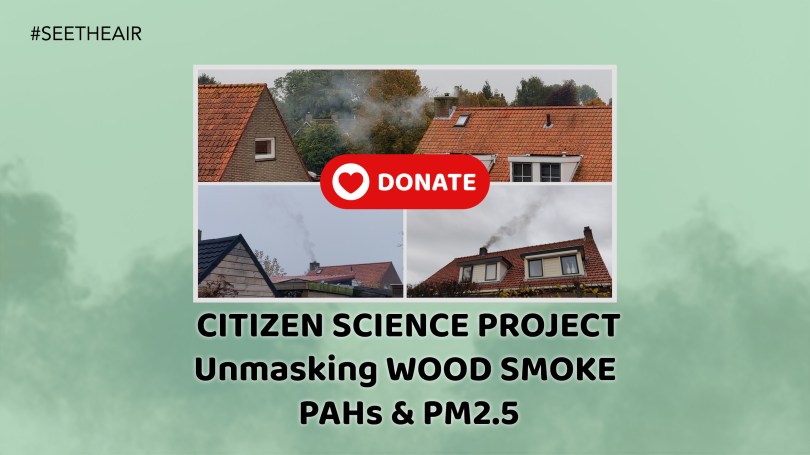
Help Us Breathe Cleaner Air: Citizen Science Project Seeks Donations for Wood Smoke Research

I won’t write a long introduction because this is of urgent matter for people to understand and support. While wood-burning stoves offer a tempting escape from soaring energy costs, they also release harmful substances into our homes and communities. These include fine particulate matter (PM2.5) and Polycyclic Aromatic Hydrocarbons (PAHs), both of which have been linked to serious health issues, including cancer.

Unveiling the Hidden Danger

Despite the known risks, we still lack sufficient data on PAHs concentrations in residential areas where wood burning is common. The location of investigation will be chosen in the Netherlands or Belgium. This is where your help is crucial.

By supporting this citizen science project, you’ll help us gather vital information about the impact of wood smoke on our air quality. The project will measure PAHs and PM2.5 levels in a residential area heavily reliant on wood burning for heating. This data will be invaluable for raising awareness among policymakers and advocating for stronger air quality regulations.

How Your Donation Makes a Difference

Analyzing air for PAHs is a complex process requiring specialized equipment and laboratory analysis. With your support, the project will:

  • Purchase air pumps and ten (10) absorption tubes to collect air samples.
  • Conduct laboratory analysis to identify and quantify PAHs.
  • Measure PM2.5 levels using advanced sensors.
  • Compare PAHs levels in wood-burning areas to background levels.

Join the Fight for Clean Air

Your donation will directly contribute to a healthier community. Together, we can uncover the hidden dangers of wood smoke and work towards cleaner air for everyone. Finally, I want to thank Dieter Pientka for his passion to investigate this crucial subject.

Help us make a difference. Donate today!

Funding Alert: Air Pollution Research – EU, UK, US, Thailand, Senegal, and Panama

Originally posted on LinkedIn

The European Commission is offering up to €73 million in funding for research projects aimed at improving air quality under its LIFE program. Successful projects can receive between €2 million and €10 million to support initiatives that restore and enhance the environment. Applications are open until September 19th, 2024.

Link: https://ec.europa.eu/info/funding-tenders/opportunities/portal/screen/opportunities/topic-details/life-2024-sap-env-environment

The European Commission’s Climate, Infrastructure and Environment Executive Agency has issued a second Life call with a focus on air quality and pollution. Projects can secure between €10 million and €30 million in funding. The deadline for applications is September 5. 2024.

Link: https://cinea.ec.europa.eu/funding-opportunities/calls-proposals/strategic-integrated-projects-sip-environment_en

Horizon Europe is launching a call for proposals on September 17 to fund projects developing zero-pollution solutions for cities and regions. Successful projects will share a €20 million pot. Applications close on February 11th, 2025.

Link: https://ec.europa.eu/info/funding-tenders/opportunities/portal/screen/opportunities/topic-details/horizon-miss-2024-cit-01-02

Read More »

Indoor Environmental Quality and Radiation Exposure

While we often think about indoor pollutants such as particle pollution (PM2.5), Carbon Dioxide (CO2), etc, the quality of the indoor environments (IEQ) can also have a significant impact on our health through various sources of radiation exposure within our homes and workplaces. Radiation is not commonly investigated nor monitored indoors.

Beyond the Usual Suspects:

Let’s explore some unexpected sources:

  • Frequent Flyers: Cosmic radiation exposure increases with altitude. While infrequent flights pose minimal risk, frequent flyers may experience slightly elevated radiation levels.
  • Ground Elements: Radioactive elements like uranium naturally occur in soil and rocks. Depending on the geology of your area, these elements can seep into basements or crawlspaces, releasing radon gas, a known human carcinogen. Radon forms from the breakdown of uranium, radium, and thorium, which are naturally present in rocks, soil, and water. As radon gas seeps into buildings through cracks and gaps in foundations, it can accumulate to dangerous levels.
  • Vintage Timekeepers: Those vintage watches with luminous dials might be harboring a radioactive secret. Radium or tritium, once used for illumination, can pose a health risk.
  • Colorful Contaminants: Certain ceramics and glassware use glazes containing radioactive elements for vibrant colors. While generally “safe” when intact, chipping or breaking these items can release radioactive particles.
  • Food: Bananas, spinach, oranges, beer, etc. all contain potassium K-40 which is a radioactive isotope that emits beta and gamma radiation. The dose of radioactivity they deliver is tiny and does not pose a health risk.
  • Nuclear Power Plants: Nuclear power plants are heavily regulated and emit very low levels of radiation during normal operation. While unlikely, a serious accident at a nuclear power plant could release dangerous amounts of radiation.
  • War Zones: Radiation exposure is a serious danger in a war zone if a nuclear weapon is detonated.
Read More »