
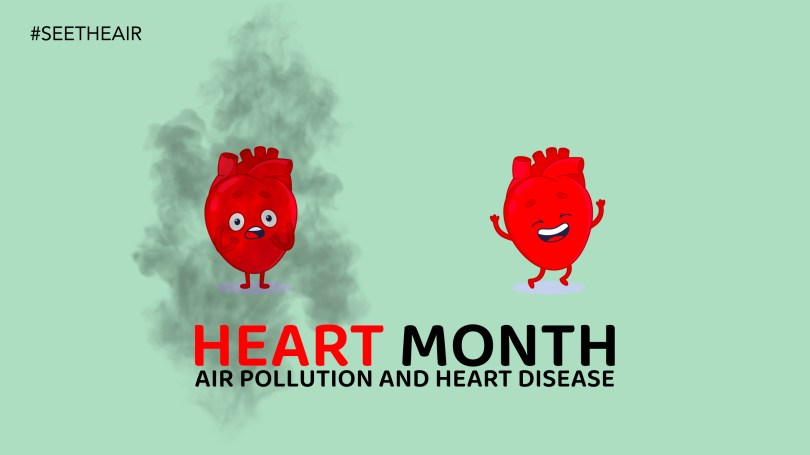
February is American Heart Month and Saint Valentine’s Day, a good time to raise awareness about cardiovascular health. While many factors contribute to heart disease, air pollution is a significant and often overlooked risk factor.
The Link Between Air Pollution and Heart Disease
Air pollution is a complex mixture of gases and particulate matter, some of which are particularly harmful to human health. When we breathe in polluted air, these particles can enter our bloodstream and trigger a cascade of negative effects on the cardiovascular system.
- Inflammation: Air pollution can cause inflammation in the blood vessels, which can lead to plaque buildup and hardening of the arteries.
- Blood Clots: Exposure to air pollution can increase the risk of blood clots, which can lead to heart attacks and strokes.
- Arrhythmias: Air pollution can disrupt the electrical activity of the heart, leading to irregular heartbeats.
- Heart Failure: Long-term exposure to air pollution can weaken the heart muscle and contribute to heart failure.
Who is at Risk?
Everyone is at risk from air pollution, but some individuals are more vulnerable than others. People with existing heart conditions, older adults, children, and those with respiratory problems are particularly susceptible to the negative effects of air pollution.
What the Scientific Studies Say?
Alexeeff et al. (2023) concluded that long-term exposure to PM2.5 is associated with increased risks of incident acute myocardial infarction (AMI) and ischaemic heart disease (IHD) mortality, and cardiovascular diseases (CVD) mortality. Specifically, a 10 μg/m3 increase in 1-year mean PM2.5 was associated with a 12% increased risk of incident AMI, a 21% increased risk of IHD mortality, and an 8% increased risk of CVD mortality. The study also found that moderate concentrations of PM2.5 (10.0 to 11.9 μg/m3) were associated with increased risks of incident AMI (6%) and IHD mortality (7%) when compared to low concentrations (less than 8 μg/m3).
Sun et al. (2023) concluded that long-term exposure to PM2.5 is associated with increased risks of IHD mortality, cerebrovascular mortality, and incident stroke. Specifically, the meta-analyses found that for every 10 µg/m3 increase in long-term PM2.5 exposure, there was a 23% increased risk for IHD mortality, a 24% increased risk for cerebrovascular mortality, and a 13% increased risk for incident stroke. The relationship between long-term PM2.5 exposure and incident myocardial infarction was suggestive of increased risk, but not conclusive.
Hayes et al. (2019) concluded that long-term exposure to PM2.5 is associated with increased mortality due to IHD and stroke. Specifically, each increase of 10 μg/m3 in PM2.5 was associated with a 16% increase in mortality from IHD and a 14% increase in mortality from stroke. The study also found that excess risks for CVD were observed at PM2.5 exposures below the previous U.S. long-term standard of 12 μg/m3. Compared to PM2.5 exposure less than 8 μg/m3, risks for CVD were increased in the range of 8-12 μg/m3, 12-20 μg/m3, and 20+ μg/m3. These findings suggest the need for continued improvements in air pollution abatement for CVD prevention.
Researchers concluded that exposure to PM2.5 is associated with adverse cardiovascular outcomes, including increased risk of mortality, stroke, heart failure, myocardial infarction, and cardiac arrhythmias. The authors hypothesize that PM2.5 functions through mechanisms such as increased oxidative stress, activation of the immune system’s inflammatory pathway, and stimulation of the autonomic nervous system. These mechanisms can lead to endothelial dysfunction, atherosclerosis, and systemic inflammation, which can then result in cardiovascular events. Both short-term and long-term exposure to PM2.5 are associated with these adverse outcomes, and the risks increase with the level and duration of exposure (Krittanawong et al., 2023).
This scientific statement from the American Heart Association (AHA) concludes that the overall evidence supports a causal relationship between PM2.5 exposure and cardiovascular morbidity and mortality. The writing group determined that short-term exposure to PM2.5 over a few hours to weeks can trigger cardiovascular disease-related mortality and nonfatal events, including myocardial ischemia and myocardial infarction, heart failure, arrhythmias, and strokes. The statement also concludes that longer-term exposure to PM2.5 increases the risk for cardiovascular mortality and reduces life expectancy within more highly exposed segments of the population (Brook et al., 2010).
A 2022 review concludes that exposure to PM2.5 is associated with adverse cardiovascular outcomes, including increased risk of mortality, stroke, heart failure, myocardial infarction, and cardiac arrhythmias. The primary mechanisms through which PM2.5 influences the incidence of cardiovascular events are intricate and multiple. PM2.5 inhalation stimulates extrapulmonary effects on the cardiovascular system through three biological pathways: (1) oxidative stress and systemic inflammation; (2) direct translocation into systemic circulation; and (3) perturbation of the autonomic nervous system (ANS) (Basith et al., 2022).

Both short-term and long-term exposure to PM2.5 are associated with these adverse outcomes, and the risks increase with the level and duration of exposure. The studies also highlights the need for stricter regulations regarding PM2.5 levels and calls for public and personal mitigation strategies to lessen its effects on health and the environment. The evidence suggests that there may be no safe threshold for PM2.5 exposure.
What Can You Do?
While air pollution is a complex issue, there are steps you can take to protect your heart health:
- Stay Informed: Monitor air quality in your area and avoid strenuous activities when pollution levels are high.
- Reduce Exposure: Limit your time spent in areas with wood burning smoke, heavy traffic, or industrial activity.
- Support Clean Air Initiatives: Advocate for policies that reduce air pollution from vehicles, power plants, and other sources.
Conclusion
This Heart Month ❤️, it’s important to recognize the link between air pollution and heart disease. By taking steps to protect ourselves and supporting efforts to improve air quality, we can all contribute to a healthier future for our hearts.
References
- Alexeeff, S. E., Deosaransingh, K., Van Den Eeden, S., Schwartz, J., Liao, N. S., & Sidney, S. (2023). Association of long-term exposure to particulate air pollution with cardiovascular events in California. JAMA Network Open, 6(2), e230561. https://doi.org/10.1001/jamanetworkopen.2023.0561
- Sun, D., Liu, C., Ding, Y., Yu, C., Guo, Y., Sun, D., Pang, Y., Pei, P., Du, H., Yang, L., Chen, Y., Meng, X., Liu, Y., Liu, J., Sohoni, R., Sansome, G., Chen, J., Chen, Z., Lv, J., . . . Li, L. (2023). Long-term exposure to ambient PM2·5, active commuting, and farming activity and cardiovascular disease risk in adults in China: a prospective cohort study. The Lancet Planetary Health, 7(4), e304–e312. https://doi.org/10.1016/s2542-5196(23)00047-5
- Hayes, R. B., Lim, C., Zhang, Y., Cromar, K., Shao, Y., Reynolds, H. R., Silverman, D. T., Jones, R. R., Park, Y., Jerrett, M., Ahn, J., & Thurston, G. D. (2019). PM2.5 air pollution and cause-specific cardiovascular disease mortality. International Journal of Epidemiology, 49(1), 25–35. https://doi.org/10.1093/ije/dyz114
- Krittanawong, C., Qadeer, Y. K., Hayes, R. B., Wang, Z., Thurston, G. D., Virani, S., & Lavie, C. J. (2023). PM2.5 and cardiovascular diseases: State-of-the-Art review. International Journal of Cardiology Cardiovascular Risk and Prevention, 19, 200217. https://doi.org/10.1016/j.ijcrp.2023.200217
- Brook, R. D., Rajagopalan, S., Pope, C. A., Brook, J. R., Bhatnagar, A., Diez-Roux, A. V., Holguin, F., Hong, Y., Luepker, R. V., Mittleman, M. A., Peters, A., Siscovick, D., Smith, S. C., Whitsel, L., & Kaufman, J. D. (2010). Particulate matter air pollution and cardiovascular disease. Circulation, 121(21), 2331–2378. https://doi.org/10.1161/cir.0b013e3181dbece1
- Basith, S., Manavalan, B., Shin, T. H., Park, C. B., Lee, W., Kim, J., & Lee, G. (2022). The impact of fine particulate Matter 2.5 on the cardiovascular system: A review of the Invisible Killer. Nanomaterials, 12(15), 2656. https://doi.org/10.3390/nano12152656
Discover more from See The Air
Subscribe to get the latest posts sent to your email.
 See The Air
Thank you for such an interesting article! I worry a lot about air pollution and it’s terrible consequences for our health and our breathing system, especially as a mother of two. I try to minimize this impact by buying air conditioner with filters, taking daily supplements for lung protection such as mullein leaf, trying to stay hydrated and doing breathing exercises. But the problem is global, and we need to do something to stop this, for our health. So thank you for telling more about this problem!
LikeLiked by 1 person