Understanding AHAM and CADR: Your Guide to Cleaner Indoor Air


In today’s world, indoor air quality is more important than ever.  Dust, pollen, and even wildfire smoke can significantly impact our health and comfort. Air purifiers offer a solution, but navigating the world of product specifications can be confusing. Is product efficiency a sufficient way to rate them, or should we think about effectiveness? This article explains the role of the Association of Home Appliance Manufacturers (AHAM) and the importance of the Clean Air Delivery Rate (CADR) in choosing the right air purifier for your needs, plus an upcoming standard that wants to deliver even better indoor air solutions.  

Understanding CADR

The Clean Air Delivery Rate (CADR) is a crucial metric that indicates how quickly an air purifier can remove specific types of particles from a room.  It measures the volume of clean air delivered by the unit and is expressed in cubic meters per hour (CMH) or cubic feet per minute (CFM). AHAM tests air purifiers for three common pollutants; smoke, dust, and pollen. Note: CMH can be converted to CFM by dividing by 1.7.

Read More »

Benchmarking: The Ultimate Catalyst for Better Air Quality Through Global Standards

This article first appeared on www.goaqs.org

Air quality is an invisible yet pervasive factor influencing our health, productivity, and overall well-being. While awareness of air pollution is growing, translating that awareness into actionable behavioral change remains a significant challenge. The key to unlocking this transformation lies in the power of benchmarking—a potent tool that, when coupled with global standards like the proposed Global Air Quality Standard (GO AQS), can empower individuals and communities to breathe cleaner air.

The Power of Comparison: Learning from Other Fields

The effectiveness of benchmarking as a driver for improvement is not a new concept; it has long been a cornerstone of success in diverse fields. Consider the world of athletics: elite athletes constantly benchmark their performance—speed, strength, endurance—against competitors in their category. This isn’t about shaming, but about identifying areas for improvement. A runner who sees their sprint times lagging behind others in their age group knows exactly where to focus their training. Similarly, in healthcare, patients track metrics like blood pressure or cholesterol against established healthy ranges or anonymized data from similar patient populations. This comparison provides a clear understanding of their health status, prompting necessary lifestyle changes or medical interventions.

A practical, personal example vividly illustrates this point: as an individual tracking my resting heart rate through an app that allows comparison against +56,000 users worldwide. Seeing a “superb” rating, indicating excellent heart aging, provides tangible positive reinforcement and validates my health efforts. Conversely, a less favorable comparison would flag a problematic area, encouraging focused action. This simple yet powerful mechanism of comparison fosters accountability and motivates behavioral adjustments.

Read More »

Key Insights from ASIC 2025 in Thailand: Bridging the Indoor-Outdoor Divide

The recent Air Sensors International Conference (ASIC) 2025, held in the vibrant backdrop of Thailand, offered a profound opportunity to delve into the evolving landscape of air quality monitoring. As an attendee, several key themes emerged that highlight both the progress made and the remaining challenges in our quest to understand the air we breathe.

The Indoor-Outdoor Air Quality Discrepancy

One striking observation from the conference was the apparent disparity in research emphasis between indoor and outdoor air quality monitoring. While outdoor environments have benefited immensely from the widespread adoption and scrutiny of low-cost air quality monitors, indoor spaces appear to lag in comparison. The primary reason for this imbalance lies in the availability of robust reference instrumentation. Governments worldwide have invested in publicly air quality stations equipped with reference-grade instruments, providing invaluable benchmarks for normalization and validating low-cost sensors in a variety of outdoor conditions. This has not only accelerated the development of accurate low-cost monitors but also fostered the creation of sophisticated correction algorithms.

Read More »

Review: InBiot Mica Plus – A Comprehensive IAQ Solution for Green Buildings and Beyond

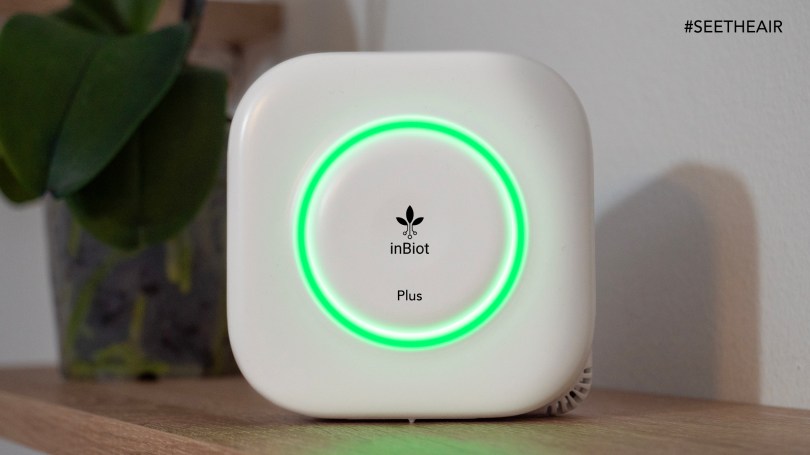
The inBiot Mica Plus is a robust indoor air quality monitor designed squarely for the B2B market, catering specifically to buildings aiming for top-tier Indoor Environmental Quality (IEQ) and compliance with stringent green building certifications like WELL, RESET, and LEED. With a promised 10-year lifespan and minimal maintenance thanks to automatic calibration, the Mica Plus is a compelling long-term investment.

Equipped with a comprehensive sensor suite including Temperature, Relative Humidity, CO₂, TVOC, Particulate Matter, and Formaldehyde, the Mica Plus provides a detailed picture of indoor air conditions. Its connectivity options are equally impressive, spanning basic Wi-Fi to advanced protocols like Power over Ethernet (PoE), LoRaWAN, Sigfox, NB-IoT/LTE-M, and local communication options such as Modbus RTU/TCP/IP, API, BACnet, and MQTT, ensuring seamless integration into existing building management systems.

Read More »

Review: µCritAir Development Kit – Gamifying Our Way to Better Indoor Air

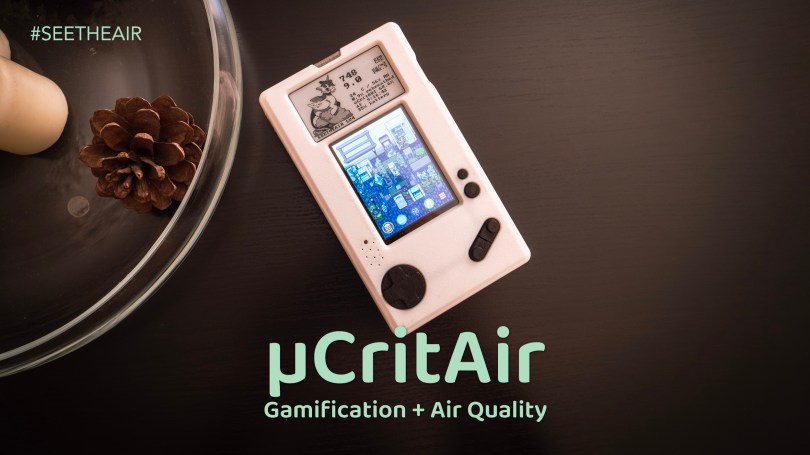
For years, I’ve been advocating for the integration of gamification into everyday tools to drive meaningful behavioral change, especially concerning something as vital yet often invisible as indoor air quality. We need engaging ways to keep people motivated to understand and improve their environments. So, when I encountered the µCritAir (it actually found me), I was immediately intrigued. This isn’t just another air quality monitor; it’s an experiment in engagement, using a digital pet – a µCritter – whose health depends directly on the air you breathe. Keep your air clean, and your critter thrives. Let it worsen, and its health suffers. It’s a compelling, tangible connection between data and consequence.

Development Kit

It’s important to set expectations correctly: the µCritAir is currently available as a Development Kit. This isn’t a polished, mass-market product yet. Instead, it’s aimed squarely at enthusiasts, early adopters, and tinkerers who enjoy being part of the development journey. Yes, this means you’ll encounter some unpolished aspects, perhaps a bug here or there, or features still under active development. However, this is also its strength for the right audience. The team behind µCritAir is clearly passionate and actively working on both software and hardware improvements. They genuinely value the feedback from their early users, creating a collaborative dynamic that’s exciting to be a part of.

Read More »

Moving from Tech-Focused Air Quality Monitoring to Societal-Centric Digital Twin Solutions

Modern cities are increasingly equipped with a wealth of data from Internet-of-Things (IoT) devices, including those monitoring air quality using low-cost sensors. The concept of urban digital twins, virtual representations of urban environments, has emerged as a promising tool to interpret this data and understand the impact of interventions. These digital twins hold the potential to move beyond mere monitoring towards real-time, automatic solutions to environmental challenges like air pollution. However, current efforts often prioritize technological development, sometimes at the expense of addressing fundamental societal needs and achieving seamless integration with digital twin technologies.

The deployment of low-cost sensor networks has indeed revolutionized air quality monitoring by providing data at much higher spatial & temporal resolutions than traditional regulatory sites. This densification of observations, facilitated by IoT, offers a greater understanding of pollution sources and dispersion. Smart city initiatives further integrate various data streams onto online platforms, theoretically enabling real-time decision-making. However, the development of fully integrated smart city infrastructure remains rare, with many applications focusing on single aspects like air quality and often struggling to address community needs, being more driven by technological deployment. Moreover, a significant number of projects do not progress beyond the demonstration stage due to funding limitations, highlighting a potential disconnect between technological advancement and sustained societal benefit.

Read More »

GO AQS and ASIC 2025 on Technology & Air Quality (Join Us in Thailand!)

For too long, the focus on air quality has primarily been on the outdoor environment. But the truth is, we spend the vast majority of our time indoors – in our homes, offices, and schools. That’s why the arrival of the Global Open Air Quality Standards (GO AQS) marks a monumental shift. This initiative is the first of its kind to establish a set of limits specifically for indoor air quality, with the primary goal of safeguarding human health. We’re excited to announce that GO AQS will be presenting our work at the ASIC 2025 conference in Thailand, and we invite tech companies and air quality experts to join us there to learn more.

GO AQS recognizes that the air we breathe within our buildings has a direct and significant impact on our well-being, productivity, and even our long-term health. But how can buildings effectively monitor and manage their indoor air to meet these new standards? The answer lies in the advancements of air quality technology, particularly the rise of low-cost monitors (LCMs).

Historically, the gold standard for air quality measurement has been reference-grade instruments. While incredibly accurate, these devices come with a hefty price tag, making widespread deployment within buildings economically prohibitive. Furthermore, they are often bulky, noisy, and energy-intensive, rendering them impractical for continuous monitoring in occupied spaces like bedrooms, offices, or classrooms. Crucially, these sophisticated instruments are typically not designed to integrate with building automation systems (BAS), hindering real-time control and response to air quality issues.

Read More »

From Rest to Rigor: How Our Air Needs Change with Activity

How much air do we breathe in a day?

We breathe without even thinking about it, but have you ever stopped to consider just how much air we actually inhale and exhale each day? The amount might surprise you. And what’s even more astonishing is the difference in air consumption between someone at rest and an athlete engaged in strenuous exercise.

At-Rest Breath

According to a paper 1, at rest, a typical adult male breathes in about 0.5 liters of air per breath and breathes 12 times per minute. This translates to roughly 6 liters of air per minute. This is because our body’s oxygen needs are lower when we are resting, so we take shallower breaths at a slower rate.

Read More »

Unlock the Power of Data Narratives in Our “Storytelling with Data” Webinar

Are you ready to transform complex data into compelling stories that resonate and drive impact? Join us for our insightful webinar, “Storytelling with Data,” on April 10th at 11:30 AM EDT on LinkedIn Live.

In today’s information-rich world, simply presenting data isn’t enough. True understanding and engagement come from weaving data into compelling narratives. This webinar delves into the art and science of Information Design, demonstrating that it’s far more than just creating charts and graphs. It’s about strategically transforming raw data into meaningful stories that captivate audiences and inspire action.

Our upcoming session brings together a panel of global experts (Gabrielle Merite, Florent Lavergne, Sotirios Papathanasiou, Nicole Lachenmeier, & Maggie Shi ) at the forefront of information design. We’ll explore how mission-driven marketers and environmentally conscious data visualization professionals can leverage the power of storytelling to amplify their message and create lasting impact.

Read More »

Review: aranetRn+ – A Deep Dive into Radon Awareness

Aranet has carved a niche for itself in the air quality monitoring space, establishing a distinct design language that prioritizes clarity and functionality. The aranet4, their popular CO2 monitor, set the stage with its minimalist aesthetic and intuitive e-ink display. The aranetRn+ builds upon this foundation, tackling the complex issue of radon monitoring while staying true to aranet’s core principles.

The aranetRn+ maintains the familiar clean lines and robust build quality associated with aranet products. However, the nature of radon detection necessitates a deeper profile. The device houses a α-decay event detection using ionization chamber, which contributes to its increased depth. While slightly bulkier, the aranetRn+ remains a discreet and unobtrusive addition to any home.

Read More »