Review: M5Stack K131 AirQ – All in One Portable Air Quality Monitor

The M5Stack K131 AirQ is an all-in-one air quality monitor designed for easy and comprehensive monitoring of your environment. It is a portable air quality monitor and an ideal companion for those who want to track their exposure to environmental pollutants.

Characteristics

Pros:

  • Multi-sensor: It goes beyond basic temperature and humidity readings, offering detailed readings on PM1.0,PM2.5, PM4, PM10 particles, VOCs, NO2, and CO2 concentration. This gives you a holistic view of your air quality.
  • E-ink display: The easy-to-read e-ink display provides clear visuals of the monitored metrics, even in low light conditions. Even in a power outage, the last screen will still be visible.
  • Versatile mounting: LEGO mounting holes, magnets, and detachable hanging ears offer various installation options for different environments.
Read More »

Recommended CO2 Levels for Optimal Building Performance

Carbon dioxide (CO2) concentration is a critical indicator of indoor air quality (IAQ) and plays a significant role in building performance. While CO2 itself may not be directly harmful at typical indoor levels, its concentration serves as a proxy for ventilation effectiveness and the potential buildup of other indoor air pollutants, including pathogens, that can negatively impact occupant health and cognitive function. This article examines the relationship between CO2 levels and building performance, drawing upon research findings and expert insights to recommend CO2 levels that promote a healthy and productive indoor environment.

Understanding the Role of CO2 in Indoor Environments

CO2 is a natural component of the air we breathe, but its levels can increase significantly in indoor spaces due to human respiration and other combustion processes (candles, cooking, combustion heating, etc). When ventilation is inadequate, CO2 from these sources can accumulate, leading to elevated concentrations.

Read More »

Review: TSI OmniTrak™ Solution a Tool for Professionals

The TSI OmniTrak™ Solution is a versatile and user-friendly air quality monitor/tracker that offers a comprehensive solution for tracking various pollutants. Equipped with a smart station and a modular design, this device provides data on air quality, making it an invaluable tool for both individuals and professionals. Disclaimer: This review was sponsored by TSI. However, my commitment to providing an unbiased and honest assessment of the product remains unchanged. The opinions expressed in this review are solely my own and are based on my personal experience with the TSI OmniTrak™ Solution.

Key Features and Benefits:

  • Modular Design: The TSI OmniTrak™ Solution supports a wide range of modules, allowing users to customize their monitoring needs. I was fortunate to receive the Ammonia, Ozone, and PM module for fine particles, which also functions as a particle counter. The modularity ensures flexibility and adaptability to different environmental conditions.
  • Wireless Connectivity: One of the standout features is the wireless communication between the modules and the Smart Station via Bluetooth®. This eliminates the need for physical connections, making it convenient to deploy and monitor air quality in various locations.
  • Portable Option: The Smart Station can be used with or without attached modules. This means you can carry the station with you and track air quality on the go by simply attaching the desired module.
  • Intuitive Interface: The large screen on the smart station resembles a smartphone, and it appears to run on an Android operating system. This familiar interface makes navigation and data interpretation straightforward.
  • Real-time Monitoring and Data Recording: The OmniTrak provides real-time measurements of various pollutants. Additionally, the “Study” function allows users to record data for further analysis and comparison.
  • Cloud Connectivity and Data Access: The device connects to the TSI Link™ cloud platform via Wi-Fi, enabling users to access and analyze data from anywhere. Furthermore, connecting the device to a computer via USB-C cable provides another option for data transfer.
Read More »

Carbon Monoxide: The Silent Killer Lurking Indoors

Carbon monoxide (CO), often referred to as the “silent killer,” is a colorless, odorless, and tasteless gas that can be deadly when inhaled in high concentrations. While it is often associated with outdoor air pollution, CO can also pose a significant risk within our homes and workplaces.

Furthermore, while carbon monoxide is often associated with acute poisoning, leading to immediate symptoms like headaches, dizziness, and nausea (hence we have CO alarms), it can also have long-term health consequences. Even exposure to low levels of CO over extended periods can cause damage to various organs and systems. Chronic CO exposure has been linked to chronic fatigue, memory problems, work difficulties, sleep disorders, dizziness, neurological disorders, paresthesia, recurrent infections, abdominal pain, and diarrhea 1, 2.

Read More »

Global Coalition Launches Initiative to Establish Universal Indoor Air Quality Standards: Global Open Air Quality Standards (GO AQS)

A diverse global coalition of scientists, air quality experts, and industry leaders has united to establish the Global Open Air Quality Standards (GO AQS), an unprecedented initiative aimed at creating universal indoor air quality (IAQ) standards. This groundbreaking effort seeks to ensure that everyone, regardless of location or socio-economic status, has access to the knowledge and tools needed to enhance their health and well-being through improved air quality.

GO AQS will serve as an authoritative and comprehensive resource for scientists, engineers, public health officials, businesses, and policymakers worldwide. By providing accessible, consistent and clear, standardised guidelines for IAQ, it empowers people to make informed decisions about their living and working environments, directly impacting health and productivity.

IAQ significantly affects our health, cognitive function, and overall productivity. Poor indoor air can exacerbate respiratory conditions, increase the risk of cardiovascular problems, and contribute to reduced work performance. Establishing universal air quality standards is a critical step in ensuring equitable access to clean and healthy air globally.

The coalition comprises experts from different fields including public health, environmental science, epidemiology, occupational health, engineering, and air quality research. Together, they are dedicated to developing GO AQS standards that are both scientifically robust and practical for implementation across diverse settings. These standards will address a wide range of indoor pollutants, including particulate matter (PM and PCN), carbon dioxide (CO2), carbon monoxide (CO), ozone (O3), and formaldehyde (CH2O), which are known to have significant adverse effects on human health and environment.

GO AQS aims to be a valuable tool for the public, private sector, and academia alike. Organisations that adopt these standards can enhance the health and well-being of their employees and customers, while simultaneously reducing their environmental footprint. This initiative also supports broader sustainability goals by promoting healthier indoor environments. 

While air quality interrogators and manufacturers are supportive of the overall goals of GO AQS, there are areas where the draft version requires further refinement to ensure its practical implementation. We remain committed to working collaboratively with all stakeholders to finalise a version of GO AQS that is both effective and feasible for the industry. Therefore the coalition is currently finalising the GO AQS standards and developing educational materials to facilitate their global implementation. The official launch is anticipated in December 2024, marking a significant milestone in the global effort to prioritise IAQ.

Read More »

AirDeveloppa: Breathe Easy and Earn Bitcoin While You’re At It

Air pollution got you down? Want to find places with clean air to escape to? Look no further than AirDeveloppa! This innovative web app tackles air quality concerns with a unique approach that benefits both users and businesses.

Finding Fresh Air, One Coffee Shop at a Time

AirDeveloppa’s core function is to help you locate indoor spots with good air quality. Participating businesses like cafes, gyms, and co-working spaces utilize the AirCheck Monitor, which constantly monitor PM2.5 levels and send that data directly to the app. With up-to-date info at your fingertips, you can easily find a breath of fresh air on even the smoggiest days. Currently only people in Thailand have access to this service but hopefully it will become worldwide available.

Read More »

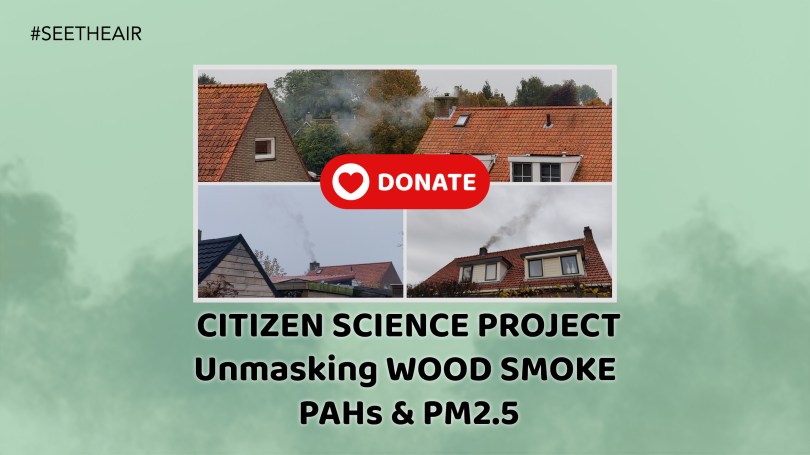
Help Us Breathe Cleaner Air: Citizen Science Project Seeks Donations for Wood Smoke Research

I won’t write a long introduction because this is of urgent matter for people to understand and support. While wood-burning stoves offer a tempting escape from soaring energy costs, they also release harmful substances into our homes and communities. These include fine particulate matter (PM2.5) and Polycyclic Aromatic Hydrocarbons (PAHs), both of which have been linked to serious health issues, including cancer.

Unveiling the Hidden Danger

Despite the known risks, we still lack sufficient data on PAHs concentrations in residential areas where wood burning is common. The location of investigation will be chosen in the Netherlands or Belgium. This is where your help is crucial.

By supporting this citizen science project, you’ll help us gather vital information about the impact of wood smoke on our air quality. The project will measure PAHs and PM2.5 levels in a residential area heavily reliant on wood burning for heating. This data will be invaluable for raising awareness among policymakers and advocating for stronger air quality regulations.

How Your Donation Makes a Difference

Analyzing air for PAHs is a complex process requiring specialized equipment and laboratory analysis. With your support, the project will:

  • Purchase air pumps and ten (10) absorption tubes to collect air samples.
  • Conduct laboratory analysis to identify and quantify PAHs.
  • Measure PM2.5 levels using advanced sensors.
  • Compare PAHs levels in wood-burning areas to background levels.

Join the Fight for Clean Air

Your donation will directly contribute to a healthier community. Together, we can uncover the hidden dangers of wood smoke and work towards cleaner air for everyone. Finally, I want to thank Dieter Pientka for his passion to investigate this crucial subject.

Help us make a difference. Donate today!

Funding Alert: Air Pollution Research – EU, UK, US, Thailand, Senegal, and Panama

Originally posted on LinkedIn

The European Commission is offering up to €73 million in funding for research projects aimed at improving air quality under its LIFE program. Successful projects can receive between €2 million and €10 million to support initiatives that restore and enhance the environment. Applications are open until September 19th, 2024.

Link: https://ec.europa.eu/info/funding-tenders/opportunities/portal/screen/opportunities/topic-details/life-2024-sap-env-environment

The European Commission’s Climate, Infrastructure and Environment Executive Agency has issued a second Life call with a focus on air quality and pollution. Projects can secure between €10 million and €30 million in funding. The deadline for applications is September 5. 2024.

Link: https://cinea.ec.europa.eu/funding-opportunities/calls-proposals/strategic-integrated-projects-sip-environment_en

Horizon Europe is launching a call for proposals on September 17 to fund projects developing zero-pollution solutions for cities and regions. Successful projects will share a €20 million pot. Applications close on February 11th, 2025.

Link: https://ec.europa.eu/info/funding-tenders/opportunities/portal/screen/opportunities/topic-details/horizon-miss-2024-cit-01-02

Read More »

Indoor Environmental Quality and Radiation Exposure

While we often think about indoor pollutants such as particle pollution (PM2.5), Carbon Dioxide (CO2), etc, the quality of the indoor environments (IEQ) can also have a significant impact on our health through various sources of radiation exposure within our homes and workplaces. Radiation is not commonly investigated nor monitored indoors.

Beyond the Usual Suspects:

Let’s explore some unexpected sources:

  • Frequent Flyers: Cosmic radiation exposure increases with altitude. While infrequent flights pose minimal risk, frequent flyers may experience slightly elevated radiation levels.
  • Ground Elements: Radioactive elements like uranium naturally occur in soil and rocks. Depending on the geology of your area, these elements can seep into basements or crawlspaces, releasing radon gas, a known human carcinogen. Radon forms from the breakdown of uranium, radium, and thorium, which are naturally present in rocks, soil, and water. As radon gas seeps into buildings through cracks and gaps in foundations, it can accumulate to dangerous levels.
  • Vintage Timekeepers: Those vintage watches with luminous dials might be harboring a radioactive secret. Radium or tritium, once used for illumination, can pose a health risk.
  • Colorful Contaminants: Certain ceramics and glassware use glazes containing radioactive elements for vibrant colors. While generally “safe” when intact, chipping or breaking these items can release radioactive particles.
  • Food: Bananas, spinach, oranges, beer, etc. all contain potassium K-40 which is a radioactive isotope that emits beta and gamma radiation. The dose of radioactivity they deliver is tiny and does not pose a health risk.
  • Nuclear Power Plants: Nuclear power plants are heavily regulated and emit very low levels of radiation during normal operation. While unlikely, a serious accident at a nuclear power plant could release dangerous amounts of radiation.
  • War Zones: Radiation exposure is a serious danger in a war zone if a nuclear weapon is detonated.
Read More »

Exciting News! “Nicholas and his Incredible Eyesight” Now Available in Farsi! 🇮🇷

Calling all Farsi readers! I am thrilled to announce that the beloved “Nicholas and his Incredible Eyesight” book series is now translated into Farsi (modern Persian). Since Farsi language printed books aren’t currently supported by Amazon, I’ve decided to make the digital format of my book available for free to everyone. This way, readers can still enjoy the work regardless of the limitations on print formats.

This exciting adventure awaits anyone who wants to join Nicholas on his amazing journeys. With his incredible eyesight, Nicholas sees the world in a whole new way, encountering challenges and surprises along the path.

A special thanks to Solmaz Ahadi, Air Quality Specialist, for her invaluable help in bringing this translation to life!

Want your FREE digital copy? It’s easy! Simply leave a comment below this announcement or contact me and I will send it straight to you.

Let’s celebrate the magic of storytelling and the power of Nicholas incredible eyesight – in Farsi! 

#FarsiBooks #FreeBooks #ChildrensBooks #NicholasAndHisIncredibleEyesight #AirQuality