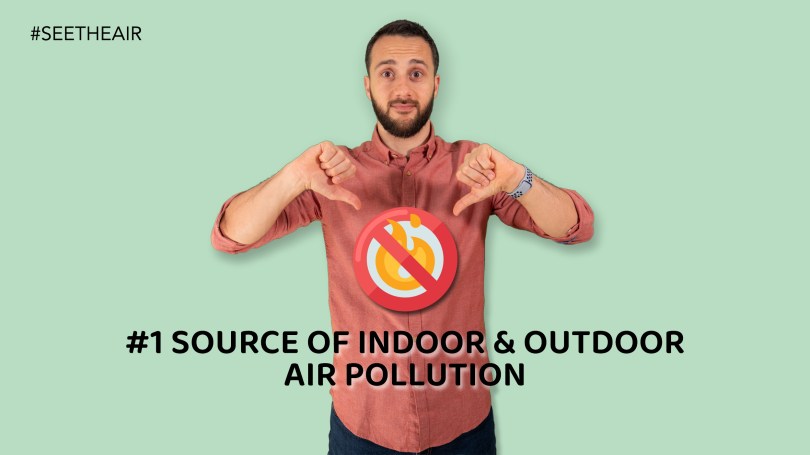
Cozy Fireplaces, Clouded Lungs: Why Wood Burning Stoves are a Holiday Health Hazard

The holidays conjure up images of crackling fires, warm hearths, and cozy evenings. But for many, especially those living in communities with widespread wood burning, this idyllic picture masks a grim reality: a significant decline in indoor and outdoor air quality. Wood burning stoves, while charming and nostalgic, are a major contributor to indoor and outdoor air pollution, posing serious health risks to both the occupants of the house and the surrounding community.

Indoor Air: A Smoky Trap

Burning wood releases a cocktail of harmful pollutants, including fine particulate matter (PM2.5), carbon monoxide, nitrogen oxides, and volatile organic compounds (VOCs). These microscopic particles can easily infiltrate the lungs and bloodstream, causing a range of health problems:

Read More »

Holiday Cheer, Hazy Air: How Festive Practices Can Harm Indoor Air Quality

The holidays are a time for celebration, filled with the warmth of family gatherings, delicious meals, and festive decorations. However, amidst the joy, some seemingly harmless traditions can have unintended consequences for our indoor air quality.

1. Culinary Combustion: The Peril of Holiday Feasts

Holiday dinners often involve hours spent in the kitchen, with ovens cranking and stoves blazing, filling the air with a medley of aromas. While tempting, this culinary combustion releases volatile organic compounds (VOCs) from cooking oils, burning meat, and even vegetables. VOCs can irritate eyes and lungs, exacerbate respiratory issues, and contribute to poor air quality. Keep ventilation on!

2. Fragrant Fumes: The Unseen Threat of Candles and Incense

Candles and incense are staples of holiday decor, adding warmth and ambience to our homes. Unfortunately, their burning releases pollutants like particulate matter and volatile organic compounds, impacting air quality. For those with asthma or allergies, these irritants can trigger unpleasant reactions. Say no to candles and incense burning!

Read More »

Holidays and Air Quality Presents 🎁❤️

I know it sounds very consumeristic, but we all have to give some kind of a gift to friends and family as this is the social norm. Why not give something that will also help people be aware of the air quality in the ambient they spend most of their time, indoors?

Air Quality Monitors

You can find air quality monitors for all wallets. The most important thing to consider is not the amount of sensors the monitor has, but the effectiveness of the monitor in communicating the air quality information to the users and always consider products that are meant to last. Super cheap products are not a good investment for your wallet and the environment. e-waste is a real issue on a global scale.

Read More »

BS 40102 – A Two Part Standard on Health, Wellbeing, Thermal Comfort, and Indoor Air Quality

The BS 40102, a fresh standard introduced in 2022 (draft released) by the British Standards Institute, focuses on assessing the health, wellbeing, and indoor environmental quality (IEQ) of buildings. It incorporates an updated best-practice method for addressing thermal comfort, indoor air quality, and overheating in buildings.

Regarding the new exposure limits, they are derived from various sources, including the DEFRA Daily Air Quality Index, WHO Air Quality Guidelines 2021, BREEAM and WELL Guidelines, and British Standard BS EN 16798-1.

Part 1 – Health and Wellbeing in Buildings

  • BS 40102-1 gives recommendations for the measuring, monitoring and reporting of the well-being and IEQ performance of an occupied building and the associated building services.
  • BS 40102-1 provides an evaluation and rating system (IEQ performance score), the aim of which is to enhance IEQ, to create healthier buildings and improve the well-being of building occupants; including but not limited to staff, visitors, tenants and customers. 
Read More »

Outdoor Air Quality Monitors 2023Q4

What’s new? Well, some clean up of discontinued monitors and some updates. In this list you will find ambient air quality monitors for experts who want to supervise and monitor air pollutants in cities and industrial sites, and commercial outdoor air quality monitors for homeowners who want to check the air quality outside their houses/apartments. 

Air pollution can cause a range of health problems, including respiratory and cardiovascular diseases (CVD), and even premature death. By monitoring ambient air quality, governments and individuals can take steps to reduce exposure to harmful pollutants and protect public health.

Read More »

Interview – Airport Series: #2 Living With Airport Pollution: A Remote Community’s Struggle with Military Operational Area

For privacy reasons the name of the interviewee has been changed.

Jake lives in a remote desert community located in a Military Operational Area (MOA) in the southwestern United States. His town is 90-120 miles away from two major military airports that are the main source of noise and air pollution in our area.

His family moved there in 2021, attracted to the quiet and scenic landscape. However, they soon noticed increased aviation activity, especially overnight flights that interrupt sleep multiple times a night. Although he can’t confirm an increase in flights, the noise pollution seems worse, with persistent droning lasting for hours in the early mornings and evenings. The noise easily penetrates our brick home.

The worst pollution comes from noisy C130s cargo planes, fighter jet passes, and helicopters, often conducting night training and looping for hours across vast distances. He has calculated these planes can be heard indoors from over 20 miles away. The noise affects his sleep, requiring daytime naps which in turn impact his work. He has experienced vestibular symptoms and severe vibration sensitivity both of which were induced by low-flying military helicopters at his old residence where he had around 10 flyovers a day. Each flyover could be multiple helicopters. from the noise exposure. Weekend nights are a respite they look forward to.

Read More »

Review: INKBIRD IBS-TH5 − All about Indoor Environmental Quality

The INKBIRD IBS-TH5 is a modern device designed to monitor and control indoor environmental conditions. With robust features and a user-friendly interface, this gadget is becoming a staple in homes and office spaces alike. In this review, we’ll delve into its technical characteristics, the importance of Indoor Environmental Quality (IEQ), and key terms such as relative humidity, vapour-pressure deficit, and dew point.

Technical Characteristics of INKBIRD IBS-TH5

INKBIRD IBS-TH5 is a 2.4 GHz WiFi-enabled temperature and humidity monitor. It features a large and clear e-ink display, showing real-time data, and the ability to connect to your smartphone via a dedicated app. This allows users to monitor and possibly adjust their indoor climates from anywhere, at any time.

  • 3.71″ e-ink Display
  • Temperatures Accuracy: ±0.36°F or ±0.2°C
  • Humidity Accuracy: ±1.8% RH
  • Built-in 2000mAh rechargeable battery
  • Built-in beeper
  • USB-C
Read More »

Interview – Airport Series: #1 The Growing Concerns of Van Nuys Airport and Its Impact on Local Community

I recently learn from Sue, a resident of Los Angeles, who is living in the shadow of the Van Nuys Airport (VNY) that the air quality of the area and mental health of the residents have been affected dramatically. She shared with me the growing concerns regarding the environmental and health impacts of the airport’s operations, particularly due to the increasing number of private and charter jets.

According to Sue over the past few years, the VNY has essentially transformed into a commercial airport due to the influx of private and charter jets. This brings with it an incessant noise pollution problem, as there’s no curfew and flights come in all day and night. And, they are under the most congested airspace in the world, with five airports in the LA area, all converging over them.

Although the airport has been around since the 1920s the changes, in recent years are drastic. Sue lives in that area since mid 80’s. They are now literally feet away from dozens of jets that emit toxic fumes into their homes, schools, and lungs. It was not like this up until a few years ago.

Read More »

The Intricate Relationship Between Plastic Pollution, Air Pollution, and Human Health

The world is grappling with an abundance of environmental challenges, two of the most critical being plastic pollution and air pollution. Although seemingly disparate, these two issues are more intertwined than we might think, especially when considering their impact on human health. Recent studies have shed light on the presence of microplastics in the human body, a discovery that links plastic pollution and air pollution in a direct and alarming way.

Understanding Plastic and Air Pollution

Plastic pollution refers to the accumulation of plastic objects and particles in the Earth’s environment, including our oceans, lands, and even the air we breathe. This pollution takes many forms such as bags, bottles, microbeads, and tiny particles known as microplastics (less than 5mm in size).

Read More »

Gender Differences in Exposure and Health Risks of Air Pollutants

Air pollution, a significant environmental health issue, affects everyone. However, there is growing research evidence showing that the health effects of air pollution may not be the same for men and women. This difference is driven by biological, socio-economic, and occupational factors that can influence exposure levels and health outcomes.

Biological Differences

In terms of biological differences, women have a higher percentage of body lipids than men, which can accumulate fat-soluble pollutants. This can lead to a higher concentration of certain pollutants in women, potentially increasing their risk of health effects. For example, a study published in the journal ‘Environmental Research’ in 2018 showed that women exposed to polycyclic aromatic hydrocarbons (PAHs), a group of chemicals released from burning coal, oil, gasoline, and tobacco, had higher levels of DNA damage than men exposed to the same levels of PAHs.

Read More »