aranet: Comprehensive Environmental Monitoring for a Healthier Home

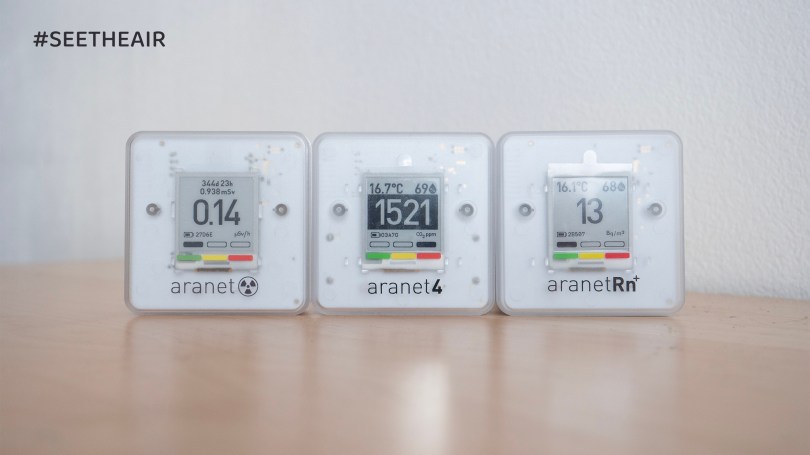
In an era where indoor air quality and environmental safety are of a high importance, aranet has emerged as one of the leaders in providing reliable and intuitive monitoring solutions. See The Air has thoroughly reviewed several of aranet’s innovative products, each designed to empower individuals with crucial insights into their living spaces. From carbon dioxide levels to radon gas and even radiation, aranet offers peace of mind through precise and accessible data.

Most aranet monitors stand out by providing a holistic view of your environment, often including temperature, relative humidity, and atmospheric pressure alongside their primary measurements. This multi-parameter approach helps users understand the interplay of various factors affecting their indoor comfort and health.

Read More »

Recommended CO2 Levels for Optimal Building Performance

Carbon dioxide (CO2) concentration is a critical indicator of indoor air quality (IAQ) and plays a significant role in building performance. While CO2 itself may not be directly harmful at typical indoor levels, its concentration serves as a proxy for ventilation effectiveness and the potential buildup of other indoor air pollutants, including pathogens, that can negatively impact occupant health and cognitive function. This article examines the relationship between CO2 levels and building performance, drawing upon research findings and expert insights to recommend CO2 levels that promote a healthy and productive indoor environment.

Understanding the Role of CO2 in Indoor Environments

CO2 is a natural component of the air we breathe, but its levels can increase significantly in indoor spaces due to human respiration and other combustion processes (candles, cooking, combustion heating, etc). When ventilation is inadequate, CO2 from these sources can accumulate, leading to elevated concentrations.

Read More »

Indoor Environmental Quality and Radiation Exposure

While we often think about indoor pollutants such as particle pollution (PM2.5), Carbon Dioxide (CO2), etc, the quality of the indoor environments (IEQ) can also have a significant impact on our health through various sources of radiation exposure within our homes and workplaces. Radiation is not commonly investigated nor monitored indoors.

Beyond the Usual Suspects:

Let’s explore some unexpected sources:

  • Frequent Flyers: Cosmic radiation exposure increases with altitude. While infrequent flights pose minimal risk, frequent flyers may experience slightly elevated radiation levels.
  • Ground Elements: Radioactive elements like uranium naturally occur in soil and rocks. Depending on the geology of your area, these elements can seep into basements or crawlspaces, releasing radon gas, a known human carcinogen. Radon forms from the breakdown of uranium, radium, and thorium, which are naturally present in rocks, soil, and water. As radon gas seeps into buildings through cracks and gaps in foundations, it can accumulate to dangerous levels.
  • Vintage Timekeepers: Those vintage watches with luminous dials might be harboring a radioactive secret. Radium or tritium, once used for illumination, can pose a health risk.
  • Colorful Contaminants: Certain ceramics and glassware use glazes containing radioactive elements for vibrant colors. While generally “safe” when intact, chipping or breaking these items can release radioactive particles.
  • Food: Bananas, spinach, oranges, beer, etc. all contain potassium K-40 which is a radioactive isotope that emits beta and gamma radiation. The dose of radioactivity they deliver is tiny and does not pose a health risk.
  • Nuclear Power Plants: Nuclear power plants are heavily regulated and emit very low levels of radiation during normal operation. While unlikely, a serious accident at a nuclear power plant could release dangerous amounts of radiation.
  • War Zones: Radiation exposure is a serious danger in a war zone if a nuclear weapon is detonated.
Read More »

Ventilation Is Not Always An Option & Ventilation Needs to Be Done Correctly


Part 1: Ventilation Is Not Always An Option

Ventilation isn’t always an option in all areas and indoor spaces. Here are some key reasons why:

Environmental challenges:

  • Extreme weather: In very hot or cold climates, opening windows can be impractical or counterproductive. In scorching temperatures, opening windows might invite more heat in, while in freezing temperatures, it can cause heat loss and discomfort.
  • Air pollution: In areas with high levels of outdoor air pollution (e.g., traffic fumes, industrial emissions, wildfires), opening windows can actually worsen indoor air quality by bringing in the polluted air.

Space limitations:

  • Windowless rooms: Basements, interior rooms, and some commercial spaces like server rooms often lack windows, making natural ventilation impossible.
  • Small or airtight spaces: Tiny apartments, trailers, and even some modern, energy-efficient houses can be so tightly sealed that natural ventilation is insufficient.
Read More »

BS 40102 – A Two Part Standard on Health, Wellbeing, Thermal Comfort, and Indoor Air Quality

The BS 40102, a fresh standard introduced in 2022 (draft released) by the British Standards Institute, focuses on assessing the health, wellbeing, and indoor environmental quality (IEQ) of buildings. It incorporates an updated best-practice method for addressing thermal comfort, indoor air quality, and overheating in buildings.

Regarding the new exposure limits, they are derived from various sources, including the DEFRA Daily Air Quality Index, WHO Air Quality Guidelines 2021, BREEAM and WELL Guidelines, and British Standard BS EN 16798-1.

Part 1 – Health and Wellbeing in Buildings

  • BS 40102-1 gives recommendations for the measuring, monitoring and reporting of the well-being and IEQ performance of an occupied building and the associated building services.
  • BS 40102-1 provides an evaluation and rating system (IEQ performance score), the aim of which is to enhance IEQ, to create healthier buildings and improve the well-being of building occupants; including but not limited to staff, visitors, tenants and customers. 
Read More »

Review: INKBIRD IBS-TH5 − All about Indoor Environmental Quality

The INKBIRD IBS-TH5 is a modern device designed to monitor and control indoor environmental conditions. With robust features and a user-friendly interface, this gadget is becoming a staple in homes and office spaces alike. In this review, we’ll delve into its technical characteristics, the importance of Indoor Environmental Quality (IEQ), and key terms such as relative humidity, vapour-pressure deficit, and dew point.

Technical Characteristics of INKBIRD IBS-TH5

INKBIRD IBS-TH5 is a 2.4 GHz WiFi-enabled temperature and humidity monitor. It features a large and clear e-ink display, showing real-time data, and the ability to connect to your smartphone via a dedicated app. This allows users to monitor and possibly adjust their indoor climates from anywhere, at any time.

  • 3.71″ e-ink Display
  • Temperatures Accuracy: ±0.36°F or ±0.2°C
  • Humidity Accuracy: ±1.8% RH
  • Built-in 2000mAh rechargeable battery
  • Built-in beeper
  • USB-C
Read More »

Study: IEQ Assessment of Classrooms in Southern Spain

The aim of this paper is to give a review of the indoor environmental conditions in schools that are located in southern Spain as the climatological conditions tend to be middler and mechanical ventilated systems are not used in most cases either any kind of purification. There are many scientific papers that have documented the effects of indoor environmental quality (IEQ) upon productivity and performance within the workplace, but this paper is going to focus on the conditions and the means that are being used to control indoor air in public and private schools. Poor IEQ is known to be a factor causing health issues and has been connected with sick building syndrome (SBS) and reduced productivity (9% decrease) among white-collar workers through many studies. Covid-19 pandemic forced some schools to rethink the ventilation strategies but they rely heavily on window ventilation. This is an issue that persists in developing countries because of the lack of funds, however, it has not been given the attention it deserves in developed countries like Spain. Throughout this paper, we point out the main building factors which affect productivity (CO2, PM2.5, temperature, and humidity), without taking into consideration additional factors such as the effects of lighting and noise as they form part of the IEQ. Our main focus is to raise IEQ/IAQ awareness in places that are considered safe for the general public.

Read about the results and conclusion on ResearchGate.com

URL Link