Why Lung Cancer Is on the Rise in Non-Smokers

Still a mystery, but here is what we have found so far. While the overall rate of lung cancer has been declining, a notable trend has emerged: lung cancer in people who have never smoked is increasing. This poses a challenge to the traditional understanding of the disease, which is heavily associated with tobacco use. Research suggests that for some, lung cancer in non-smokers is a distinct disease from that in smokers, driven by different factors and presenting in a different form.

Environmental and Lifestyle Factors

A major contributing factor to lung cancer in non-smokers is exposure to environmental carcinogens.

Read More »

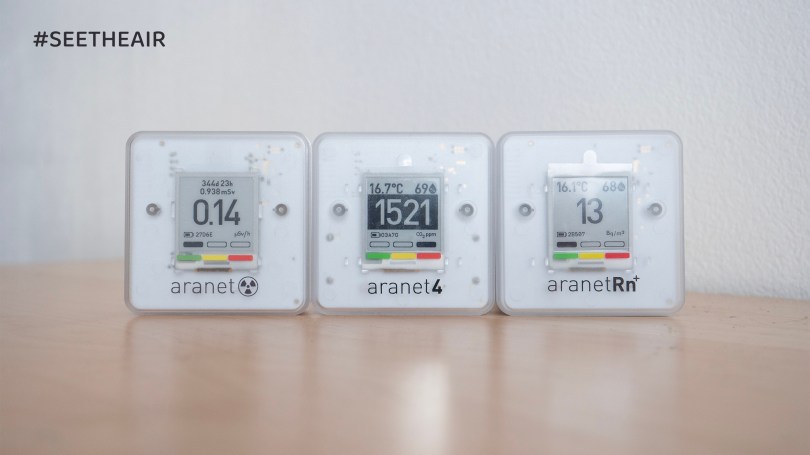
aranet: Comprehensive Environmental Monitoring for a Healthier Home

In an era where indoor air quality and environmental safety are of a high importance, aranet has emerged as one of the leaders in providing reliable and intuitive monitoring solutions. See The Air has thoroughly reviewed several of aranet’s innovative products, each designed to empower individuals with crucial insights into their living spaces. From carbon dioxide levels to radon gas and even radiation, aranet offers peace of mind through precise and accessible data.

Most aranet monitors stand out by providing a holistic view of your environment, often including temperature, relative humidity, and atmospheric pressure alongside their primary measurements. This multi-parameter approach helps users understand the interplay of various factors affecting their indoor comfort and health.

Read More »

The CO2 Debate: A Parallel to the Egg Dilemma

The discussion around carbon dioxide (CO2) in indoor air quality (IAQ) often brings up a fascinating parallel to another long-standing debate: the health effects of eggs.

The Indisputable Value (Eggs & CO2 as Proxies):

Just as eggs are widely recognized for their nutritional value – a powerhouse of protein, vitamins, and minerals – CO2 in IAQ assessment holds an undeniable, practical value. We know that CO2 levels are incredibly useful as a proxy. They effectively signal ventilation rates, which in turn are crucial indicators for the potential airborne transmission of diseases and the presence of odors indoors. In this sense, CO2 is a vital tool for understanding and managing our indoor environments, much like eggs are a staple in many healthy diets.

Read More »

The EU’s New EPBD: Why Indoor Air Quality Needs a Unified Standard

The recently updated Energy Performance of Buildings Directive (EPBD) is a pivotal legislative framework aimed at improving the energy efficiency of buildings across the European Union. While its primary focus remains on energy savings and decarbonization, the revised EPBD now formally recognizes the crucial link between energy performance and Indoor Environmental Quality (IEQ). This update requires member states to address IEQ in their national legislation, ensuring that energy-efficient buildings also support the health, comfort, and well-being of their occupants.


A Framework for IEQ, Not a Rigid Standard

A significant aspect of the updated EPBD is its approach to IEQ. Rather than imposing a single, rigid set of Europe-wide limit values for all IEQ parameters, the directive establishes a flexible framework. This approach acknowledges the vast diversity in climate zones, building types, and occupant needs across the EU. The consensus is that a one-size-fits-all model would be counterproductive, potentially leading to suboptimal outcomes and hindering innovation.

The new EPBD defines IEQ as a comprehensive concept that includes several key domains:

  • Indoor Air Quality (IAQ): Addressing contaminants and ventilation.
  • Thermal Comfort: Pertaining to temperature and humidity.
  • Lighting: Considering both natural and artificial light.
  • Acoustics: Controlling internal and external noise.
Read More »

The Unseen Air Inside Classrooms

In the modern classroom, the focus is often on technology, curriculum, and engagement. However, a critical element that directly impacts student health and learning often goes overlooked: the air they breathe. In many schools, especially older buildings, ventilation systems are inadequate or non-existent. This can lead to a buildup of pollutants and, most critically, an increased risk of airborne infections.

The importance of good air quality cannot be overstated. A well-ventilated space keeps the concentration of airborne particles at bay, including viruses and bacteria. When traditional ventilation falls short, supplementary solutions become essential. This is where air purifiers, both commercial and do-it-yourself (DIY), offer a viable and often more affordable solution.

Read More »

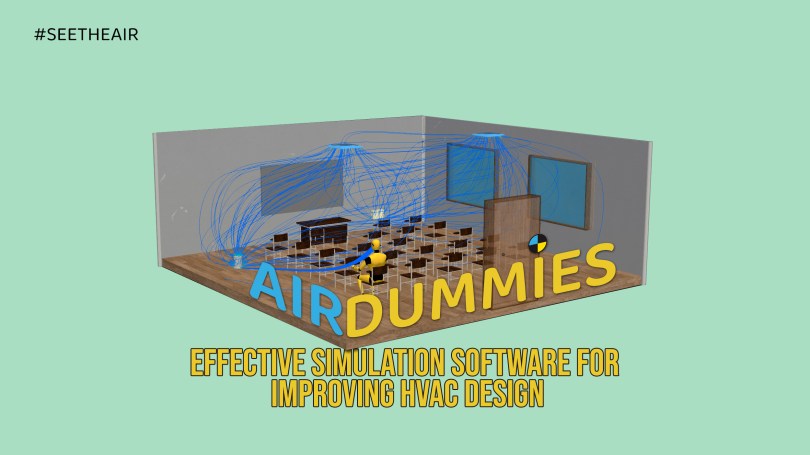
AirDummies: A Breath of Fresh Air for Indoor Environment Simulation

AirDummies emerges as a highly intuitive and powerful Computational Fluid Dynamics (CFD) software, purpose-built to demystify the complex world of indoor air dynamics. Designed with a clear focus on accessibility, it caters to a broad spectrum of users, offering invaluable insights into air patterns within diverse indoor environments, including school classrooms, offices, and domestic settings. Its ability to simulate everything from CO2 concentrations, particle contaminants, and temperature gradients to air velocity makes it an indispensable tool for optimizing comfort, health, and energy efficiency.

AirDummies is built upon the OpenFOAM open-source library. This foundational relationship means AirDummies leverages OpenFOAM’s extensive capabilities for simulating fluid flow, heat transfer, and related phenomena. By utilizing OpenFOAM, AirDummies benefits from a robust, well-validated, and continuously developed CFD engine, providing users with a powerful and flexible platform for their simulation needs.

Read More »

Latvia’s Model for Healthy Learning: The MESH Air Quality Project

Latvia has successfully deployed 14,000 CO2 monitors in hundreds of schools, ensuring safer and healthier learning environments for students and teachers. This nationwide initiative, launched by the Ministry of Education and Science of Latvia and implemented by the technology company MESH, addresses concerns about elevated CO₂ levels, which can contribute to the transmission of pathogens and affect concentration. Such successful projects should serve as a blueprint for others aiming to improve indoor air quality and efficiency in public buildings. The data collected from these monitors is freely accessible to the public via the website https://co2.mesh.lv/home/dashboard, providing transparency and peace of mind for parents.

The project, which involved an initial investment of €3.58M, translates to an approximate cost of 12 euros per student. This cost-effective solution was designed to significantly improve cognitive abilities and health, as well as air quality, for 300,000 children across Latvian schools. Even without adding heating control, facility managers were able to optimize energy use by simply analyzing temperature trends available online – leading to smarter manual adjustments and early savings in several municipalities. Following the project, some municipalities further developed the system by integrating automatic regulation of heat nodes, and in one case, the investment was fully recouped within a single heating season.

Read More »

Understanding AHAM and CADR: Your Guide to Cleaner Indoor Air


In today’s world, indoor air quality is more important than ever.  Dust, pollen, and even wildfire smoke can significantly impact our health and comfort. Air purifiers offer a solution, but navigating the world of product specifications can be confusing. Is product efficiency a sufficient way to rate them, or should we think about effectiveness? This article explains the role of the Association of Home Appliance Manufacturers (AHAM) and the importance of the Clean Air Delivery Rate (CADR) in choosing the right air purifier for your needs, plus an upcoming standard that wants to deliver even better indoor air solutions.  

Understanding CADR

The Clean Air Delivery Rate (CADR) is a crucial metric that indicates how quickly an air purifier can remove specific types of particles from a room.  It measures the volume of clean air delivered by the unit and is expressed in cubic meters per hour (CMH) or cubic feet per minute (CFM). AHAM tests air purifiers for three common pollutants; smoke, dust, and pollen. Note: CMH can be converted to CFM by dividing by 1.7.

Read More »

Benchmarking: The Ultimate Catalyst for Better Air Quality Through Global Standards

This article first appeared on www.goaqs.org

Air quality is an invisible yet pervasive factor influencing our health, productivity, and overall well-being. While awareness of air pollution is growing, translating that awareness into actionable behavioral change remains a significant challenge. The key to unlocking this transformation lies in the power of benchmarking—a potent tool that, when coupled with global standards like the proposed Global Air Quality Standard (GO AQS), can empower individuals and communities to breathe cleaner air.

The Power of Comparison: Learning from Other Fields

The effectiveness of benchmarking as a driver for improvement is not a new concept; it has long been a cornerstone of success in diverse fields. Consider the world of athletics: elite athletes constantly benchmark their performance—speed, strength, endurance—against competitors in their category. This isn’t about shaming, but about identifying areas for improvement. A runner who sees their sprint times lagging behind others in their age group knows exactly where to focus their training. Similarly, in healthcare, patients track metrics like blood pressure or cholesterol against established healthy ranges or anonymized data from similar patient populations. This comparison provides a clear understanding of their health status, prompting necessary lifestyle changes or medical interventions.

A practical, personal example vividly illustrates this point: as an individual tracking my resting heart rate through an app that allows comparison against +56,000 users worldwide. Seeing a “superb” rating, indicating excellent heart aging, provides tangible positive reinforcement and validates my health efforts. Conversely, a less favorable comparison would flag a problematic area, encouraging focused action. This simple yet powerful mechanism of comparison fosters accountability and motivates behavioral adjustments.

Read More »

Review: InBiot Mica Plus – A Comprehensive IAQ Solution for Green Buildings and Beyond

The inBiot Mica Plus is a robust indoor air quality monitor designed squarely for the B2B market, catering specifically to buildings aiming for top-tier Indoor Environmental Quality (IEQ) and compliance with stringent green building certifications like WELL, RESET, and LEED. With a promised 10-year lifespan and minimal maintenance thanks to automatic calibration, the Mica Plus is a compelling long-term investment.

Equipped with a comprehensive sensor suite including Temperature, Relative Humidity, CO₂, TVOC, Particulate Matter, and Formaldehyde, the Mica Plus provides a detailed picture of indoor air conditions. Its connectivity options are equally impressive, spanning basic Wi-Fi to advanced protocols like Power over Ethernet (PoE), LoRaWAN, Sigfox, NB-IoT/LTE-M, and local communication options such as Modbus RTU/TCP/IP, API, BACnet, and MQTT, ensuring seamless integration into existing building management systems.

Read More »