Spectroscopy: The Next Step for Low-Cost Particulate Matter Sensors

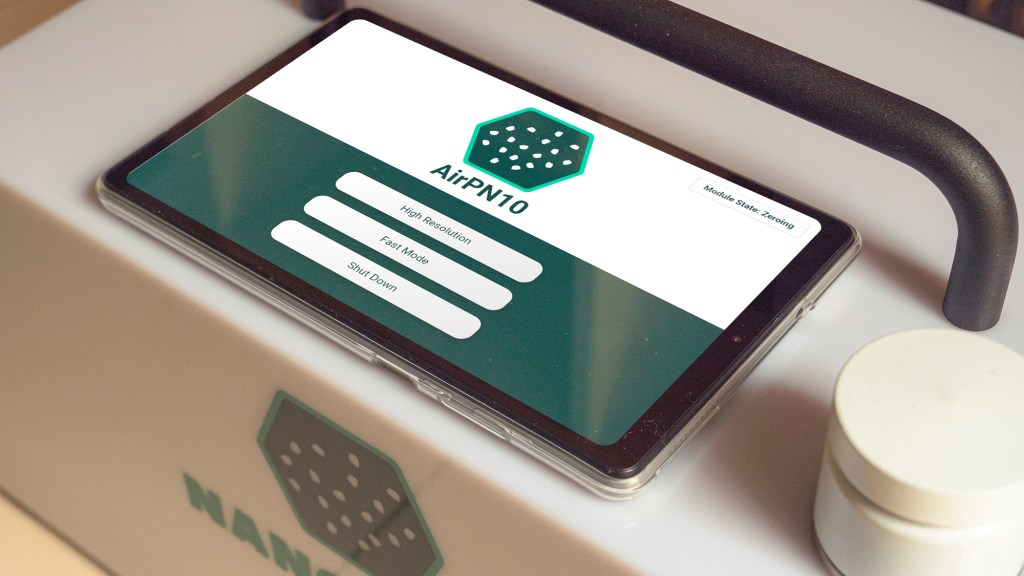
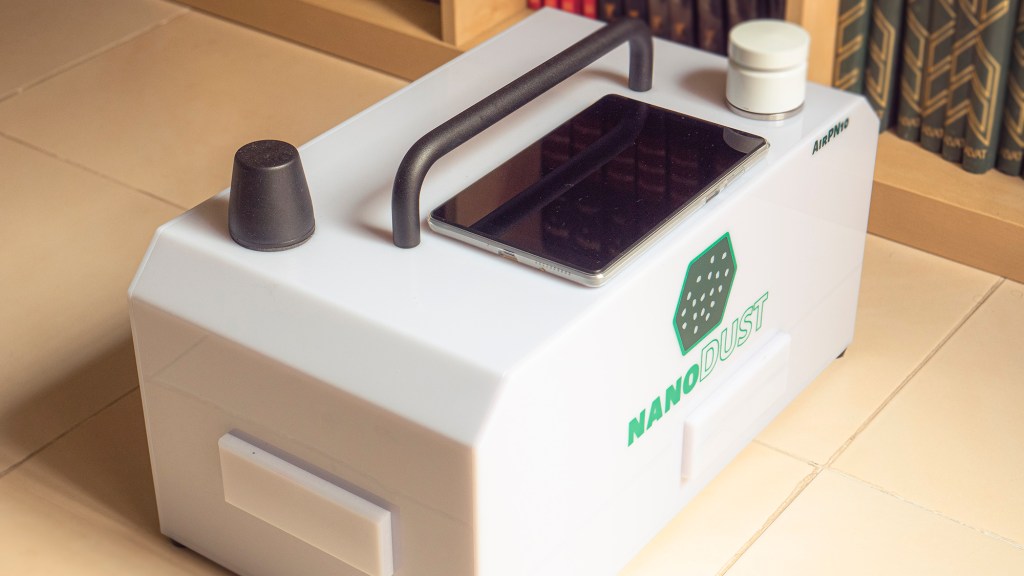
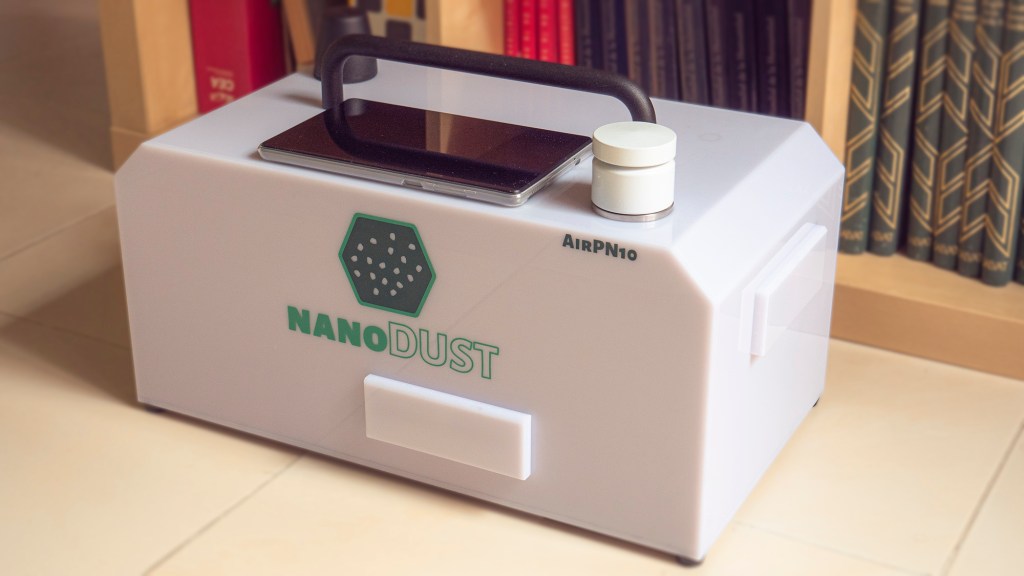
The landscape of ambient air quality monitoring is evolving, driven by the increasing availability of low-cost sensors. While current low-cost particulate matter (PM) sensors, which rely on light scattering, provide valuable data on particle size and number, they lack the ability to determine a particle’s composition. This limitation is a significant hurdle in understanding the true nature and origin of air pollution. The future of affordable PM sensors lies in spectroscopy, a technique that will allow for a more detailed analysis of airborne particles.

Read More »

aranet: Comprehensive Environmental Monitoring for a Healthier Home

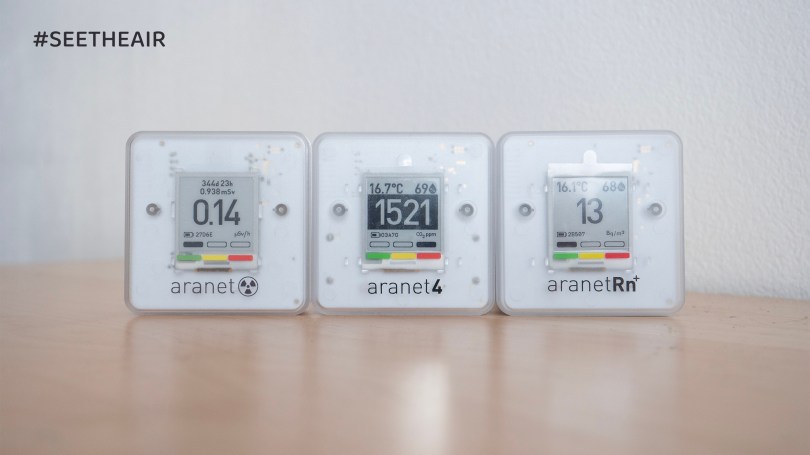
In an era where indoor air quality and environmental safety are of a high importance, aranet has emerged as one of the leaders in providing reliable and intuitive monitoring solutions. See The Air has thoroughly reviewed several of aranet’s innovative products, each designed to empower individuals with crucial insights into their living spaces. From carbon dioxide levels to radon gas and even radiation, aranet offers peace of mind through precise and accessible data.

Most aranet monitors stand out by providing a holistic view of your environment, often including temperature, relative humidity, and atmospheric pressure alongside their primary measurements. This multi-parameter approach helps users understand the interplay of various factors affecting their indoor comfort and health.

Read More »

Review: µCritAir Development Kit – Gamifying Our Way to Better Indoor Air

For years, I’ve been advocating for the integration of gamification into everyday tools to drive meaningful behavioral change, especially concerning something as vital yet often invisible as indoor air quality. We need engaging ways to keep people motivated to understand and improve their environments. So, when I encountered the µCritAir (it actually found me), I was immediately intrigued. This isn’t just another air quality monitor; it’s an experiment in engagement, using a digital pet – a µCritter – whose health depends directly on the air you breathe. Keep your air clean, and your critter thrives. Let it worsen, and its health suffers. It’s a compelling, tangible connection between data and consequence.

Development Kit

It’s important to set expectations correctly: the µCritAir is currently available as a Development Kit. This isn’t a polished, mass-market product yet. Instead, it’s aimed squarely at enthusiasts, early adopters, and tinkerers who enjoy being part of the development journey. Yes, this means you’ll encounter some unpolished aspects, perhaps a bug here or there, or features still under active development. However, this is also its strength for the right audience. The team behind µCritAir is clearly passionate and actively working on both software and hardware improvements. They genuinely value the feedback from their early users, creating a collaborative dynamic that’s exciting to be a part of.

Read More »

Review: M5Stack K131 AirQ – All in One Portable Air Quality Monitor

The M5Stack K131 AirQ is an all-in-one air quality monitor designed for easy and comprehensive monitoring of your environment. It is a portable air quality monitor and an ideal companion for those who want to track their exposure to environmental pollutants.

Characteristics

Pros:

  • Multi-sensor: It goes beyond basic temperature and humidity readings, offering detailed readings on PM1.0,PM2.5, PM4, PM10 particles, VOCs, NO2, and CO2 concentration. This gives you a holistic view of your air quality.
  • E-ink display: The easy-to-read e-ink display provides clear visuals of the monitored metrics, even in low light conditions. Even in a power outage, the last screen will still be visible.
  • Versatile mounting: LEGO mounting holes, magnets, and detachable hanging ears offer various installation options for different environments.
Read More »

From Boom to Bust: The Great IoT Air Quality Recession

The once booming Internet of Things (IoT) air quality monitoring market is facing a harsh reality check. Fueled by a surge in AI startups attracting investments and a subsequent saturation of low-cost air quality monitors, the industry is experiencing a period of upheaval. This downturn, dubbed “The Great IoT Air Quality Recession,” is forcing companies to adapt or face extinction. I see many high-profile executives leaving previously thought innovative startups in the realm of air quality in search of a more “stable” future.

A Wave of Investment and Sensor Saturation

AI startups like ChatGTP and similar, promising to leverage the power of machine learning to generate content or analyze data, became investor darlings. This new influx of cash is fueling the decline of IoT low-cost air quality solutions.

After the COVID-19 pandemic, the market quickly became saturated with low-cost monitors that promised that will fix indoor and outdoor environments. Buildings were filled with cheap monitors, but actionable insights remained scarce. The promised AI-powered analysis, in many cases, failed to materialize. Consumers were left with a plethora of data points with no clear understanding of what it all meant or what to do.

Read More »

Outdoor Air Quality Monitors 2023Q4

What’s new? Well, some clean up of discontinued monitors and some updates. In this list you will find ambient air quality monitors for experts who want to supervise and monitor air pollutants in cities and industrial sites, and commercial outdoor air quality monitors for homeowners who want to check the air quality outside their houses/apartments. 

Air pollution can cause a range of health problems, including respiratory and cardiovascular diseases (CVD), and even premature death. By monitoring ambient air quality, governments and individuals can take steps to reduce exposure to harmful pollutants and protect public health.

Read More »

Dyson Zone an Unnecessary Product or Innovation?

I wanted some time to pass before I write my thoughts on Dyson’s new product called “Zone”.


For those who don’t know who Dyson is, Dyson is a company known for its innovative and unique products (mainly vacuum cleaners) and it has recently released a new product that combines two seemingly unrelated items: headphones and air purifiers. The Dyson Zone headphones are a pair of noise-canceling Bluetooth headphones with air purification technology built in. I don’t want to focus on the headphone but on the purification capabilities for individuals.

Points

1st Point: We live in a society where individualism becomes stronger and stronger over time and instead of fixing the air pollution for all we are thinking about how to protect only ourselves, not even our kids or family. The device is not capable of stopping pollutants from getting into the wearer’s body and a n95 mask is more effective because it seals better.

Read More »

Tamagotchi for Air Quality

Do you remember the Tamagotchi from the 90s? A small and portable digital pet that you had to take care of in order to keep it “alive”?

Wouldn’t it be great to create the same pet but with the only difference that it breathes air and air quality information is taken into account in order to determine its survival chances? I think it will engage people and help them not to get accustomed to the presence of poor AQ. Poor air quality can be due to the presence of particle pollution but also high CO2 levels indoors which will make the character sleepy.

A while ago, I wrote a similar article on Gamification and Air Quality. Same approach but even more fun! Kids will definitely try to keep the character alive, and it doesn’t even require hardware as it can be an app on your phone. Outdoor air quality data are available all over the world, so there is no problem there, but we need to think about how to implement indoor AQ data into the algorithm that calculates Tamagotchi’s health. Remember we spend most of our time indoors.

In this case, a small wearable monitor would be the best. However, 3rd party companies with Indoor AQ monitors will need to give access to the application that runs the companion character. That way, the character can be updated and engage with the user more often based on real data.

A software service will rise here as the company that decides to commercialize such a feature will have to build something similar to what Amazon, ecobee, or Apple with HomeKit provides in order to feed the app with air.

I don’t like the name Tamagotchi a lot, plus there are some copyright issues there, so let’s name our character Nicholas from the titular character of my kid’s books. Nicholas has superpowers and can see particulate pollutants. I cannot imagine a better companion!

Wood Burning Patterns!

I live in an area where wood burning is an unfortunate “cozy” habit for the people around me. So, I decided to see if patterns appear after monitoring the ambient air quality for 30 days in order to identify if there is any window that will allow me to open the windows and get some fresh & clean air. For the sake of simplicity, I will use only PM2.5 values.

I don’t mind if I have to wake up at 3:00 AM in order to allow some outdoor air to come inside and dilute some VOC and CO2 that build up. Indoors, PM2.5 concentrations are kept well under 5μg/m3 because I run the air purifiers 24/7. By the way in a recent, poster the position of the air purifier inside the house plays an important role in how well particles are captured.

Anyway, let’s jump into the data I collected and analyzed.

Read More »

Review: Canāree by Piera Systems

This is a quick review of the Canāree. An indoor air quality monitor that you can carry around thanks to its compact size.

Specifications

  • 7-Bin Optical Particle Counter Sensor (PM1.0/PM2.5/PM10)
  • Volatile Organic Compounds (VOC)
  • Temperature Sensor
  • Humidity Sensor
  • Air Pressure Sensor
  • USB-A
  • WiFi Module
  • RGB LED AQ Indicator
Read More »