The Silent Lifeline of IoT: Why Compression is the Future of Air Quality Monitoring

For years, the Internet of Things (IoT) conversation has been dominated by sensors, cloud platforms, and the flashier world of AI analytics. While AI remains the current “buzzword,” the reality is that millions of IoT devices are already quietly working in the background, providing the essential sensor data that powers our modern world. However, as these deployments mature and scale, a critical bottleneck has emerged: the cost and physical limits of data transmission.

In my experience with Air Quality Monitoring (AQM) solutions, I’ve seen this play out repeatedly. Projects often aim to transmit high-frequency, continuous air quality measurements over long distances, only to hit a wall. Whether it’s the strict payload size limits of LoRaWAN or the spiraling costs of high-frequency transmissions over LTE/NB-IoT, the “raw data” approach is no longer sustainable.

The Problem with “Raw” Transmission

Most IoT data, especially from air quality sensors, is highly structured and repetitive. Devices often transmit variations of the same environmental measurements over and over. Sending this information raw ignores a simple reality: transmission is expensive, not just in terms of data plans, but in battery life, maintenance, and long-term operational costs.

As the industry matures, we are seeing a shift in mindset. Compression is no longer just a low-level technical detail; it is becoming a foundational technology because it makes large-scale deployments sustainable.

Three Pillars of IoT Compression

Integrating lossless compression directly onto the device, rather than relying on the cloud, transforms it into a perpetual efficiency engine. This creates several vital second-order effects:

  • System Resilience: Fewer transmissions lead to less network congestion and fewer collision points. This reduces “chatter” and makes systems like city-wide AQM grids significantly more reliable.
  • Extended Battery Life: Radio transmissions are the primary power drain for most IoT devices. By reducing how often a device needs to “speak,” we can extend battery life dramatically, reducing the need for expensive “truck rolls” to replace batteries in the field.
  • Enhanced Data Quality: Paradoxically, compression allows you to collect more data. By transmitting more intelligently, devices can sample at higher frequencies to capture micro-events and short-lived anomalies that would otherwise be lost due to bandwidth constraints.

Real-World Efficiency: The Up-to 87% Reduction

The potential for this technology is best illustrated by modern encoders capable of high-ratio reduction. For instance, testing with 50 timeseries payloads (32 bytes each) shows a raw size of 1600 bytes being compressed down to just 202 bytes—an 87.4% reduction (Source: Zetako Lab Demo Tool). This level of efficiency allows for high-granularity monitoring even on restricted protocols like LoRaWAN.

MetricRaw DataCompressed Data
Payload Size1600 Bytes202 Bytes
Reduction0%87.4%
IntegrityN/ASHA256 Verified

Conclusion

The future of IoT won’t be defined by who collects the most raw data, but by who uses fewer resources to learn more. In critical infrastructure like healthcare, transportation, and air quality monitoring, these efficiency choices compound.

Compression is no longer just a “feature”, it is a lifeline. Without it, IoT cannot scale sustainably to meet the demands of our data-driven future.

AirSpot Review: The Wearable CO2 Monitor That Delivers Real-Time Clarity

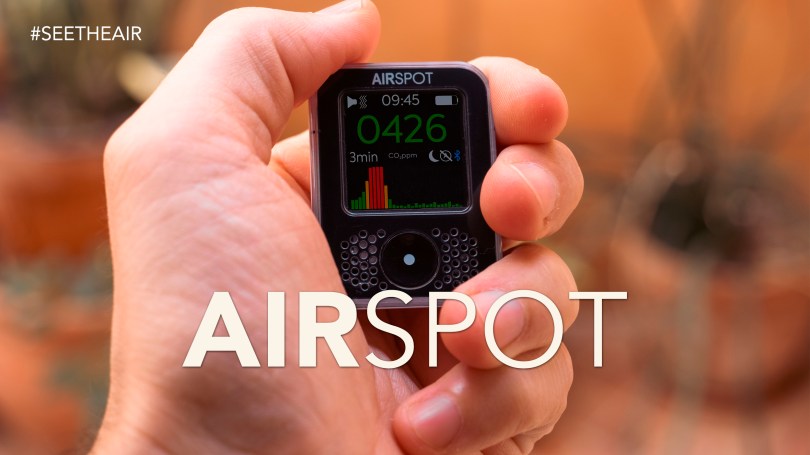
The world of air quality monitoring has long been dominated by bulky, desk-bound units. The AirSpot, a revolutionary small CO2 monitor, shatters that paradigm. Given to me by the CEO of The Safer Air Project, this device is not just a monitor—it’s a truly wearable environmental sensor that brings crucial air quality data right to your wrist or backpack.

Design, Portability, and Hardware

The AirSpot’s most immediate selling point is its diminutive size and featherlight weight. Measuring a mere 3.6cm x 4.8cm x 1.15cm and weighing only 17g (0.6 ounces), it is, to my recollection, the smallest CO2 monitor currently available. This size isn’t just a gimmick; it’s the foundation of its usability.

The device’s true genius lies in its ecosystem of accessories. AirSpot is unique in offering a wide range of mounting options, including a wristband that makes it genuinely wearable. I personally prefer the carabiner-style key ring case, which allowed me to easily clip it onto my backpack or belt—perfect for on-the-go monitoring.

Read More »

aranet: Comprehensive Environmental Monitoring for a Healthier Home

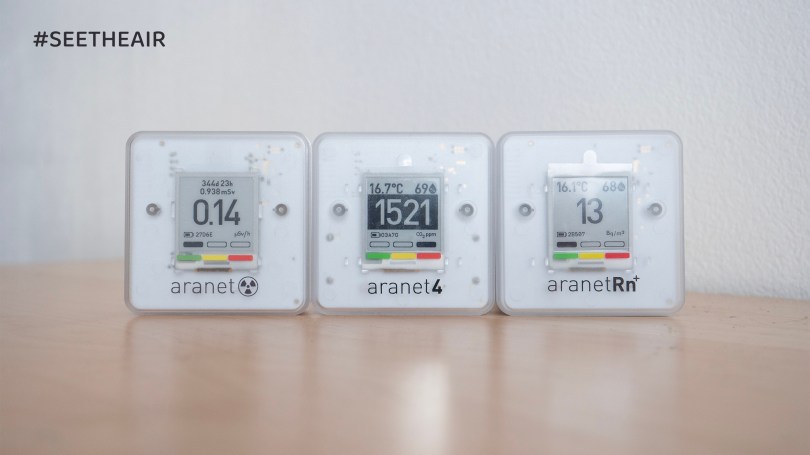
In an era where indoor air quality and environmental safety are of a high importance, aranet has emerged as one of the leaders in providing reliable and intuitive monitoring solutions. See The Air has thoroughly reviewed several of aranet’s innovative products, each designed to empower individuals with crucial insights into their living spaces. From carbon dioxide levels to radon gas and even radiation, aranet offers peace of mind through precise and accessible data.

Most aranet monitors stand out by providing a holistic view of your environment, often including temperature, relative humidity, and atmospheric pressure alongside their primary measurements. This multi-parameter approach helps users understand the interplay of various factors affecting their indoor comfort and health.

Read More »

Key Insights from ASIC 2025 in Thailand: Bridging the Indoor-Outdoor Divide

The recent Air Sensors International Conference (ASIC) 2025, held in the vibrant backdrop of Thailand, offered a profound opportunity to delve into the evolving landscape of air quality monitoring. As an attendee, several key themes emerged that highlight both the progress made and the remaining challenges in our quest to understand the air we breathe.

The Indoor-Outdoor Air Quality Discrepancy

One striking observation from the conference was the apparent disparity in research emphasis between indoor and outdoor air quality monitoring. While outdoor environments have benefited immensely from the widespread adoption and scrutiny of low-cost air quality monitors, indoor spaces appear to lag in comparison. The primary reason for this imbalance lies in the availability of robust reference instrumentation. Governments worldwide have invested in publicly air quality stations equipped with reference-grade instruments, providing invaluable benchmarks for normalization and validating low-cost sensors in a variety of outdoor conditions. This has not only accelerated the development of accurate low-cost monitors but also fostered the creation of sophisticated correction algorithms.

Read More »

Review: µCritAir Development Kit – Gamifying Our Way to Better Indoor Air

For years, I’ve been advocating for the integration of gamification into everyday tools to drive meaningful behavioral change, especially concerning something as vital yet often invisible as indoor air quality. We need engaging ways to keep people motivated to understand and improve their environments. So, when I encountered the µCritAir (it actually found me), I was immediately intrigued. This isn’t just another air quality monitor; it’s an experiment in engagement, using a digital pet – a µCritter – whose health depends directly on the air you breathe. Keep your air clean, and your critter thrives. Let it worsen, and its health suffers. It’s a compelling, tangible connection between data and consequence.

Development Kit

It’s important to set expectations correctly: the µCritAir is currently available as a Development Kit. This isn’t a polished, mass-market product yet. Instead, it’s aimed squarely at enthusiasts, early adopters, and tinkerers who enjoy being part of the development journey. Yes, this means you’ll encounter some unpolished aspects, perhaps a bug here or there, or features still under active development. However, this is also its strength for the right audience. The team behind µCritAir is clearly passionate and actively working on both software and hardware improvements. They genuinely value the feedback from their early users, creating a collaborative dynamic that’s exciting to be a part of.

Read More »

Personal Exposure: Tracking Air Quality with Portable Monitors – 6 Months

This article documents my personal experiment tracking air quality exposure for 6 months using two portable, low-cost monitors: one for PM2.5 (particulate matter) and the other for CO2 (carbon dioxide). The experiment aimed to gain insights into personal exposure levels and understand the impact of lifestyle and environmental factors on air quality.

Read More »

Review: M5Stack K131 AirQ – All in One Portable Air Quality Monitor

The M5Stack K131 AirQ is an all-in-one air quality monitor designed for easy and comprehensive monitoring of your environment. It is a portable air quality monitor and an ideal companion for those who want to track their exposure to environmental pollutants.

Characteristics

Pros:

  • Multi-sensor: It goes beyond basic temperature and humidity readings, offering detailed readings on PM1.0,PM2.5, PM4, PM10 particles, VOCs, NO2, and CO2 concentration. This gives you a holistic view of your air quality.
  • E-ink display: The easy-to-read e-ink display provides clear visuals of the monitored metrics, even in low light conditions. Even in a power outage, the last screen will still be visible.
  • Versatile mounting: LEGO mounting holes, magnets, and detachable hanging ears offer various installation options for different environments.
Read More »

Are Low-Cost Sensors Random Number Generators?

Low-cost sensors aka LCS are commonly used in an effort to measure air pollutants like particulate matter all around the world, indoors and outdoors. Their low price has driven a lot of interest from many communities. Academics, experts, and consumers have embraced them because they are cheap to get and easy to embed in an IoT solution.

Countless air quality monitors use low-cost sensors (mostly from China) and although they are great as educational tools, their low accuracy leads to wrong conclusions most of the time.

Wrong conclusions are as bad as misinformation or fake news. Air pollution doesn’t kill instantly (most of the time) and it doesn’t create severe health issues in the short-term, but after an extended period or at least when we notice the consequences. One exception is carbon monoxide (CO) as it can kill people instantly and this is the reason we don’t see many low-cost CO sensors. There are some regulations that protect the consumers. Moreover, companies don’t want to take responsibility by using a low-cost CO sensor because they can get sued easily by the family of a victim when the air quality monitor won’t notice the increase of the gas indoors. Liability!

Read More »

Outdoor Air Quality Monitors 2023Q4

What’s new? Well, some clean up of discontinued monitors and some updates. In this list you will find ambient air quality monitors for experts who want to supervise and monitor air pollutants in cities and industrial sites, and commercial outdoor air quality monitors for homeowners who want to check the air quality outside their houses/apartments. 

Air pollution can cause a range of health problems, including respiratory and cardiovascular diseases (CVD), and even premature death. By monitoring ambient air quality, governments and individuals can take steps to reduce exposure to harmful pollutants and protect public health.

Read More »

Low-Cost Sensors, Do They Hold Up To The Hype?

Low-cost sensors have helped communities see the air quality, but experts are still debating whether data are accurate or not. In many cases, monitor manufacturers have to turn to data manipulation in order to get accurate results, but it is time to step up by deploying better sensor technology.

The technology exists and we should take advantage of it as soon as possible. Almost always, the first thing I am asked about sensors is how accurate they are. Well, this question has a very tricky answer. In many cases, we measure accuracy by comparing a low-cost sensor with a reference monitor, which worths thousands of dollars. However, the comparison is not always fair. For example, if the XYZ company sends their monitor for evaluation during a high humidity season then unless they have a heater or dryer at the inlet to remove humid droplets of water from the samples before measurement then the results from the correlation would be catastrophic.

Read More »