AQ Monitors meet Apple HomeKit

I really like to have all AQ Monitors and other devices connected to one place in order to make my life easier when I try to figure out what is going on in my house. I am an iOS user which means this post doesn’t concern Android users, however, I will advise you to stick around and read the benefits of having Apple HomeKit.

Not all AQ Monitor manufacturers support HomeKit and here comes HomeBridge which is a platform to bring non-supported devices to Apple’s ecosystem. There are only a few AQM manufacturers that officially support HomeKit, like Kaiterra, Eve and QingPing.

The community of the HomeBridge has allowed others to take advantage of the platform and make the user experience even better by porting many more AQMs into HomeKit.

Which AQMs support HomeBridge?

  • Airthings
  • PurpleAir
  • Awair
  • Sensor Community (aka Luftdaten)
How to set up HomeBridge?

Read More »

Review: Kaiterra Sensedge Mini for Business and Green Buildings

There is a demand for Green Buildings lately, which focus on the comfort and health of the building’s occupants. Energy efficiency was the original target for most of the green buildings certifications programs, but they have evolved, and they now focus on many more aspects of the indoor environments. Indoor Air Quality has become the number one priority for many green building certifications, and in order to be certified, there are strict rules for ventilation and AQ monitoring.

Here comes Kaiterra Sensedge Mini, which is a RESET certified indoor air quality monitor. The Sensedge Mini is a calibrated real-time monitor that has to be placed in buildings that wish to obtain a Green Buildings certification.

The Sensedge Mini uses two removable sensor modules to replace the traditional, costly calibration processes for long-term accuracy with minimal maintenance.

Read More »

Things no one talks about: Flatulence and Indoor Air Quality

Have you ever wondered if the gases we produce as humans are toxic to those who live with us?

It is a taboo but I think we all have thought about it at one moment in our lives. Scientifically known as flatus but commonly known as a fart, many of us even use funny expressions to cope with this uncomfortable situation they create like Acid-rain maker, After the thunder comes the rain, Baking brownies, Death Breath, Fire a stink torpedo, pass the gas, etc…

Let’s take a step back and analyze the chemical composition of a flatus. More than 99% of the volume of flatus is composed of non-smelly gases. These include oxygen (O2), nitrogen (N), carbon dioxide (CO2) hydrogen (H) and methane (CH4), keep in mind, methane is a colorless, odorless gas and nitrogen is not produced in the gut, but it is a component of environmental air. The remaining trace (<1% volume) compounds give flatus its smell which comes from a combination of volatile sulfur compounds. Hydrogen sulfide (H₂S), methyl mercaptan (CH4S), dimethyl sulfide (C2H6S), dimethyl disulfide (C2H6S2), and dimethyl trisulfide (C2H6S3).Read More »

Air Quality Monitors – Comparison List 2020 Q4

It has been a while since the last time I updated the list with all the air quality monitors in the market. Just to be clear, there are a lot more Chinese knockouts that I haven’t included because they don’t have any support from the companies either they offer something unique.

This time the list includes some Pro-level indoor AQMs like the elichens
Indoor Air Quality PRO Station
and the NEMo XT – Indoor.

  • Prices may vary during time.
  • Some Companies don’t specify on their data sheet if their devices are capable to measure PM2.5 or PM10 and they just mention the word dust.
  • Some other companies say: Our product goes beyond CO₂ by analyzing substances that directly affect your well-being by measuring VOCs. They aren’t clear if their devices have CO₂ sensor.
  • Some of the devices are AQI Monitors and Air Purifiers Combo. On this list you can only read the features as an AQI monitor.

CO2 Monitors for Indoor AQ Monitoring and Management during the COVID-19 Pandemic

The pandemic has made us aware of the indoor air quality. We have learned that it is important to monitor the carbon dioxide (CO2) concentration inside a room for two reasons: To keep productivity up and to reduce the chances of infection especially, when a room is occupied by many people like in classrooms, offices, etc.

A CO2 monitor can help us estimate the risk of infection of the coronavirus as a high concentration number (above 900 ppm) can indicate that too many people are inside a room, and the air hasn’t been renewed as frequently as the regulations indicate, in some countries.

There are a lot of indoor CO2 monitors in the market, I have reviewed many of them, but I thought it is useful to gather them all together in one place and make your life easier.

Read More »

Series of Innovators: SPEC Sensors

Introduction

SPEC Sensors was founded in 2012 in the USA (California) by Dr. Joseph Stetter and Ed Stetter. Their gas sensors, analog and digital, are one of a kind as the technology and hard work has allowed them to minimize the sensor size to only 20x20x3 mm in order for gas sensing to become a part of our everyday lives. The company has foreseen that sensors of all types are going to be integrated into smartphones and other wearable devices, becoming an integral part of our everyday lives and building the Internet of Things (IoT).

IoT low-cost sensors are in my DNA as I believe they will allow us to understand environmental issues otherwise, we would have dismissed or we would not be aware.

Let’s read together what they have to share with us and reach a conclusion at the end.

Interview

  • Tell us a bit about your motivation in developing air quality sensors?

We saw the need and opportunity for low cost electrochemical sensors with good performance – before SPEC, high performance sensors were too expensive and too big to enable new applications in wearables and distributed monitors. SPEC was born out of the research driven by Eco Sensors / KWJ Engineering, Inc. led by Dr. Joseph Stetter.  We were able to build SPEC Sensors using modern technology in a new high performance plastic package.Read More »

Review: Airthinx IAQ for Homeowners

This review is dedicated to the end-users (homeowners) as I present the tools (Smartphone app) and functionalities of the device for the average user and some basic features on the dashboard. Later on, I will review the same monitor for businesses where we will have the chance to see and analyze the more advanced tools which are present on the dashboard for all.

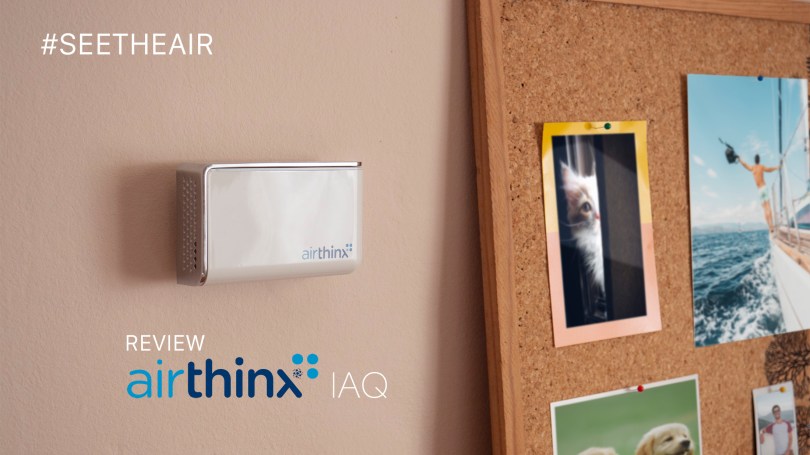
Airthinx IAQ is an Air Quality Monitor (AQM) that was built for experts with many communication protocols in order to ensure that users will be able to access air quality measurements from anywhere and air quality sensors that matter in the indoor environment.

Technical Specifications

  • PM1 / PM2.5 / PM10 Sensors (0~500 μg/m3)
  • CO2 Sensor (0~3000 ppm)
  • CH2O Sensor (0~1 mg/m3)
  • TVOC Sensor (1-10ppm of EtOH) (0-1ppm of Isobutylene)
  • Temperature Sensor (-10-85°C)
  • Humidity Sensor (25-90 %RH)
  • Barometer Sensor (300-1100 hPa)
  • Cellular (GSM/GPRS/EDGE/UMTS/HSPA)
  • WiFi (802.11 b/g)
  • Bluetooth 4.0
  • Zigbee
  • GPS
  • Accelorometer 16g (13-bit resolution)
  • 2 Micro-USB Power Ports

Read More »

uHoo – Virus Index (Update)

Some of you have contacted me because you wanted to know my opinion on uHoo’s latest update. Since June 2020, uHoo has implemented a Virus Index which is a patent-pending technology that uses the power of air quality data to help you know how suitable your close environment is for a virus to survive and spread.

uHoo is an air quality monitor that features nine environmental and pollution sensors. If you want to learn more, read my review here.

uhoo app 2020 virus index

Read More »

UV Filtration During COVID-19 with BRISE C200 Air Purifier (English/Español)

(Scroll down for the Spanish version/Desplácese hacia abajo para la versión en español)

Two years ago I reviewed the BRISE C200 and I have been using it everyday but I had never thought before that the UV sterilization process will come so handy. It provides an extra layer of protection in a house or in small office especially during this covid-19 pandemic.

I don’t know about your experience during the lockdown, but mine was quite frustrating when I had to go out for grocery shopping and return home or even when I ventilate my house. A lot of things had been written about the SARSCoV2 virus, like that it could survive on clothes, on surfaces (keys, phones, money, etc) and that it can be an airborne pathogen.

Airborne means that a virus is transmitted between people through respiratory droplets and contact routes.Read More »

Could an Air Quality Monitor save your life when it is paired with a Smart Light bulb?

Have you ever wondered how to use the RGB LED bulb you have purchased in a more productive way? Sure, you can control the lights via your phone but this is not “smart” plus if you manage your lights with your phone it may take longer to turn off and on a light fixture than just by hitting the switch.

The obvious is to set up a visual (light) indicator each time the air quality is poor in your house, for example, when PM2.5 is high, then the lights flash twice with orange colour. However, the ultimate way to give real value to a smart light bulb is when the combination of an AQ monitor and a light bulb can save your life in a real-life threatening situation. How?

Read More »