Outdoor Air Quality Monitors 2023Q4

What’s new? Well, some clean up of discontinued monitors and some updates. In this list you will find ambient air quality monitors for experts who want to supervise and monitor air pollutants in cities and industrial sites, and commercial outdoor air quality monitors for homeowners who want to check the air quality outside their houses/apartments. 

Air pollution can cause a range of health problems, including respiratory and cardiovascular diseases (CVD), and even premature death. By monitoring ambient air quality, governments and individuals can take steps to reduce exposure to harmful pollutants and protect public health.

Read More »

Interview – Airport Series: #2 Living With Airport Pollution: A Remote Community’s Struggle with Military Operational Area

For privacy reasons the name of the interviewee has been changed.

Jake lives in a remote desert community located in a Military Operational Area (MOA) in the southwestern United States. His town is 90-120 miles away from two major military airports that are the main source of noise and air pollution in our area.

His family moved there in 2021, attracted to the quiet and scenic landscape. However, they soon noticed increased aviation activity, especially overnight flights that interrupt sleep multiple times a night. Although he can’t confirm an increase in flights, the noise pollution seems worse, with persistent droning lasting for hours in the early mornings and evenings. The noise easily penetrates our brick home.

The worst pollution comes from noisy C130s cargo planes, fighter jet passes, and helicopters, often conducting night training and looping for hours across vast distances. He has calculated these planes can be heard indoors from over 20 miles away. The noise affects his sleep, requiring daytime naps which in turn impact his work. He has experienced vestibular symptoms and severe vibration sensitivity both of which were induced by low-flying military helicopters at his old residence where he had around 10 flyovers a day. Each flyover could be multiple helicopters. from the noise exposure. Weekend nights are a respite they look forward to.

Read More »

Review: INKBIRD IBS-TH5 − All about Indoor Environmental Quality

The INKBIRD IBS-TH5 is a modern device designed to monitor and control indoor environmental conditions. With robust features and a user-friendly interface, this gadget is becoming a staple in homes and office spaces alike. In this review, we’ll delve into its technical characteristics, the importance of Indoor Environmental Quality (IEQ), and key terms such as relative humidity, vapour-pressure deficit, and dew point.

Technical Characteristics of INKBIRD IBS-TH5

INKBIRD IBS-TH5 is a 2.4 GHz WiFi-enabled temperature and humidity monitor. It features a large and clear e-ink display, showing real-time data, and the ability to connect to your smartphone via a dedicated app. This allows users to monitor and possibly adjust their indoor climates from anywhere, at any time.

  • 3.71″ e-ink Display
  • Temperatures Accuracy: ±0.36°F or ±0.2°C
  • Humidity Accuracy: ±1.8% RH
  • Built-in 2000mAh rechargeable battery
  • Built-in beeper
  • USB-C
Read More »

Interview – Airport Series: #1 The Growing Concerns of Van Nuys Airport and Its Impact on Local Community

I recently learn from Sue, a resident of Los Angeles, who is living in the shadow of the Van Nuys Airport (VNY) that the air quality of the area and mental health of the residents have been affected dramatically. She shared with me the growing concerns regarding the environmental and health impacts of the airport’s operations, particularly due to the increasing number of private and charter jets.

According to Sue over the past few years, the VNY has essentially transformed into a commercial airport due to the influx of private and charter jets. This brings with it an incessant noise pollution problem, as there’s no curfew and flights come in all day and night. And, they are under the most congested airspace in the world, with five airports in the LA area, all converging over them.

Although the airport has been around since the 1920s the changes, in recent years are drastic. Sue lives in that area since mid 80’s. They are now literally feet away from dozens of jets that emit toxic fumes into their homes, schools, and lungs. It was not like this up until a few years ago.

Read More »

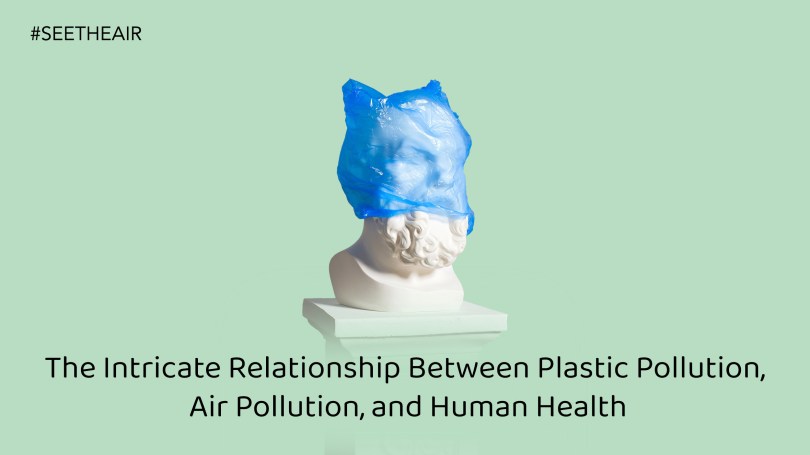
The Intricate Relationship Between Plastic Pollution, Air Pollution, and Human Health

The world is grappling with an abundance of environmental challenges, two of the most critical being plastic pollution and air pollution. Although seemingly disparate, these two issues are more intertwined than we might think, especially when considering their impact on human health. Recent studies have shed light on the presence of microplastics in the human body, a discovery that links plastic pollution and air pollution in a direct and alarming way.

Understanding Plastic and Air Pollution

Plastic pollution refers to the accumulation of plastic objects and particles in the Earth’s environment, including our oceans, lands, and even the air we breathe. This pollution takes many forms such as bags, bottles, microbeads, and tiny particles known as microplastics (less than 5mm in size).

Read More »

Gender Differences in Exposure and Health Risks of Air Pollutants

Air pollution, a significant environmental health issue, affects everyone. However, there is growing research evidence showing that the health effects of air pollution may not be the same for men and women. This difference is driven by biological, socio-economic, and occupational factors that can influence exposure levels and health outcomes.

Biological Differences

In terms of biological differences, women have a higher percentage of body lipids than men, which can accumulate fat-soluble pollutants. This can lead to a higher concentration of certain pollutants in women, potentially increasing their risk of health effects. For example, a study published in the journal ‘Environmental Research’ in 2018 showed that women exposed to polycyclic aromatic hydrocarbons (PAHs), a group of chemicals released from burning coal, oil, gasoline, and tobacco, had higher levels of DNA damage than men exposed to the same levels of PAHs.

Read More »

Interview with Change The Air Foundation

Our outdoor and indoor air is filled with particulate matter (PM) that consists of tiny solid and liquid particles that are often invisible to the naked eye. 

But just because we can’t always see these particles, doesn’t mean they aren’t there and negatively affecting our health. In fact, the tinier the particle, the deeper into our bodies it can go! 

The good news is there are steps you can take to improve your indoor air quality.

Be sure to check out this interview to learn more about how everything from your gas stove to your humidifier can be contributing to poor indoor air quality and how you can take steps today to improve the air inside your home!

Read More »

Indoor Air Quality Monitors – Comparison List 2023 Q3

I know, I know I haven’t updated the list for quite a long time. The main reason is the lack of innovation lately. Also, many companies have shifted their attention and they have removed their products from the market as they don’t have the desirable sales. It doesn’t make sense for new companies to reproduce the same air quality monitors with the same sensors and technology inside over and over again.

I feel the saturation is noticeable nowadays. However, a change is happening and I see it unfolds in front of my eyes.

Anyway, remember there are two tabs; Air quality monitors for consumers (B2C) and for businesses (B2B). As always, I stay away from knockoffs and cheap products. An air quality monitor needs to function properly for 5 to 10 years depending the sensors − gas sensors tend to have a shorter lifespan. Keep in mind, it doesn’t matter how many sensors an air quality monitor has as long as the implementation has be done correctly.

Read More »

Understanding ASHRAE Standard 241: A Boon for Building Occupants

Understanding ASHRAE Standard 241: Control of Infectious Aerosols

ASHRAE, the American Society of Heating, Refrigerating and Air-Conditioning Engineers, is a global professional organization committed to advancing the arts and sciences of heating, ventilation, air conditioning, refrigeration and their allied fields. They have recently introduced a new standard, ASHRAE 241-2023, which focuses on the ‘Control of Infectious Aerosols.’ This new standard is a significant step forward in addressing the transmission of airborne diseases in non-healthcare settings.

The Genesis of ASHRAE 241

The genesis of ASHRAE 241 was during the COVID-19 pandemic, where there was a widespread realization that ventilation rates in non-healthcare settings were not designed to mitigate airborne disease transmission. The pandemic highlighted the inadequacies of our buildings’ ventilation systems, and organizations scrambled to upgrade their systems without a clear understanding of ‘how much’ ventilation was needed.

Read More »

Correlation Between Air Pollution Exposure, Dementia Risk, and Blood Concentrations of Vitamin B and Amino Acids

A recent study has unveiled a potential link between exposure to air pollution, the risk of developing dementia, and the levels of certain nutrients in the blood. The research, published in the journal Neurology, suggests that individuals with blood certain concentrations of vitamin B related amino acids (Homocysteine and Methionine) may be more susceptible to dementia after exposure to air pollution.

The study, led by a team of researchers, analyzed data from over 2,500 adults participants aged 60 and above. The participants’ blood samples were examined for levels of certain amino acids, while their exposure to air pollution was assessed using their residential history and air quality data.

Read More »