Review: airCoda – Pocket CO2 Monitor

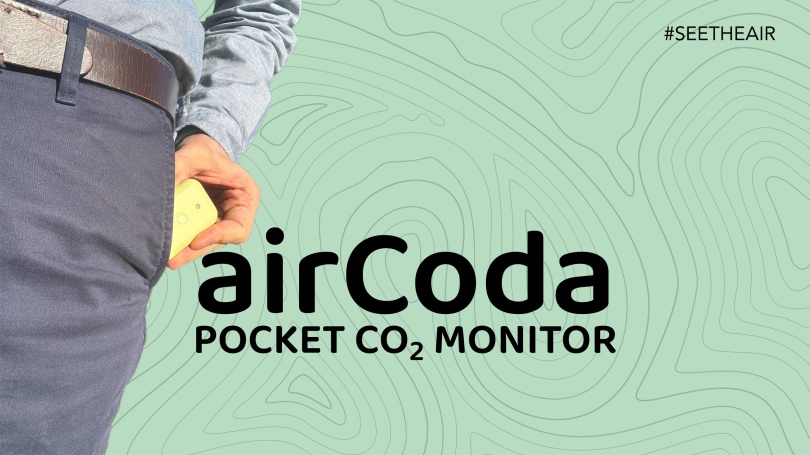
Looking for a way to monitor CO2 levels on the go? The airCoda pocket CO2 monitor might be your breath of fresh air. This compact device features a photoacoustic NDIR CO2 sensors, a technology known for its small size and accuracy in measuring CO2 concentrations in any environment.

Why the airCoda?

  • Pocket-Sized Portability: Unlike bulkier CO2 monitors, airCoda’s small size allows you to easily carry it anywhere. Whether you’re checking CO2 levels in your office, classroom, or even your car, airCoda gives you the freedom to monitor air quality wherever you go.
  • Sensor Accuracy: Thanks to the integrated sensor, you can trust airCoda to provide reliable CO2 readings. This is crucial for making informed decisions about ventilation and maintaining healthy air quality.
Read More »

Masked and Misunderstood: The Silent Struggle of Chronically Ill in a Challenging World

For many, face masks became a symbol of the pandemic – a temporary inconvenience in the fight against COVID-19. But for those with chronic illnesses, masks are a lifeline, a shield against a world teeming with invisible threats. These individuals wage a silent battle, one breath at a time, often unseen and misunderstood.

Imagine living with a compromised respiratory system, a weakened immune response, or a condition that makes you extra susceptible to infections. Every outing becomes a calculated risk. A simple cough from a stranger or a waft of car exhaust can trigger a flare-up, landing you in the hospital. Face masks, then, aren’t just a recommendation; they’re a necessity.

Read More »

Taiwan Tightens PM2.5 Standards to Protect Public Health

Taiwan is taking a significant step towards cleaner air by tightening its regulations on PM2.5, a dangerous air pollutant linked to lung cancer and other respiratory illnesses. The new standard will set the maximum permissible concentration of PM2.5 at 12 μg/m3, a reduction from the current limit of 15 μg/m3.

This policy change is backed by an eight-year research study conducted by the National Health Research Institutes. The study’s findings confirm the negative health impacts of PM2.5 exposure, highlighting the urgency to curb air pollution levels.

PM2.5 refers to fine particulate matter measuring 2.5 micrometers or less in diameter. These tiny particles can easily penetrate deep into the lungs, causing inflammation and aggravating respiratory problems. Air pollution sources include vehicle emissions, industrial activities, and other human-made factors.

Read More »

Are Low-Cost Sensors Random Number Generators?

Low-cost sensors aka LCS are commonly used in an effort to measure air pollutants like particulate matter all around the world, indoors and outdoors. Their low price has driven a lot of interest from many communities. Academics, experts, and consumers have embraced them because they are cheap to get and easy to embed in an IoT solution.

Countless air quality monitors use low-cost sensors (mostly from China) and although they are great as educational tools, their low accuracy leads to wrong conclusions most of the time.

Wrong conclusions are as bad as misinformation or fake news. Air pollution doesn’t kill instantly (most of the time) and it doesn’t create severe health issues in the short-term, but after an extended period or at least when we notice the consequences. One exception is carbon monoxide (CO) as it can kill people instantly and this is the reason we don’t see many low-cost CO sensors. There are some regulations that protect the consumers. Moreover, companies don’t want to take responsibility by using a low-cost CO sensor because they can get sued easily by the family of a victim when the air quality monitor won’t notice the increase of the gas indoors. Liability!

Read More »

Over-the-Range Hood Microwaves: Addressing Indoor Air Quality Concerns

Over-the-range hood microwaves offer the convenience of a combined microwave and “ventilation” system. However, a common misconception is that they effectively remove cooking fumes and pollutants from the kitchen. While they do have a fan system, it’s crucial to understand their limitations.

Recirculation vs. True Ventilation:

Unlike range hoods that vent exhaust outdoors, most over-the-range microwaves utilize a recirculation system. This means they draw in cooking fumes, grease, and moisture through a metallic mesh filter with holes bigger than a Swiss cheese, then release the “treated” air back into the kitchen.

Read More »

Elevating the Topic of Healthy Air | The Air Exchange S2 E1

H&V’s Air Exchange host, Bruce Lorange, kicks off Season 2 by sitting down with IAQ “Influencer”, Sotirios Papathanasiou of the weblog @ Seetheair.org to discuss the importance of healthy air.

Sotirios discusses the importance of air quality, clean air initiatives, and healthy buildings as he shares his background and passion for merging technology and the environment. Sotirios and Bruce also discuss the need for education and legislation to improve indoor air quality.

Read More »

Review: AIR-1 Air Quality For Home Assistant

Breathe Easy and Tinker Freely: A Review of the AIR-1 Air Quality Sensor for Home Assistant

For the privacy-conscious and perfectionist homeowners who crave customization, the AIR-1 Air Quality Sensor by Apollo Automation is a breath of fresh air (literally). This sensor goes beyond simply monitoring air quality; it empowers you to take control of your indoor environment.

A little background about Home Assistant: Home Assistant is an open-source home automation that puts local control and privacy first. Powered by a worldwide community of DIY enthusiasts. Think of it as Apple’s HomeKit with the ability for endless customizations.

Specifications

  • Particulate Sensor
  • CO2 Photoacoustic NDIR Sensor (Optional)
  • Gas Sensor MOS Package (CO, NO2, C2H5OH, H2, NH3, and CH4) (Optional)
  • TVOC Sensor
  • Temperature and Humidity Sensor
  • Barometric Pressure
  • 3 RGB LEDs
  • USB-C
  • WiFi 2.4 GHz
  • Bluetooth 5

All the specifications and sensor manufactures are listed here.

Built for the DIY Enthusiast

Unlike many smart home devices, the AIR-1 doesn’t lock you into a proprietary ecosystem. It leverages the open-source power of Home Assistant, giving you complete control over your data and how it’s used. This is perfect for those who want to tinker and integrate the AIR-1 into their existing smart home setup.

Read More »

Beyond the Pleasant Smell: The Hidden Dangers of Air Fresheners in Your Home

We all like our homes to smell fresh (not possible) and inviting. But that seemingly harmless air freshener, scented candle, or electric perfume dispenser might be doing more harm than good. In fact they do and you will understand in detail below. These common household items can release a surprising number of chemicals that negatively impact indoor air quality and potentially our health.

The Culprit: Volatile Organic Compounds (VOCs)

All air fresheners, regardless of form (spray, plug-in, candle), rely on volatile organic compounds (VOCs) to create their signature scents. VOCs are chemicals that easily become gases at room temperature. While some VOCs occur naturally, those found in air fresheners are often synthetic and can irritate the eyes, nose, and throat.

Read More »

Taking a Deep Breath: Air Quality Awareness Week 2024

This May 6th through 10th, the United States Environmental Protection Agency (EPA) is hosting Air Quality Awareness Week (AQAW) [1]. This annual event is a timely reminder about the importance of clean air and the things we can all do to protect it.

This year’s AQAW coincides with World Asthma Day on May 7th, making it an especially relevant opportunity to learn more about how air quality impacts our health.

Why Clean Air Matters

Clean air is essential for our health and well-being. According to the EPA, air pollution can cause a variety of health problems, including respiratory illness, heart disease, and even cancer [1].

Read More »

Hacking the Herd: How Social Norms Can Inspire You (and Everyone Else) to Change

Social norms are like unwritten rules that a group of people follow. They’re the guidelines for how we behave in certain situations, and they help keep things running smoothly. Social norms are still a powerful tool for inspiring behavior change for a few reasons:

  • Leveraging the Desire to Belong: People are social creatures with a natural desire to fit in with their groups. Social norms highlight what behaviors are expected and accepted, nudging people to conform to avoid social disapproval.
  • Focus on Prevalence: Social norms campaigns can emphasize that the desired behavior is actually more common than people think. This can counteract the feeling of being alone in adopting a new behavior.
  • Positive Reinforcement: Seeing others engage in the positive behavior can provide encouragement and a sense of community around the change.

Here’s how social norms can be applied to air pollution:

  • Highlighting Eco-Friendly Choices: Campaigns can showcase people using public transport, carpooling, or opting for sustainable products. This reframes these actions as the norm, making them more likely to be adopted by others.
  • Community Recognition: Programs that recognize individuals or businesses for their efforts to reduce air pollution can create positive social pressure and inspire others to follow suit.
  • Countering Misconceptions: Social norms campaigns can address the misconception that individual actions don’t make a difference. By highlighting the collective impact of many small changes, they can motivate people to take action.

For example, a campaign might feature a slogan like “Most people in our community use heat pumps – Join the Movement for Cleaner Air!” This approach uses social norms (descriptive norm – what people actually do) to encourage alternative heating to wood burning stoves (desired behavior).

By framing eco-friendly behaviors as the social norm, communities can create a more sustainable environment and improve air quality for everyone.