Why Lung Cancer Is on the Rise in Non-Smokers

Still a mystery, but here is what we have found so far. While the overall rate of lung cancer has been declining, a notable trend has emerged: lung cancer in people who have never smoked is increasing. This poses a challenge to the traditional understanding of the disease, which is heavily associated with tobacco use. Research suggests that for some, lung cancer in non-smokers is a distinct disease from that in smokers, driven by different factors and presenting in a different form.

Environmental and Lifestyle Factors

A major contributing factor to lung cancer in non-smokers is exposure to environmental carcinogens.

Read More »

Spectroscopy: The Next Step for Low-Cost Particulate Matter Sensors

The landscape of ambient air quality monitoring is evolving, driven by the increasing availability of low-cost sensors. While current low-cost particulate matter (PM) sensors, which rely on light scattering, provide valuable data on particle size and number, they lack the ability to determine a particle’s composition. This limitation is a significant hurdle in understanding the true nature and origin of air pollution. The future of affordable PM sensors lies in spectroscopy, a technique that will allow for a more detailed analysis of airborne particles.

Read More »

Latvia’s Model for Healthy Learning: The MESH Air Quality Project

Latvia has successfully deployed 14,000 CO2 monitors in hundreds of schools, ensuring safer and healthier learning environments for students and teachers. This nationwide initiative, launched by the Ministry of Education and Science of Latvia and implemented by the technology company MESH, addresses concerns about elevated CO₂ levels, which can contribute to the transmission of pathogens and affect concentration. Such successful projects should serve as a blueprint for others aiming to improve indoor air quality and efficiency in public buildings. The data collected from these monitors is freely accessible to the public via the website https://co2.mesh.lv/home/dashboard, providing transparency and peace of mind for parents.

The project, which involved an initial investment of €3.58M, translates to an approximate cost of 12 euros per student. This cost-effective solution was designed to significantly improve cognitive abilities and health, as well as air quality, for 300,000 children across Latvian schools. Even without adding heating control, facility managers were able to optimize energy use by simply analyzing temperature trends available online – leading to smarter manual adjustments and early savings in several municipalities. Following the project, some municipalities further developed the system by integrating automatic regulation of heat nodes, and in one case, the investment was fully recouped within a single heating season.

Read More »

A Compromised Approach to Indoor Air Quality Assessment

Professionals in the field of indoor air quality sometimes compromise the accuracy of their assessments by opting for short-term sampling periods. While quick measurements can provide preliminary insights, they may not accurately reflect the dynamic nature of indoor air quality. Factors such as occupancy patterns, ventilation systems, and external influences can significantly impact pollutant concentrations over time. By relying on brief sampling periods, professionals risk drawing incorrect conclusions about long-term exposure risks and the effectiveness of mitigation strategies. To obtain a comprehensive understanding of indoor air quality, it is essential to employ continuous monitoring techniques or extended sampling periods that capture the full range of variations in pollutant levels.

Common Misconceptions about Air Quality Monitoring

A prevalent misconception in the field is the practice of taking short-term air samples, often lasting 10 minutes or an hour, to assess indoor air quality. While this approach might provide a snapshot of conditions at a specific moment, it fails to capture the full picture of air quality fluctuations over time. Such limited data can lead to inaccurate conclusions and potentially miss critical issues that may arise during occupied or unoccupied periods or under different operational conditions.

Comprehensive Air Quality Monitoring: A Holistic Approach

To effectively evaluate indoor air quality, a more comprehensive approach is required. Continuous monitoring systems equipped with sensors capable of measuring various pollutants, including carbon dioxide, volatile organic compounds (VOCs), particulate matter, and temperature and humidity, offer a more accurate and insightful assessment.

These systems can collect data at regular intervals, providing real-time insights into air quality trends and enabling timely interventions to address any issues that may arise.

Specific Pollutants and Monitoring Techniques

Different pollutants require specific monitoring techniques:

  • Particulate Matter: Regulatory limits for PM2.5 are commonly specified for 24-hour or annual averages. Consequently, sampling protocols should be designed to capture these temporal scales. The World Health Organization (WHO) has established guideline limits of 5 μg/m³ for the annual mean and 15 μg/m³ for the 24-hour mean of PM2.5.
  • Radon: Radon limits are based on annual concentrations. To accurately assess the average annual radon level in a home, it’s crucial to strategically place radon measurement devices in areas where occupants spend the most time, such as bedrooms, living rooms, and basements. The measurement period should ideally be at least 91 days to ensure a reliable estimate of the average annual exposure. However, to ensure an accurate assessment of the average annual radon level in a home, Health Canada recommends conducting radon tests over a period of 3 to 12 months. This timeframe allows for a comprehensive evaluation of radon fluctuations throughout the year and provides a reliable estimate of long-term exposure.
  • Gases: In many cases a diffusion tube, which is a scientific instrument designed to passively measure the concentration of specific gases (VOCs, NO2, etc.) in the air, is commonly used to track average air pollution levels over periods ranging from days to approximately a month. It’s important to note that longer sampling times generally improve the detection limits for low-concentration analytes, but they can also increase the risk of breakthrough, where analytes exceed the adsorbent capacity of the tube. Therefore, the optimal sampling time should be determined based on the specific analytical requirements and the characteristics of the sampling site. Additionally, continuous sensors, such as electrochemical, metal oxide, and UV absorption sensors, are employed to measure indoor gas concentrations. To ensure appropriate assessment against regulatory standards, the sampling duration should align with the specific timeframes established by these standards. For example, WHO has set a 24-hour limit of 25 μg/m³ for nitrogen dioxide (NO₂) and an 8-hour limit of 100 μg/m³ for ozone (O₃).
  • Carbon dioxide (CO2): CO2 monitoring in indoor spaces is essential for maintaining optimal ventilation rates and occupant well-being. An absolute threshold of around 800 or 1000 ppm has been established as a guideline for safe CO2 levels. To accurately assess CO2 concentrations, measurements should be taken when the room is fully occupied. This is because CO2 levels are primarily influenced by human activity, and empty spaces will not provide meaningful data. By monitoring CO2 levels during periods of maximum occupancy, we can ensure that the established threshold is not exceeded, reducing the risk of negative health impacts associated with poor indoor air quality. In certain cases, activities like cooking or burning candles can also contribute to elevated CO2 levels, necessitating additional monitoring considerations.

Air quality within buildings is not static; it fluctuates throughout the day due to various factors such as occupancy, activities, materials used, and environmental indoor and outdoor conditions like temperature, humidity, and air pressure. By understanding the dynamic nature of indoor air quality and employing appropriate monitoring techniques, building occupants can enjoy healthier and more productive environments.

Understanding AHAM and CADR: Your Guide to Cleaner Indoor Air


In today’s world, indoor air quality is more important than ever.  Dust, pollen, and even wildfire smoke can significantly impact our health and comfort. Air purifiers offer a solution, but navigating the world of product specifications can be confusing. Is product efficiency a sufficient way to rate them, or should we think about effectiveness? This article explains the role of the Association of Home Appliance Manufacturers (AHAM) and the importance of the Clean Air Delivery Rate (CADR) in choosing the right air purifier for your needs, plus an upcoming standard that wants to deliver even better indoor air solutions.  

Understanding CADR

The Clean Air Delivery Rate (CADR) is a crucial metric that indicates how quickly an air purifier can remove specific types of particles from a room.  It measures the volume of clean air delivered by the unit and is expressed in cubic meters per hour (CMH) or cubic feet per minute (CFM). AHAM tests air purifiers for three common pollutants; smoke, dust, and pollen. Note: CMH can be converted to CFM by dividing by 1.7.

Read More »

Benchmarking: The Ultimate Catalyst for Better Air Quality Through Global Standards

This article first appeared on www.goaqs.org

Air quality is an invisible yet pervasive factor influencing our health, productivity, and overall well-being. While awareness of air pollution is growing, translating that awareness into actionable behavioral change remains a significant challenge. The key to unlocking this transformation lies in the power of benchmarking—a potent tool that, when coupled with global standards like the proposed Global Air Quality Standard (GO AQS), can empower individuals and communities to breathe cleaner air.

The Power of Comparison: Learning from Other Fields

The effectiveness of benchmarking as a driver for improvement is not a new concept; it has long been a cornerstone of success in diverse fields. Consider the world of athletics: elite athletes constantly benchmark their performance—speed, strength, endurance—against competitors in their category. This isn’t about shaming, but about identifying areas for improvement. A runner who sees their sprint times lagging behind others in their age group knows exactly where to focus their training. Similarly, in healthcare, patients track metrics like blood pressure or cholesterol against established healthy ranges or anonymized data from similar patient populations. This comparison provides a clear understanding of their health status, prompting necessary lifestyle changes or medical interventions.

A practical, personal example vividly illustrates this point: as an individual tracking my resting heart rate through an app that allows comparison against +56,000 users worldwide. Seeing a “superb” rating, indicating excellent heart aging, provides tangible positive reinforcement and validates my health efforts. Conversely, a less favorable comparison would flag a problematic area, encouraging focused action. This simple yet powerful mechanism of comparison fosters accountability and motivates behavioral adjustments.

Read More »

Key Insights from ASIC 2025 in Thailand: Bridging the Indoor-Outdoor Divide

The recent Air Sensors International Conference (ASIC) 2025, held in the vibrant backdrop of Thailand, offered a profound opportunity to delve into the evolving landscape of air quality monitoring. As an attendee, several key themes emerged that highlight both the progress made and the remaining challenges in our quest to understand the air we breathe.

The Indoor-Outdoor Air Quality Discrepancy

One striking observation from the conference was the apparent disparity in research emphasis between indoor and outdoor air quality monitoring. While outdoor environments have benefited immensely from the widespread adoption and scrutiny of low-cost air quality monitors, indoor spaces appear to lag in comparison. The primary reason for this imbalance lies in the availability of robust reference instrumentation. Governments worldwide have invested in publicly air quality stations equipped with reference-grade instruments, providing invaluable benchmarks for normalization and validating low-cost sensors in a variety of outdoor conditions. This has not only accelerated the development of accurate low-cost monitors but also fostered the creation of sophisticated correction algorithms.

Read More »

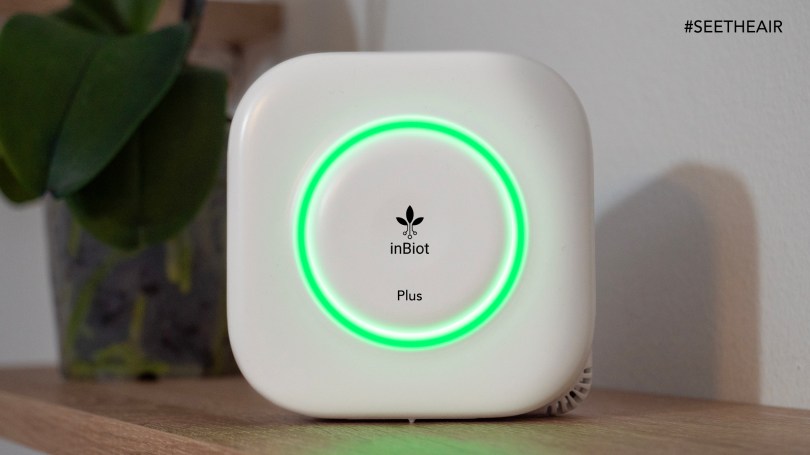
Review: InBiot Mica Plus – A Comprehensive IAQ Solution for Green Buildings and Beyond

The inBiot Mica Plus is a robust indoor air quality monitor designed squarely for the B2B market, catering specifically to buildings aiming for top-tier Indoor Environmental Quality (IEQ) and compliance with stringent green building certifications like WELL, RESET, and LEED. With a promised 10-year lifespan and minimal maintenance thanks to automatic calibration, the Mica Plus is a compelling long-term investment.

Equipped with a comprehensive sensor suite including Temperature, Relative Humidity, CO₂, TVOC, Particulate Matter, and Formaldehyde, the Mica Plus provides a detailed picture of indoor air conditions. Its connectivity options are equally impressive, spanning basic Wi-Fi to advanced protocols like Power over Ethernet (PoE), LoRaWAN, Sigfox, NB-IoT/LTE-M, and local communication options such as Modbus RTU/TCP/IP, API, BACnet, and MQTT, ensuring seamless integration into existing building management systems.

Read More »

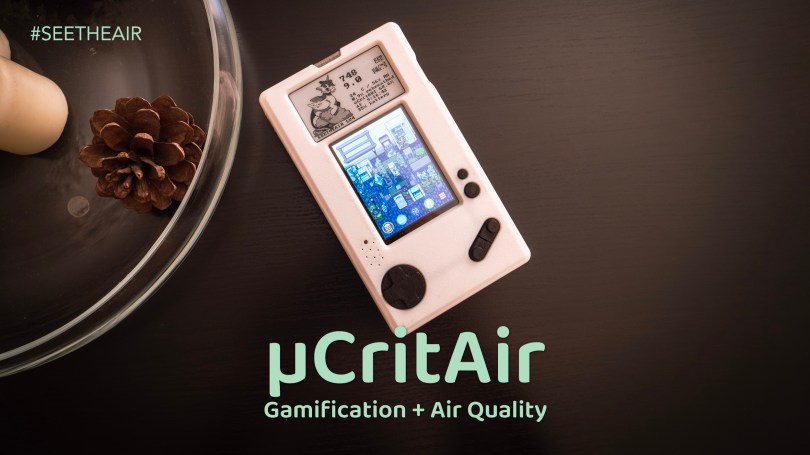
Review: µCritAir Development Kit – Gamifying Our Way to Better Indoor Air

For years, I’ve been advocating for the integration of gamification into everyday tools to drive meaningful behavioral change, especially concerning something as vital yet often invisible as indoor air quality. We need engaging ways to keep people motivated to understand and improve their environments. So, when I encountered the µCritAir (it actually found me), I was immediately intrigued. This isn’t just another air quality monitor; it’s an experiment in engagement, using a digital pet – a µCritter – whose health depends directly on the air you breathe. Keep your air clean, and your critter thrives. Let it worsen, and its health suffers. It’s a compelling, tangible connection between data and consequence.

Development Kit

It’s important to set expectations correctly: the µCritAir is currently available as a Development Kit. This isn’t a polished, mass-market product yet. Instead, it’s aimed squarely at enthusiasts, early adopters, and tinkerers who enjoy being part of the development journey. Yes, this means you’ll encounter some unpolished aspects, perhaps a bug here or there, or features still under active development. However, this is also its strength for the right audience. The team behind µCritAir is clearly passionate and actively working on both software and hardware improvements. They genuinely value the feedback from their early users, creating a collaborative dynamic that’s exciting to be a part of.

Read More »

Filtration Hour – Air Quality Governance

I am pleased to announce the World Filtration Institute (WFI) upcoming event, “Air Quality Governance,” a crucial discussion focused on the intersection of policy, technology, and public health.

This event will bring together leading experts, policymakers, and industry professionals to explore and discuss the latest advancements and strategies in air quality management.

Key Focus Areas:

  • Policy and Regulation: Examining current and future regulatory frameworks for air quality.
  • Technological Innovations: Showcasing cutting-edge filtration technologies and monitoring systems.
  • Public Health Impact: Analyzing the direct correlation between air quality and community well-being.
  • Sustainable Solutions: Promoting environmentally responsible practices in air filtration and management.

This event is designed to foster collaboration and knowledge sharing, aiming to drive impactful solutions for cleaner, healthier air globally. Attendees will have the opportunity to:

  • Engage with prominent figures in the air quality sector.
  • Gain insights into the latest research and best practices.
  • Network with professionals from diverse backgrounds.

Distinguished Speakers:

  • Sotirios Papathanasiou, Air Quality Expert, GO AQS (Spain)
  • R. Vijayakumar, PhD, Founder AERFIL, USA.
  • Andrew Guido​​​​Vice President, Sustainability & Innovation, Canada.
  • Stephanie Taylor, MD, CEO and Founder, Building4Health, USA
  • Thomas Peters, PhD, Director, Peters Consulting, Germany
  • 🌍Join Us at Filtration Hour!
  • 📅 Date: April 17, 2025
  • Time: 10:00 – 11:30 AM EST
  • 🎤 Topic: Air Quality Governance
  • 🔗 Register Now for Free.

For more information and to register, please visit: https://www.wfius.org/post/airqualitygovernance

About the World Filtration Institute (WFI):

The World Filtration Institute is a global non-profit organization dedicated to advancing the science, technology, and application of filtration and separation solutions. WFI fosters innovation, collaboration, and professional development to create a cleaner, healthier, and more sustainable world.