
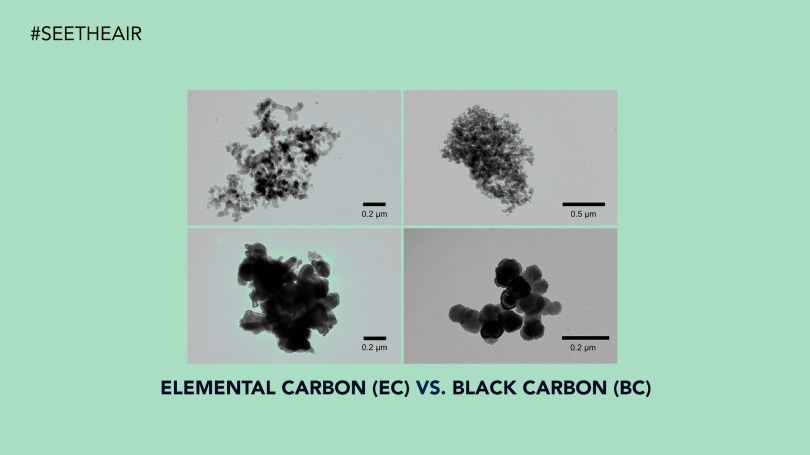
The terms Elemental Carbon (EC) and Black Carbon (BC) are both used to describe the product of incomplete combustion of fossil fuels, biomass, and biofuels, which is a significant component of aerosols (airborne particulate matter). While often used interchangeably in general discussion, they represent distinct concepts primarily tied to their respective measurement methodologies. Understanding this difference is crucial in air quality monitoring, climate science, and health studies.
Elemental Carbon (EC): The Reference Method
Elemental Carbon (EC) is the term associated with the reference method for measuring this specific fraction of carbonaceous aerosol.
- Measurement Method: EC is quantified using thermal-optical analysis. This technique relies on the sequential heating of a filter sample to different temperatures in different atmospheres (non-oxidizing and oxidizing) to distinguish carbon fractions.
- Standard Protocol: The EN 16909 standard is a prominent European standard for the determination of EC (and Organic Carbon, OC) in ambient air, often employing the thermal-optical reference technique.
- Specific Protocol: The EUSAAR_2 thermal protocol is a common, specific thermal-optical protocol used to define the temperature steps and atmospheres for the measurement.
- Charring Correction: A critical part of the thermal-optical method is the charring correction, typically based on the transmittance (or reflectance) of a laser beam through the filter. This corrects for the formation of “pyrolyzed” or “charred” organic carbon during the heating process, which can otherwise be misclassified as EC.
- Definition: Conceptually, EC represents the carbon in its pure, elemental form—the refractory, graphitic, or amorphous carbon that is the most stable at high temperatures.
 See The Air