aranet: Comprehensive Environmental Monitoring for a Healthier Home

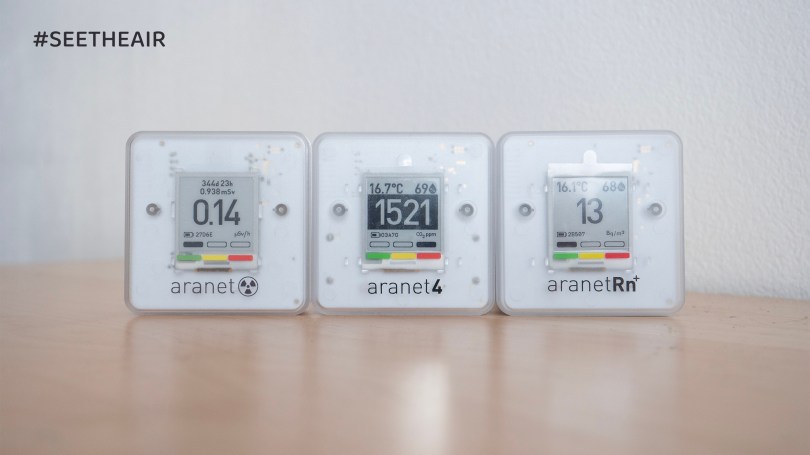
In an era where indoor air quality and environmental safety are of a high importance, aranet has emerged as one of the leaders in providing reliable and intuitive monitoring solutions. See The Air has thoroughly reviewed several of aranet’s innovative products, each designed to empower individuals with crucial insights into their living spaces. From carbon dioxide levels to radon gas and even radiation, aranet offers peace of mind through precise and accessible data.

Most aranet monitors stand out by providing a holistic view of your environment, often including temperature, relative humidity, and atmospheric pressure alongside their primary measurements. This multi-parameter approach helps users understand the interplay of various factors affecting their indoor comfort and health.

Read More »

The CO2 Debate: A Parallel to the Egg Dilemma

The discussion around carbon dioxide (CO2) in indoor air quality (IAQ) often brings up a fascinating parallel to another long-standing debate: the health effects of eggs.

The Indisputable Value (Eggs & CO2 as Proxies):

Just as eggs are widely recognized for their nutritional value – a powerhouse of protein, vitamins, and minerals – CO2 in IAQ assessment holds an undeniable, practical value. We know that CO2 levels are incredibly useful as a proxy. They effectively signal ventilation rates, which in turn are crucial indicators for the potential airborne transmission of diseases and the presence of odors indoors. In this sense, CO2 is a vital tool for understanding and managing our indoor environments, much like eggs are a staple in many healthy diets.

Read More »

AirDummies: A Breath of Fresh Air for Indoor Environment Simulation

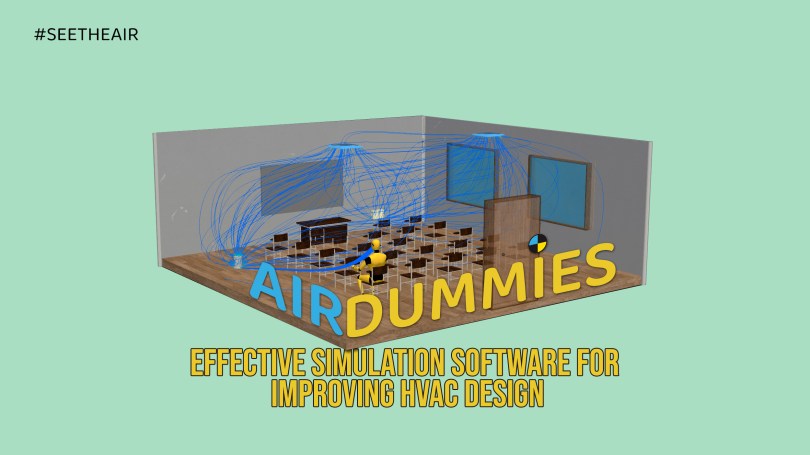
AirDummies emerges as a highly intuitive and powerful Computational Fluid Dynamics (CFD) software, purpose-built to demystify the complex world of indoor air dynamics. Designed with a clear focus on accessibility, it caters to a broad spectrum of users, offering invaluable insights into air patterns within diverse indoor environments, including school classrooms, offices, and domestic settings. Its ability to simulate everything from CO2 concentrations, particle contaminants, and temperature gradients to air velocity makes it an indispensable tool for optimizing comfort, health, and energy efficiency.

AirDummies is built upon the OpenFOAM open-source library. This foundational relationship means AirDummies leverages OpenFOAM’s extensive capabilities for simulating fluid flow, heat transfer, and related phenomena. By utilizing OpenFOAM, AirDummies benefits from a robust, well-validated, and continuously developed CFD engine, providing users with a powerful and flexible platform for their simulation needs.

Read More »

Introducing FantaMix: An Innovative DIY Ventilation Solution

At See The Air, I am always excited to share innovative approaches to improving indoor air quality. Today, I am highlighting some fantastic articles by Nathalie Roussy that delve into the world of DIY ventilation with her in-depth work on the FantaMix.

FantaMix Review: A Look at Performance and Impact

Nathalie’s comprehensive review, titled “FantaMix Review,” was originally published on Medium. You can read her full article here.

The FantaMix is a compact, open-source ventilation system designed for home construction at a low cost. Nathalie, who is the designer and tester of the FantaMix, explains how this hybrid device filters a mix of fresh outdoor air and stale indoor air through an H11 HEPA filter, all while recovering lost heat. It functions as both a source of fresh air and an indoor air purifier.

Her article covers the origins of the FantaMix, how it works, and the results of various field tests, including airflow rate, noise level, heat recovery, and power consumption. She also provides a comparison with similar devices and a visual analysis of CO₂ levels to demonstrate its impact on air quality. Nathalie emphasizes that the FantaMix is a DIY project, offering an accessible solution for enhancing indoor air quality, particularly for renters or those with budget constraints, and is especially beneficial during events like wildfires.

Building the FantaMix: Your Step-by-Step Guide

For those inspired to build their own FantaMix, Nathalie has also published a detailed DIY guide titled “Building the FantaMix: Fresh Filtered Air at Home — No Exhaust, Under $200,” also available on Medium. Find the complete guide here.

This step-by-step open-source guide outlines how to create this affordable and effective home ventilation system. The FantaMix aims to provide fresh, HEPA-filtered outdoor air with partial heat recovery, costing under $200 and requiring no major construction or exhaust system. The project is 100% open source, promoting accessible knowledge over opaque products. The article covers the detailed construction process, including building the base, assembling the top section, preparing the outdoor air intake panel, and installing components like fans, insulation, and wiring. It also includes a detailed cost breakdown, a list of essential and optional tools, and crucial safety precautions, especially when working with materials like heated foam. Maintenance tips for filter replacement and fan cleaning are also provided.

I am particularly proud to note that Nathalie’s work on the FantaMix was inspired by our very own article, “DIY Ventilation Solution for Renters.” It’s wonderful to see how shared knowledge and innovation can lead to such practical and impactful solutions for healthier living spaces.

We highly recommend reading Nathalie’s articles to learn more about the FantaMix and consider it as a potential DIY project for your own home!

Review: InBiot Mica Plus – A Comprehensive IAQ Solution for Green Buildings and Beyond

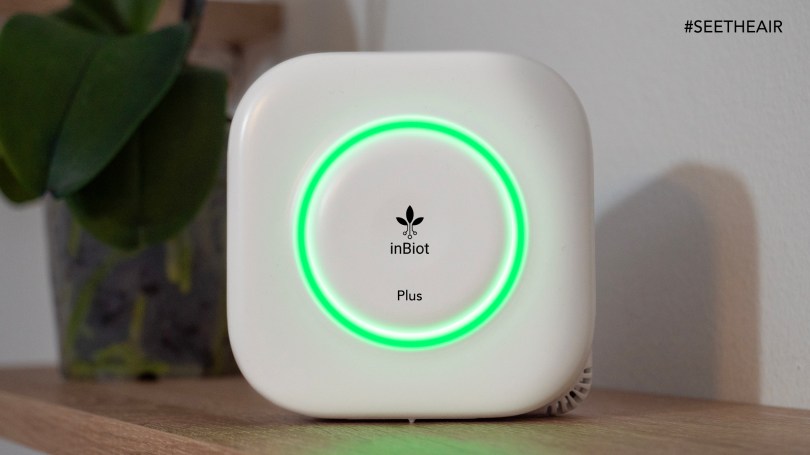
The inBiot Mica Plus is a robust indoor air quality monitor designed squarely for the B2B market, catering specifically to buildings aiming for top-tier Indoor Environmental Quality (IEQ) and compliance with stringent green building certifications like WELL, RESET, and LEED. With a promised 10-year lifespan and minimal maintenance thanks to automatic calibration, the Mica Plus is a compelling long-term investment.

Equipped with a comprehensive sensor suite including Temperature, Relative Humidity, CO₂, TVOC, Particulate Matter, and Formaldehyde, the Mica Plus provides a detailed picture of indoor air conditions. Its connectivity options are equally impressive, spanning basic Wi-Fi to advanced protocols like Power over Ethernet (PoE), LoRaWAN, Sigfox, NB-IoT/LTE-M, and local communication options such as Modbus RTU/TCP/IP, API, BACnet, and MQTT, ensuring seamless integration into existing building management systems.

Read More »

A DIY Ventilation Solution for Renters

Renting an apartment often means limited control over modifications, especially when it comes to essential systems like ventilation. Poor indoor air quality can significantly impact health and well-being, but drilling holes for traditional ventilation systems is usually out of the question. This article presents a simple, affordable DIY project using a standard air purifier to bring fresh, filtered air into your rented space without any permanent alterations.

The Problem: Stale Indoor Air and Renting Restrictions

Old apartments but also modern, energy-efficient apartments can sometimes suffer from poor ventilation, leading to a buildup of indoor pollutants like CO2, volatile organic compounds (VOCs), and particulate matter. While opening windows is a simple solution, it’s not always practical due to weather, noise, or outdoor air pollution. Renters often face the added challenge of not being allowed to make structural changes, ruling out traditional ventilation installations.   

The DIY Solution: Air Purifier Ventilation

This project uses a standard standalone air purifier in a novel way to introduce fresh, filtered outdoor air. The key components are:

  • A Standard Air Purifier: Choose one with a HEPA filter for particulate matter and a carbon filter for gases. Programmable models are highly recommended for automation.
  • Flexible Tubing and Window Adapter: These connect the air purifier’s intake to a slightly opened window. You can find suitable tubing and adapters at most hardware stores for around €15.
Read More »

Book Review: “Indoor Air Quality in Buildings for Well-being: Practical Application Strategies”

A 2023 published book in Spanish, “Calidad del aire interior en los edificios para el bienestar: estrategias de aplicación práctica” (Indoor Air Quality in Buildings for Well-being: Practical Application Strategies), is poised to become an essential resource for improving indoor air quality globally. Authored by Miguel Ángel Campano, Jessica Fernández-Agüera, and Juan José Sendra, this comprehensive guide delves into the critical aspects of indoor air quality (IAQ) and offers practical strategies for creating healthier indoor environments.   

Relevance to Global Initiatives

While currently available in Spanish, this book’s content is highly relevant to international efforts such as the development of Global Open Air Quality Standards (GO AQS). The GO AQS initiative aims to establish universal benchmarks for air quality, and the book provides valuable insights and data that can orient the initiative.

Comprehensive Coverage of Key IAQ Factors

Read More »

Personal Exposure: Tracking Air Quality with Portable Monitors – 6 Months

This article documents my personal experiment tracking air quality exposure for 6 months using two portable, low-cost monitors: one for PM2.5 (particulate matter) and the other for CO2 (carbon dioxide). The experiment aimed to gain insights into personal exposure levels and understand the impact of lifestyle and environmental factors on air quality.

Read More »

Alveolar Sacs and Particulate Matter: A Deep Dive into Respiratory Health

The respiratory system is a complex network responsible for the vital exchange of oxygen (O2) and carbon dioxide (CO2). At the heart of this system lie the alveoli, tiny air sacs where this gas exchange occurs. However, these delicate structures are also vulnerable to the intrusion of harmful particles, which can have serious health consequences.   

The Journey of Inhaled Particles

When we breathe, we inhale a variety of particles, including dust, smoke pollutants, and pathogens. The size of these particles plays a crucial role in determining how far they travel into our respiratory system. Larger particles are typically trapped in the upper airways, while smaller ones can penetrate deeper into the lungs.   

Read More »

The Future of Air Quality Monitoring: Portable Power

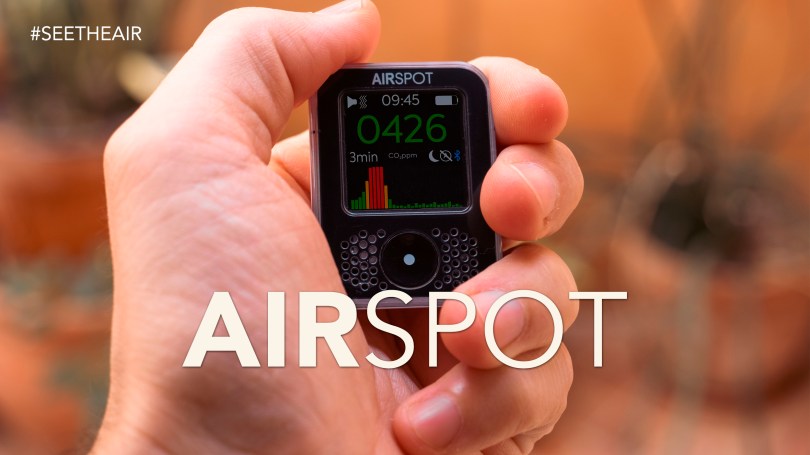
Years ago, I explored the potential of gamification to enhance public engagement with air quality. Now, numerous projects are emerging, promising to deliver user-friendly products that bridge the knowledge gap. Two key players are driving this innovation: sensor manufacturers, who are relentlessly miniaturizing their technology, and startups, which are pioneering innovative solutions to bring these sensors directly to consumers.

Air quality monitoring is no longer a niche concern for environmental scientists. With growing awareness of the impact of air pollution on health, a new wave of portable air quality monitors is poised to revolutionize how we perceive and manage the air we breathe.

Read More »