The EU’s New EPBD: Why Indoor Air Quality Needs a Unified Standard

The recently updated Energy Performance of Buildings Directive (EPBD) is a pivotal legislative framework aimed at improving the energy efficiency of buildings across the European Union. While its primary focus remains on energy savings and decarbonization, the revised EPBD now formally recognizes the crucial link between energy performance and Indoor Environmental Quality (IEQ). This update requires member states to address IEQ in their national legislation, ensuring that energy-efficient buildings also support the health, comfort, and well-being of their occupants.


A Framework for IEQ, Not a Rigid Standard

A significant aspect of the updated EPBD is its approach to IEQ. Rather than imposing a single, rigid set of Europe-wide limit values for all IEQ parameters, the directive establishes a flexible framework. This approach acknowledges the vast diversity in climate zones, building types, and occupant needs across the EU. The consensus is that a one-size-fits-all model would be counterproductive, potentially leading to suboptimal outcomes and hindering innovation.

The new EPBD defines IEQ as a comprehensive concept that includes several key domains:

  • Indoor Air Quality (IAQ): Addressing contaminants and ventilation.
  • Thermal Comfort: Pertaining to temperature and humidity.
  • Lighting: Considering both natural and artificial light.
  • Acoustics: Controlling internal and external noise.
Read More »

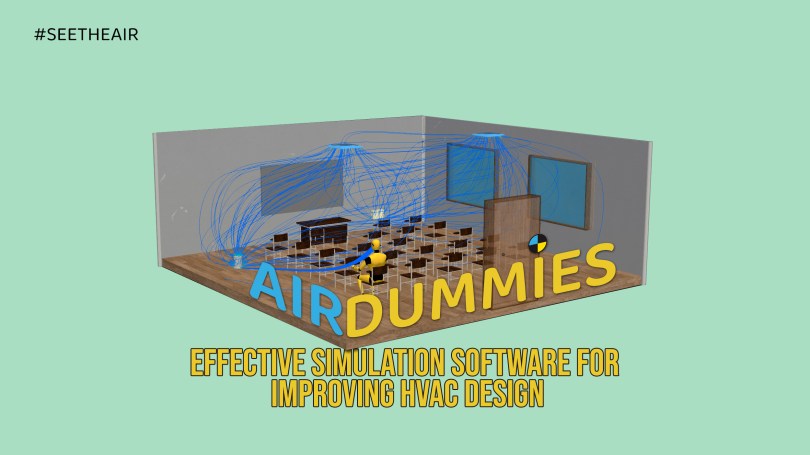
AirDummies: A Breath of Fresh Air for Indoor Environment Simulation

AirDummies emerges as a highly intuitive and powerful Computational Fluid Dynamics (CFD) software, purpose-built to demystify the complex world of indoor air dynamics. Designed with a clear focus on accessibility, it caters to a broad spectrum of users, offering invaluable insights into air patterns within diverse indoor environments, including school classrooms, offices, and domestic settings. Its ability to simulate everything from CO2 concentrations, particle contaminants, and temperature gradients to air velocity makes it an indispensable tool for optimizing comfort, health, and energy efficiency.

AirDummies is built upon the OpenFOAM open-source library. This foundational relationship means AirDummies leverages OpenFOAM’s extensive capabilities for simulating fluid flow, heat transfer, and related phenomena. By utilizing OpenFOAM, AirDummies benefits from a robust, well-validated, and continuously developed CFD engine, providing users with a powerful and flexible platform for their simulation needs.

Read More »

Latvia’s Model for Healthy Learning: The MESH Air Quality Project

Latvia has successfully deployed 14,000 CO2 monitors in hundreds of schools, ensuring safer and healthier learning environments for students and teachers. This nationwide initiative, launched by the Ministry of Education and Science of Latvia and implemented by the technology company MESH, addresses concerns about elevated CO₂ levels, which can contribute to the transmission of pathogens and affect concentration. Such successful projects should serve as a blueprint for others aiming to improve indoor air quality and efficiency in public buildings. The data collected from these monitors is freely accessible to the public via the website https://co2.mesh.lv/home/dashboard, providing transparency and peace of mind for parents.

The project, which involved an initial investment of €3.58M, translates to an approximate cost of 12 euros per student. This cost-effective solution was designed to significantly improve cognitive abilities and health, as well as air quality, for 300,000 children across Latvian schools. Even without adding heating control, facility managers were able to optimize energy use by simply analyzing temperature trends available online – leading to smarter manual adjustments and early savings in several municipalities. Following the project, some municipalities further developed the system by integrating automatic regulation of heat nodes, and in one case, the investment was fully recouped within a single heating season.

Read More »

Introducing FantaMix: An Innovative DIY Ventilation Solution

At See The Air, I am always excited to share innovative approaches to improving indoor air quality. Today, I am highlighting some fantastic articles by Nathalie Roussy that delve into the world of DIY ventilation with her in-depth work on the FantaMix.

FantaMix Review: A Look at Performance and Impact

Nathalie’s comprehensive review, titled “FantaMix Review,” was originally published on Medium. You can read her full article here.

The FantaMix is a compact, open-source ventilation system designed for home construction at a low cost. Nathalie, who is the designer and tester of the FantaMix, explains how this hybrid device filters a mix of fresh outdoor air and stale indoor air through an H11 HEPA filter, all while recovering lost heat. It functions as both a source of fresh air and an indoor air purifier.

Her article covers the origins of the FantaMix, how it works, and the results of various field tests, including airflow rate, noise level, heat recovery, and power consumption. She also provides a comparison with similar devices and a visual analysis of CO₂ levels to demonstrate its impact on air quality. Nathalie emphasizes that the FantaMix is a DIY project, offering an accessible solution for enhancing indoor air quality, particularly for renters or those with budget constraints, and is especially beneficial during events like wildfires.

Building the FantaMix: Your Step-by-Step Guide

For those inspired to build their own FantaMix, Nathalie has also published a detailed DIY guide titled “Building the FantaMix: Fresh Filtered Air at Home — No Exhaust, Under $200,” also available on Medium. Find the complete guide here.

This step-by-step open-source guide outlines how to create this affordable and effective home ventilation system. The FantaMix aims to provide fresh, HEPA-filtered outdoor air with partial heat recovery, costing under $200 and requiring no major construction or exhaust system. The project is 100% open source, promoting accessible knowledge over opaque products. The article covers the detailed construction process, including building the base, assembling the top section, preparing the outdoor air intake panel, and installing components like fans, insulation, and wiring. It also includes a detailed cost breakdown, a list of essential and optional tools, and crucial safety precautions, especially when working with materials like heated foam. Maintenance tips for filter replacement and fan cleaning are also provided.

I am particularly proud to note that Nathalie’s work on the FantaMix was inspired by our very own article, “DIY Ventilation Solution for Renters.” It’s wonderful to see how shared knowledge and innovation can lead to such practical and impactful solutions for healthier living spaces.

We highly recommend reading Nathalie’s articles to learn more about the FantaMix and consider it as a potential DIY project for your own home!


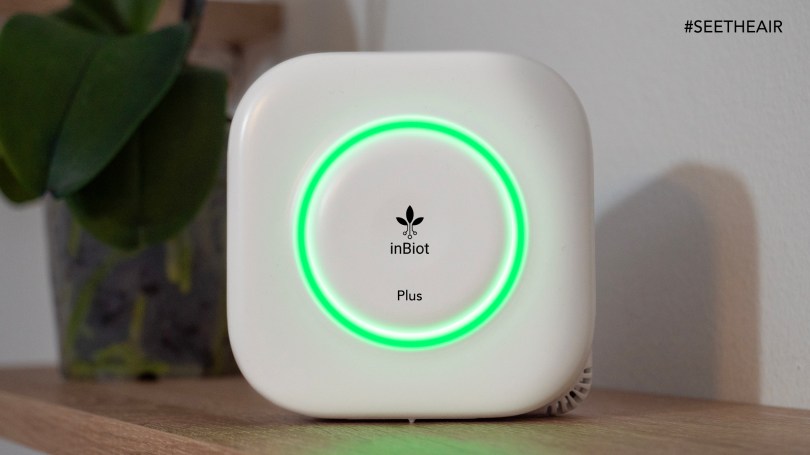
Review: InBiot Mica Plus – A Comprehensive IAQ Solution for Green Buildings and Beyond

The inBiot Mica Plus is a robust indoor air quality monitor designed squarely for the B2B market, catering specifically to buildings aiming for top-tier Indoor Environmental Quality (IEQ) and compliance with stringent green building certifications like WELL, RESET, and LEED. With a promised 10-year lifespan and minimal maintenance thanks to automatic calibration, the Mica Plus is a compelling long-term investment.

Equipped with a comprehensive sensor suite including Temperature, Relative Humidity, CO₂, TVOC, Particulate Matter, and Formaldehyde, the Mica Plus provides a detailed picture of indoor air conditions. Its connectivity options are equally impressive, spanning basic Wi-Fi to advanced protocols like Power over Ethernet (PoE), LoRaWAN, Sigfox, NB-IoT/LTE-M, and local communication options such as Modbus RTU/TCP/IP, API, BACnet, and MQTT, ensuring seamless integration into existing building management systems.

Read More »

Tools for Navigating Global Air Quality Standards, and the Push for Universal Equity

The air we breathe is fundamental to life, yet the quality of that air varies drastically across the globe. Understanding the complexities of air quality standards (AQS) is crucial for policymakers, researchers, and concerned citizens alike. Thankfully, several invaluable tools exist to navigate this complex landscape.   

Two prominent resources stand out: the WHO’s Air Quality Standards tool and the STC34’s IEQ Guidelines platform.

The WHO’s Interactive Tool: A Global Overview

The World Health Organization (WHO) has developed a powerful interactive tool, accessible at https://worldhealthorg.shinyapps.io/Air_Quality_Standards_V2_1/, that allows users to explore ambient AQS from countries worldwide. This platform provides a user-friendly interface to compare standards for key pollutants such as particulate matter (PM2.5, PM10), ozone (O3), nitrogen dioxide (NO2), sulfur dioxide (SO2), and carbon monoxide (CO). Users can filter by country, pollutant, and averaging time, gaining a comprehensive understanding of the diverse regulatory approaches adopted globally.   

Read More »

Book Review: “Indoor Air Quality in Buildings for Well-being: Practical Application Strategies”

A 2023 published book in Spanish, “Calidad del aire interior en los edificios para el bienestar: estrategias de aplicación práctica” (Indoor Air Quality in Buildings for Well-being: Practical Application Strategies), is poised to become an essential resource for improving indoor air quality globally. Authored by Miguel Ángel Campano, Jessica Fernández-Agüera, and Juan José Sendra, this comprehensive guide delves into the critical aspects of indoor air quality (IAQ) and offers practical strategies for creating healthier indoor environments.   

Relevance to Global Initiatives

While currently available in Spanish, this book’s content is highly relevant to international efforts such as the development of Global Open Air Quality Standards (GO AQS). The GO AQS initiative aims to establish universal benchmarks for air quality, and the book provides valuable insights and data that can orient the initiative.

Comprehensive Coverage of Key IAQ Factors

Read More »

Understanding the Link Between Indoor Ventilation and Radon Levels: Insights from Recent Measurements

January marks Radon Awareness Month, a time when public health officials and environmental agencies emphasize the importance of monitoring and mitigating radon gas, a known carcinogen that can accumulate in buildings. Recent measurements taken in my residential setting have revealed a clear pattern linking radon (Rn) levels to indoor ventilation practices, providing valuable insights into how we can manage this health risk effectively.

Short-Term Analysis (7 Days)

The first screenshot presents data for a 7-day period, from January 1 to January 7, 2025. Here, we observe a significant spike in radon concentration on January 5, where levels reached a peak of 114.0 Bq/m³. This short-term data suggests that there was an event or condition on January 5 that caused an unusual increase in radon levels, possibly due to changes in weather, ground conditions, or indoor activities that disturbed the soil or building structure.

Read More »

A New Children’s Book Empowers Young Readers to Breathe Clean Indoor Air

Nicholas isn’t your average kid. He has a unique superpower: he can see invisible air pollution. When Nicholas notices these harmful particles making his classmates sick, he knows he must take action. But how can you fight something you can’t see?

In this captivating new children’s book, Nicholas Tackles Indoor Air Quality, young readers join Nicholas on an exciting adventure to improve indoor air quality. With the help of his friends, Nicholas learns about the importance of clean air and discovers practical ways to combat air pollution.

Read More »

Indoorcare: Finally, Actionable Insights for Indoor Air Quality Management

For years, I’ve been preaching to companies the importance of offering curated insights into indoor air quality (IAQ). Building managers, while well-meaning, are often overwhelmed by raw data and technical measurements. They need actionable information, not complex reports.  Indoorcare is the first platform I’ve seen that truly empowers building managers to do their jobs effectively without becoming data analysts.

Effortless Management with AI-powered Insights

Indoorcare offers a user-friendly dashboard that goes beyond simply displaying air quality readings for PM2.5, CO2, CO, etc.  The magic lies in the AI-powered feedback. Users are presented with clear, easy-to-understand metrics like “Comfort Index,” “Cognitive Performance,” and even an “Allergy Risk Meter.” This allows managers to  immediately grasp the impact of air quality on building occupants.

Read More »