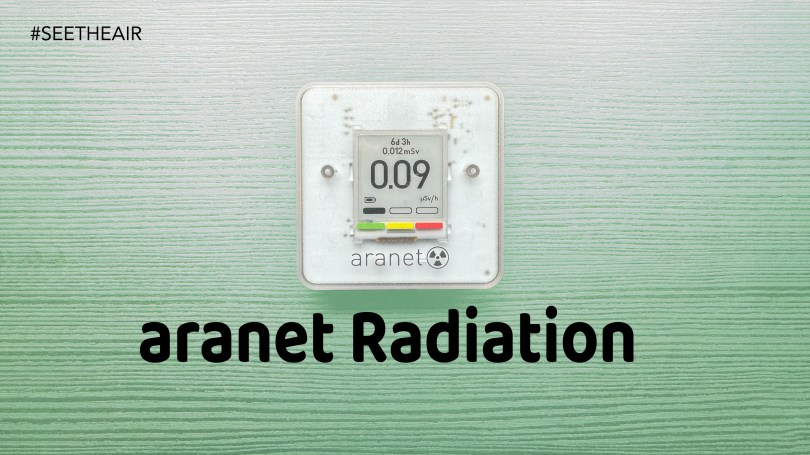
Review: aranet Radiation ☢️

The aranet Radiation tackles a whole new frontier: personal radiation safety. This device promises to empower you by monitoring gamma (γ), beta (β), and x-ray levels, giving you insights into your environment’s radiation for years.

Pros:

  • Peace of Mind: Being aware of radiation levels can be a major stress reliever, especially in areas where radiation concerns might exist like near nuclear power plants.
  • Long-Term Tracking: With a two-year data tracking capability, the Aranet Radiation allows you to identify trends and build a picture of your overall radiation exposure.
  • Battery Life: Aranet devices are known for their impressive battery life, and the Radiation model is likely to follow suit.
Read More »

Indoor Environmental Quality and Radiation Exposure

While we often think about indoor pollutants such as particle pollution (PM2.5), Carbon Dioxide (CO2), etc, the quality of the indoor environments (IEQ) can also have a significant impact on our health through various sources of radiation exposure within our homes and workplaces. Radiation is not commonly investigated nor monitored indoors.

Beyond the Usual Suspects:

Let’s explore some unexpected sources:

  • Frequent Flyers: Cosmic radiation exposure increases with altitude. While infrequent flights pose minimal risk, frequent flyers may experience slightly elevated radiation levels.
  • Ground Elements: Radioactive elements like uranium naturally occur in soil and rocks. Depending on the geology of your area, these elements can seep into basements or crawlspaces, releasing radon gas, a known human carcinogen. Radon forms from the breakdown of uranium, radium, and thorium, which are naturally present in rocks, soil, and water. As radon gas seeps into buildings through cracks and gaps in foundations, it can accumulate to dangerous levels.
  • Vintage Timekeepers: Those vintage watches with luminous dials might be harboring a radioactive secret. Radium or tritium, once used for illumination, can pose a health risk.
  • Colorful Contaminants: Certain ceramics and glassware use glazes containing radioactive elements for vibrant colors. While generally “safe” when intact, chipping or breaking these items can release radioactive particles.
  • Food: Bananas, spinach, oranges, beer, etc. all contain potassium K-40 which is a radioactive isotope that emits beta and gamma radiation. The dose of radioactivity they deliver is tiny and does not pose a health risk.
  • Nuclear Power Plants: Nuclear power plants are heavily regulated and emit very low levels of radiation during normal operation. While unlikely, a serious accident at a nuclear power plant could release dangerous amounts of radiation.
  • War Zones: Radiation exposure is a serious danger in a war zone if a nuclear weapon is detonated.
Read More »

BS 40102 – A Two Part Standard on Health, Wellbeing, Thermal Comfort, and Indoor Air Quality

The BS 40102, a fresh standard introduced in 2022 (draft released) by the British Standards Institute, focuses on assessing the health, wellbeing, and indoor environmental quality (IEQ) of buildings. It incorporates an updated best-practice method for addressing thermal comfort, indoor air quality, and overheating in buildings.

Regarding the new exposure limits, they are derived from various sources, including the DEFRA Daily Air Quality Index, WHO Air Quality Guidelines 2021, BREEAM and WELL Guidelines, and British Standard BS EN 16798-1.

Part 1 – Health and Wellbeing in Buildings

  • BS 40102-1 gives recommendations for the measuring, monitoring and reporting of the well-being and IEQ performance of an occupied building and the associated building services.
  • BS 40102-1 provides an evaluation and rating system (IEQ performance score), the aim of which is to enhance IEQ, to create healthier buildings and improve the well-being of building occupants; including but not limited to staff, visitors, tenants and customers. 
Read More »

Office Study – Tapping Into The Real World Air Quality Data

Nowadays, it is a privilege to have access to a real indoor environment where you can measure and quantify indoor environmental quality (IEQ). It is not an easy task because most companies keep AQ data private, and we totally respect that. However, sometimes tapping into the real world data is fundamental in order to understand the conditions white color employees and employers work in an effort to improve work conditions and productivity.

The owner of the building and the office granted me access to installing the Atmocube IAQ monitor for two months, in order to figure out what improvements shall apply in their effort to mitigate covid19, improve working conditions and boost productivity. The office is located in Almeria, Spain which is a coastal city.

They don’t have any mechanical ventilation systems, so the indoor conditions were subject to their human actions and whether they opened the windows/doors or not.

Read More »