aranet: Comprehensive Environmental Monitoring for a Healthier Home

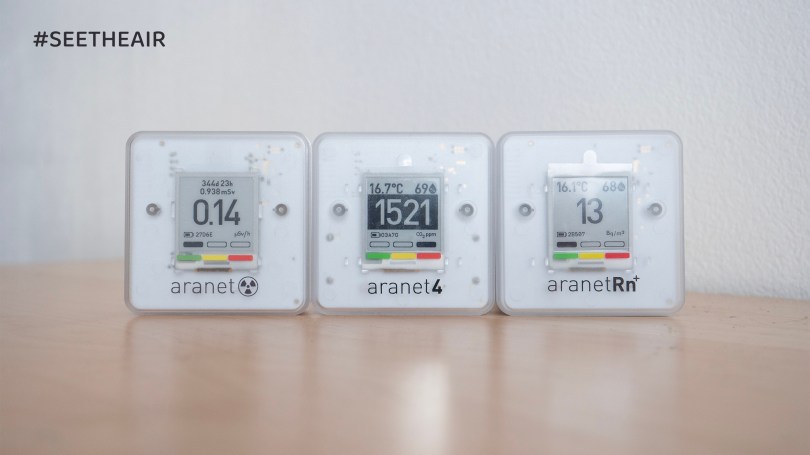
In an era where indoor air quality and environmental safety are of a high importance, aranet has emerged as one of the leaders in providing reliable and intuitive monitoring solutions. See The Air has thoroughly reviewed several of aranet’s innovative products, each designed to empower individuals with crucial insights into their living spaces. From carbon dioxide levels to radon gas and even radiation, aranet offers peace of mind through precise and accessible data.

Most aranet monitors stand out by providing a holistic view of your environment, often including temperature, relative humidity, and atmospheric pressure alongside their primary measurements. This multi-parameter approach helps users understand the interplay of various factors affecting their indoor comfort and health.

Read More »

The CO2 Debate: A Parallel to the Egg Dilemma

The discussion around carbon dioxide (CO2) in indoor air quality (IAQ) often brings up a fascinating parallel to another long-standing debate: the health effects of eggs.

The Indisputable Value (Eggs & CO2 as Proxies):

Just as eggs are widely recognized for their nutritional value – a powerhouse of protein, vitamins, and minerals – CO2 in IAQ assessment holds an undeniable, practical value. We know that CO2 levels are incredibly useful as a proxy. They effectively signal ventilation rates, which in turn are crucial indicators for the potential airborne transmission of diseases and the presence of odors indoors. In this sense, CO2 is a vital tool for understanding and managing our indoor environments, much like eggs are a staple in many healthy diets.

Read More »

The EU’s New EPBD: Why Indoor Air Quality Needs a Unified Standard

The recently updated Energy Performance of Buildings Directive (EPBD) is a pivotal legislative framework aimed at improving the energy efficiency of buildings across the European Union. While its primary focus remains on energy savings and decarbonization, the revised EPBD now formally recognizes the crucial link between energy performance and Indoor Environmental Quality (IEQ). This update requires member states to address IEQ in their national legislation, ensuring that energy-efficient buildings also support the health, comfort, and well-being of their occupants.


A Framework for IEQ, Not a Rigid Standard

A significant aspect of the updated EPBD is its approach to IEQ. Rather than imposing a single, rigid set of Europe-wide limit values for all IEQ parameters, the directive establishes a flexible framework. This approach acknowledges the vast diversity in climate zones, building types, and occupant needs across the EU. The consensus is that a one-size-fits-all model would be counterproductive, potentially leading to suboptimal outcomes and hindering innovation.

The new EPBD defines IEQ as a comprehensive concept that includes several key domains:

  • Indoor Air Quality (IAQ): Addressing contaminants and ventilation.
  • Thermal Comfort: Pertaining to temperature and humidity.
  • Lighting: Considering both natural and artificial light.
  • Acoustics: Controlling internal and external noise.
Read More »

A Compromised Approach to Indoor Air Quality Assessment

Professionals in the field of indoor air quality sometimes compromise the accuracy of their assessments by opting for short-term sampling periods. While quick measurements can provide preliminary insights, they may not accurately reflect the dynamic nature of indoor air quality. Factors such as occupancy patterns, ventilation systems, and external influences can significantly impact pollutant concentrations over time. By relying on brief sampling periods, professionals risk drawing incorrect conclusions about long-term exposure risks and the effectiveness of mitigation strategies. To obtain a comprehensive understanding of indoor air quality, it is essential to employ continuous monitoring techniques or extended sampling periods that capture the full range of variations in pollutant levels.

Common Misconceptions about Air Quality Monitoring

A prevalent misconception in the field is the practice of taking short-term air samples, often lasting 10 minutes or an hour, to assess indoor air quality. While this approach might provide a snapshot of conditions at a specific moment, it fails to capture the full picture of air quality fluctuations over time. Such limited data can lead to inaccurate conclusions and potentially miss critical issues that may arise during occupied or unoccupied periods or under different operational conditions.

Comprehensive Air Quality Monitoring: A Holistic Approach

To effectively evaluate indoor air quality, a more comprehensive approach is required. Continuous monitoring systems equipped with sensors capable of measuring various pollutants, including carbon dioxide, volatile organic compounds (VOCs), particulate matter, and temperature and humidity, offer a more accurate and insightful assessment.

These systems can collect data at regular intervals, providing real-time insights into air quality trends and enabling timely interventions to address any issues that may arise.

Specific Pollutants and Monitoring Techniques

Different pollutants require specific monitoring techniques:

  • Particulate Matter: Regulatory limits for PM2.5 are commonly specified for 24-hour or annual averages. Consequently, sampling protocols should be designed to capture these temporal scales. The World Health Organization (WHO) has established guideline limits of 5 μg/m³ for the annual mean and 15 μg/m³ for the 24-hour mean of PM2.5.
  • Radon: Radon limits are based on annual concentrations. To accurately assess the average annual radon level in a home, it’s crucial to strategically place radon measurement devices in areas where occupants spend the most time, such as bedrooms, living rooms, and basements. The measurement period should ideally be at least 91 days to ensure a reliable estimate of the average annual exposure. However, to ensure an accurate assessment of the average annual radon level in a home, Health Canada recommends conducting radon tests over a period of 3 to 12 months. This timeframe allows for a comprehensive evaluation of radon fluctuations throughout the year and provides a reliable estimate of long-term exposure.
  • Gases: In many cases a diffusion tube, which is a scientific instrument designed to passively measure the concentration of specific gases (VOCs, NO2, etc.) in the air, is commonly used to track average air pollution levels over periods ranging from days to approximately a month. It’s important to note that longer sampling times generally improve the detection limits for low-concentration analytes, but they can also increase the risk of breakthrough, where analytes exceed the adsorbent capacity of the tube. Therefore, the optimal sampling time should be determined based on the specific analytical requirements and the characteristics of the sampling site. Additionally, continuous sensors, such as electrochemical, metal oxide, and UV absorption sensors, are employed to measure indoor gas concentrations. To ensure appropriate assessment against regulatory standards, the sampling duration should align with the specific timeframes established by these standards. For example, WHO has set a 24-hour limit of 25 μg/m³ for nitrogen dioxide (NO₂) and an 8-hour limit of 100 μg/m³ for ozone (O₃).
  • Carbon dioxide (CO2): CO2 monitoring in indoor spaces is essential for maintaining optimal ventilation rates and occupant well-being. An absolute threshold of around 800 or 1000 ppm has been established as a guideline for safe CO2 levels. To accurately assess CO2 concentrations, measurements should be taken when the room is fully occupied. This is because CO2 levels are primarily influenced by human activity, and empty spaces will not provide meaningful data. By monitoring CO2 levels during periods of maximum occupancy, we can ensure that the established threshold is not exceeded, reducing the risk of negative health impacts associated with poor indoor air quality. In certain cases, activities like cooking or burning candles can also contribute to elevated CO2 levels, necessitating additional monitoring considerations.

Air quality within buildings is not static; it fluctuates throughout the day due to various factors such as occupancy, activities, materials used, and environmental indoor and outdoor conditions like temperature, humidity, and air pressure. By understanding the dynamic nature of indoor air quality and employing appropriate monitoring techniques, building occupants can enjoy healthier and more productive environments.


Review: InBiot Mica Plus – A Comprehensive IAQ Solution for Green Buildings and Beyond

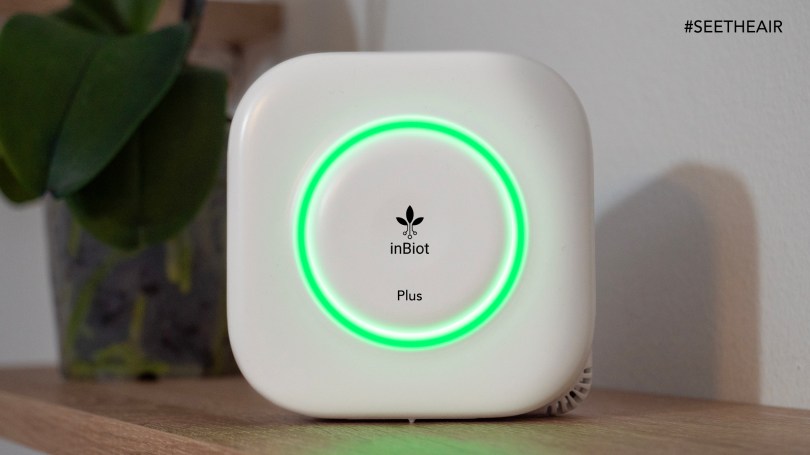
The inBiot Mica Plus is a robust indoor air quality monitor designed squarely for the B2B market, catering specifically to buildings aiming for top-tier Indoor Environmental Quality (IEQ) and compliance with stringent green building certifications like WELL, RESET, and LEED. With a promised 10-year lifespan and minimal maintenance thanks to automatic calibration, the Mica Plus is a compelling long-term investment.

Equipped with a comprehensive sensor suite including Temperature, Relative Humidity, CO₂, TVOC, Particulate Matter, and Formaldehyde, the Mica Plus provides a detailed picture of indoor air conditions. Its connectivity options are equally impressive, spanning basic Wi-Fi to advanced protocols like Power over Ethernet (PoE), LoRaWAN, Sigfox, NB-IoT/LTE-M, and local communication options such as Modbus RTU/TCP/IP, API, BACnet, and MQTT, ensuring seamless integration into existing building management systems.

Read More »

Review: aranetRn+ – A Deep Dive into Radon Awareness

Aranet has carved a niche for itself in the air quality monitoring space, establishing a distinct design language that prioritizes clarity and functionality. The aranet4, their popular CO2 monitor, set the stage with its minimalist aesthetic and intuitive e-ink display. The aranetRn+ builds upon this foundation, tackling the complex issue of radon monitoring while staying true to aranet’s core principles.

The aranetRn+ maintains the familiar clean lines and robust build quality associated with aranet products. However, the nature of radon detection necessitates a deeper profile. The device houses a α-decay event detection using ionization chamber, which contributes to its increased depth. While slightly bulkier, the aranetRn+ remains a discreet and unobtrusive addition to any home.

Read More »

Win a Free Copy of “Nicholas Tackles Indoor Air Quality”

Does your child dream of being a superhero? Nicholas might not have a cape, but he has a superpower most people can’t see: the ability to spot air pollution! In our exciting new children’s book, Nicholas Tackles Indoor Air Quality, join Nicholas and his friends on an adventure to learn about the importance of clean air and discover fun ways to fight invisible pollutants indoors!

Want to win a FREE copy for your little superhero? Here’s your chance!

We’re giving away one FREE printed copy delivered straight to your door through Amazon.com (for US residents only), and one FREE downloadable PDF copy (worldwide) for your convenience.

Entering is easy! Just choose one (or both!) of these ways to participate:

  • Leave a comment on your social media (Linkedin, Bluesky, Instagram, etc.).
  • Leave a comment below this article, telling us why clean indoor air is important to you.

The more the merrier, but the deadline to enter is December 15th, 2024, at 23:59 CET.

We’ll randomly select two lucky winners on December 16th and announce them on our social media channels. So, what are you waiting for? Help Nicholas spread the message of clean indoor air and enter today!

Good luck from the team behind “Nicholas Tackles Indoor Air Quality”!

A New Children’s Book Empowers Young Readers to Breathe Clean Indoor Air

Nicholas isn’t your average kid. He has a unique superpower: he can see invisible air pollution. When Nicholas notices these harmful particles making his classmates sick, he knows he must take action. But how can you fight something you can’t see?

In this captivating new children’s book, Nicholas Tackles Indoor Air Quality, young readers join Nicholas on an exciting adventure to improve indoor air quality. With the help of his friends, Nicholas learns about the importance of clean air and discovers practical ways to combat air pollution.

Read More »

Breathe Easy Together: Register Now for The Safer Air Project Report Launch!

Creating a world where everyone can breathe safely indoors.

The pandemic has highlighted a critical truth: many diseases spread through the air we breathe. This makes clean indoor air essential for minimizing the risk of infection in our shared spaces, especially for those most vulnerable to airborne illnesses. Everyone deserves the right to access public spaces safely, and that right starts with clean air.

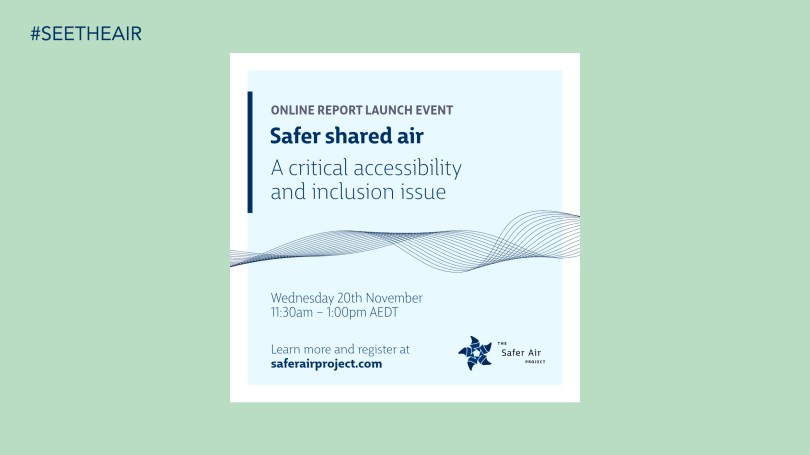
The Safer Air Project is excited to invite you to the online launch of our groundbreaking report, Safer Shared Air: A Critical Accessibility and Inclusion Issue. Join us to explore the importance of clean indoor air for public health and accessibility.

Here’s what you can expect:

  • Discover why safer shared air is a critical accessibility and inclusion issue.
  • Learn how we can work together to ensure healthier indoor air for everyone.
  • Gain insights from our report on the impact of poor indoor air quality and its connection to public health and inclusion.

This event is free and open to everyone!

Register now: https://www.saferairproject.com/

Together, we can create a world where everyone breathes safely indoors. Don’t miss this important discussion!

Review: TSI OmniTrak™ Solution a Tool for Professionals

The TSI OmniTrak™ Solution is a versatile and user-friendly air quality monitor/tracker that offers a comprehensive solution for tracking various pollutants. Equipped with a smart station and a modular design, this device provides data on air quality, making it an invaluable tool for both individuals and professionals. Disclaimer: This review was sponsored by TSI. However, my commitment to providing an unbiased and honest assessment of the product remains unchanged. The opinions expressed in this review are solely my own and are based on my personal experience with the TSI OmniTrak™ Solution.

Key Features and Benefits:

  • Modular Design: The TSI OmniTrak™ Solution supports a wide range of modules, allowing users to customize their monitoring needs. I was fortunate to receive the Ammonia, Ozone, and PM module for fine particles, which also functions as a particle counter. The modularity ensures flexibility and adaptability to different environmental conditions.
  • Wireless Connectivity: One of the standout features is the wireless communication between the modules and the Smart Station via Bluetooth®. This eliminates the need for physical connections, making it convenient to deploy and monitor air quality in various locations.
  • Portable Option: The Smart Station can be used with or without attached modules. This means you can carry the station with you and track air quality on the go by simply attaching the desired module.
  • Intuitive Interface: The large screen on the smart station resembles a smartphone, and it appears to run on an Android operating system. This familiar interface makes navigation and data interpretation straightforward.
  • Real-time Monitoring and Data Recording: The OmniTrak provides real-time measurements of various pollutants. Additionally, the “Study” function allows users to record data for further analysis and comparison.
  • Cloud Connectivity and Data Access: The device connects to the TSI Link™ cloud platform via Wi-Fi, enabling users to access and analyze data from anywhere. Furthermore, connecting the device to a computer via USB-C cable provides another option for data transfer.
Read More »