
Understanding AHAM and CADR: Your Guide to Cleaner Indoor Air


In today’s world, indoor air quality is more important than ever.  Dust, pollen, and even wildfire smoke can significantly impact our health and comfort. Air purifiers offer a solution, but navigating the world of product specifications can be confusing. Is product efficiency a sufficient way to rate them, or should we think about effectiveness? This article explains the role of the Association of Home Appliance Manufacturers (AHAM) and the importance of the Clean Air Delivery Rate (CADR) in choosing the right air purifier for your needs, plus an upcoming standard that wants to deliver even better indoor air solutions.  

Understanding CADR

The Clean Air Delivery Rate (CADR) is a crucial metric that indicates how quickly an air purifier can remove specific types of particles from a room.  It measures the volume of clean air delivered by the unit and is expressed in cubic meters per hour (CMH) or cubic feet per minute (CFM). AHAM tests air purifiers for three common pollutants; smoke, dust, and pollen. Note: CMH can be converted to CFM by dividing by 1.7.

Read More »
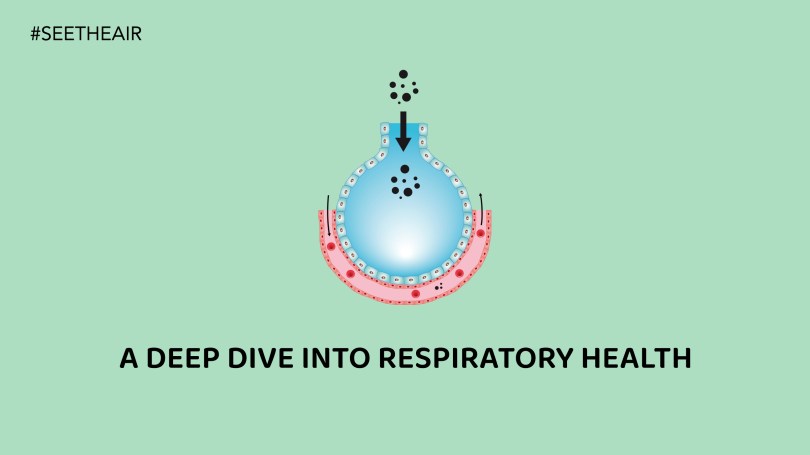
Alveolar Sacs and Particulate Matter: A Deep Dive into Respiratory Health

The respiratory system is a complex network responsible for the vital exchange of oxygen (O2) and carbon dioxide (CO2). At the heart of this system lie the alveoli, tiny air sacs where this gas exchange occurs. However, these delicate structures are also vulnerable to the intrusion of harmful particles, which can have serious health consequences.   

The Journey of Inhaled Particles

When we breathe, we inhale a variety of particles, including dust, smoke pollutants, and pathogens. The size of these particles plays a crucial role in determining how far they travel into our respiratory system. Larger particles are typically trapped in the upper airways, while smaller ones can penetrate deeper into the lungs.   

Read More »

Don’t Be Fooled by Mass: Why Counting Particles Is One Way Street for Sub-micron Air Quality Monitoring

While monitoring air quality, scientists traditionally relied on mass concentration to measure particulate matter (PM). This metric tells you the total mass of particles per unit volume of air. But for sub-micron particles – those less than one micrometer in diameter – mass concentration falls short. Here’s why measuring particle number by size distribution is a superior approach.

The Small Matter of Small Particles

Sub-micron particles are incredibly tiny. Imagine a human hair – typically around 70 microns thick. A sub-micron particle is hundreds to thousands of times smaller! Due to their miniscule mass, even large numbers of sub-micron particles can register a low mass concentration. This can be misleading, as the health risks they pose aren’t dependent solely on weight.

Penetrating Deep: Size Matters More

Sub-micron particles, especially those in the ultrafine range (less than 100 nanometers), are deeply concerning. Their small size allows them to bypass the body’s natural defenses and infiltrate deep into the lungs. These particles can even enter the bloodstream, potentially causing respiratory and cardiovascular problems.

Read More »

Fireworks are Bad New for your Body

Fireworks or pyrotechnics are used heavily to this day in many places around the world to celebrate various events. People have them associated with fan and parties, so they are not very open on hearing that they are bad for our health. Fireworks elevate air levels of particulate matter with several metallic components and gases during their explosion. Studies show that hospital admissions with respiratory issues increase during similar events all around the world.

The color of the fireworks is subject to the metals they mix, and while these metals heat from the explosive materials, they produce various color hues.

Read More »

What does my air filter reveal about my indoor environment? In-Depth Filter Analysis by Camfil

We have indoor air quality monitors and purifiers to manage indoor air, but even the most intelligent domestic devices cannot inspect all the air pollutants present in our indoor spaces, so I thought it was about time to send a filter from the main air purifier to a laboratory for analysis in order to identify all the pollutants that have been present in my house. Maybe there is something I am not aware!

I try my best to keep outdoor pollutants from entering inside like smoke from wood-burning stoves or fumes from vehicle traffic. However, we are humans and we make mistakes, so sometimes we burn the food or introduce pollutants indoors unconsciously.

We humans can smell some pollutants like PAHs or VOCs but sometimes we are unable to detect heavy metals or other pollutants that our nose isn’t able to register, yet we may breathe them. Air purifiers or central HVAC with a filtration system capture those pollutants in the filter media. Then we can analyze the filter and discover aspects of the pollution we hadn’t thought about before.

Read More »