Spectroscopy: The Next Step for Low-Cost Particulate Matter Sensors

The landscape of ambient air quality monitoring is evolving, driven by the increasing availability of low-cost sensors. While current low-cost particulate matter (PM) sensors, which rely on light scattering, provide valuable data on particle size and number, they lack the ability to determine a particle’s composition. This limitation is a significant hurdle in understanding the true nature and origin of air pollution. The future of affordable PM sensors lies in spectroscopy, a technique that will allow for a more detailed analysis of airborne particles.

Read More »

Understanding AHAM and CADR: Your Guide to Cleaner Indoor Air


In today’s world, indoor air quality is more important than ever.  Dust, pollen, and even wildfire smoke can significantly impact our health and comfort. Air purifiers offer a solution, but navigating the world of product specifications can be confusing. Is product efficiency a sufficient way to rate them, or should we think about effectiveness? This article explains the role of the Association of Home Appliance Manufacturers (AHAM) and the importance of the Clean Air Delivery Rate (CADR) in choosing the right air purifier for your needs, plus an upcoming standard that wants to deliver even better indoor air solutions.  

Understanding CADR

The Clean Air Delivery Rate (CADR) is a crucial metric that indicates how quickly an air purifier can remove specific types of particles from a room.  It measures the volume of clean air delivered by the unit and is expressed in cubic meters per hour (CMH) or cubic feet per minute (CFM). AHAM tests air purifiers for three common pollutants; smoke, dust, and pollen. Note: CMH can be converted to CFM by dividing by 1.7.

Read More »

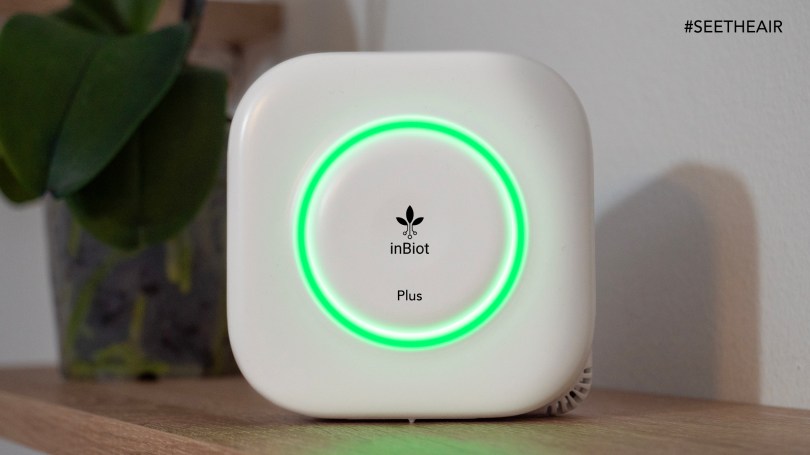
Review: InBiot Mica Plus – A Comprehensive IAQ Solution for Green Buildings and Beyond

The inBiot Mica Plus is a robust indoor air quality monitor designed squarely for the B2B market, catering specifically to buildings aiming for top-tier Indoor Environmental Quality (IEQ) and compliance with stringent green building certifications like WELL, RESET, and LEED. With a promised 10-year lifespan and minimal maintenance thanks to automatic calibration, the Mica Plus is a compelling long-term investment.

Equipped with a comprehensive sensor suite including Temperature, Relative Humidity, CO₂, TVOC, Particulate Matter, and Formaldehyde, the Mica Plus provides a detailed picture of indoor air conditions. Its connectivity options are equally impressive, spanning basic Wi-Fi to advanced protocols like Power over Ethernet (PoE), LoRaWAN, Sigfox, NB-IoT/LTE-M, and local communication options such as Modbus RTU/TCP/IP, API, BACnet, and MQTT, ensuring seamless integration into existing building management systems.

Read More »

A DIY Ventilation Solution for Renters

Renting an apartment often means limited control over modifications, especially when it comes to essential systems like ventilation. Poor indoor air quality can significantly impact health and well-being, but drilling holes for traditional ventilation systems is usually out of the question. This article presents a simple, affordable DIY project using a standard air purifier to bring fresh, filtered air into your rented space without any permanent alterations.

The Problem: Stale Indoor Air and Renting Restrictions

Old apartments but also modern, energy-efficient apartments can sometimes suffer from poor ventilation, leading to a buildup of indoor pollutants like CO2, volatile organic compounds (VOCs), and particulate matter. While opening windows is a simple solution, it’s not always practical due to weather, noise, or outdoor air pollution. Renters often face the added challenge of not being allowed to make structural changes, ruling out traditional ventilation installations.   

The DIY Solution: Air Purifier Ventilation

This project uses a standard standalone air purifier in a novel way to introduce fresh, filtered outdoor air. The key components are:

  • A Standard Air Purifier: Choose one with a HEPA filter for particulate matter and a carbon filter for gases. Programmable models are highly recommended for automation.
  • Flexible Tubing and Window Adapter: These connect the air purifier’s intake to a slightly opened window. You can find suitable tubing and adapters at most hardware stores for around €15.
Read More »

Heart Month: Understanding the Link Between Air Pollution and Heart Disease


February is American Heart Month and Saint Valentine’s Day, a good time to raise awareness about cardiovascular health. While many factors contribute to heart disease, air pollution is a significant and often overlooked risk factor.

The Link Between Air Pollution and Heart Disease

Air pollution is a complex mixture of gases and particulate matter, some of which are particularly harmful to human health. When we breathe in polluted air, these particles can enter our bloodstream and trigger a cascade of negative effects on the cardiovascular system.   

  • Inflammation: Air pollution can cause inflammation in the blood vessels, which can lead to plaque buildup and hardening of the arteries.   
  • Blood Clots: Exposure to air pollution can increase the risk of blood clots, which can lead to heart attacks and strokes.   
  • Arrhythmias: Air pollution can disrupt the electrical activity of the heart, leading to irregular heartbeats.   
  • Heart Failure: Long-term exposure to air pollution can weaken the heart muscle and contribute to heart failure.
Read More »

Book Review: “Indoor Air Quality in Buildings for Well-being: Practical Application Strategies”

A 2023 published book in Spanish, “Calidad del aire interior en los edificios para el bienestar: estrategias de aplicación práctica” (Indoor Air Quality in Buildings for Well-being: Practical Application Strategies), is poised to become an essential resource for improving indoor air quality globally. Authored by Miguel Ángel Campano, Jessica Fernández-Agüera, and Juan José Sendra, this comprehensive guide delves into the critical aspects of indoor air quality (IAQ) and offers practical strategies for creating healthier indoor environments.   

Relevance to Global Initiatives

While currently available in Spanish, this book’s content is highly relevant to international efforts such as the development of Global Open Air Quality Standards (GO AQS). The GO AQS initiative aims to establish universal benchmarks for air quality, and the book provides valuable insights and data that can orient the initiative.

Comprehensive Coverage of Key IAQ Factors

Read More »

Personal Exposure: Tracking Air Quality with Portable Monitors – 6 Months

This article documents my personal experiment tracking air quality exposure for 6 months using two portable, low-cost monitors: one for PM2.5 (particulate matter) and the other for CO2 (carbon dioxide). The experiment aimed to gain insights into personal exposure levels and understand the impact of lifestyle and environmental factors on air quality.

Read More »

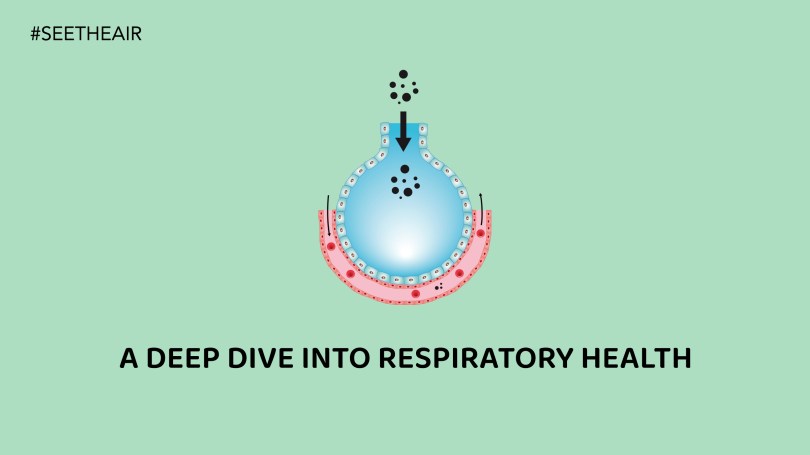
Alveolar Sacs and Particulate Matter: A Deep Dive into Respiratory Health

The respiratory system is a complex network responsible for the vital exchange of oxygen (O2) and carbon dioxide (CO2). At the heart of this system lie the alveoli, tiny air sacs where this gas exchange occurs. However, these delicate structures are also vulnerable to the intrusion of harmful particles, which can have serious health consequences.   

The Journey of Inhaled Particles

When we breathe, we inhale a variety of particles, including dust, smoke pollutants, and pathogens. The size of these particles plays a crucial role in determining how far they travel into our respiratory system. Larger particles are typically trapped in the upper airways, while smaller ones can penetrate deeper into the lungs.   

Read More »

Why Millions in India Breathe Toxic Air

Air pollution is a major health crisis in India. Millions of people in the country are exposed to unhealthy levels of air pollution every day. This is a serious problem that can lead to a variety of health problems, including respiratory diseases, heart disease, and even cancer.   

There are a number of reasons why air pollution is so bad in India. One reason is the large number of vehicles on the roads. India has a rapidly growing economy, and this has led to a surge in the number of cars, trucks, and motorcycles on the roads. These vehicles emit a lot of pollutants into the air.   

Another reason for air pollution in India is industrial activity. India is a major industrial power, and factories and other industrial facilities emit a lot of pollutants into the air.   

Finally, agricultural burning is also a major source of air pollution in India. Farmers often burn crop stubble after harvest, and this can create a thick haze of smoke that can linger for days.   

The Health Effects of Air Pollution

Air pollution can have a serious impact on human health. Short-term exposure to air pollution can cause respiratory problems, such as coughing, wheezing, and shortness of breath. Long-term exposure to air pollution can lead to more serious health problems, such as heart disease, stroke, lung cancer, and even death.   

Read More »

The Future of Air Quality Monitoring: Portable Power

Years ago, I explored the potential of gamification to enhance public engagement with air quality. Now, numerous projects are emerging, promising to deliver user-friendly products that bridge the knowledge gap. Two key players are driving this innovation: sensor manufacturers, who are relentlessly miniaturizing their technology, and startups, which are pioneering innovative solutions to bring these sensors directly to consumers.

Air quality monitoring is no longer a niche concern for environmental scientists. With growing awareness of the impact of air pollution on health, a new wave of portable air quality monitors is poised to revolutionize how we perceive and manage the air we breathe.

Read More »