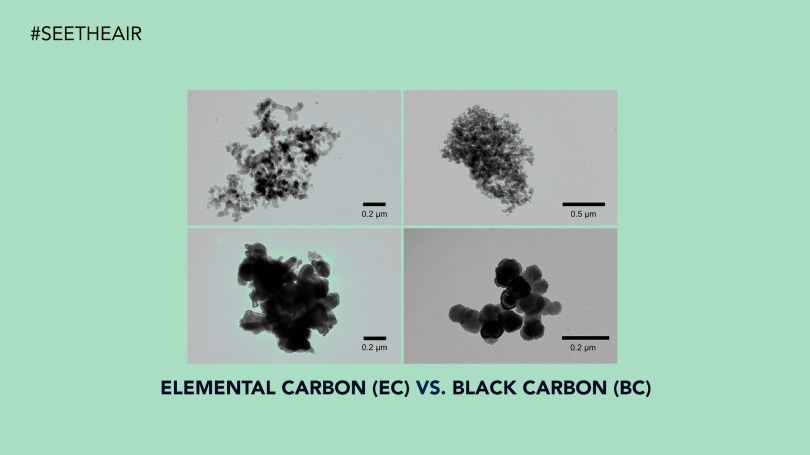
Elemental Carbon (EC) vs. Black Carbon (BC): A Distinction in Measurement and Terminology

The terms Elemental Carbon (EC) and Black Carbon (BC) are both used to describe the product of incomplete combustion of fossil fuels, biomass, and biofuels, which is a significant component of aerosols (airborne particulate matter). While often used interchangeably in general discussion, they represent distinct concepts primarily tied to their respective measurement methodologies. Understanding this difference is crucial in air quality monitoring, climate science, and health studies.

Elemental Carbon (EC): The Reference Method

Elemental Carbon (EC) is the term associated with the reference method for measuring this specific fraction of carbonaceous aerosol.

  • Measurement Method: EC is quantified using thermal-optical analysis. This technique relies on the sequential heating of a filter sample to different temperatures in different atmospheres (non-oxidizing and oxidizing) to distinguish carbon fractions.
  • Standard Protocol: The EN 16909 standard is a prominent European standard for the determination of EC (and Organic Carbon, OC) in ambient air, often employing the thermal-optical reference technique.
  • Specific Protocol: The EUSAAR_2 thermal protocol is a common, specific thermal-optical protocol used to define the temperature steps and atmospheres for the measurement.
  • Charring Correction: A critical part of the thermal-optical method is the charring correction, typically based on the transmittance (or reflectance) of a laser beam through the filter. This corrects for the formation of “pyrolyzed” or “charred” organic carbon during the heating process, which can otherwise be misclassified as EC.
  • Definition: Conceptually, EC represents the carbon in its pure, elemental form—the refractory, graphitic, or amorphous carbon that is the most stable at high temperatures.
Read More »

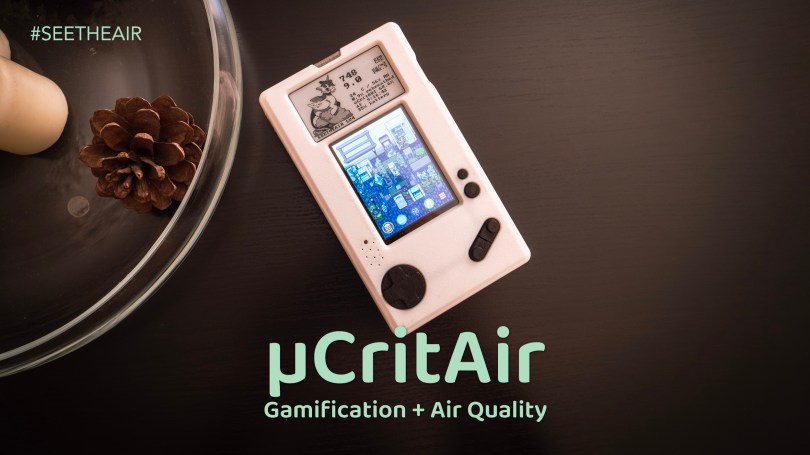
Review: µCritAir Development Kit – Gamifying Our Way to Better Indoor Air

For years, I’ve been advocating for the integration of gamification into everyday tools to drive meaningful behavioral change, especially concerning something as vital yet often invisible as indoor air quality. We need engaging ways to keep people motivated to understand and improve their environments. So, when I encountered the µCritAir (it actually found me), I was immediately intrigued. This isn’t just another air quality monitor; it’s an experiment in engagement, using a digital pet – a µCritter – whose health depends directly on the air you breathe. Keep your air clean, and your critter thrives. Let it worsen, and its health suffers. It’s a compelling, tangible connection between data and consequence.

Development Kit

It’s important to set expectations correctly: the µCritAir is currently available as a Development Kit. This isn’t a polished, mass-market product yet. Instead, it’s aimed squarely at enthusiasts, early adopters, and tinkerers who enjoy being part of the development journey. Yes, this means you’ll encounter some unpolished aspects, perhaps a bug here or there, or features still under active development. However, this is also its strength for the right audience. The team behind µCritAir is clearly passionate and actively working on both software and hardware improvements. They genuinely value the feedback from their early users, creating a collaborative dynamic that’s exciting to be a part of.

Read More »

Global Coalition Launches Initiative to Establish Universal Indoor Air Quality Standards: Global Open Air Quality Standards (GO AQS)

A diverse global coalition of scientists, air quality experts, and industry leaders has united to establish the Global Open Air Quality Standards (GO AQS), an unprecedented initiative aimed at creating universal indoor air quality (IAQ) standards. This groundbreaking effort seeks to ensure that everyone, regardless of location or socio-economic status, has access to the knowledge and tools needed to enhance their health and well-being through improved air quality.

GO AQS will serve as an authoritative and comprehensive resource for scientists, engineers, public health officials, businesses, and policymakers worldwide. By providing accessible, consistent and clear, standardised guidelines for IAQ, it empowers people to make informed decisions about their living and working environments, directly impacting health and productivity.

IAQ significantly affects our health, cognitive function, and overall productivity. Poor indoor air can exacerbate respiratory conditions, increase the risk of cardiovascular problems, and contribute to reduced work performance. Establishing universal air quality standards is a critical step in ensuring equitable access to clean and healthy air globally.

The coalition comprises experts from different fields including public health, environmental science, epidemiology, occupational health, engineering, and air quality research. Together, they are dedicated to developing GO AQS standards that are both scientifically robust and practical for implementation across diverse settings. These standards will address a wide range of indoor pollutants, including particulate matter (PM and PCN), carbon dioxide (CO2), carbon monoxide (CO), ozone (O3), and formaldehyde (CH2O), which are known to have significant adverse effects on human health and environment.

GO AQS aims to be a valuable tool for the public, private sector, and academia alike. Organisations that adopt these standards can enhance the health and well-being of their employees and customers, while simultaneously reducing their environmental footprint. This initiative also supports broader sustainability goals by promoting healthier indoor environments. 

While air quality interrogators and manufacturers are supportive of the overall goals of GO AQS, there are areas where the draft version requires further refinement to ensure its practical implementation. We remain committed to working collaboratively with all stakeholders to finalise a version of GO AQS that is both effective and feasible for the industry. Therefore the coalition is currently finalising the GO AQS standards and developing educational materials to facilitate their global implementation. The official launch is anticipated in December 2024, marking a significant milestone in the global effort to prioritise IAQ.

Read More »

Los Libros de Nicholas ahora están disponible en Español – Nicholas’ books are available in Spanish

Los libros de Nicholas ahora están disponible en Español gracias a la colaboración con el Instituto Universitario de Medio Ambiente y Grupo de investigación Química Analítica Aplicada de la Universidade da Coruña. 

La educación ambiental de los niños es muy importante para poder promover la conciencia ecológica y el cuidado del ambiente en la ciudadanía. El aire puro que necesitamos para respirar y vivir es un derecho humano. La ONU calcula que aproximadamente 7 millones de personas mueren cada año de forma prematura debido a la contaminación del aire. Ademas un 90% de la población mundial respira aire contaminado.

Los libros van a estar disponibles en varias bibliotecas en Galicia (España) pero también están disponible en Amazon.