Understanding AHAM and CADR: Your Guide to Cleaner Indoor Air


In today’s world, indoor air quality is more important than ever.  Dust, pollen, and even wildfire smoke can significantly impact our health and comfort. Air purifiers offer a solution, but navigating the world of product specifications can be confusing. Is product efficiency a sufficient way to rate them, or should we think about effectiveness? This article explains the role of the Association of Home Appliance Manufacturers (AHAM) and the importance of the Clean Air Delivery Rate (CADR) in choosing the right air purifier for your needs, plus an upcoming standard that wants to deliver even better indoor air solutions.  

Understanding CADR

The Clean Air Delivery Rate (CADR) is a crucial metric that indicates how quickly an air purifier can remove specific types of particles from a room.  It measures the volume of clean air delivered by the unit and is expressed in cubic meters per hour (CMH) or cubic feet per minute (CFM). AHAM tests air purifiers for three common pollutants; smoke, dust, and pollen. Note: CMH can be converted to CFM by dividing by 1.7.

Read More »

A DIY Ventilation Solution for Renters

Renting an apartment often means limited control over modifications, especially when it comes to essential systems like ventilation. Poor indoor air quality can significantly impact health and well-being, but drilling holes for traditional ventilation systems is usually out of the question. This article presents a simple, affordable DIY project using a standard air purifier to bring fresh, filtered air into your rented space without any permanent alterations.

The Problem: Stale Indoor Air and Renting Restrictions

Old apartments but also modern, energy-efficient apartments can sometimes suffer from poor ventilation, leading to a buildup of indoor pollutants like CO2, volatile organic compounds (VOCs), and particulate matter. While opening windows is a simple solution, it’s not always practical due to weather, noise, or outdoor air pollution. Renters often face the added challenge of not being allowed to make structural changes, ruling out traditional ventilation installations.   

The DIY Solution: Air Purifier Ventilation

This project uses a standard standalone air purifier in a novel way to introduce fresh, filtered outdoor air. The key components are:

  • A Standard Air Purifier: Choose one with a HEPA filter for particulate matter and a carbon filter for gases. Programmable models are highly recommended for automation.
  • Flexible Tubing and Window Adapter: These connect the air purifier’s intake to a slightly opened window. You can find suitable tubing and adapters at most hardware stores for around €15.
Read More »

Personal Exposure: Tracking Air Quality with Portable Monitors – 6 Months

This article documents my personal experiment tracking air quality exposure for 6 months using two portable, low-cost monitors: one for PM2.5 (particulate matter) and the other for CO2 (carbon dioxide). The experiment aimed to gain insights into personal exposure levels and understand the impact of lifestyle and environmental factors on air quality.

Read More »

Why Millions in India Breathe Toxic Air

Air pollution is a major health crisis in India. Millions of people in the country are exposed to unhealthy levels of air pollution every day. This is a serious problem that can lead to a variety of health problems, including respiratory diseases, heart disease, and even cancer.   

There are a number of reasons why air pollution is so bad in India. One reason is the large number of vehicles on the roads. India has a rapidly growing economy, and this has led to a surge in the number of cars, trucks, and motorcycles on the roads. These vehicles emit a lot of pollutants into the air.   

Another reason for air pollution in India is industrial activity. India is a major industrial power, and factories and other industrial facilities emit a lot of pollutants into the air.   

Finally, agricultural burning is also a major source of air pollution in India. Farmers often burn crop stubble after harvest, and this can create a thick haze of smoke that can linger for days.   

The Health Effects of Air Pollution

Air pollution can have a serious impact on human health. Short-term exposure to air pollution can cause respiratory problems, such as coughing, wheezing, and shortness of breath. Long-term exposure to air pollution can lead to more serious health problems, such as heart disease, stroke, lung cancer, and even death.   

Read More »

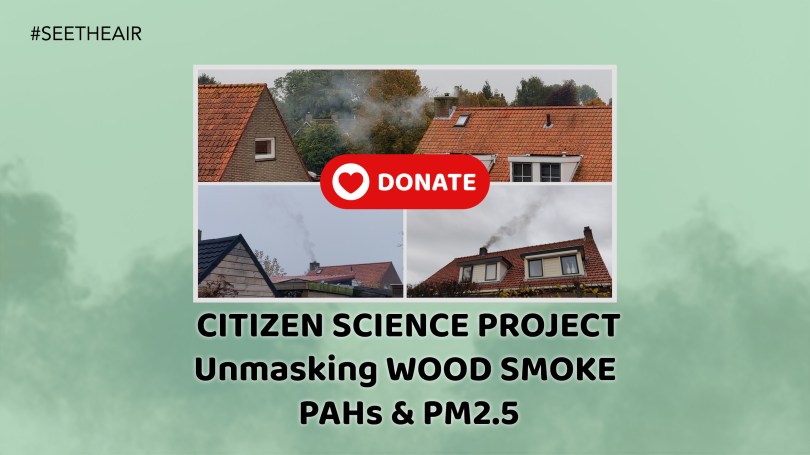
Help Us Breathe Cleaner Air: Citizen Science Project Seeks Donations for Wood Smoke Research

I won’t write a long introduction because this is of urgent matter for people to understand and support. While wood-burning stoves offer a tempting escape from soaring energy costs, they also release harmful substances into our homes and communities. These include fine particulate matter (PM2.5) and Polycyclic Aromatic Hydrocarbons (PAHs), both of which have been linked to serious health issues, including cancer.

Unveiling the Hidden Danger

Despite the known risks, we still lack sufficient data on PAHs concentrations in residential areas where wood burning is common. The location of investigation will be chosen in the Netherlands or Belgium. This is where your help is crucial.

By supporting this citizen science project, you’ll help us gather vital information about the impact of wood smoke on our air quality. The project will measure PAHs and PM2.5 levels in a residential area heavily reliant on wood burning for heating. This data will be invaluable for raising awareness among policymakers and advocating for stronger air quality regulations.

How Your Donation Makes a Difference

Analyzing air for PAHs is a complex process requiring specialized equipment and laboratory analysis. With your support, the project will:

  • Purchase air pumps and ten (10) absorption tubes to collect air samples.
  • Conduct laboratory analysis to identify and quantify PAHs.
  • Measure PM2.5 levels using advanced sensors.
  • Compare PAHs levels in wood-burning areas to background levels.

Join the Fight for Clean Air

Your donation will directly contribute to a healthier community. Together, we can uncover the hidden dangers of wood smoke and work towards cleaner air for everyone. Finally, I want to thank Dieter Pientka for his passion to investigate this crucial subject.

Help us make a difference. Donate today!

Air Pollution Chronicle (Granada, Spain Edition)

They say that good air quality is a fundamental right for all, and at the same time, they say that 99% of the population worldwide is exposed to air pollution above WHO Air Quality Guidelines. Mixed messages here. Even though I have already shared the story on a Tweet thread, I decided to write an article as well because of the permanence of the article and because it is easier to share.

December 17th, 2023

I arrived in Granada, Spain for the holidays. A blanket of smoke was covering Granada and the small towns around with a total area of over 100 km2. Although I was super tired, the intense smell of smoke inside the apartment and the fact that I knew that there was a lot of particulate pollution indoors didn’t permit me to sleep well.

Read More »

How Easy is for Wildfire Smoke to Travel Across States and Countries

The animated image below was created by Mark Parrington and was originally publish on his Twitter account on June 6th, 2023.

I believe it is an eye opening animation as it reveals how easy air pollution travels across states and countries. We call this pollution Cross-Border Air Pollution.

2023 Canadian Wildfires and Smoke
Read More »

Wildfires and Indoor Air Quality

It was brought to my attention by Dr. Howook Chang that most media are talking about wildfires, what the color of the sunset looks like, and that people shouldn’t go outside. However, no one is talking about the fact that smoke can infiltrate houses quite easily. Wildfire smoke can join you during dinner or while you are sleeping.

Air quality matters more indoors where we spend most of our time. So here is a series of things to keep in mind in order to breathe healthy air.

Monitor Air Quality

First of all, measure the air quality indoors and outdoors. The reason we need to measure both environments is that we need to benchmark the conditions and take decisions based on the data we have collected. Pollutants can easily come inside the house during ambient pollution events, whether is a wildfire, traffic, or a dust storm (e.g. Sahara Dust). Windows, doors, HVAC systems, or simply not good insulation are some of the main entrances of pollution indoors.

Read More »

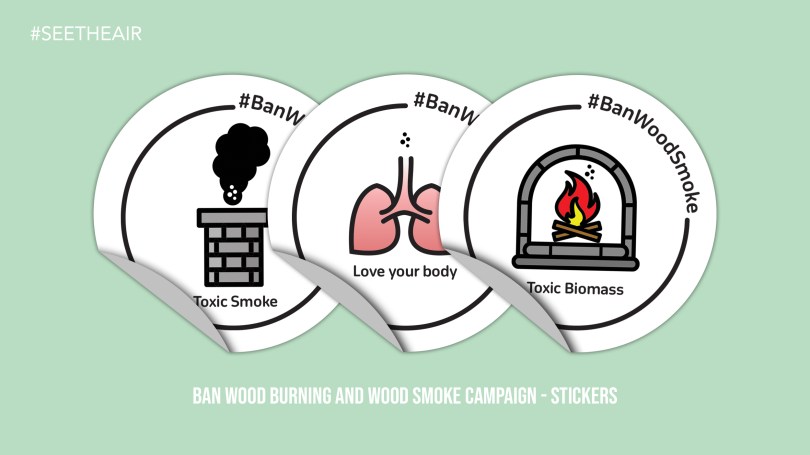
Ban Wood Smoke – Stickers

In my effort to help clean air communities to raise awareness (I am not only words), I decided to design three simple circular stickers which I will distribute to the communities once the poll is closed and you have selected the best sticker.

Choose one between the three of them and apply to get stickers once the poll is closed. You can apply for the winning sticker via the contact page. Thank you!

Read More »

The Dark Side of the Wood Stove Industry

You probably have seen “cozy” images of fireplaces or wood stoves with happy people, a blanket around them, and a hot beverage and you may have thought that’s something very appealing, I want that! Well, I would suggest thinking twice before taking that decision and if you have already taken it, maybe it’s time to undo your mistake.

You see, people get sick thanks to these “cozy” elements in houses. It’s very hard to undo the brain wash the wood stove industry has done all of these years but we have to realize that wood burning is neither sustainable nor healthy.

Many claims that biomass is sustainable but this is a myth. A story designed to push people into spending money for status or simple ineffective heating. You see, clean energy (wind, solar, etc) doesn’t require the user to buy fuel, logs, or pellets every season. It is there for us but doesn’t generate constant revenue for the companies.

Read More »