The EU’s New EPBD: Why Indoor Air Quality Needs a Unified Standard

The recently updated Energy Performance of Buildings Directive (EPBD) is a pivotal legislative framework aimed at improving the energy efficiency of buildings across the European Union. While its primary focus remains on energy savings and decarbonization, the revised EPBD now formally recognizes the crucial link between energy performance and Indoor Environmental Quality (IEQ). This update requires member states to address IEQ in their national legislation, ensuring that energy-efficient buildings also support the health, comfort, and well-being of their occupants.


A Framework for IEQ, Not a Rigid Standard

A significant aspect of the updated EPBD is its approach to IEQ. Rather than imposing a single, rigid set of Europe-wide limit values for all IEQ parameters, the directive establishes a flexible framework. This approach acknowledges the vast diversity in climate zones, building types, and occupant needs across the EU. The consensus is that a one-size-fits-all model would be counterproductive, potentially leading to suboptimal outcomes and hindering innovation.

The new EPBD defines IEQ as a comprehensive concept that includes several key domains:

  • Indoor Air Quality (IAQ): Addressing contaminants and ventilation.
  • Thermal Comfort: Pertaining to temperature and humidity.
  • Lighting: Considering both natural and artificial light.
  • Acoustics: Controlling internal and external noise.
Read More »

Benchmarking: The Ultimate Catalyst for Better Air Quality Through Global Standards

This article first appeared on www.goaqs.org

Air quality is an invisible yet pervasive factor influencing our health, productivity, and overall well-being. While awareness of air pollution is growing, translating that awareness into actionable behavioral change remains a significant challenge. The key to unlocking this transformation lies in the power of benchmarking—a potent tool that, when coupled with global standards like the proposed Global Air Quality Standard (GO AQS), can empower individuals and communities to breathe cleaner air.

The Power of Comparison: Learning from Other Fields

The effectiveness of benchmarking as a driver for improvement is not a new concept; it has long been a cornerstone of success in diverse fields. Consider the world of athletics: elite athletes constantly benchmark their performance—speed, strength, endurance—against competitors in their category. This isn’t about shaming, but about identifying areas for improvement. A runner who sees their sprint times lagging behind others in their age group knows exactly where to focus their training. Similarly, in healthcare, patients track metrics like blood pressure or cholesterol against established healthy ranges or anonymized data from similar patient populations. This comparison provides a clear understanding of their health status, prompting necessary lifestyle changes or medical interventions.

A practical, personal example vividly illustrates this point: as an individual tracking my resting heart rate through an app that allows comparison against +56,000 users worldwide. Seeing a “superb” rating, indicating excellent heart aging, provides tangible positive reinforcement and validates my health efforts. Conversely, a less favorable comparison would flag a problematic area, encouraging focused action. This simple yet powerful mechanism of comparison fosters accountability and motivates behavioral adjustments.

Read More »

Tools for Navigating Global Air Quality Standards, and the Push for Universal Equity

The air we breathe is fundamental to life, yet the quality of that air varies drastically across the globe. Understanding the complexities of air quality standards (AQS) is crucial for policymakers, researchers, and concerned citizens alike. Thankfully, several invaluable tools exist to navigate this complex landscape.   

Two prominent resources stand out: the WHO’s Air Quality Standards tool and the STC34’s IEQ Guidelines platform.

The WHO’s Interactive Tool: A Global Overview

The World Health Organization (WHO) has developed a powerful interactive tool, accessible at https://worldhealthorg.shinyapps.io/Air_Quality_Standards_V2_1/, that allows users to explore ambient AQS from countries worldwide. This platform provides a user-friendly interface to compare standards for key pollutants such as particulate matter (PM2.5, PM10), ozone (O3), nitrogen dioxide (NO2), sulfur dioxide (SO2), and carbon monoxide (CO). Users can filter by country, pollutant, and averaging time, gaining a comprehensive understanding of the diverse regulatory approaches adopted globally.   

Read More »

Join the Global Open Air Quality Standards Initiative

The air we breathe is fundamental to our health and well-being, yet air quality, particularly indoors, remains a complex and often overlooked issue. Communicating this complexity to the public, ensuring consistent industry practices, and guaranteeing equitable access to clean air for everyone are critical challenges. That’s why we’re excited to invite you to join the Global Open Air Quality Standards (GO AQS) initiative.   

GO AQS is a collaborative effort aimed at developing and promoting universally recognized standards for indoor air quality. This open invitation extends to researchers, industry professionals, policymakers, and anyone passionate about ensuring healthy air for all. We believe that by working together, we can create a world where clean air is not a privilege, but a fundamental right.   

Why is Academia’s Support Crucial?

The academic community plays a vital role in the success of GO AQS. Your expertise and research are essential for establishing robust, science-backed standards. Here’s why your involvement is so important:

Read More »

Global Coalition Launches Initiative to Establish Universal Indoor Air Quality Standards: Global Open Air Quality Standards (GO AQS)

A diverse global coalition of scientists, air quality experts, and industry leaders has united to establish the Global Open Air Quality Standards (GO AQS), an unprecedented initiative aimed at creating universal indoor air quality (IAQ) standards. This groundbreaking effort seeks to ensure that everyone, regardless of location or socio-economic status, has access to the knowledge and tools needed to enhance their health and well-being through improved air quality.

GO AQS will serve as an authoritative and comprehensive resource for scientists, engineers, public health officials, businesses, and policymakers worldwide. By providing accessible, consistent and clear, standardised guidelines for IAQ, it empowers people to make informed decisions about their living and working environments, directly impacting health and productivity.

IAQ significantly affects our health, cognitive function, and overall productivity. Poor indoor air can exacerbate respiratory conditions, increase the risk of cardiovascular problems, and contribute to reduced work performance. Establishing universal air quality standards is a critical step in ensuring equitable access to clean and healthy air globally.

The coalition comprises experts from different fields including public health, environmental science, epidemiology, occupational health, engineering, and air quality research. Together, they are dedicated to developing GO AQS standards that are both scientifically robust and practical for implementation across diverse settings. These standards will address a wide range of indoor pollutants, including particulate matter (PM and PCN), carbon dioxide (CO2), carbon monoxide (CO), ozone (O3), and formaldehyde (CH2O), which are known to have significant adverse effects on human health and environment.

GO AQS aims to be a valuable tool for the public, private sector, and academia alike. Organisations that adopt these standards can enhance the health and well-being of their employees and customers, while simultaneously reducing their environmental footprint. This initiative also supports broader sustainability goals by promoting healthier indoor environments. 

While air quality interrogators and manufacturers are supportive of the overall goals of GO AQS, there are areas where the draft version requires further refinement to ensure its practical implementation. We remain committed to working collaboratively with all stakeholders to finalise a version of GO AQS that is both effective and feasible for the industry. Therefore the coalition is currently finalising the GO AQS standards and developing educational materials to facilitate their global implementation. The official launch is anticipated in December 2024, marking a significant milestone in the global effort to prioritise IAQ.

Read More »

Taiwan Tightens PM2.5 Standards to Protect Public Health

Taiwan is taking a significant step towards cleaner air by tightening its regulations on PM2.5, a dangerous air pollutant linked to lung cancer and other respiratory illnesses. The new standard will set the maximum permissible concentration of PM2.5 at 12 μg/m3, a reduction from the current limit of 15 μg/m3.

This policy change is backed by an eight-year research study conducted by the National Health Research Institutes. The study’s findings confirm the negative health impacts of PM2.5 exposure, highlighting the urgency to curb air pollution levels.

PM2.5 refers to fine particulate matter measuring 2.5 micrometers or less in diameter. These tiny particles can easily penetrate deep into the lungs, causing inflammation and aggravating respiratory problems. Air pollution sources include vehicle emissions, industrial activities, and other human-made factors.

Read More »

Understanding ASHRAE Standard 241: A Boon for Building Occupants

Understanding ASHRAE Standard 241: Control of Infectious Aerosols

ASHRAE, the American Society of Heating, Refrigerating and Air-Conditioning Engineers, is a global professional organization committed to advancing the arts and sciences of heating, ventilation, air conditioning, refrigeration and their allied fields. They have recently introduced a new standard, ASHRAE 241-2023, which focuses on the ‘Control of Infectious Aerosols.’ This new standard is a significant step forward in addressing the transmission of airborne diseases in non-healthcare settings.

The Genesis of ASHRAE 241

The genesis of ASHRAE 241 was during the COVID-19 pandemic, where there was a widespread realization that ventilation rates in non-healthcare settings were not designed to mitigate airborne disease transmission. The pandemic highlighted the inadequacies of our buildings’ ventilation systems, and organizations scrambled to upgrade their systems without a clear understanding of ‘how much’ ventilation was needed.

Read More »

Particulate Matter (PM2.5) Mega Guide

In this article, you will find information about everything related to particulate matter. I will focus on PM2.5 as I believe it is the most universal indicator of air quality. Almost all scientific studies concentrate their attention to PM2.5 because there is a substantial availability of monitors/sensors. Some extracts were taken from my book See The Air – PROOF THAT AIR POLLUTION KILLS.

1) What is PM2.5?

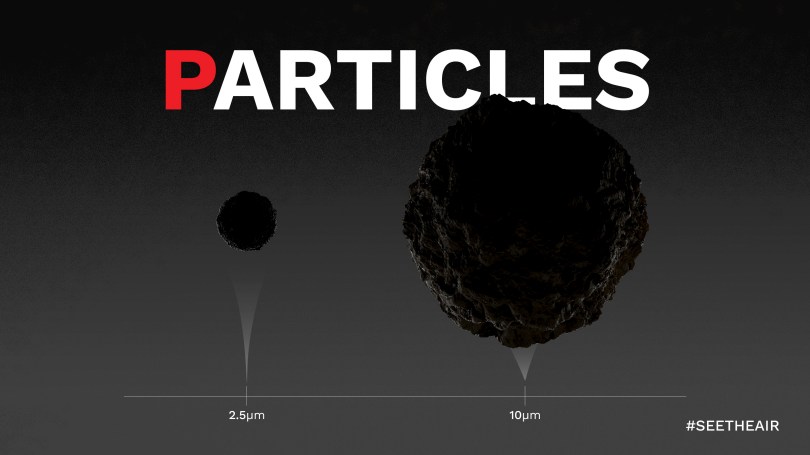
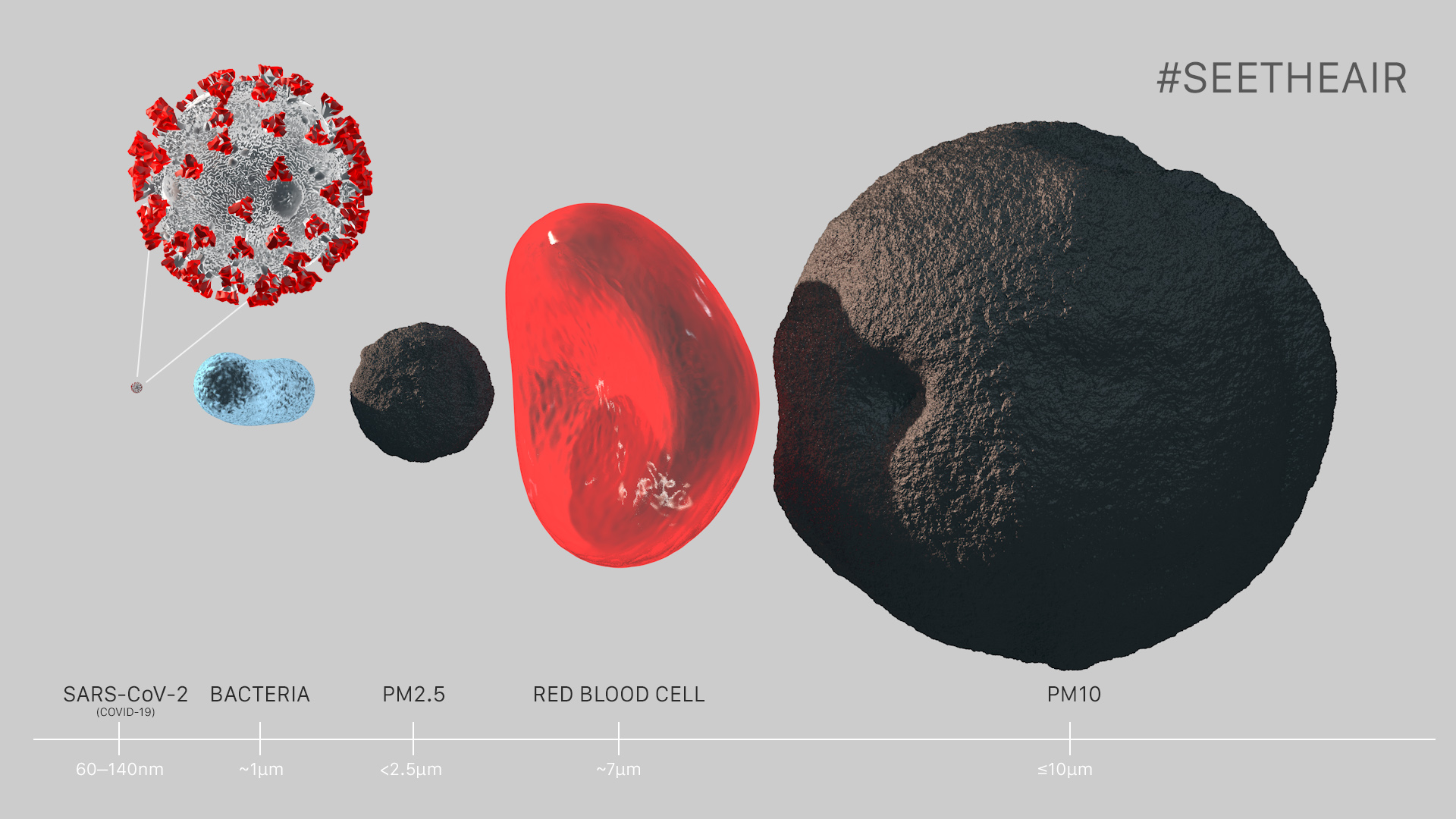
Scientific explanation: PM2.5 is a mass concentration on basis of a separation curve, where the 50% value is at 2.5μm aerodynamic diameter. More precisely, the weighting function is much steeper (100% weighting <0.5μm, to 0% weighting> 3.5μm and 50% weighting at approximately 2.5μm). PM2.5 pollution can only be seen with an electron microscope.

Plain English explanation: PM2.5 referees to fine particles with a size of or less than 2.5μm (aka micron). By the way, soot, aerosols, dust, BC are other common terms to call particle pollution.

2) What is PM2.5 made of?

It is hard to determine a specific chemical composition, however, here is a list of all the chemicals that might be found in a single particle. Polycyclic aromatic hydrocarbons (naphthalene, acenaphthylene acenaphthene, fluorene, phenanthrene, anthracene, fluoranthene, pyrene, benzo(a)anthracene, chrysene, benzo(b)fluoranthene, benzo(k)fluoranthene, benzo(a) pyrene, dibenzo(a,h)anthracene, benzo(g,h,i)perylene, and indene), metals (Al, Si, P, S, CI, K, Ti, Cr, Mn, Fe, Ni, Cu, Zn, Pb, Ca), others.

Read More »