
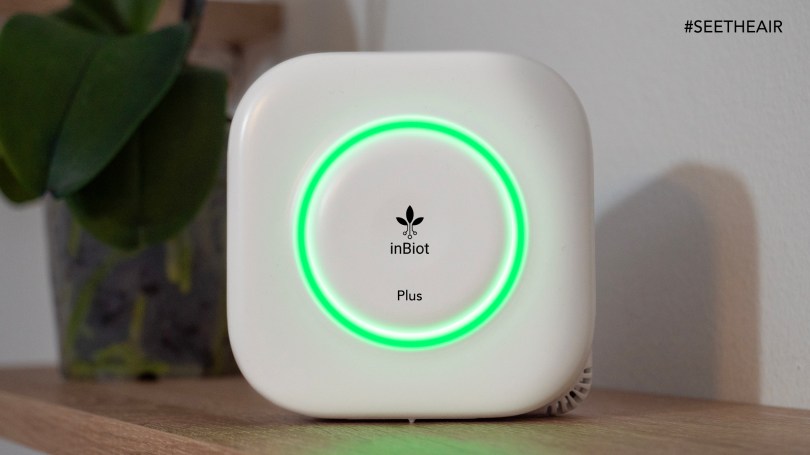
The inBiot Mica Plus is a robust indoor air quality monitor designed squarely for the B2B market, catering specifically to buildings aiming for top-tier Indoor Environmental Quality (IEQ) and compliance with stringent green building certifications like WELL, RESET, and LEED. With a promised 10-year lifespan and minimal maintenance thanks to automatic calibration, the Mica Plus is a compelling long-term investment.
Equipped with a comprehensive sensor suite including Temperature, Relative Humidity, CO₂, TVOC, Particulate Matter, and Formaldehyde, the Mica Plus provides a detailed picture of indoor air conditions. Its connectivity options are equally impressive, spanning basic Wi-Fi to advanced protocols like Power over Ethernet (PoE), LoRaWAN, Sigfox, NB-IoT/LTE-M, and local communication options such as Modbus RTU/TCP/IP, API, BACnet, and MQTT, ensuring seamless integration into existing building management systems.
Technical Specifications – Mica Plus
- Particulate Matter (Light scattering laser) 0 – 1000 µg/m3
- TVOC (MOx) 0 – 500 VOC Index Points (0 – 1000 ppm)
- Carbon Dioxide (NDIR) 400 – 10000 ppm
- Formaldehyde (Electrochemical) 0 – 1000 ppb
- Temperature (Silicon bandgap) -40 – 145 ºC
- Relative Humidity (Capacitive) 0 – 100 %RH
- Power Supply options
- USB type C
- 110 – 240V AC
- 8 – 36V DC
- Connectivity options
- WiFi 2.4 GHz
- LoRaWAN
- Sigfox
- NB-IoT / LTE-M
- Ethernet
- Power over Ethernet (PoE)
- Weight 250 grams
- Dimensions 110x110x45 mm

Personally, I’m particularly impressed by inBiot’s web and mobile dashboard. It’s not just functional; it’s genuinely insightful. The standout feature is undoubtedly the automated Certification Reports for WELL, RESET, and LEED, which significantly streamline the certification process for building managers. Beyond compliance, the dashboard’s smart reporting tools empower users to make informed decisions about their building’s IEQ. The dashboard’s comprehensive management tools, covering device management, user access, alerts, customization, data handling, and even weather integration, demonstrate a user-centric approach.
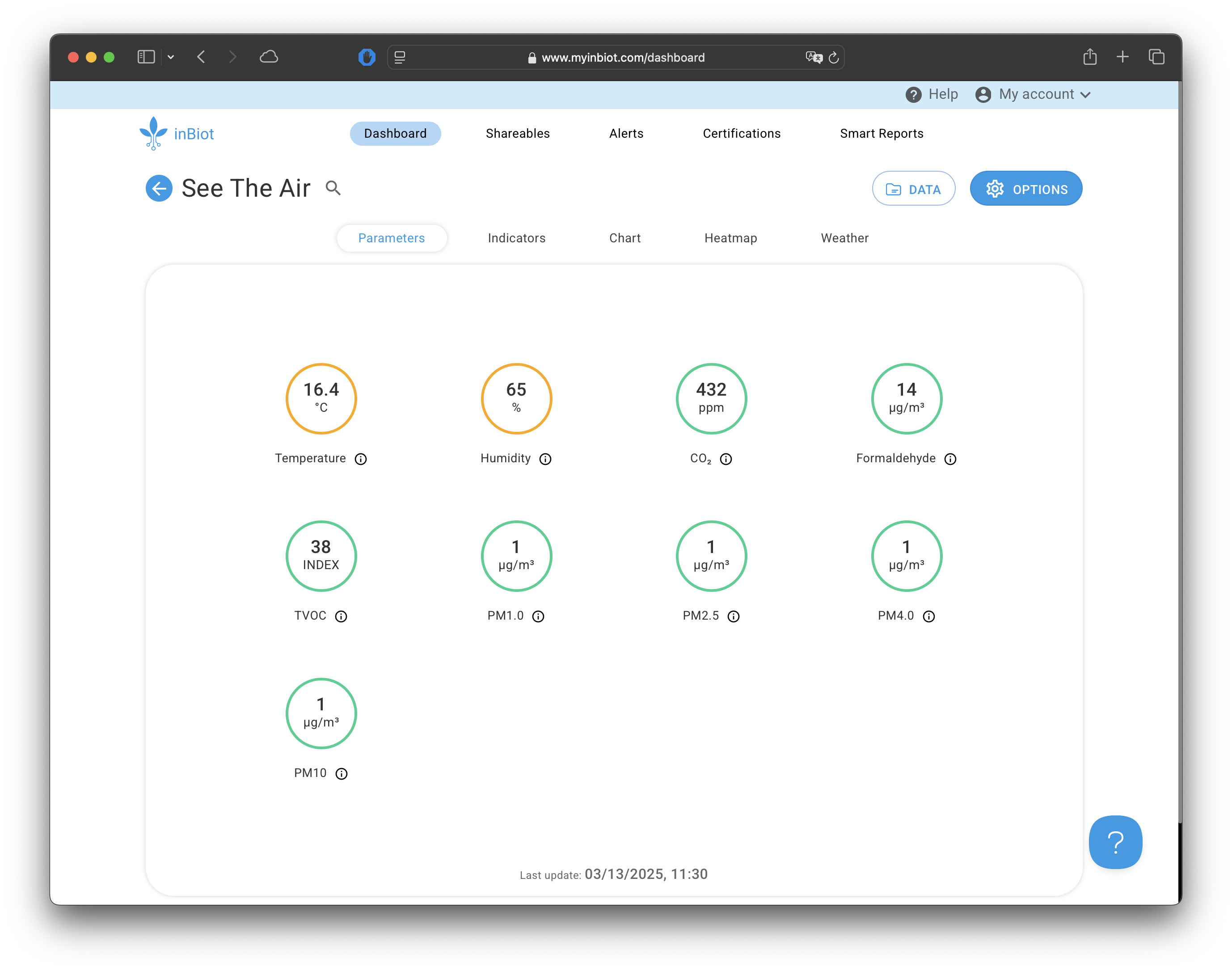
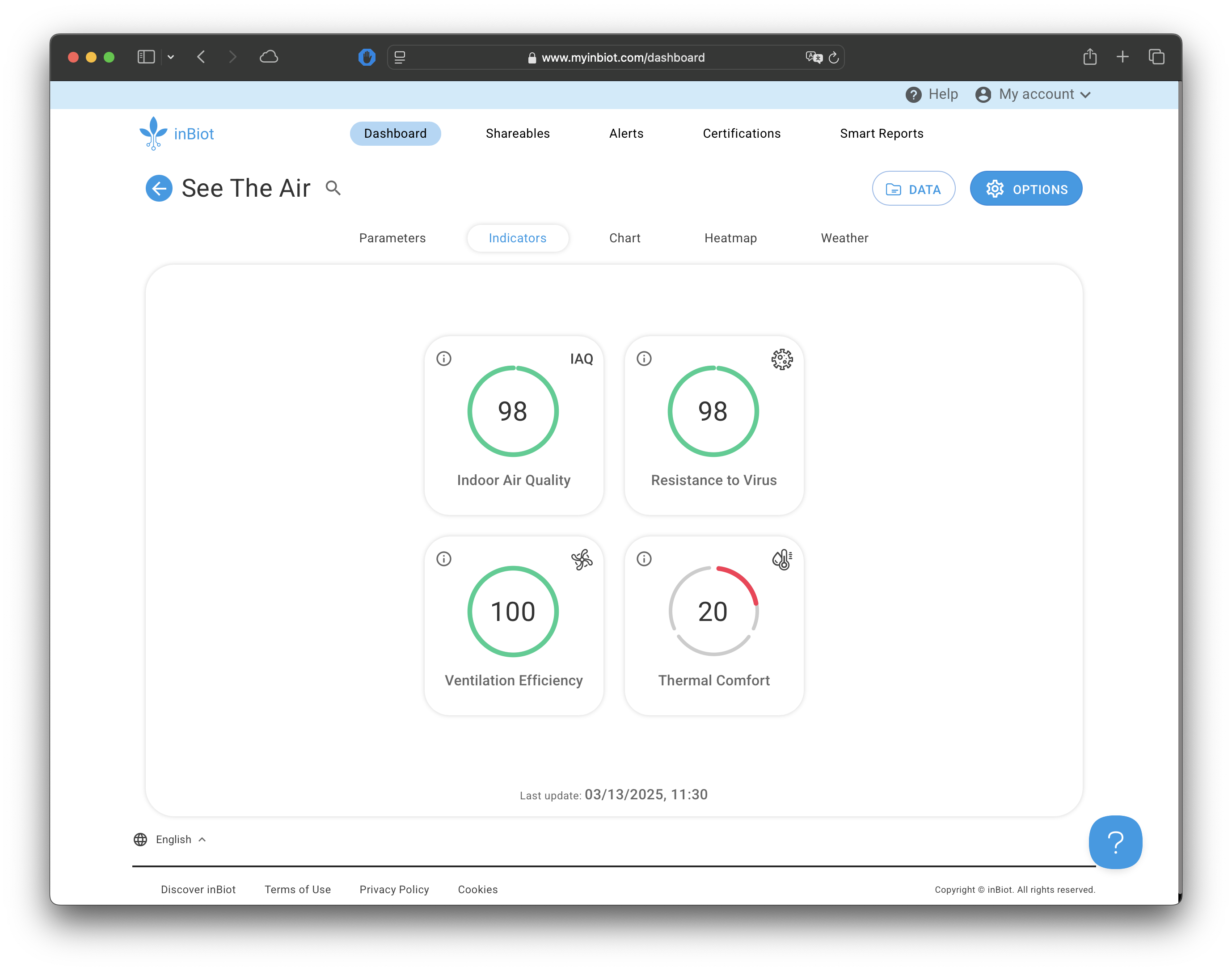
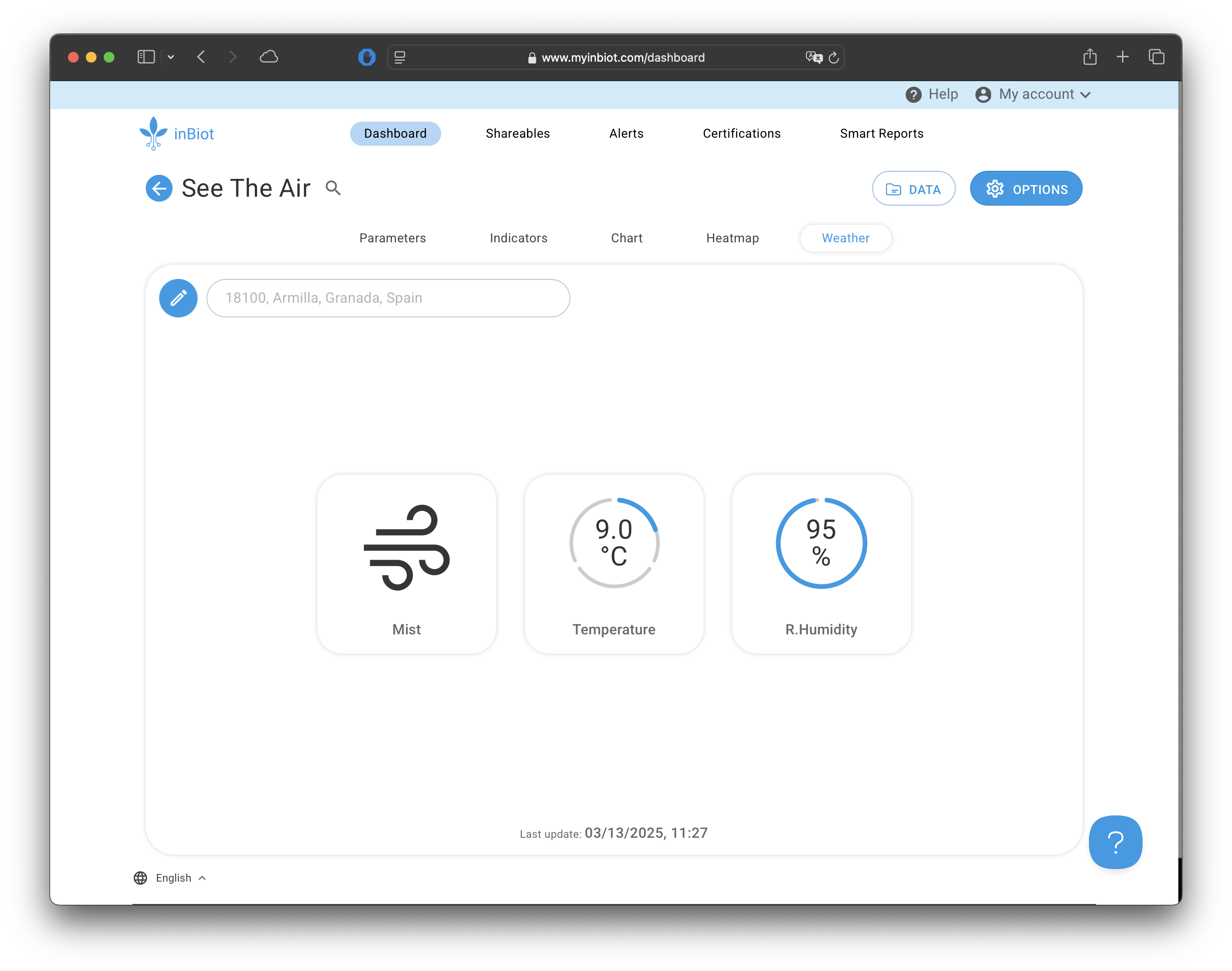
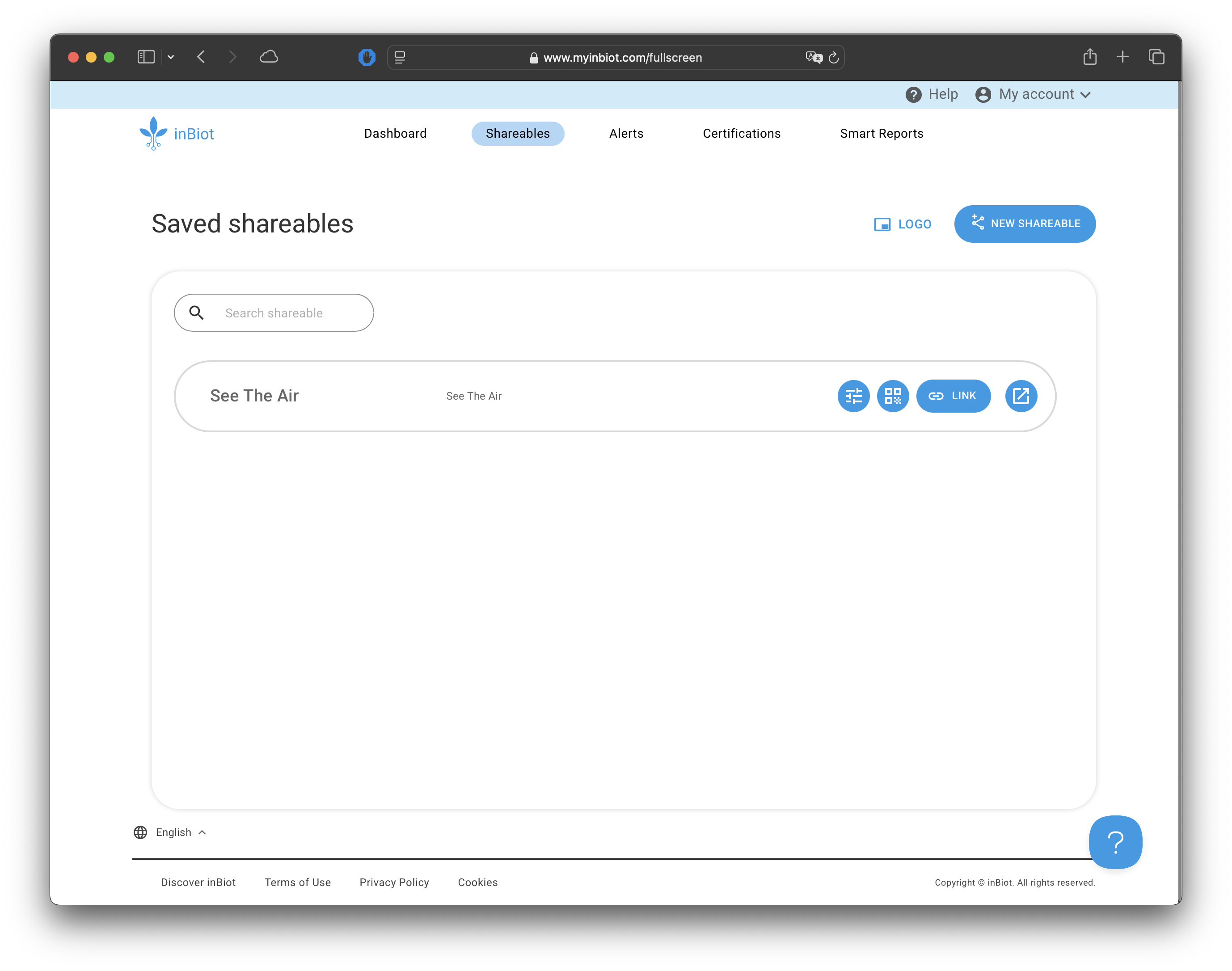
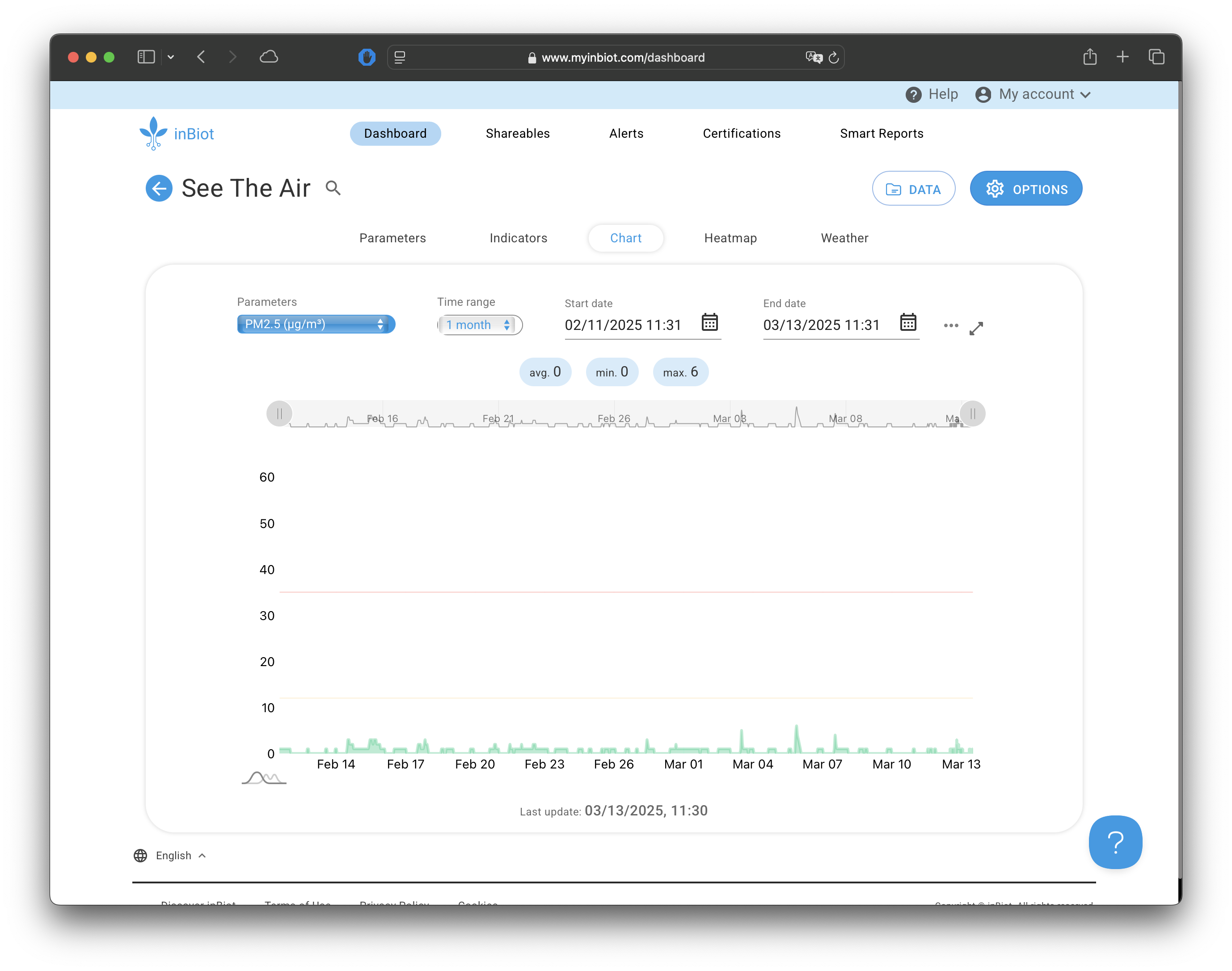
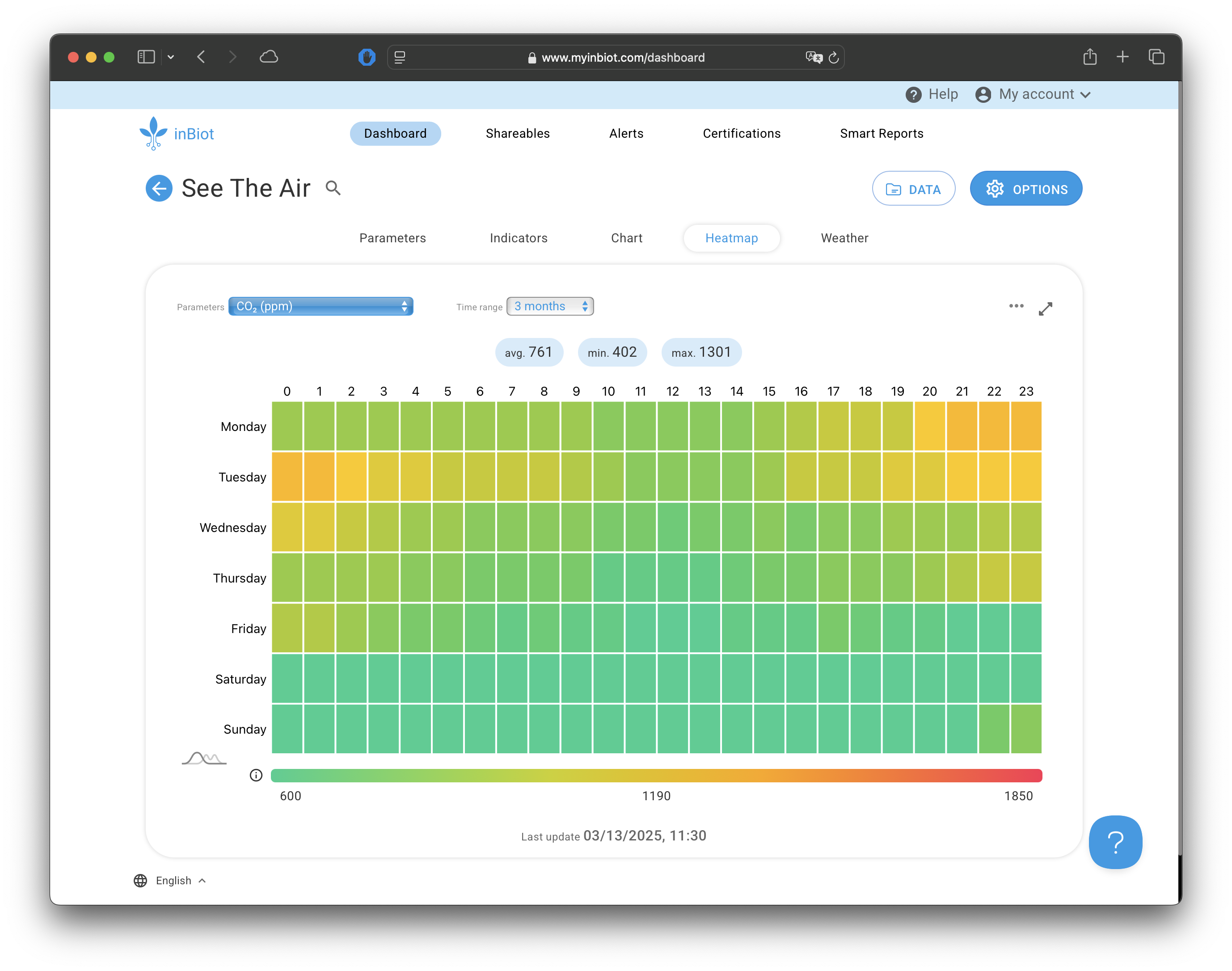


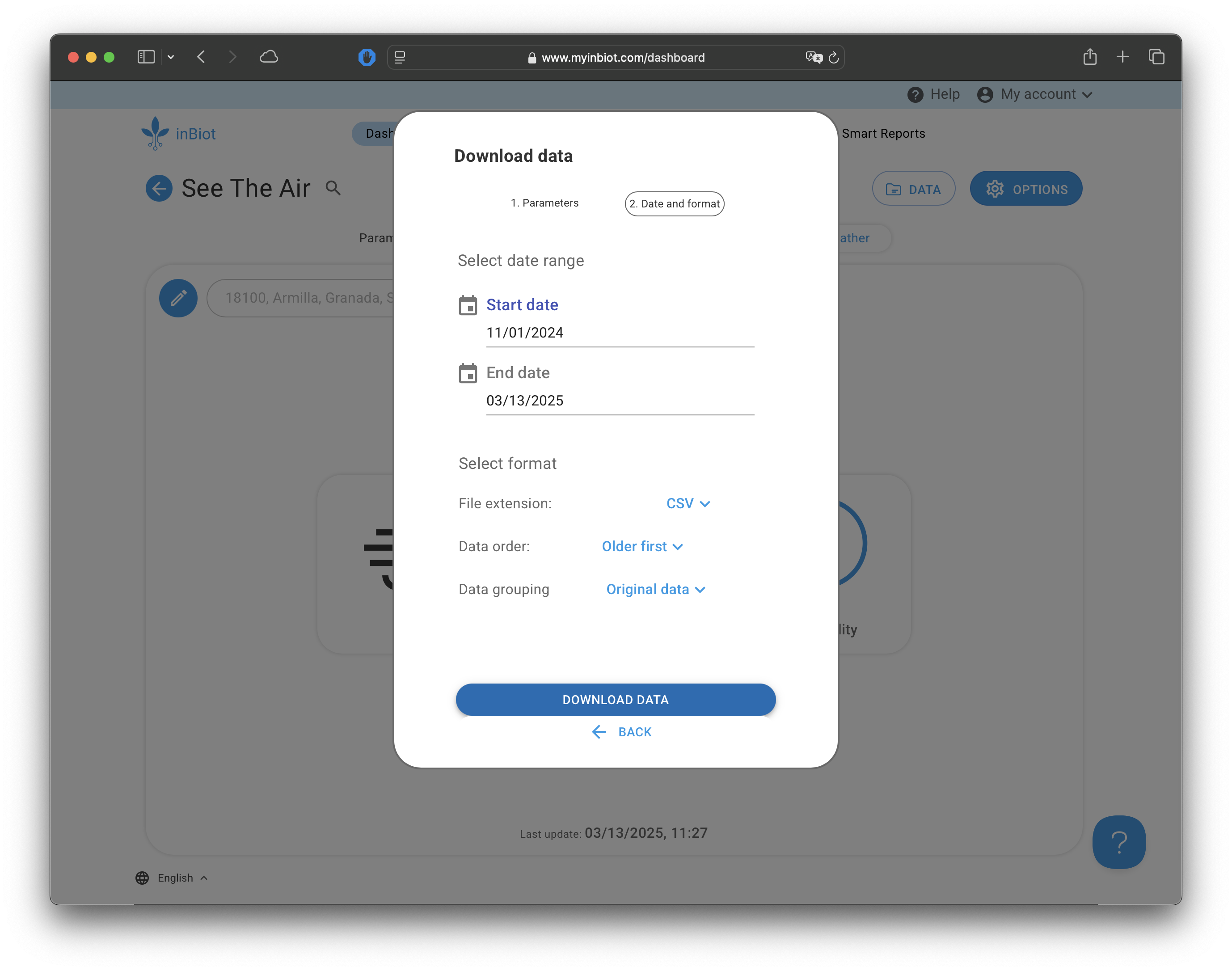
The prominent color LED ring, while optional, serves as an immediate visual alert when air quality thresholds are exceeded, prompting swift action. Furthermore, inBiot is a supporter of the GO AQS initiative, demonstrating its commitment to the adoption of standardized air quality monitoring.
During the winter months in Granada, where smoke from wood-burning stoves heavily impacts indoor air quality, the Mica Plus proved invaluable. I was able to constantly monitor PM2.5 levels, providing much-needed peace of mind. While CO2 levels were higher than ideal due to the need to minimize outdoor air infiltration, the Mica Plus allowed me to make informed trade-offs for optimal air quality.
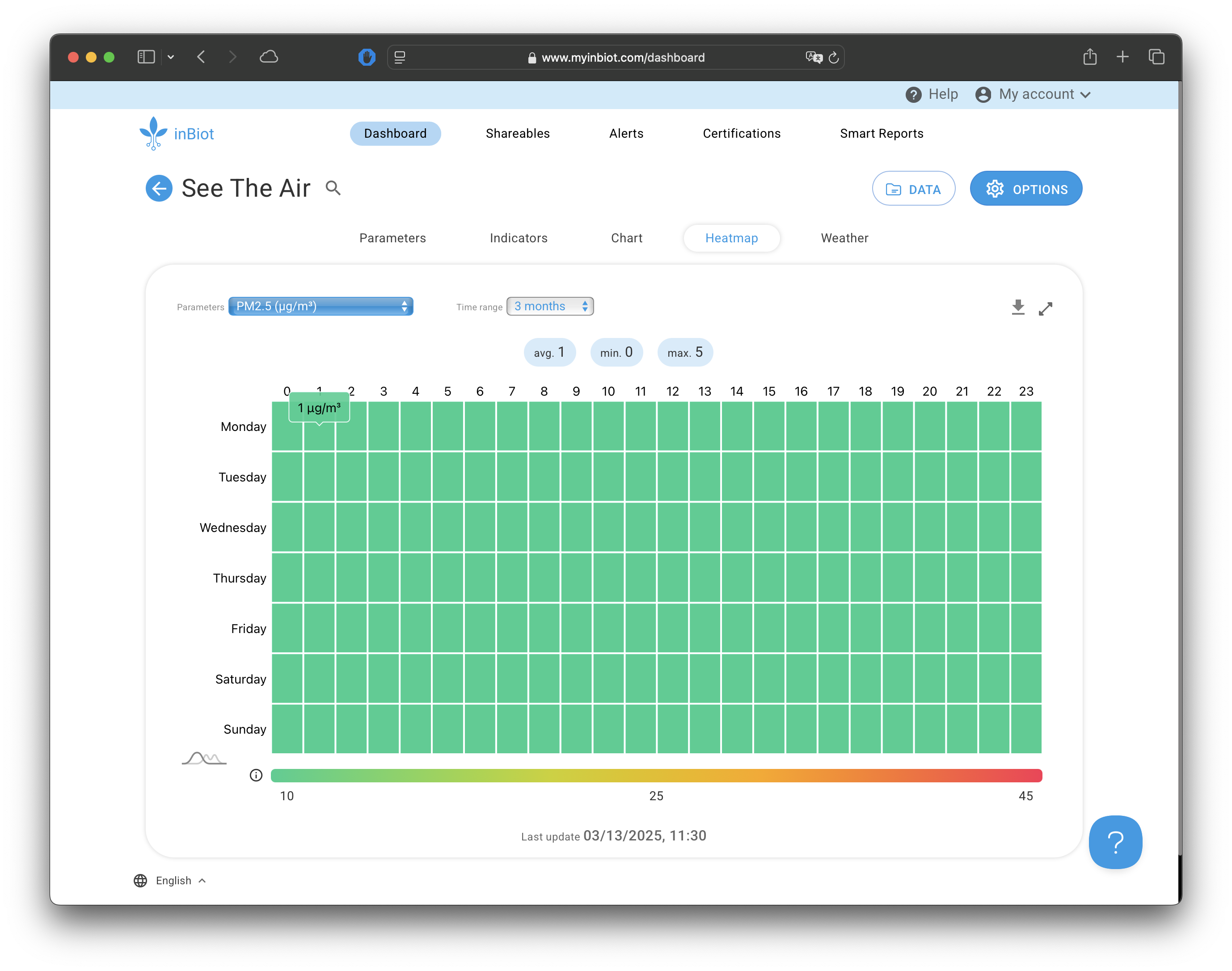

I welcome you to see the air and environmental quality live in my house by scanning this QR code.

You can download a Sample Report detailing the measured levels of particulate matter, TVOC, formaldehyde, and CO2, providing a snapshot of my home’s IEQ.
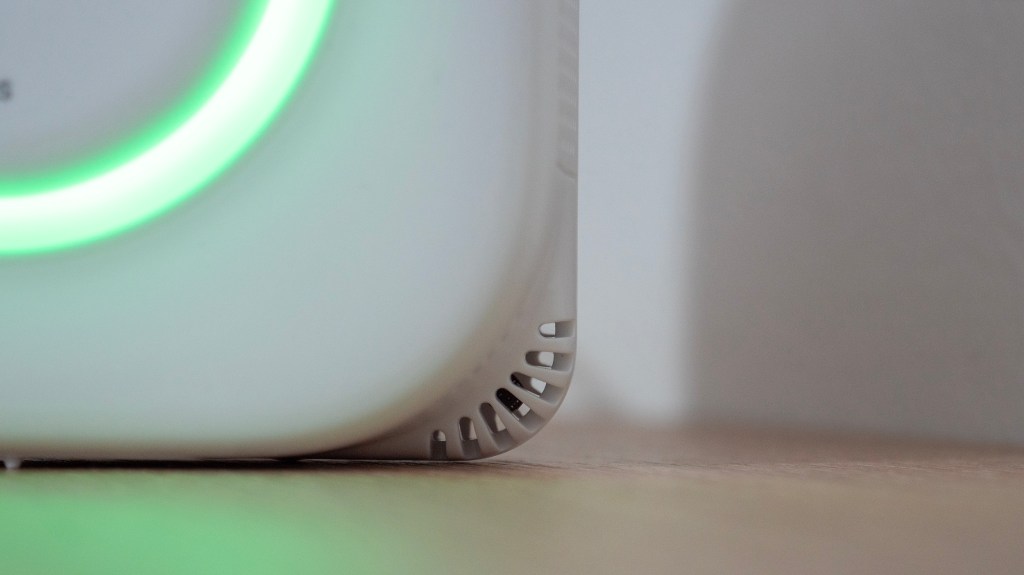
The monitor distinguishes itself by its thoughtful sensor placement, a critical factor in achieving accurate environmental readings. By strategically positioning its temperature and humidity sensors as close as possible to the surrounding indoor environment, and conversely, far from the influence of its internal electronic components, the device minimizes potential distortions. This design ensures that the data collected truly reflects the ambient conditions, providing users with a more reliable and precise understanding of their indoor climate. This focus on accurate data capture is a key feature of the inBiot monitors.
A key enhancement to the inBiot platform is the integration of real-time outdoor air quality data, sourced directly from official city air quality monitoring stations, into the user dashboard. This new feature provides users with a comprehensive view of both indoor and outdoor environmental conditions side-by-side. By enabling a clear comparison of indoor air quality metrics against the prevailing external air quality and the calculated indoor/outdoor ratio, users gain deeper insights into how outdoor conditions influence their indoor environment. This enhanced understanding is crucial for making informed decisions about ventilation strategies. Instead of relying solely on indoor readings or fixed schedules, users can leverage the combined data to dynamically adjust ventilation systems, drawing in fresh air when outdoor quality is favorable and minimizing intake or employing advanced filtration when external pollution levels are high. This leads to more efficient operation of HVAC systems, optimizing energy consumption while ensuring healthier indoor air quality by maintaining an ideal balance informed by the external environment.

One constructive suggestion, while the RGB Color Ring LED on the inBiot devices is a helpful visual indicator of indoor air quality conditions, its current functionality, which allows users only to manually turn it on or off, presents an opportunity for refinement. A valuable addition would be the implementation of a scheduling function for the LED ring within the platform’s control settings. In environments like office buildings, which are often unoccupied during nighttime or weekends, having potentially numerous devices emitting light unnecessarily consumes energy and can be disruptive. Allowing users to set schedules for the LED ring to automatically turn off during these predetermined unoccupied periods would significantly enhance energy efficiency across potentially hundreds of devices, reducing operational costs and environmental impact without compromising the utility of the visual indicator during occupied hours when it is most needed.
In conclusion, the inBiot Mica Plus stands out as a powerful and versatile IAQ monitoring solution for businesses and buildings prioritizing occupant well-being and green building certifications. Its comprehensive sensor suite, flexible connectivity, and user-friendly dashboard, especially the certification reporting features, make it a valuable asset for any organization seeking to optimize indoor environmental quality. While the need of outdoor air quality integration would further enhance its capabilities, the Mica Plus already provides a robust and reliable platform for effective IAQ management.
Discover more from See The Air
Subscribe to get the latest posts sent to your email.
 See The Air
The big question though is accuracy of readings. All of the nice graphics are useless if it’s not providing accurate readings.
Products like Foobot and URAD were no more accurate than sticking a finger in the air and guessing what the CO2 was.
LikeLike