Book Review: The Time Thief by Simon Jones

In The Time Thief — The Broken Promise of Our Buildings and the Fight for the Air We Breathe, Simon Jones presents a sobering “manifesto” that unmasks a silent systemic failure within our modern built environment. While the title might initially evoke a sense of mystery, Simon meticulously explains throughout the narrative that the “Time Thief” is not a metaphor, but a literal description of how poor indoor air quality and structural failures rob us of our literal lifespan. By detailing the physiological and societal toll of the “invisible pollutants” that compromise human health, Simon justifies his chosen title, demonstrating how the very buildings intended to protect us are, in fact, stealing years of our lives.

Throughout the book, Simon anchors his argument in four fundamental truths that challenge our complacency regarding the built environment.

The Truth of the Inhalable Diet

One of the most striking “truths” shared by experts like Tanya Kaur Bedi is the concept of the “inhalable diet”. While society is obsessed with the quality of the 2,000 calories we eat daily, we largely ignore the 10,000 to 15,000 liters of air we consume every single day. This truth highlights a dangerous double standard: we would never accept lead-contaminated tap water, yet we routinely accept air filled with a “transparent chemical soup” of VOCs, particulates, and nitrogen dioxide.

The Truth of Compliance vs. Safety

A central theme discussed by experts like Nathan Wood and Chris Rush is the “race to the bottom” regarding building standards. The book argues that “compliant” does not mean “safe,” as minimum legal standards often become the maximum ambition for developers. This truth reveals a culture where ventilation is treated as a technical add-on or a “toaster” to be plugged in and forgotten, rather than a critical “life-safety system” comparable to a fire alarm.

The Truth of Data and Visibility

The book champions the “Data Truth” as a primary tool for accountability. Experts like Jenny Danson, myself and others emphasize that because poor air quality is invisible, it does not trigger the same visceral response as a visible threat like a mouldy wall. By using low-cost monitors to make the invisible measurable, residents and workers can finally demand healthier environments and move away from “tenant-blaming” toward evidence-based structural changes.

The Truth of Health Inequity

Perhaps the most painful truth Jones explores is the “postcode lottery” of air quality. Experts note that the ability to breathe clean air has become a luxury tied to wealth and geography, creating a “triple jeopardy” where the most vulnerable people often live in the most polluted, poorly maintained environments with the least power to change them. Jones and contributors like José Luis Castro argue that clean indoor air must be defended as a universal human right rather than a premium feature.

The Time Thief is ultimately an urgent call to break the silos between the medical community and the construction industry. It moves beyond technical jargon to present air quality as a moral issue, forcing us to choose between continuing to normalize building failure or taking collective responsibility for the air that literally shapes our lives.

I highly recommend this book for anyone interested in health, architecture, or social justice. It moves beyond technical jargon to present air quality as a moral issue, forcing us to choose between continuing to normalize building failure or taking collective responsibility for the air that shapes our lives.

You can find the book here: The Time Thief on Amazon

Review: Atmotube PRO2 – From Consumer Gadget to Citizen Science Instrument

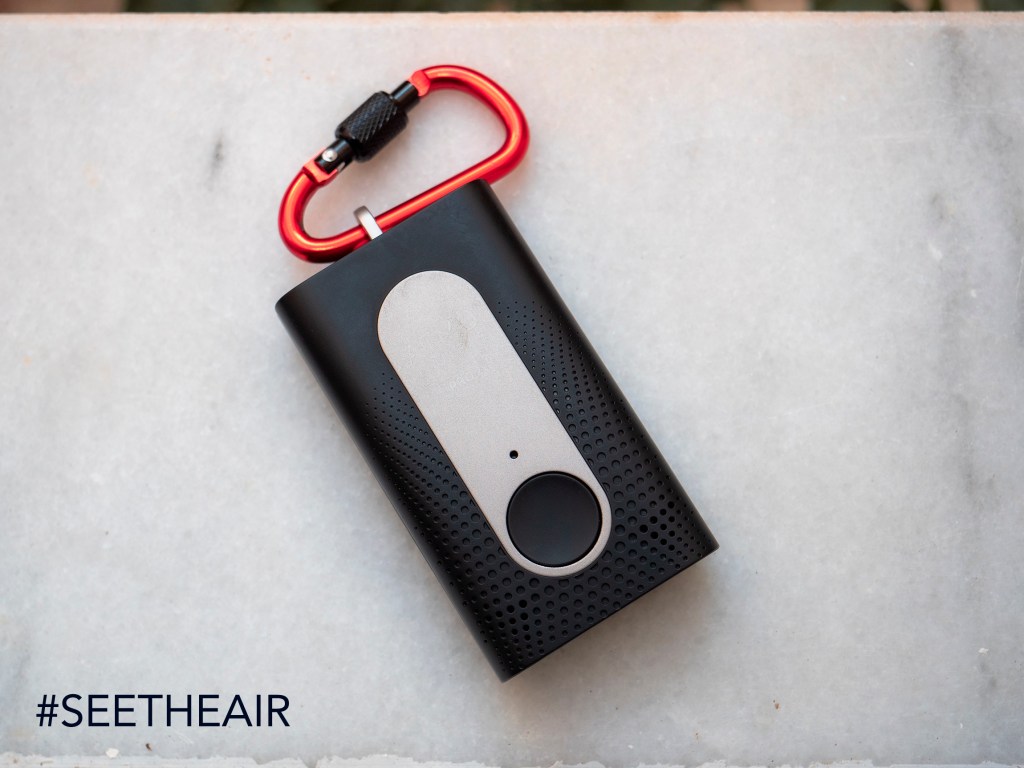
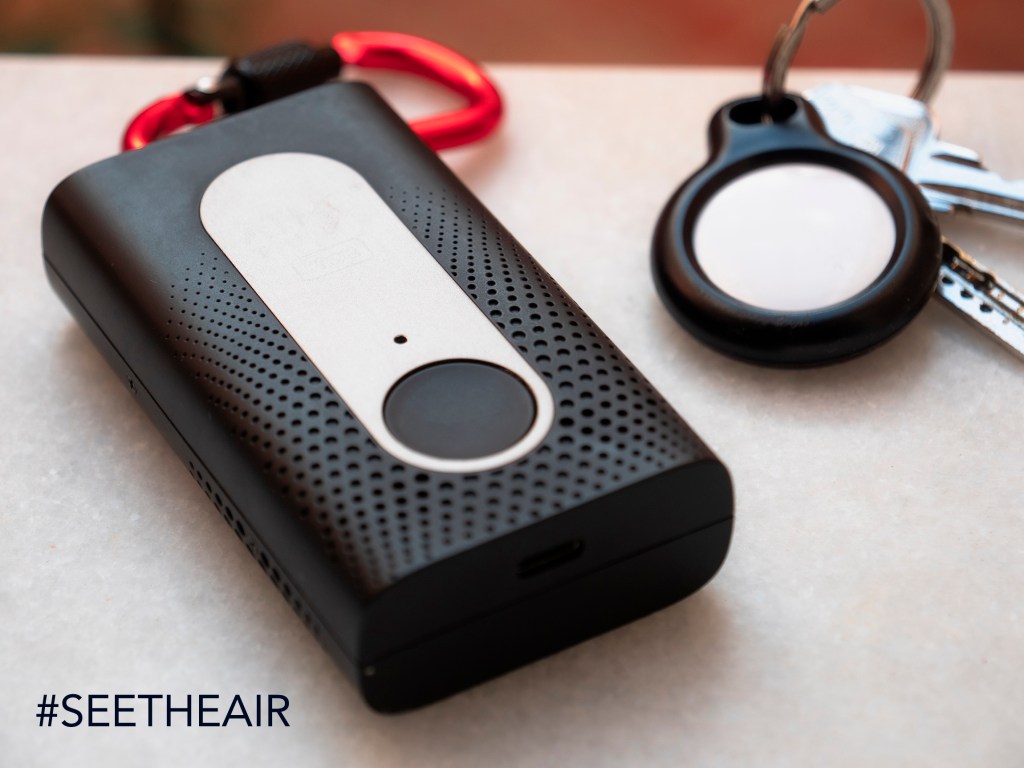
The Atmotube PRO2 marks a significant evolution in the world of personal air quality monitors (PAQMs). While it retains the rugged, familiar aesthetic of the original Atmotube PRO, the internal upgrades transform it from a consumer gadget into a serious scientific tool. Having put this device through a rigorous “field test”, it is clear that ATMO has listened to the research community to solve the most nagging pain points of the first generation.

Technical Specifications: A Scientist’s Toolkit

Here is the breakdown of the sensor suite:

  • PM sensor for PM1, PM2.5, PM10, and PCN0.5 (Sensirion SPS30)
  • NOx and TVOC sensor (Sensirion SGP41)
  • Temperature, Humidity (Sensirion SHT40-AD1B)
  • Air Pressure (Infineon DPS310)
  • CO2 sensor (Sensirion STCC4)
  • Built-in GPS (Allystar TAU1113) and Accelerometer (MiraMEMS da213B)
  • USB-C data access Sync history data with multiple devices
  • Memory size 16MB
  • Battery Li-Po 2300 mAh
  • Bluetooth 5.0
  • Weight: 106 g (3.7 oz)
  • Dimensions (H × W × D): 86 x 50 x 22 mm (3.4 x 2 x 0.9 in)

Something important to keep in mind as I found evidence that the device can measure PCN0.5 particle bin. If in the future the Atmotube PRO2 provides a precise particle count for the submicron fraction, which aligning with Global Open Air Quality Standards (GO AQS) recommendations to move beyond standard PM2.5 monitoring, this is crucial because traditional mass concentration (μg/m3) often fails to capture the significant health impacts of these tiny submicron particles.

Read More »

How Small Changes to your Daily Routine Could Make a Big Difference to your Exposure to Air Pollution

We often think of air pollution as something that happens “out there”, smoggy skylines and exhaust fumes. However, for many of us, the most polluted air we breathe is actually inside our own homes. The good news? You don’t need a massive renovation to fix it. A few strategic changes to your daily habits can drastically reduce your exposure to harmful particulates and chemicals.

1. Master the Kitchen: Your Primary Pollution Zone

Cooking is frequently the #1 source of high particulate matter (PM2.5) indoors. Frying, searing, and even boiling on gas stoves release combustion byproducts and grease particles into your breathing zone.

  • The Fix: Always use your range hood on its highest effective setting. If your hood doesn’t vent outside (recirculating), open a nearby window to create cross-ventilation.
  • The Tip: Start the fan before you turn on the heat and leave it running for five minutes after you finish.
Read More »

AirSpot Review: The Wearable CO2 Monitor That Delivers Real-Time Clarity

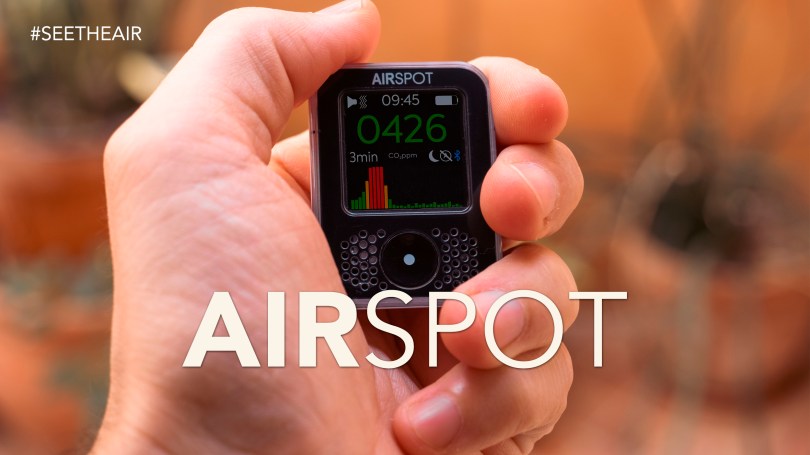
The world of air quality monitoring has long been dominated by bulky, desk-bound units. The AirSpot, a revolutionary small CO2 monitor, shatters that paradigm. Given to me by the CEO of The Safer Air Project, this device is not just a monitor—it’s a truly wearable environmental sensor that brings crucial air quality data right to your wrist or backpack.

Design, Portability, and Hardware

The AirSpot’s most immediate selling point is its diminutive size and featherlight weight. Measuring a mere 3.6cm x 4.8cm x 1.15cm and weighing only 17g (0.6 ounces), it is, to my recollection, the smallest CO2 monitor currently available. This size isn’t just a gimmick; it’s the foundation of its usability.

The device’s true genius lies in its ecosystem of accessories. AirSpot is unique in offering a wide range of mounting options, including a wristband that makes it genuinely wearable. I personally prefer the carabiner-style key ring case, which allowed me to easily clip it onto my backpack or belt—perfect for on-the-go monitoring.

Read More »

aranet: Comprehensive Environmental Monitoring for a Healthier Home

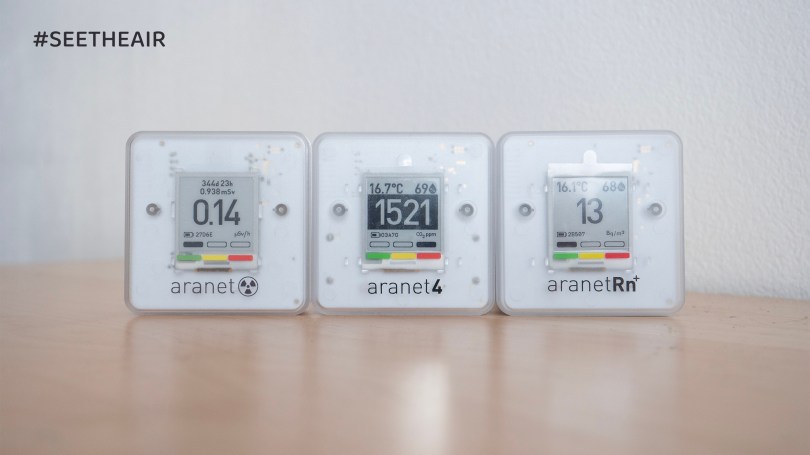
In an era where indoor air quality and environmental safety are of a high importance, aranet has emerged as one of the leaders in providing reliable and intuitive monitoring solutions. See The Air has thoroughly reviewed several of aranet’s innovative products, each designed to empower individuals with crucial insights into their living spaces. From carbon dioxide levels to radon gas and even radiation, aranet offers peace of mind through precise and accessible data.

Most aranet monitors stand out by providing a holistic view of your environment, often including temperature, relative humidity, and atmospheric pressure alongside their primary measurements. This multi-parameter approach helps users understand the interplay of various factors affecting their indoor comfort and health.

Read More »

The CO2 Debate: A Parallel to the Egg Dilemma

The discussion around carbon dioxide (CO2) in indoor air quality (IAQ) often brings up a fascinating parallel to another long-standing debate: the health effects of eggs.

The Indisputable Value (Eggs & CO2 as Proxies):

Just as eggs are widely recognized for their nutritional value – a powerhouse of protein, vitamins, and minerals – CO2 in IAQ assessment holds an undeniable, practical value. We know that CO2 levels are incredibly useful as a proxy. They effectively signal ventilation rates, which in turn are crucial indicators for the potential airborne transmission of diseases and the presence of odors indoors. In this sense, CO2 is a vital tool for understanding and managing our indoor environments, much like eggs are a staple in many healthy diets.

Read More »

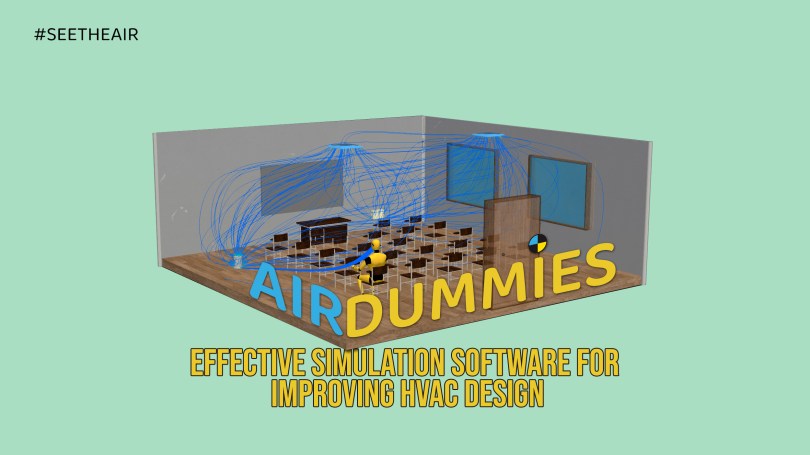
AirDummies: A Breath of Fresh Air for Indoor Environment Simulation

AirDummies emerges as a highly intuitive and powerful Computational Fluid Dynamics (CFD) software, purpose-built to demystify the complex world of indoor air dynamics. Designed with a clear focus on accessibility, it caters to a broad spectrum of users, offering invaluable insights into air patterns within diverse indoor environments, including school classrooms, offices, and domestic settings. Its ability to simulate everything from CO2 concentrations, particle contaminants, and temperature gradients to air velocity makes it an indispensable tool for optimizing comfort, health, and energy efficiency.

AirDummies is built upon the OpenFOAM open-source library. This foundational relationship means AirDummies leverages OpenFOAM’s extensive capabilities for simulating fluid flow, heat transfer, and related phenomena. By utilizing OpenFOAM, AirDummies benefits from a robust, well-validated, and continuously developed CFD engine, providing users with a powerful and flexible platform for their simulation needs.

Read More »

Latvia’s Model for Healthy Learning: The MESH Air Quality Project

Latvia has successfully deployed 14,000 CO2 monitors in hundreds of schools, ensuring safer and healthier learning environments for students and teachers. This nationwide initiative, launched by the Ministry of Education and Science of Latvia and implemented by the technology company MESH, addresses concerns about elevated CO₂ levels, which can contribute to the transmission of pathogens and affect concentration. Such successful projects should serve as a blueprint for others aiming to improve indoor air quality and efficiency in public buildings. The data collected from these monitors is freely accessible to the public via the website https://co2.mesh.lv/home/dashboard, providing transparency and peace of mind for parents.

The project, which involved an initial investment of €3.58M, translates to an approximate cost of 12 euros per student. This cost-effective solution was designed to significantly improve cognitive abilities and health, as well as air quality, for 300,000 children across Latvian schools. Even without adding heating control, facility managers were able to optimize energy use by simply analyzing temperature trends available online – leading to smarter manual adjustments and early savings in several municipalities. Following the project, some municipalities further developed the system by integrating automatic regulation of heat nodes, and in one case, the investment was fully recouped within a single heating season.

Read More »

Introducing FantaMix: An Innovative DIY Ventilation Solution

At See The Air, I am always excited to share innovative approaches to improving indoor air quality. Today, I am highlighting some fantastic articles by Nathalie Roussy that delve into the world of DIY ventilation with her in-depth work on the FantaMix.

FantaMix Review: A Look at Performance and Impact

Nathalie’s comprehensive review, titled “FantaMix Review,” was originally published on Medium. You can read her full article here.

The FantaMix is a compact, open-source ventilation system designed for home construction at a low cost. Nathalie, who is the designer and tester of the FantaMix, explains how this hybrid device filters a mix of fresh outdoor air and stale indoor air through an H11 HEPA filter, all while recovering lost heat. It functions as both a source of fresh air and an indoor air purifier.

Her article covers the origins of the FantaMix, how it works, and the results of various field tests, including airflow rate, noise level, heat recovery, and power consumption. She also provides a comparison with similar devices and a visual analysis of CO₂ levels to demonstrate its impact on air quality. Nathalie emphasizes that the FantaMix is a DIY project, offering an accessible solution for enhancing indoor air quality, particularly for renters or those with budget constraints, and is especially beneficial during events like wildfires.

Building the FantaMix: Your Step-by-Step Guide

For those inspired to build their own FantaMix, Nathalie has also published a detailed DIY guide titled “Building the FantaMix: Fresh Filtered Air at Home — No Exhaust, Under $200,” also available on Medium. Find the complete guide here.

This step-by-step open-source guide outlines how to create this affordable and effective home ventilation system. The FantaMix aims to provide fresh, HEPA-filtered outdoor air with partial heat recovery, costing under $200 and requiring no major construction or exhaust system. The project is 100% open source, promoting accessible knowledge over opaque products. The article covers the detailed construction process, including building the base, assembling the top section, preparing the outdoor air intake panel, and installing components like fans, insulation, and wiring. It also includes a detailed cost breakdown, a list of essential and optional tools, and crucial safety precautions, especially when working with materials like heated foam. Maintenance tips for filter replacement and fan cleaning are also provided.

I am particularly proud to note that Nathalie’s work on the FantaMix was inspired by our very own article, “DIY Ventilation Solution for Renters.” It’s wonderful to see how shared knowledge and innovation can lead to such practical and impactful solutions for healthier living spaces.

We highly recommend reading Nathalie’s articles to learn more about the FantaMix and consider it as a potential DIY project for your own home!


Review: InBiot Mica Plus – A Comprehensive IAQ Solution for Green Buildings and Beyond

The inBiot Mica Plus is a robust indoor air quality monitor designed squarely for the B2B market, catering specifically to buildings aiming for top-tier Indoor Environmental Quality (IEQ) and compliance with stringent green building certifications like WELL, RESET, and LEED. With a promised 10-year lifespan and minimal maintenance thanks to automatic calibration, the Mica Plus is a compelling long-term investment.

Equipped with a comprehensive sensor suite including Temperature, Relative Humidity, CO₂, TVOC, Particulate Matter, and Formaldehyde, the Mica Plus provides a detailed picture of indoor air conditions. Its connectivity options are equally impressive, spanning basic Wi-Fi to advanced protocols like Power over Ethernet (PoE), LoRaWAN, Sigfox, NB-IoT/LTE-M, and local communication options such as Modbus RTU/TCP/IP, API, BACnet, and MQTT, ensuring seamless integration into existing building management systems.

Read More »