

Latvia has successfully deployed 14,000 CO2 monitors in hundreds of schools, ensuring safer and healthier learning environments for students and teachers. This nationwide initiative, launched by the Ministry of Education and Science of Latvia and implemented by the technology company MESH, addresses concerns about elevated CO₂ levels, which can contribute to the transmission of pathogens and affect concentration. Such successful projects should serve as a blueprint for others aiming to improve indoor air quality and efficiency in public buildings. The data collected from these monitors is freely accessible to the public via the website https://co2.mesh.lv/home/dashboard, providing transparency and peace of mind for parents.

The project, which involved an initial investment of €3.58M, translates to an approximate cost of 12 euros per student. This cost-effective solution was designed to significantly improve cognitive abilities and health, as well as air quality, for 300,000 children across Latvian schools. Even without adding heating control, facility managers were able to optimize energy use by simply analyzing temperature trends available online – leading to smarter manual adjustments and early savings in several municipalities. Following the project, some municipalities further developed the system by integrating automatic regulation of heat nodes, and in one case, the investment was fully recouped within a single heating season.
This significant outlay covered the essential hardware and its installation, forming the foundational infrastructure. A substantial portion of the investment was also allocated to the development and implementation of a national data collection platform, crucial for aggregating and managing information. To ensure public accountability and access to data, funding was also dedicated to facilitating public transparency via the online dashboard. Finally, the investment plan included provisions for device servicing for a period of three years, ensuring the longevity and continued functionality of the deployed systems.
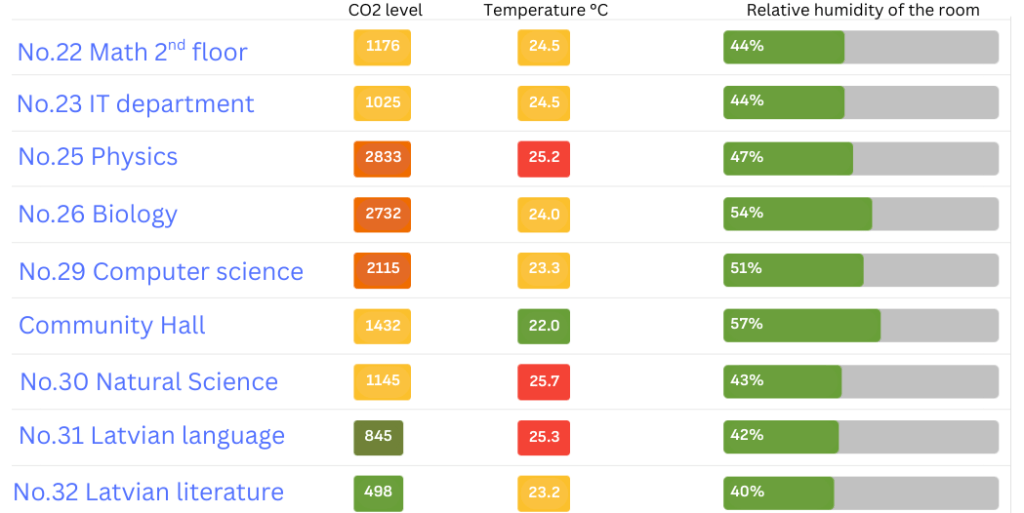
Real classrooms:
To understand why this was necessary to measure IAQ, see what happens during a physics lesson. The air inside reaches 25.2°C and CO₂ levels climb to nearly 3,000 ppm – three times over the recommended limit – with 30 students in the room. These conditions are not just uncomfortable, they’re unsafe.
Initial data from the project, has revealed several insights into the air quality in schools:
- Temperature Readings (9:00-11:00 AM): Measurements indicate that a significant number of buildings are overheated, with 12% being substantially overheated and 50% exceeding recommended temperatures. This suggests that improved heat regulation and more frequent, longer ventilation periods could potentially reduce overall energy consumption.

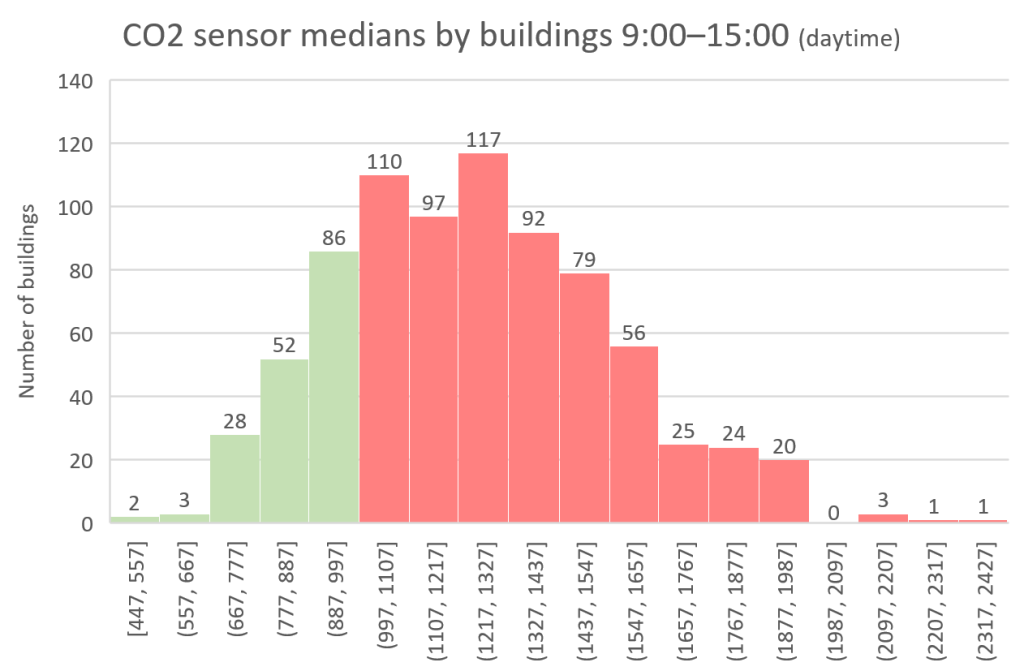
- Daytime CO2 Levels (9:00-15:00): While the overall air quality can be considered acceptable, with most buildings below 2000 ppm, only 35% of buildings have good air quality. This often correlates with schools equipped with mechanical forced ventilation systems. Maintaining good air quality is crucial for limiting the spread of pathogens, and currently, only 35% of buildings meet these requirements. It was also noted that even in buildings with forced ventilation, some rooms exhibit inadequate air quality, suggesting a need for individual analysis of data by building managers and balancing of forced ventilation system ducts. To achieve this, CO2 meters should be installed simultaneously in all serviced areas.
- CO2 Standard Deviation (9:00-15:00): Analysis of standard deviation indicates that many buildings do not optimally utilize all classrooms based on occupancy. Some classrooms are continuously occupied from morning to evening, while others remain unused. Since individual schedules show that it is not possible to fully ventilate rooms during class breaks, it is recommended to limit consecutive lessons to no more than two or to extend break times for optimal room utilization.

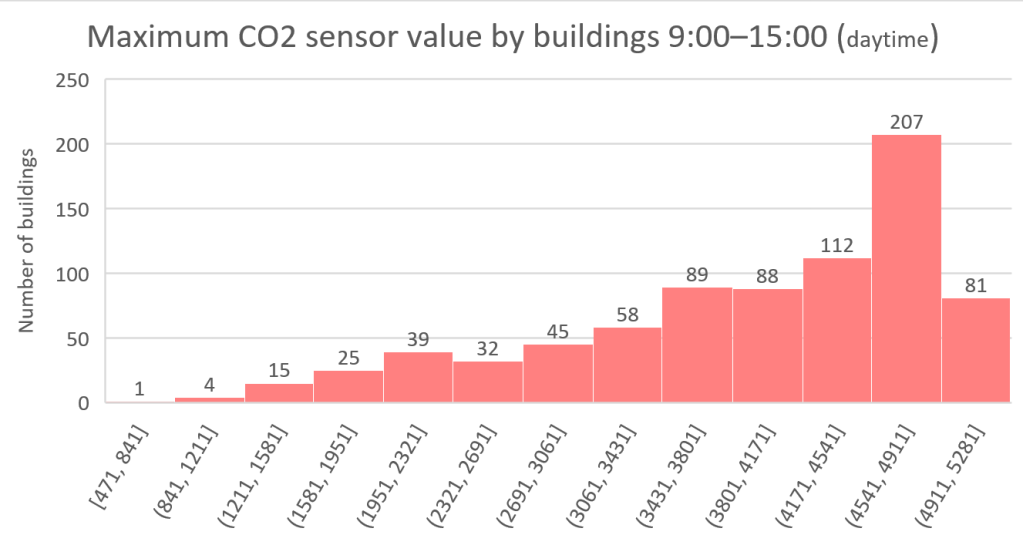
- Maximum CO2 Values (9:00-15:00): The data reveals that in half of the buildings, there has been at least one instance where CO2 levels reached concentrations that could lead to serious issues if sustained. Therefore, it is recommended to install audible alarms on air quality monitors that activate when CO2 levels exceed 5000 ppm.
Observations
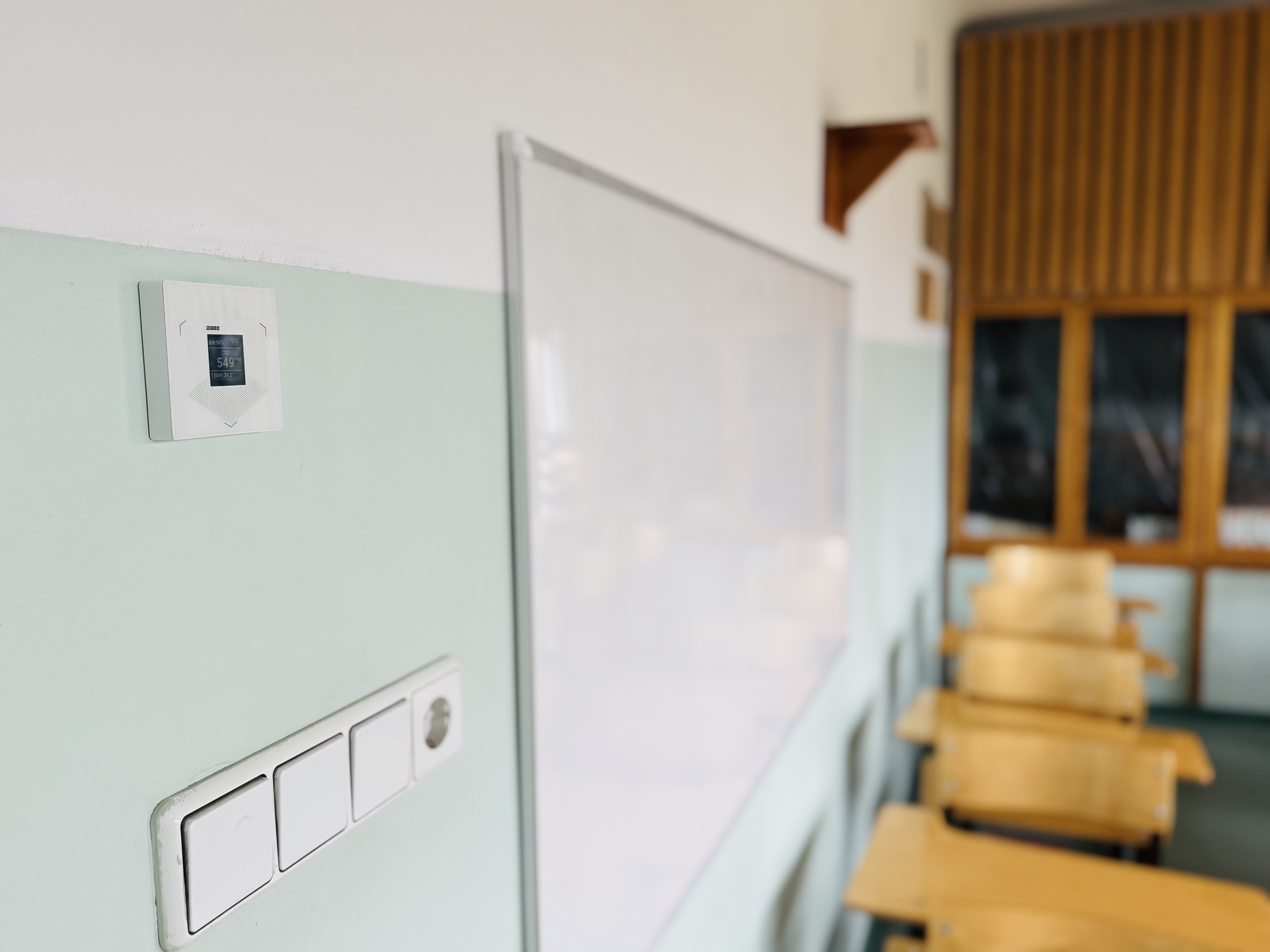
The deployment of these CO2 monitors has also highlighted some limitations and areas for improvement. During the reporting period, installations were still ongoing, and CO2 sensors required a calibration period after installation, which could affect accuracy by 300 ppm or more. Sensors were also installed in various building groups that were not analyzed individually. Notably, healthcare facilities predominantly showed the worst readings, although their proportion among installed meters is small, making the data error acceptable.
The project also noted that mechanical ventilation systems can dry indoor air, suggesting that future ventilation systems should include requirements for humidity recovery and, if necessary, air humidification. Furthermore, to optimize room usage based on air quality, CO2 meters should be installed in all classrooms, as currently, only a portion of rooms are equipped with them. During installation, it was also identified that some general education buildings house preschools, which were not equipped with CO2 meters at all.
Improvements in indoor air quality by an average of 500 ppm could also be achieved by extending breaks and by repeated instruction, periodic awareness campaigns, and control of staff. This is evident in the graphs, which show that some 10-minute breaks allowed for complete room ventilation, while others only reduced CO2 to 1000 ppm, indicating that windows may not always be opened wide enough for adequate ventilation.
Measurable Impact
Specialists estimate a 3–5% reduction in energy consumption due to smarter building regulation. With an average school energy usage of 120 kWh/m²/year and a heat energy tariff of €85/MWh, this results in annual savings of €0.50 per m² – a return that covers the entire investment in under two years.
One municipality reported full cost recovery within a single heating season after integrating MESH monitors with automatic heat node controls.
Overall, this initiative by Ministry of Education and Science of Latvia is a significant step towards ensuring a healthier and saferlearning environment for students and teachers in Latvia, promoting better air quality and mitigating health risks. Arnis Glāznieks, Executive Director of MESH, and Līva Lelīte, International Sales Manager, emphasize that this groundbreaking initiative by Latvia’s
Ministry of Education and Science is a powerful example how to improve learning
environments through better indoor air quality and is a replicable model for other
countries seeking healthier, more energy-efficient schools.

Discover more from See The Air
Subscribe to get the latest posts sent to your email.
 See The Air