Wildfires: some say that we have to learn to live with them, some say that we need to stay indoors and close doors, windows, and ventilation systems until the plumes of smoke settle down, but in reality, we have to do something else, I will elaborate on that in a flaming hot minute!
Wildfires are very dangerous and destructive for many reasons. When I read on the news that a new fire started even in the most remote location in the world, I take a deep breath because it can happen to anyone and everywhere. It has happened to my parents’ house, and a vast feeling of impotency takes your whole body. In most cases, we worry about the destructiveness, but it is more than that.
Wildfires can occur naturally but unfortunately in most cases, they are byproducts of unconscious anthropogenic behaviour because we leave trash everywhere. Glass bottles that work as magnifying glass under the hot summer sunlight, cigarette buds, fireworks, BBQs are some of the common reasons wildfires start.
Not many people know this but wildfires create new wildfires through pyrocumulus clouds which basically are the cloud plumes that are electrically charged, as a result, lightning bolts come out of the pyrocumulus clouds which light new fires a few kilometers away. Firefighters have a hard time controlling multiple fronts and those kinds of fronts are unpredictably created.
The aim of this paper is to give a review of the indoor environmental conditions in schools that are located in southern Spain as the climatological conditions tend to be middler and mechanical ventilated systems are not used in most cases either any kind of purification. There are many scientific papers that have documented the effects of indoor environmental quality (IEQ) upon productivity and performance within the workplace, but this paper is going to focus on the conditions and the means that are being used to control indoor air in public and private schools. Poor IEQ is known to be a factor causing health issues and has been connected with sick building syndrome (SBS) and reduced productivity (9% decrease) among white-collar workers through many studies. Covid-19 pandemic forced some schools to rethink the ventilation strategies but they rely heavily on window ventilation. This is an issue that persists in developing countries because of the lack of funds, however, it has not been given the attention it deserves in developed countries like Spain. Throughout this paper, we point out the main building factors which affect productivity (CO2, PM2.5, temperature, and humidity), without taking into consideration additional factors such as the effects of lighting and noise as they form part of the IEQ. Our main focus is to raise IEQ/IAQ awareness in places that are considered safe for the general public.
On 1st August 2021, I will attempt to travel from Spain to Greece in a hybrid car. I aim to reach my parent’s home (yes, I miss them a lot, damn you covid19) and then return to Spain by sea on a ferry.
It is a month-long road trip of about 3799 km (2360 miles) and I hope I will have the chance to meet new places and during this process, I will document the air quality/pollution in different countries/cities in my effort to raise awareness. I will carry with me a portable air quality monitor that measures, particulate matter (PM1.0/PM2.5), volatile organic compounds (VOC), temperature, and humidity. The monitor is the Atmotube Pro which I have already reviewed here and it correlates very well against reference monitors. Personal and 3rd party field evaluations reveal that the monitor correlates very strongly against GRIMM data PM1.0 r2 ~ 0.93, and PM2.5 r2 ~ 0.89 (1-hr mean). PM2.5 data against a FEM BAM correlate strongly as well r2 ~ 0.78.
I feel confident about the data that I will obtain and as the device saves everything on internal storage and in the phone with GPS coordinates, I won’t lose anything and I will be able to answer some questions, like which counties are more Air Quality friendly based on my data, what was my average exposure to PM during the trip in total and in different countries, or if I had stayed at home, would I have been exposed to less PM, etc. Let’s find the Mediterranean country/city with the cleanest air.
I will visit some cities in Spain, France, Monaco, Italy, Slovenia, Croatia, Bosnia and Herzegovina, Montenegro, Albania, and Greece.
Stay tuned on social media like Twitter and Instagram, as I will post very frequently photos of the trip with AQ data and comments!
Wish me good luck and if you are interested in learning about the air quality in one of the places I will visit or you have any questions please write below.
After the fiasco with the exposure notifications on smartphones which was designed by Apple and Google to facilitate digital contact tracing during the COVID-19 pandemic, we realized that governments weren’t ready to accept the terms of the service for privacy reasons probably and also users weren’t keen on enabling such feature probably for the same reasons.
We have to be able to monitor the situation in indoor environments beyond the location of an individual and we already do that with air quality monitors. Indoor air quality monitors help us see the air we are exposed to and when something isn’t right like high CO2 concentrations, we get notified to act by opening the windows or turning on the ventilation system, or eventually leaving the room if none of the latter are an option.
I propose to bring that kind of awareness to the indoor environments of transports, especially, in long-distance buses, airplanes, and trains as we spend substation time inside these transports and we all share the same air.
Most vehicles allow drivers to choose between outdoor air or recycled air. They never ever mention the benefits of fresh air (but not clean) to the drivers, so in most cases, drivers never change the settings. Have you ever been in a car for a long time, having the recycled air turned on? The drivers always complain about the lack of focus or energy and many passengers fall asleep. In most cases, this is due to the lack of oxygen and the high CO2 concentration which is scientifically proved to affect and decrease cognitive function.
The same thing applies inside an airplane. However, the pilots get the most oxygen from the rest of the occupants in the plane, but still, I am not sure if the bus drivers know about the indoor air quality (IAQ) of their buses and the outdoor air or where is the recycled air switch.
Not only that, we know that CO2 is a great indicator of ventilation rates and consequently indicates the viral load inside a transport. A viral load is a numerical expression of the quantity of virus in a given volume of air. The higher the viral load the most likely is to catch the virus, any virus, or pathogen.
Air quality data like CO2/PM2.5 are not as privacy-sensitive as location information and they can help us in mitigating the spread of diseases and improving our cognitive abilities and health. Clean air means healthy lungs, heart, and brain.
Indoor air quality monitors are relatively inexpensive and CO2 sensors can operate for up to 15 years. They will also reveal the truth about the air we breathe in cities. I know that not many council members want people to know that the air they are exposed to daily is poor and unhealthy but if you are a good politician with real morals and compassion for your fellow dwellers then you want the best for them.
So maybe it is time to start designing indoor air quality monitors for transports. They can work offline or online depending on the transport. Passengers can access the information as their ticket can host a QR code with the link of the specific monitor/transport/route. In the case of an off-line monitor then a display with clear readings will allow passengers and the staff/cabin crew of the transport to adjust the indoor conditions.
I should have written this comparison a long time ago, but I was very busy the past few months. A lot of you have insisted, so here it is.
A CO2 monitor is the number one tool that can help us understand ventilation rates in indoor environments and consequently mitigate the spread of airborne viruses like coronavirus (SARS-CoV-2), but let’s not forget the common flu either.
Carbon Dioxide CO2 can decrease our cognitive ability. The correlation between CO2 and productivity has been studied a lot for over 50 years by many academics. Interesting facts, the design standard for CO2 levels in most buildings is 1000ppm but the recommended concentration is below 700ppm. In one of the studies, Harvard researchers have found significant negative impact at 930 ppm.
According to World Green Building Council, they estimate the reduced absenteeism through sick days to be worth ~$35/m2. Again the World Green Building Council estimates that if employees’ productivity improves by even a 5% because of better IAQ, that alone would be worth ~$400/m2.
The monitors are divided into two categories, the ones that can be carried with you (portable/wearable) and the fixed ones and in most cases professional solutions. Each monitor offers different characteristics. Sometimes just because it has more features, it doesn’t mean that it is the right tool for you.
Most of the monitors offer much more than just CO2 monitoring. We spend a lot of time indoors and a more holistic approach is needed sometimes when it comes to indoor air quality (IAQ) or indoor environmental quality (IEQ).
The CO2BUDDY is the only wearable CO2 monitor that can be used in so many places and for a variety of reasons. Very important for professionals that work in places where the conditions are extreme. Closed or crowded indoor spaces.
Aranet4 HOME
Aranet4 is a small and portable CO2 monitor that surprises people. It can be used as an indicator of productivity in schools and office buildings. It is packed with smart features for those that want to log measurements and share them later on.
Awair OMNI
Awair OMNI is a well-thought product that has one aim, to help professionals see the air and address potential issues. The Awair Display Mode allows users to display any information from the monitor to a big screen inside a bar, restaurant, office, school, etc. It features up to 8 hour battery and logs data on-device. It complies with the most common certifications from WELL V1, LEED, Fitwel, LBC, and RESET.
Ethera Labs TX mini
The Ethera Labs XT Mini ensures quality and competitive monitoring systems with great cloud platforms for all needs and budgets. By connecting the monitor to BMS, they manage to achieve energy efficiency while directly managing the ventilation system, as well as portable air purifiers. It is the only monitor that can be connected to a PC via USB and upload data locally.
Kaiterra Sensedge mini
The Sensedge Mini is a great and accessible choice for those that wish to get or not air quality certification by RESET, LEED, WELL, and others as the monitor complies with their requirements. The removable sensor modules reduce maintenance costs and ensure accuracy, something really important when you want to offer comfort and health to the building’s occupants.
Airthings Wave Plus
Airthings Wave Plus is designed for professionals and homeowners (different plans). It offers a great dashboard that makes air quality data comprehensive. Excellent low power CO2 sensor that runs on two AA batteries for up to 16 months and the colour LED ring can indicate the high CO2 levels. Additionally, it can measure Radon which is a radioactive gas.
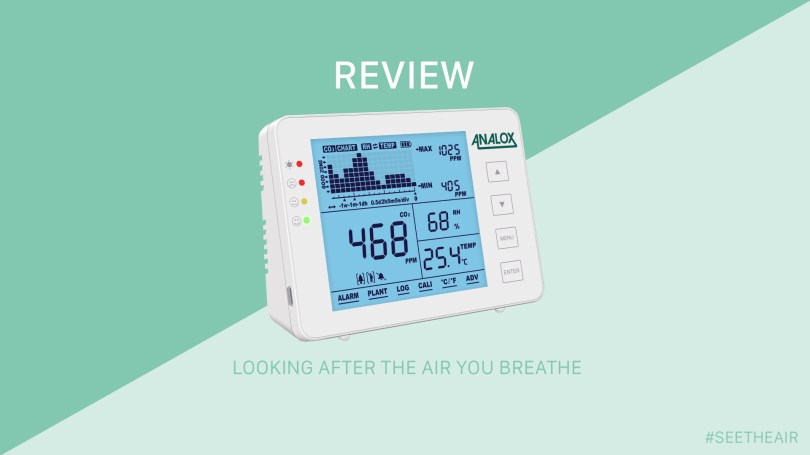
Analox Air Quality Guardian
The Air Quality Guardian comes with a large LCD display that provides plenty of clear information for those professionals that don’t have the luxury of time to continually take their phones out of their pockets in order to check the CO2 concentrations and trends. Very loud alarm and great traffic light system🚦 where 3 LED lights will turn on depending on the concentration of CO2 in the indoor environment.
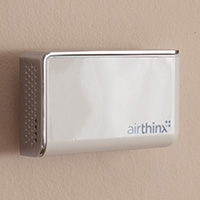
airthinx IAQ
Airthinx IAQ is designed for professionals, however, it is also available to homeowners too. The dashboard offers so many features that can really help you build a solid business model around it as you can rent the device(s) to third parties. The company provides a solid ecosystem of hardware and software, hard to resist.
Quick Comparison
All monitors deliver great CO2 measurements as I have tested them all. They all feature a non-dispersive infrared (NDIR) sensor which is the best among the low-cost sensors because of their accuracy and low-power consumption.
Each monitor has unique features, so read each review individually to discover if it is the right fit for you.
This is the second Analox product review that I have written on my blog. I like the product range and the solutions that Analox offer to professionals. The first review was about the CO2BUDDY, a portable/wearable carbon dioxide (CO2) monitor. In this review, I will write about the Air Quality Guardian. The Air Quality Guardian is a CO2 monitor station, designed for those that don’t want unnecessary smart features and too many bells and whistles.
The large LCD display provides plenty of clear information for those professionals that don’t have the luxury of time to continually take their phones out of their pockets in order to check the CO2 concentrations and trends. Keep in mind, the monitor measures other environmental parameters as well.
Specifications
4” backlit LCD screen
CO2 Sensor Low drift NDIR (Non dispersive infra-red) CO2 sensor with a long lifespan
Temperature and Relative Humidity Sensor
Simple 4 button navigation
Built-in data logging
Simple three-level indoor air quality indication system including:
I love combining technologies and services because this is a great and inexpensive way for companies to expand their businesses and for users to have a better experience. Awair has developed a great B2B air quality monitor the OMNI (hardware) and Djinn has developed a great B2B service (software) that combined together may offer better AQ insights or in other words, they contextualize data.
So I took the liberty to use the API Awair provides to its users and integrate it into Djinn’s platform. The reason is simple, Awair measures a plethora of parameters (temperature, humidity, PM2.5, VOC, CO2, noise, and light), and Djinn provides better insights into the impact those various indoor environmental parameters have on our health, like cardiovascular health risk and allergy risk. However, they also provide the productivity index which estimates the quality of the indoor environment with regard to the influence on productivity.
In real-life situations (offices, classrooms, etc) low-quality indoor environments may result in productivity drop up to 10% and more. Often in such cases, indoor environment quality is not comprehended by a person during the work process. The productivity index is based on research by cognitive scientists from various Universities.
According to the researchers, Human Decision Making Performance may be divided into different cognitive functions. Djinn service is able not only to estimate a general level of productivity, called Integral Productivity Index (IPI) but specify it for 9 cognitive activity areas based on research. An IPI is calculated as the average of all 9 directions. Those different models allow you to tune indoor parameters for optimal productivity according to your needs.
Carbon dioxide (CO2) monitor sales have skyrocketed during the pandemic because they are good indicators of the indoor conditions in public places like schools, offices, restaurants, etc. The CO2BUDDY can be used in all these cases. However, it can cover even more scenarios as it functions as a tool for professionals that work in places where the conditions are extreme, for example, in dry ice shipping & logistics and COVID-19 vaccine distribution channels.
Dry ice is a solid form of CO2. As it warms, it goes through a process called sublimation, meaning it goes directly from a solid to a gas, bypassing the liquid state. As a result, huge concentrations of CO2 are released into the atmosphere and the environment. These concentrations can reach critical levels for the health of the employees.
I want my review to be as accurate as possible and despite the fact that I don’t work in harsh environments, I know people that they do, so I asked them to wear the CO2BUDDY during their workdays and share their experience with me. They were more than happy to help and they also took some photos. Before reading their experience let’s learn some technical details about the monitor.
In this episode, Arabella Daniel, who lives in Melbourne Australia, will share with us her everyday experience with air pollution. Arabella has founded "Clean Air Communities" in Australia. She is active at local, state & federal government level to advocate for policy change on Clean Air. Twitter: @CAirCommunities Facebook: https://www.facebook.com/cleanaircommunities Please share and rate this episode with 5 stars.
In this episode, Arabella Daniel, who lives in Melbourne Australia, will share with us her everyday experience with air pollution. Arabella has founded “Clean Air Communities” in Australia. She is active at local, state & federal government level to advocate for policy change on Clean Air.
Awair is one of the earliest companies in the space of IoT air quality monitoring with great experience and knowledge as they have released a few consumers based air quality monitors like Awair Original, Awair 2nd Edition, Awair Element, and Glow C. Recently they entered the enterprise market with the release of Awair Omni.
I have seen the evolution of the company from the beginning as they have designed some of the most iconic domestic air quality monitors. The design language of Awair Omni is exactly what you expect from an air quality monitor inside a business environment like an office. The simplicity and the elegance of the product blend harmoniously without creating unnecessary distractions to the occupants of the room yet with the right information always available thanks to the dot matrix LEDs.












 See The Air