Funding Alert: Air Pollution Research – EU, UK, US, Thailand, Senegal, and Panama

Originally posted on LinkedIn

The European Commission is offering up to €73 million in funding for research projects aimed at improving air quality under its LIFE program. Successful projects can receive between €2 million and €10 million to support initiatives that restore and enhance the environment. Applications are open until September 19th, 2024.

Link: https://ec.europa.eu/info/funding-tenders/opportunities/portal/screen/opportunities/topic-details/life-2024-sap-env-environment

The European Commission’s Climate, Infrastructure and Environment Executive Agency has issued a second Life call with a focus on air quality and pollution. Projects can secure between €10 million and €30 million in funding. The deadline for applications is September 5. 2024.

Link: https://cinea.ec.europa.eu/funding-opportunities/calls-proposals/strategic-integrated-projects-sip-environment_en

Horizon Europe is launching a call for proposals on September 17 to fund projects developing zero-pollution solutions for cities and regions. Successful projects will share a €20 million pot. Applications close on February 11th, 2025.

Link: https://ec.europa.eu/info/funding-tenders/opportunities/portal/screen/opportunities/topic-details/horizon-miss-2024-cit-01-02

Read More »

Indoor Environmental Quality and Radiation Exposure

While we often think about indoor pollutants such as particle pollution (PM2.5), Carbon Dioxide (CO2), etc, the quality of the indoor environments (IEQ) can also have a significant impact on our health through various sources of radiation exposure within our homes and workplaces. Radiation is not commonly investigated nor monitored indoors.

Beyond the Usual Suspects:

Let’s explore some unexpected sources:

  • Frequent Flyers: Cosmic radiation exposure increases with altitude. While infrequent flights pose minimal risk, frequent flyers may experience slightly elevated radiation levels.
  • Ground Elements: Radioactive elements like uranium naturally occur in soil and rocks. Depending on the geology of your area, these elements can seep into basements or crawlspaces, releasing radon gas, a known human carcinogen. Radon forms from the breakdown of uranium, radium, and thorium, which are naturally present in rocks, soil, and water. As radon gas seeps into buildings through cracks and gaps in foundations, it can accumulate to dangerous levels.
  • Vintage Timekeepers: Those vintage watches with luminous dials might be harboring a radioactive secret. Radium or tritium, once used for illumination, can pose a health risk.
  • Colorful Contaminants: Certain ceramics and glassware use glazes containing radioactive elements for vibrant colors. While generally “safe” when intact, chipping or breaking these items can release radioactive particles.
  • Food: Bananas, spinach, oranges, beer, etc. all contain potassium K-40 which is a radioactive isotope that emits beta and gamma radiation. The dose of radioactivity they deliver is tiny and does not pose a health risk.
  • Nuclear Power Plants: Nuclear power plants are heavily regulated and emit very low levels of radiation during normal operation. While unlikely, a serious accident at a nuclear power plant could release dangerous amounts of radiation.
  • War Zones: Radiation exposure is a serious danger in a war zone if a nuclear weapon is detonated.
Read More »

Exciting News! “Nicholas and his Incredible Eyesight” Now Available in Farsi! 🇮🇷

Calling all Farsi readers! I am thrilled to announce that the beloved “Nicholas and his Incredible Eyesight” book series is now translated into Farsi (modern Persian). Since Farsi language printed books aren’t currently supported by Amazon, I’ve decided to make the digital format of my book available for free to everyone. This way, readers can still enjoy the work regardless of the limitations on print formats.

This exciting adventure awaits anyone who wants to join Nicholas on his amazing journeys. With his incredible eyesight, Nicholas sees the world in a whole new way, encountering challenges and surprises along the path.

A special thanks to Solmaz Ahadi, Air Quality Specialist, for her invaluable help in bringing this translation to life!

Want your FREE digital copy? It’s easy! Simply leave a comment below this announcement or contact me and I will send it straight to you.

Let’s celebrate the magic of storytelling and the power of Nicholas incredible eyesight – in Farsi! 

#FarsiBooks #FreeBooks #ChildrensBooks #NicholasAndHisIncredibleEyesight #AirQuality

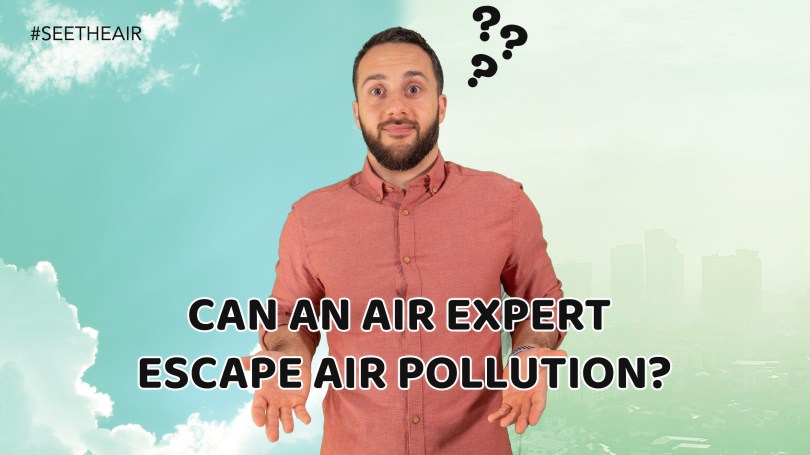
Can an Air Expert Escape Air Pollution? A 2-Month, 6-Month, and Year-Long Experiment in Personal Air Quality

Air pollution is an invisible threat, silently impacting our health. But what if you knew exactly where it lurked, both indoors and outdoors? Could an air quality expert, armed with this knowledge and personal equipment, achieve the World Health Organization’s (WHO) air quality guidelines for extended periods?

This is the question I, Sotirios Papathanasiou, an air quality expert,  will try to figure out over the next year. Starting July 1st, 2024, I embarked on a unique experiment, tracking my personal air quality for a full year. I am monitoring two key air quality metrics: Carbon Dioxide (CO2) and PM2.5 (fine particulate matter). However, PM2.5 data will be excluded when relative humidity surpasses 70% because the limitations of low-cost sensors. I will be carrying an Atmotube Pro and an AIRVALENT everywhere I go.

I am your human guinea pig, carrying these portable air quality monitors everywhere – from my bedroom to my gym, from my kitchen while cooking to the beach on a weekend getaway. This comprehensive data will allow us to see if, despite my expertise in pollution sources and protective measures, I can consistently meet the WHO’s air quality guidelines.

Read More »

It’s Time to Breathe Easy: See The Air is Giving Away an AIRVALENT CO2 Monitor! [Closed]

Calling all air quality enthusiasts! See The Air with the collaboration of AIRVALENT are thrilled to announce a giveaway for one lucky follower to win a cutting-edge AIRVALENT CO2 Monitor.

Ever wondered if that stuffy feeling in your office is due to poor ventilation? Or maybe you’re curious about the CO2 levels in your home gym? With the AIRVALENT CO2 Monitor, you can take control of your indoor air quality and breathe a little easier.

Here’s how to enter the giveaway:

  1. Subscribe at seetheair.org or follow me on any social media. (This will help me to reach out to you in case you win).
  2. Head to the giveaway post and leave a comment telling us which AIRVALENT design you think is the most stylish! There is no correct answer.
  3. (Optional) Share the giveaway post to your social media.
Read More »

Don’t Be Fooled by Mass: Why Counting Particles Is One Way Street for Sub-micron Air Quality Monitoring

While monitoring air quality, scientists traditionally relied on mass concentration to measure particulate matter (PM). This metric tells you the total mass of particles per unit volume of air. But for sub-micron particles – those less than one micrometer in diameter – mass concentration falls short. Here’s why measuring particle number by size distribution is a superior approach.

The Small Matter of Small Particles

Sub-micron particles are incredibly tiny. Imagine a human hair – typically around 70 microns thick. A sub-micron particle is hundreds to thousands of times smaller! Due to their miniscule mass, even large numbers of sub-micron particles can register a low mass concentration. This can be misleading, as the health risks they pose aren’t dependent solely on weight.

Penetrating Deep: Size Matters More

Sub-micron particles, especially those in the ultrafine range (less than 100 nanometers), are deeply concerning. Their small size allows them to bypass the body’s natural defenses and infiltrate deep into the lungs. These particles can even enter the bloodstream, potentially causing respiratory and cardiovascular problems.

Read More »

Review: airCoda – Pocket CO2 Monitor

Looking for a way to monitor CO2 levels on the go? The airCoda pocket CO2 monitor might be your breath of fresh air. This compact device features a photoacoustic NDIR CO2 sensors, a technology known for its small size and accuracy in measuring CO2 concentrations in any environment.

Why the airCoda?

  • Pocket-Sized Portability: Unlike bulkier CO2 monitors, airCoda’s small size allows you to easily carry it anywhere. Whether you’re checking CO2 levels in your office, classroom, or even your car, airCoda gives you the freedom to monitor air quality wherever you go.
  • Sensor Accuracy: Thanks to the integrated sensor, you can trust airCoda to provide reliable CO2 readings. This is crucial for making informed decisions about ventilation and maintaining healthy air quality.
Read More »

Masked and Misunderstood: The Silent Struggle of Chronically Ill in a Challenging World

For many, face masks became a symbol of the pandemic – a temporary inconvenience in the fight against COVID-19. But for those with chronic illnesses, masks are a lifeline, a shield against a world teeming with invisible threats. These individuals wage a silent battle, one breath at a time, often unseen and misunderstood.

Imagine living with a compromised respiratory system, a weakened immune response, or a condition that makes you extra susceptible to infections. Every outing becomes a calculated risk. A simple cough from a stranger or a waft of car exhaust can trigger a flare-up, landing you in the hospital. Face masks, then, aren’t just a recommendation; they’re a necessity.

Read More »

Taiwan Tightens PM2.5 Standards to Protect Public Health

Taiwan is taking a significant step towards cleaner air by tightening its regulations on PM2.5, a dangerous air pollutant linked to lung cancer and other respiratory illnesses. The new standard will set the maximum permissible concentration of PM2.5 at 12 μg/m3, a reduction from the current limit of 15 μg/m3.

This policy change is backed by an eight-year research study conducted by the National Health Research Institutes. The study’s findings confirm the negative health impacts of PM2.5 exposure, highlighting the urgency to curb air pollution levels.

PM2.5 refers to fine particulate matter measuring 2.5 micrometers or less in diameter. These tiny particles can easily penetrate deep into the lungs, causing inflammation and aggravating respiratory problems. Air pollution sources include vehicle emissions, industrial activities, and other human-made factors.

Read More »

Over-the-Range Hood Microwaves: Addressing Indoor Air Quality Concerns

Over-the-range hood microwaves offer the convenience of a combined microwave and “ventilation” system. However, a common misconception is that they effectively remove cooking fumes and pollutants from the kitchen. While they do have a fan system, it’s crucial to understand their limitations.

Recirculation vs. True Ventilation:

Unlike range hoods that vent exhaust outdoors, most over-the-range microwaves utilize a recirculation system. This means they draw in cooking fumes, grease, and moisture through a metallic mesh filter with holes bigger than a Swiss cheese, then release the “treated” air back into the kitchen.

Read More »