Office Study – Tapping Into The Real World Air Quality Data

Nowadays, it is a privilege to have access to a real indoor environment where you can measure and quantify indoor environmental quality (IEQ). It is not an easy task because most companies keep AQ data private, and we totally respect that. However, sometimes tapping into the real world data is fundamental in order to understand the conditions white color employees and employers work in an effort to improve work conditions and productivity.

The owner of the building and the office granted me access to installing the Atmocube IAQ monitor for two months, in order to figure out what improvements shall apply in their effort to mitigate covid19, improve working conditions and boost productivity. The office is located in Almeria, Spain which is a coastal city.

They don’t have any mechanical ventilation systems, so the indoor conditions were subject to their human actions and whether they opened the windows/doors or not.

Read More »

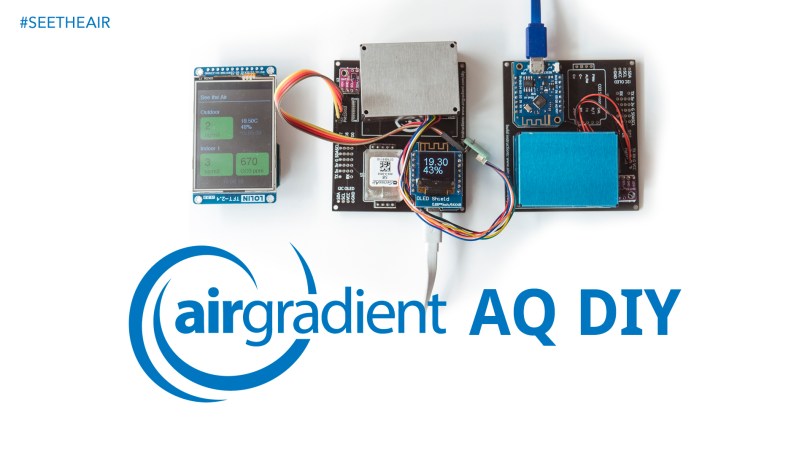
AirGradient DIY Indoor & Outdoor Air Quality Monitor

Countless times I have mentioned that we need to monitor indoor and outdoor air quality. This is an essential step in order to have a holistic approach to air pollution that surrounds us in both environments. Unfortunately, not everybody can afford to buy two monitors but thanks to the community and AirGradient there are two DIY solutions that can help us monitor the air quality quite accurately and of course, manage the air we breathe better.

AirGradient’s DIY solution is more appealing than the competition for many reasons. First of all, you can buy directly the DIY Kit with all the electronic components from them including the PCB. The PCB is the board where we will deploy all the sensors, WiFi module, and display. That is a huge benefit because you don’t have to search on the internet and purchase the components one by one. The well-designed PCB will also help us keep the monitor neat and small without unnecessary cables. Secondly, Air Gradient’s DIY AQ Monitor is very customizable allowing us to build an indoor monitor with an NDIR CO2 sensor but another one without a CO2 sensor or display for the outdoor environment. If you don’t want temperature/humidity sensors you can easily omit them too, but I highly recommend them. Moreover, there is software support as a community of passionate people have been improving the firmware constantly. Finally, the solution comes with a web dashboard where you can manage all the monitors and take advantage of the histograms and tools like the alerts.

Additionally, the devices which are connected to the cloud and the dashboard can broadcast the measurements back to a separate display (Viewport) which allows us to see the air quality indoors and outdoors like in the example below. Isn’t that very cool?

It has been a long time since I soldered something, so I was very happy to build the monitor. I built two monitors by following the fairly easy instruction here. There is also a video with the instructions here by Jeff Geerling.

Read More »

Review: IKEA VINDRIKTNING Air Quality Monitor

In 2021, IKEA made available an indoor air quality monitor, which is very very affordable. I bought one because I was curious to answer some basic questions like how did they manage to build and sell a particulate matter sensor that costs only 14€ or US$12 but also how smart and reliable is it in relation to other monitors.

IKEA is obsessed with naming all their products with Swedish words, so the AQ monitor VINDRIKTNING (which I can’t pronounce) translates as Wind Direction. Obviously, they don’t aim to create names memorable to people’s minds.

Let me share a story with you. Long before covid19 (2018 if I remember well) I and a company I worked for, decided to pitch IKEA into building an AQ monitor as I saw their interest in air quality because they designed some photocatalyst curtains that neutralized VOCs back then. Unfortunately, they turned us down, but I think we planted a seed into them. Long story short in 2021 they released the VINDRIKTNING.

Specifications

  • Particulate Matter Sensor Cubic Sensor PM1006K
  • 1 Green / 1 Yellow / 1 Red LED
  • USB-C connector
Read More »

In & Out – Airthings & Airly

Countless times, I have said that it is very important to monitor our indoor air quality side by side with the outdoor air quality. A collaboration between Airthings and Airly brought the best of both worlds, ambient air quality and indoor air quality monitoring in one place. Unfortunately, this solution is available only to the business customers but we can always hope that the demand will drive the feature to the consumer clients as well.

Why in & out AQ monitoring is important?

Our indoor air quality depends on many factors like building material, furniture, and indoor activities (cooking in a home or printing documents in an office, the perfumes people wear, etc). All of these factors will determine indoor air quality from the inside but indoor air quality is subject to outdoor conditions too. Vehicle traffic, marine traffic (in case you live near a port), wood-burning, industrial activities in the area, and wildfires are some of the reasons that will affect indoor air quality as buildings need to breathe or ventilate if you want.

Read More »

Back Indoors – Indoor Air Quality is still a thing, here is why!

Autumn and Winter are almost here for the Northern Hemisphere which means a vast majority of the population is going to leave terraces and other open outdoor spaces for indoor spaces (offices, classrooms, homes, indoor restaurants, etc). Covid-19 is still present, but most importantly, we are going to breathe lots of indoor air. We need to take control of the air we breathe as indoors is much easier to diminish the quantity of pollutants we inhale than been outside.

Covid-19 has ruined the lives of many people, personally, I believe that it is very easy to combat the spread of the virus in enclosed spaces, but we need to follow the rules of proper ventilation and purification combined. Scientists have developed various kinds of technologies that can capture pollutants and pathogens. I don’t want to focus very much on the pandemic rather than how important is to breathe clean and fresh air indoors for so many other reasons.

Read More »

Episode 8: London, UK – Indoor Air Pollution

Episode 8: London, UK – Indoor Air Pollution See The Air | Real Life Stories

My guest today is Robert John aka HUMAN SPACEMAN who is a purpose driven entrepreneur, visionary leader and innovator of human health improving solutions for property technology. Many say he was born do to make indoor environment better due to his severe childhood asthma and getting into the air cleaning industry with only 19 years of age. Today, over 20 years later he is the founder of Terraform Global based in London, UKLinkedin: https://www.linkedin.com/in/robert-john-spaceman/

My guest today is Robert John aka HUMAN SPACEMAN who is a purpose driven entrepreneur, visionary leader and innovator of human health improving solutions for property technology. Many say he was born do to make indoor environment better due to his severe childhood asthma and getting into the air cleaning industry with only 19 years of age. Today, over 20 years later he is the founder of Terraform Global based in London, UK

Linkedin: https://www.linkedin.com/in/robert-john-spaceman/

Please share and rate this episode with 5 stars.

Air Quality Monitors in transports – Why do we need at least CO2 monitoring?

After the fiasco with the exposure notifications on smartphones which was designed by Apple and Google to facilitate digital contact tracing during the COVID-19 pandemic, we realized that governments weren’t ready to accept the terms of the service for privacy reasons probably and also users weren’t keen on enabling such feature probably for the same reasons.

We have to be able to monitor the situation in indoor environments beyond the location of an individual and we already do that with air quality monitors. Indoor air quality monitors help us see the air we are exposed to and when something isn’t right like high CO2 concentrations, we get notified to act by opening the windows or turning on the ventilation system, or eventually leaving the room if none of the latter are an option.

I propose to bring that kind of awareness to the indoor environments of transports, especially, in long-distance buses, airplanes, and trains as we spend substation time inside these transports and we all share the same air.

Most vehicles allow drivers to choose between outdoor air or recycled air. They never ever mention the benefits of fresh air (but not clean) to the drivers, so in most cases, drivers never change the settings. Have you ever been in a car for a long time, having the recycled air turned on? The drivers always complain about the lack of focus or energy and many passengers fall asleep. In most cases, this is due to the lack of oxygen and the high CO2 concentration which is scientifically proved to affect and decrease cognitive function.

The same thing applies inside an airplane. However, the pilots get the most oxygen from the rest of the occupants in the plane, but still, I am not sure if the bus drivers know about the indoor air quality (IAQ) of their buses and the outdoor air or where is the recycled air switch.

Not only that, we know that CO2 is a great indicator of ventilation rates and consequently indicates the viral load inside a transport. A viral load is a numerical expression of the quantity of virus in a given volume of air. The higher the viral load the most likely is to catch the virus, any virus, or pathogen.

Air quality data like CO2/PM2.5 are not as privacy-sensitive as location information and they can help us in mitigating the spread of diseases and improving our cognitive abilities and health. Clean air means healthy lungs, heart, and brain.

Indoor air quality monitors are relatively inexpensive and CO2 sensors can operate for up to 15 years. They will also reveal the truth about the air we breathe in cities. I know that not many council members want people to know that the air they are exposed to daily is poor and unhealthy but if you are a good politician with real morals and compassion for your fellow dwellers then you want the best for them.

So maybe it is time to start designing indoor air quality monitors for transports. They can work offline or online depending on the transport. Passengers can access the information as their ticket can host a QR code with the link of the specific monitor/transport/route. In the case of an off-line monitor then a display with clear readings will allow passengers and the staff/cabin crew of the transport to adjust the indoor conditions.


Comparison: CO2 Monitors – Why do we need them in indoor environments?

I should have written this comparison a long time ago, but I was very busy the past few months. A lot of you have insisted, so here it is.

A CO2 monitor is the number one tool that can help us understand ventilation rates in indoor environments and consequently mitigate the spread of airborne viruses like coronavirus (SARS-CoV-2), but let’s not forget the common flu either.

Carbon Dioxide CO2 can decrease our cognitive ability. The correlation between CO2 and productivity has been studied a lot for over 50 years by many academics. Interesting facts, the design standard for CO2 levels in most buildings is 1000ppm but the recommended concentration is below 700ppm. In one of the studies, Harvard researchers have found significant negative impact at 930 ppm.

According to World Green Building Council, they estimate the reduced absenteeism through sick days to be worth ~$35/m2. Again the World Green Building Council estimates that if employees’ productivity improves by even a 5% because of better IAQ, that alone would be worth ~$400/m2.

The monitors are divided into two categories, the ones that can be carried with you (portable/wearable) and the fixed ones and in most cases professional solutions. Each monitor offers different characteristics. Sometimes just because it has more features, it doesn’t mean that it is the right tool for you.

Most of the monitors offer much more than just CO2 monitoring. We spend a lot of time indoors and a more holistic approach is needed sometimes when it comes to indoor air quality (IAQ) or indoor environmental quality (IEQ).

The monitors are:

Analox CO2BUDDY

The CO2BUDDY is the only wearable CO2 monitor that can be used in so many places and for a variety of reasons. Very important for professionals that work in places where the conditions are extreme. Closed or crowded indoor spaces.

Aranet4 HOME

Aranet4 is a small and portable CO2 monitor that surprises people. It can be used as an indicator of productivity in schools and office buildings. It is packed with smart features for those that want to log measurements and share them later on.

Awair OMNI

Awair OMNI is a well-thought product that has one aim, to help professionals see the air and address potential issues. The Awair Display Mode allows users to display any information from the monitor to a big screen inside a bar, restaurant, office, school, etc. It features up to 8 hour battery and logs data on-device. It complies with the most common certifications from WELL V1, LEED, Fitwel, LBC, and RESET.

Ethera Labs TX mini

The Ethera Labs XT Mini ensures quality and competitive monitoring systems with great cloud platforms for all needs and budgets. By connecting the monitor to BMS, they manage to achieve energy efficiency while directly managing the ventilation system, as well as portable air purifiers. It is the only monitor that can be connected to a PC via USB and upload data locally.

Kaiterra Sensedge mini

The Sensedge Mini is a great and accessible choice for those that wish to get or not air quality certification by RESET, LEED, WELL, and others as the monitor complies with their requirements. The removable sensor modules reduce maintenance costs and ensure accuracy, something really important when you want to offer comfort and health to the building’s occupants.

Airthings Wave Plus

Airthings Wave Plus is designed for professionals and homeowners (different plans). It offers a great dashboard that makes air quality data comprehensive. Excellent low power CO2 sensor that runs on two AA batteries for up to 16 months and the colour LED ring can indicate the high CO2 levels. Additionally, it can measure Radon which is a radioactive gas.

Analox Air Quality Guardian

The Air Quality Guardian comes with a large LCD display that provides plenty of clear information for those professionals that don’t have the luxury of time to continually take their phones out of their pockets in order to check the CO2 concentrations and trends. Very loud alarm and great traffic light system🚦 where 3 LED lights will turn on depending on the concentration of CO2 in the indoor environment.

airthinx IAQ

Airthinx IAQ is designed for professionals, however, it is also available to homeowners too. The dashboard offers so many features that can really help you build a solid business model around it as you can rent the device(s) to third parties. The company provides a solid ecosystem of hardware and software, hard to resist.

Quick Comparison

All monitors deliver great CO2 measurements as I have tested them all. They all feature a non-dispersive infrared (NDIR) sensor which is the best among the low-cost sensors because of their accuracy and low-power consumption.

Each monitor has unique features, so read each review individually to discover if it is the right fit for you.

Review: Air Quality Guardian by Analox

This is the second Analox product review that I have written on my blog. I like the product range and the solutions that Analox offer to professionals. The first review was about the CO2BUDDY, a portable/wearable carbon dioxide (CO2) monitor. In this review, I will write about the Air Quality Guardian. The Air Quality Guardian is a CO2 monitor station, designed for those that don’t want unnecessary smart features and too many bells and whistles.

The large LCD display provides plenty of clear information for those professionals that don’t have the luxury of time to continually take their phones out of their pockets in order to check the CO2 concentrations and trends. Keep in mind, the monitor measures other environmental parameters as well.

Specifications

  • 4” backlit LCD screen
  • CO2 Sensor Low drift NDIR (Non dispersive infra-red) CO2  sensor with a long lifespan 
  • Temperature and Relative Humidity Sensor
  • Simple 4 button navigation
  • Built-in data logging 
  • Simple three-level indoor air quality indication system including: 
  • Configurable audible and visual alarms
  • Power and charge via mini USB
  • 8 hour battery backup
  • Wall mountable or desktop
  • Dimensions 120 x 90 x 35 mm 4.75 x 3.5 x 1.4 in
  • CE, UKCA, RoHS 2.0 and FCC compliant
Read More »

Review: Awair OMNI – B2B Air Quality Monitoring Solution

Awair is one of the earliest companies in the space of IoT air quality monitoring with great experience and knowledge as they have released a few consumers based air quality monitors like Awair Original, Awair 2nd Edition, Awair Element, and Glow C. Recently they entered the enterprise market with the release of Awair Omni.

I have seen the evolution of the company from the beginning as they have designed some of the most iconic domestic air quality monitors. The design language of Awair Omni is exactly what you expect from an air quality monitor inside a business environment like an office. The simplicity and the elegance of the product blend harmoniously without creating unnecessary distractions to the occupants of the room yet with the right information always available thanks to the dot matrix LEDs.

Read More »