Review: Node-S by Clarity

I love clean air and even when we are indoors the air we breathe comes from the outdoor environment, like streets, small neighborhoods, city superblocks, etc. There are high probabilities that you, the reader, live in a city and the air you breathe isn’t clean enough to support your healthy lifestyle.

Most cities in Europe, as far as I know, have two state reference stations (a background and an urban) for air quality monitoring. They are great, with highly accurate and expensive equipments inside. Unfortunately, most of the time they are old and outdated which limit their ability to engage people to look into the air quality problems we are facing.

My city hosts around 200,000 people and the one urban reference stations we have isn’t capable of measuring PM2.5, at least not as most people will expect. It registers ONE daily average PM2.5 measurement (and not always). Data are free but in order to get these daily measurements you need to file a form and wait a month as manually a lab examines the filters were PM2.5 particles are captured.

Of course this is a tedious way to report data in 2020 at least in my opinion, I understand the “accuracy” obsession that surrounds some scientists, they can keep doing that but also they need to report real-time data to citizens if they want them to change the way they think and behave. I mean, what can I do if I learn that the air was dirty a month ago?

Here comes a outdoor monitor like Clarity Node-S. In my opinion, cities have no excuse not to install such monitors around the city and allow citizens to see the air they breathe. Literally, it is so easy to pick a place in a city and install a monitor. Clarity takes advantage of the low-cost sensors and has developed a solution hard to resist.

Read More »

Is covid-19 going to halt the air quality industry?

No, this is not the case for the air quality industry, but quite the opposite.

Since the outbreak of the pandemic, the media has covered the topic quite extensively. Big newspapers like The Guardian, The Sun, NY Times, etc have written at least a few articles about how good is the air outside and small local newspapers, which had never mentioned any environmental issue before, wrote about the same subject.

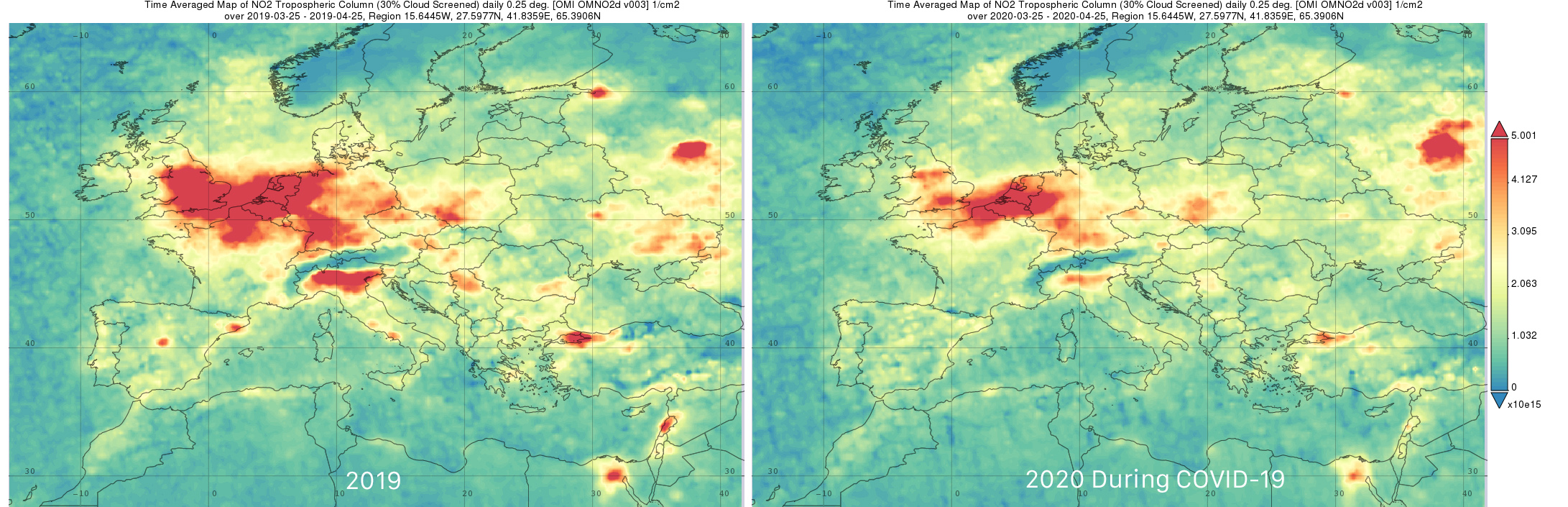
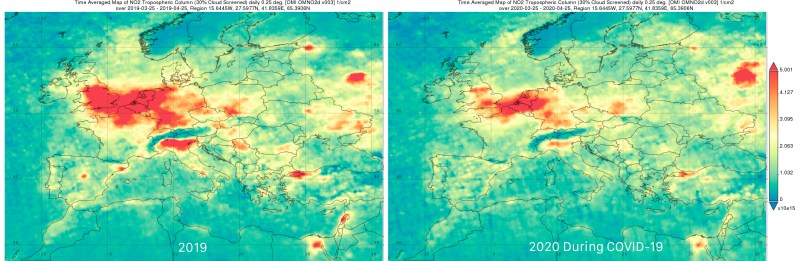
The pandemic has shocked people to their core, as a result, during the lockdown, more people became aware of the issue of air pollution and how traffic contributes a lot to the problem. In a recent NASA seminar, I learned that the satellite maps that we all have seen in newspapers presenting the NO2 concentrations before and during the lockdown, don’t represent the NO2 on the surface, where people breathe. However, they represent the total amount of NO2 from the surface to the top of the troposphere.

SatelliteGIOVANNI-NO2 COVID19

Indoors

Of course air pollution is not only present in the streets but inside our houses too, as a result, people have taken closer attention to indoor air quality as they spend 24/7 inside their houses, working, cooking, eating, relaxing, and playing with their kids.

Being all day long inside your house makes you think about how you can improve the indoor conditions and of course, air quality is as important as a pillow for your head during a night’s sleep. You want to be in a comfortable environment with the right temperature, humidity, and air quality.

This is the reason many companies sold out indoor air quality monitors. I had people asking me where they could find an air quality monitor and some companies telling me “we are out of stock” or they were running to fulfill orders.

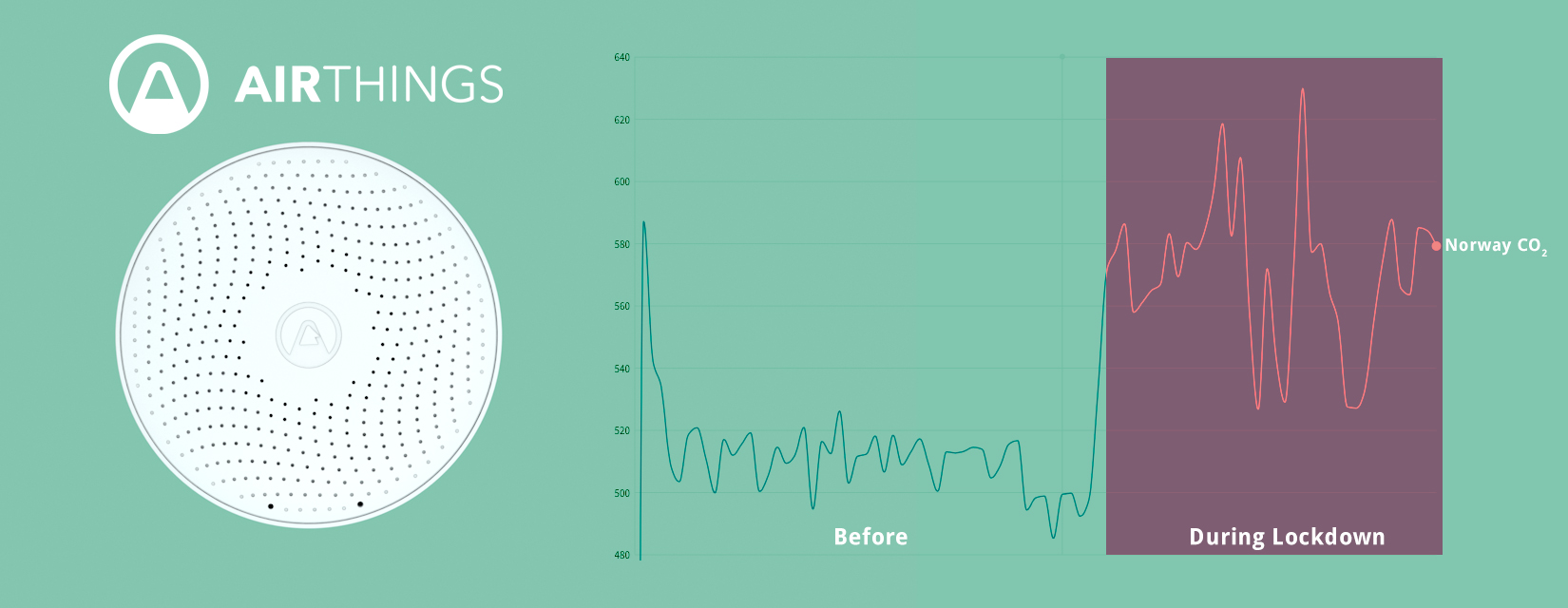
Let’s see what AQ data from Airthings say before and during the lockdown. Immediately, we can understand that there was an average increase in CO2 concentration inside houses. Nevertheless, there are some factor we have to consider:

CO2 indoors US Norway

First of all, Airthings’ users are conscious about the air they breathe because the devices help them see the air quality so they may take measurements against high CO2 concentrations. Imagine what happens to houses were no monitors can be found. Secondly, we have to consider that houses in northern Europe tend to have HRV systems and fresh air is introduced automatically to the indoor environment.

All in all, not all houses, have mechanical ventilation systems and during winter, when windows are closed, CO2 levels tend to be above 1000ppm for a great period during the day. Before COVID-19, houses used to “breathe” when homeowners went to work or school but not anymore, so monitoring the air quality indoors is more crucial than ever before. Especially if we want to avoid Brain fog, which is the inability to have a sharp memory due to high CO2 concentrations.

Outdoors

On the other hand, outdoor air was and still is important because one day we will return to a “new normal life” where we will need to breathe clean air outdoors. Cities are preparing the streets for the post-pandemic era, we have seen examples of cities allocating more space to the pedestrians and cyclists but also there are cities that now are investing in IoT low-cost outdoor air quality stations that can easily be placed all over the cities and provide us with a more dense spatial air quality coverage.

The improved and dense spatial air quality coverage will allow the policymakers to make better decisions and will allow citizens to have access to air quality data more easily than before as the outdated air quality stations we can currently find in many cities sometimes require manual work to register values one by one and they are not data-driven. This manual work makes data not real-time, hard to reach, and unsuitable for instant decisions. For example, in Andalucia, Spain the PM2.5 measurements are available after a month from the day the data were taken, and then you need to file an official form in order to access them.

Liberating accurate information and allowing people to access it, I think will transform the way we think and act, two important words that are key in order to address the issue.

Indoors outdoors air quality

Dear Air Purifier Manufacturers

An Introduction

Air purifiers are machines that help us breathe cleaner air when for some reason the air quality indoors is bad. There are a lot of companies and models out there for costumers to choose and most of them offer some kind of High-efficiency particulate air filtration aka (HEPA).

HEPA filters are made by compressing randomly together thin fibers of glass or synthetic material like PP+PET with diameters between 0.5 and 2.0 microns. The air space between HEPA filter fibers is typically much greater than 0.3 μm.

HEPA Fiber2_0094
Clean HEPA fibres

Read More »

Djinn vs COVID-19

In September 2019, I reviewed a great air quality monitor called Djinn. One of the unique features of this device is the algorithms that are running in its core. The team of Djinn was able to move even further their technology by designing a respiratory virus risk among others analytics on their dashboard, which is very handy during the covid-19 pandemic.

respiratory virus activity

The team took part in the “A Call for Actiontowards building the data infrastructure and ecosystem we need to tackle pandemics and other dynamic societal and environmental threats.Read More »

Free Printable or Digital Activities for kids.

I share with you a part of my book “Nicholas and his incredible eyesight”

You will find a printable or digital PDF with activities for kids during the #Covid19 lockdown. A great way for them to spend some educational time.

https://seetheair.org/wp-content/uploads/2020/03/nicholas-book-printable-activities.pdf

Be Safe!

Experiment: Cooking Pollution

I am sure you all have heard that we spend 90% of our time indoors, as a result we have to create a healthy environment if we want to stay healthy and strong. Although I am very tired of hearing this expression, it is true, most of us spend that 90% indoors but not only inside our house. Inside our houses we spend about 60% of our time, cooking, cleaning, sleeping/resting, having fun with our loved ones and reading.

In this experiment, I want to demonstrate what academic studies have already proved that when we cook we deteriorate the air quality inside our house. Remember we eat at least twice a day and probably we have to cook twice a day as well.

Read More »

Tool: HelpMeChoose AQM

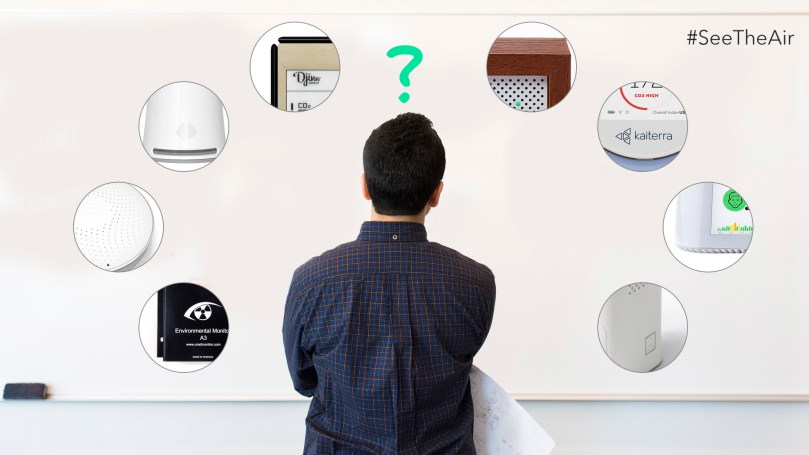
Which is the best indoor Air Quality Monitor for me?

I am sure you have asked this question a lot of times, many of them you have contacted me through my blog or social media platforms asking for my help. As a result, I decided to create a web tool to help you choose which one is best for your needs.

It’s super easy, just answer a few simple questions and the right Air Quality Monitor will pop up for you. Click below 👇

https://form.jotformeu.com/seetheair/HelpMeChooseAQM

Review: Laser Egg + CO2

I was given the opportunity to review the brand new Laser Egg + CO2 monitor which is a new addition into the family of Kaiterra domestic air quality monitors.

This product is designed for those who work or stay lots of hours indoors and pay attention to how Carbon Dioxide CO2 can decrease our cognitive ability. The correlation between CO2 and productivity has been studied a lot for over 50 years by many academics.

Interesting facts, surprisingly, the design standard for CO2 levels in most buildings is 1000ppm but the recommended concentration is below 700ppm. In one of the studies, Harvard researchers have found significant negative impact at 930 ppm.

Read More »

Indoor IAQ Monitors 2019Q4

Here are all the available IAQ Monitors on the market 2019 Q4. There are so many devices out there but they all lack innovation and they all offer exactly the same technologies. Companies had better hear users feedback!

Read More »

Review: Airthings Wave Plus

Finally,  an air quality monitor that focuses on Radon indoor pollution. Many of you have asked me to review an AQM with a radon sensor and the most famous of all the Airthings Wave which comes in various versions (Wave, Wave Plus). In this review, I am featuring the Airthings Wave Plus.

What is Radon?

For those who hear for the first time about Radon, it comes from the radioactive breakdown aka decay of naturally occurring Uranium found in most soils. As a gas in the soil, it enters buildings through small openings in the foundation. Since radon can easily be trapped inside buildings, indoor radon concentrations can increase to many times that of outdoor levels. When radon gas decays, it emits radioactive radiation in the form of an alpha particle/waves and Airthings Wave   can measure those alpha particles/waves. I don’t want to enter into details about the health effects on this post but Radon is found to be the second most common reason for lung cancer (after smoking).

Read More »