Breathe Easy and Tinker Freely: A Review of the AIR-1 Air Quality Sensor for Home Assistant
For the privacy-conscious and perfectionist homeowners who crave customization, the AIR-1 Air Quality Sensor by Apollo Automation is a breath of fresh air (literally). This sensor goes beyond simply monitoring air quality; it empowers you to take control of your indoor environment.
A little background about Home Assistant: Home Assistant is an open-source home automation that puts local control and privacy first. Powered by a worldwide community of DIY enthusiasts. Think of it as Apple’s HomeKit with the ability for endless customizations.
Specifications
Particulate Sensor
CO2 Photoacoustic NDIR Sensor (Optional)
Gas Sensor MOS Package (CO, NO2, C2H5OH, H2, NH3, and CH4) (Optional)
TVOC Sensor
Temperature and Humidity Sensor
Barometric Pressure
3 RGB LEDs
USB-C
WiFi 2.4 GHz
Bluetooth 5
All the specifications and sensor manufactures are listed here.
Built for the DIY Enthusiast
Unlike many smart home devices, the AIR-1 doesn’t lock you into a proprietary ecosystem. It leverages the open-source power of Home Assistant, giving you complete control over your data and how it’s used. This is perfect for those who want to tinker and integrate the AIR-1 into their existing smart home setup.
They say that good air quality is a fundamental right for all, and at the same time, they say that 99% of the population worldwide is exposed to air pollution above WHO Air Quality Guidelines. Mixed messages here. Even though I have already shared the story on a Tweet thread, I decided to write an article as well because of the permanence of the article and because it is easier to share.
December 17th, 2023
I arrived in Granada, Spain for the holidays. A blanket of smoke was covering Granada and the small towns around with a total area of over 100 km2. Although I was super tired, the intense smell of smoke inside the apartment and the fact that I knew that there was a lot of particulate pollution indoors didn’t permit me to sleep well.
The INKBIRD IBS-TH5 is a modern device designed to monitor and control indoor environmental conditions. With robust features and a user-friendly interface, this gadget is becoming a staple in homes and office spaces alike. In this review, we’ll delve into its technical characteristics, the importance of Indoor Environmental Quality (IEQ), and key terms such as relative humidity, vapour-pressure deficit, and dew point.
Technical Characteristics of INKBIRD IBS-TH5
INKBIRD IBS-TH5 is a 2.4 GHz WiFi-enabled temperature and humidity monitor. It features a large and clear e-ink display, showing real-time data, and the ability to connect to your smartphone via a dedicated app. This allows users to monitor and possibly adjust their indoor climates from anywhere, at any time.
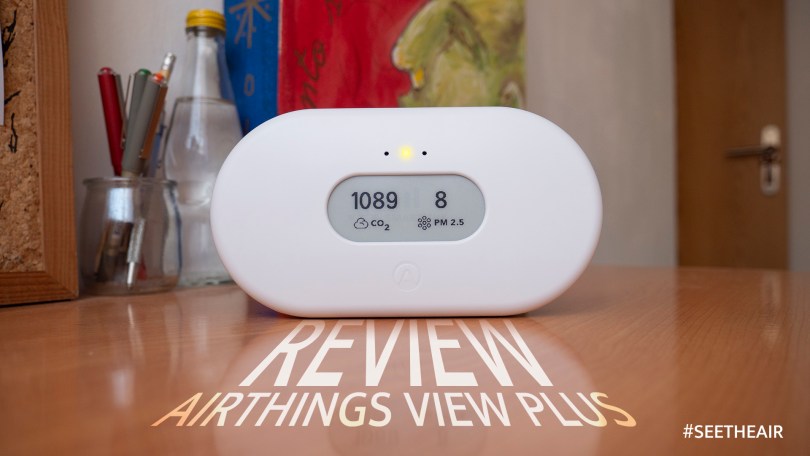
View Plus is the flagship air quality monitor from Airthings which was designed to address as many indoor parameters as possible and it complies with Green Building Certification.
The philosophy behind Airthings air quality monitors is simple. They try to make B2C and B2B clients’ life easy. One clear example is that all monitors, including the View Plus, work on simple AA batteries in order to avoid installation fees (from construction workers) and ugly cables running all over the walls.
Someone may ask what more they can offer to an already saturated market of air quality monitors. The answer is simple: Experience! TSI Incorporated is a USA-based company with more than 60 years of experience and knowledge thanks to the 1000 researchers and engineers that work for the company worldwide. They hold more than 50 patents.
Recently, TSI released the AirAssure which is an IoT-enabled Indoor Air Quality Monitor (AQM) designed specifically for buildings that really need to have an in-depth and accurate view of the indoor air quality. The monitor comes in two versions the 4-gas and 6-gas variation. I am going to review the 4-gas AirAssure IAQM that comes with a Formaldehyde, Carbon Monoxide, Carbon Dioxide, and Total Volatile Organic Compounds sensors. Apart from the 4 or 6 gas sensors configurations, all versions come with a particulate matter sensor and a temperature/humidity/barometric pressure sensor. Also, a new CO2 and VOC model will be released this autumn.
Technical Specs 4-Gas AirAssure
Formaldehyde (CH₂O)
Carbon Monoxide (CO)
Carbon Dioxide (CO2)
Total Volatile Organic Compounds (tVOC)
Particulate matter (PM)
Temperature, Relative humidity and Barometric pressure
I should have written this comparison a long time ago, but I was very busy the past few months. A lot of you have insisted, so here it is.
A CO2 monitor is the number one tool that can help us understand ventilation rates in indoor environments and consequently mitigate the spread of airborne viruses like coronavirus (SARS-CoV-2), but let’s not forget the common flu either.
Carbon Dioxide CO2 can decrease our cognitive ability. The correlation between CO2 and productivity has been studied a lot for over 50 years by many academics. Interesting facts, the design standard for CO2 levels in most buildings is 1000ppm but the recommended concentration is below 700ppm. In one of the studies, Harvard researchers have found significant negative impact at 930 ppm.
According to World Green Building Council, they estimate the reduced absenteeism through sick days to be worth ~$35/m2. Again the World Green Building Council estimates that if employees’ productivity improves by even a 5% because of better IAQ, that alone would be worth ~$400/m2.
The monitors are divided into two categories, the ones that can be carried with you (portable/wearable) and the fixed ones and in most cases professional solutions. Each monitor offers different characteristics. Sometimes just because it has more features, it doesn’t mean that it is the right tool for you.
Most of the monitors offer much more than just CO2 monitoring. We spend a lot of time indoors and a more holistic approach is needed sometimes when it comes to indoor air quality (IAQ) or indoor environmental quality (IEQ).
The CO2BUDDY is the only wearable CO2 monitor that can be used in so many places and for a variety of reasons. Very important for professionals that work in places where the conditions are extreme. Closed or crowded indoor spaces.
Aranet4 HOME
Aranet4 is a small and portable CO2 monitor that surprises people. It can be used as an indicator of productivity in schools and office buildings. It is packed with smart features for those that want to log measurements and share them later on.
Awair OMNI
Awair OMNI is a well-thought product that has one aim, to help professionals see the air and address potential issues. The Awair Display Mode allows users to display any information from the monitor to a big screen inside a bar, restaurant, office, school, etc. It features up to 8 hour battery and logs data on-device. It complies with the most common certifications from WELL V1, LEED, Fitwel, LBC, and RESET.
Ethera Labs TX mini
The Ethera Labs XT Mini ensures quality and competitive monitoring systems with great cloud platforms for all needs and budgets. By connecting the monitor to BMS, they manage to achieve energy efficiency while directly managing the ventilation system, as well as portable air purifiers. It is the only monitor that can be connected to a PC via USB and upload data locally.
Kaiterra Sensedge mini
The Sensedge Mini is a great and accessible choice for those that wish to get or not air quality certification by RESET, LEED, WELL, and others as the monitor complies with their requirements. The removable sensor modules reduce maintenance costs and ensure accuracy, something really important when you want to offer comfort and health to the building’s occupants.
Airthings Wave Plus
Airthings Wave Plus is designed for professionals and homeowners (different plans). It offers a great dashboard that makes air quality data comprehensive. Excellent low power CO2 sensor that runs on two AA batteries for up to 16 months and the colour LED ring can indicate the high CO2 levels. Additionally, it can measure Radon which is a radioactive gas.
Analox Air Quality Guardian
The Air Quality Guardian comes with a large LCD display that provides plenty of clear information for those professionals that don’t have the luxury of time to continually take their phones out of their pockets in order to check the CO2 concentrations and trends. Very loud alarm and great traffic light system🚦 where 3 LED lights will turn on depending on the concentration of CO2 in the indoor environment.
airthinx IAQ
Airthinx IAQ is designed for professionals, however, it is also available to homeowners too. The dashboard offers so many features that can really help you build a solid business model around it as you can rent the device(s) to third parties. The company provides a solid ecosystem of hardware and software, hard to resist.
Quick Comparison
All monitors deliver great CO2 measurements as I have tested them all. They all feature a non-dispersive infrared (NDIR) sensor which is the best among the low-cost sensors because of their accuracy and low-power consumption.
Each monitor has unique features, so read each review individually to discover if it is the right fit for you.
(Scroll down for the Spanish or Greek version of the review/Desplácese hacia abajo para la versión en español o Griega/ Μετακινηθείτε προς τα κάτω για την ισπανική ή την ελληνική έκδοση της αξιολόγησης)
It is not a coincidence that everywhere you look nowadays you see a small, square, and white monitor with a screen in the middle that displays some numbers! Well, this is Aranet4 which was developed by a Latvian company.
Aranet4 is a small and mighty CO2 monitor that surprise people for two reasons. First of all, it is very comprehensive, and secondly, most people are intrigued by the technology of the display as it uses an e-ink display and, to the untrained eye, looks like a simple sticker.
The commonly found AA batteries can operate the monitor for up to 2 years so you don’t have to worry about them. It uses a single channel non-dispersive infrared (NDIR) sensor technology for accurate CO₂ measurements, read more here.
I am very happy to announce that I am launching a new series of Podcast episodes where people from all around the world will be able to share their experience with air pollution and how it affects their lives.
Episode 1 : London, UK – Traffic Pollution and LTNs
In the first episode, we will hear Ediz from London, UK. Ediz is a clean air campaigner and he and his family members have to breathe lots of traffic-related air pollution as his neighborhood is jammed by hundreds of cars every day.
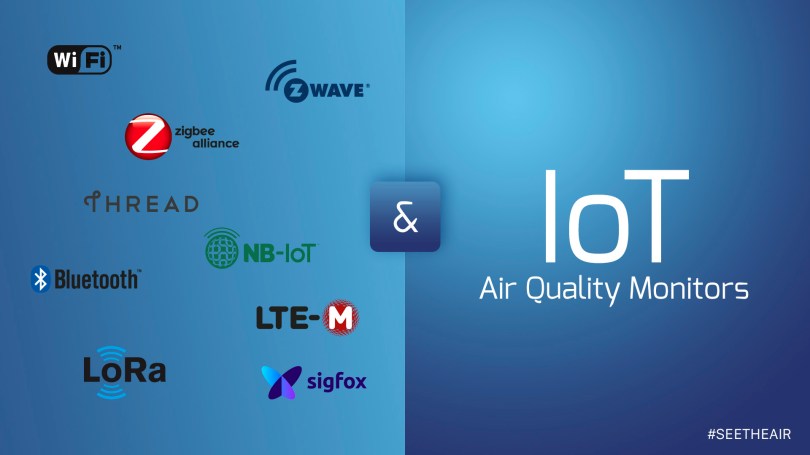
The Internet of Things (IoT) describes the network of electronic devices (air quality monitors, purifiers, motion detectors, cameras, etc.) that are embedded with sensors, software, and other technologies for the purpose of connecting and exchanging data with other devices over the Internet.
In this article, I am going to describe some of the available networks and physical layers that are used by Air Quality Monitors (AQM), mainly for consumer-based products, and discuss which technologies make more sense in 2021+ for Smart Homes/Buildings and Businesses.
Wi-Fi IEEE 802.11
IEEE 802.11 is part of the IEEE 802 set of local area network (LAN) protocols and specifies the set of media access control (MAC) and physical layer (PHY) protocols for implementing wireless local area network (WLAN) Wi-Fi computer communication in various frequencies including 2.4 GHz, 5 GHz, and 6GHz.
IEEE 802.11a/b/g/n
This standard wireless network protocol is among the most common protocols for communication between the devices and the internet/cloud. Most devices even today use the ~20 years old 802.11b or 802.11g with a linkrate between 1 to 54 Mbit/s and a frequency of 2.4 GHz for power conservation reasons and good wall penetration. The 802.11n transmits the highest data throughput, but at the cost of high-power consumption at 5GHz.
IoT AQMs do not need a high-speed data throughput because the information they transfer is very little and in the range of a few kilobytes. So protocols like the IEEE 802.11ac and IEEE 802.11ax don’t make a lot of sense because they demand energy and they don’t offer good wall penetration in order to cover an entry house/apartment.
IEEE 802.11ax aka WiFi 6 or 6e
There are some claims that IoT devices will adopt the new WiFi 6e (e stands for enhanced) but I don’t think we will see that happening as bandwidth isn’t relevant for AQMs but the range is more essential and the WiFi 6e is designed to cover approximately 30m/98ft indoors. The 6e operates at 6Ghz, as a result, the highest the frequency the shortest the distance a signal can travel within walls. A positive feature of this protocol is that it supports a Low Power Indoor (LPI) mode. In the multi-user scenario, the WiFi 6 module consumes only one-third of that of the Wi-Fi 4 (802.11n) module and they achieve that by shortening wake-up time.
It is not always an easy task to keep indoor air free from pollutants, especially, when Nitrogen Dioxide (NO2) is present in indoor environments. In most cases, there is little you can do to eliminate NO2 and other gases like Sulphur Dioxide (SO2), Formaldehyde (TVOC), or even pathogens like H1N1 Influenza A virus (pandemic flu), and Staphylococcus aureus (or similar bacteria).
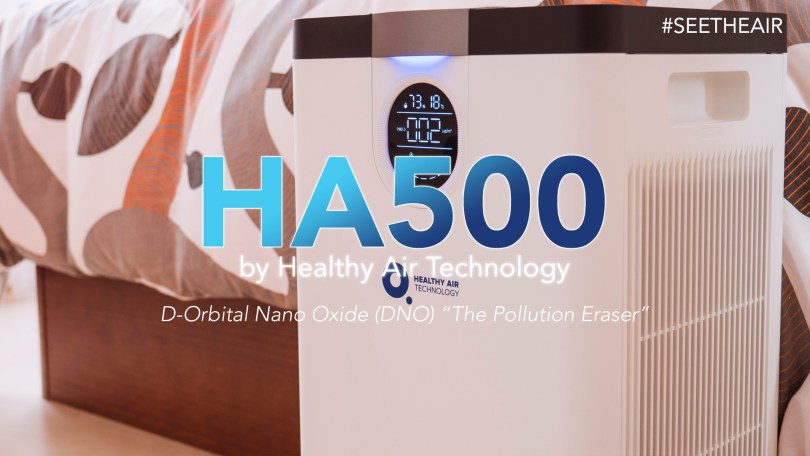
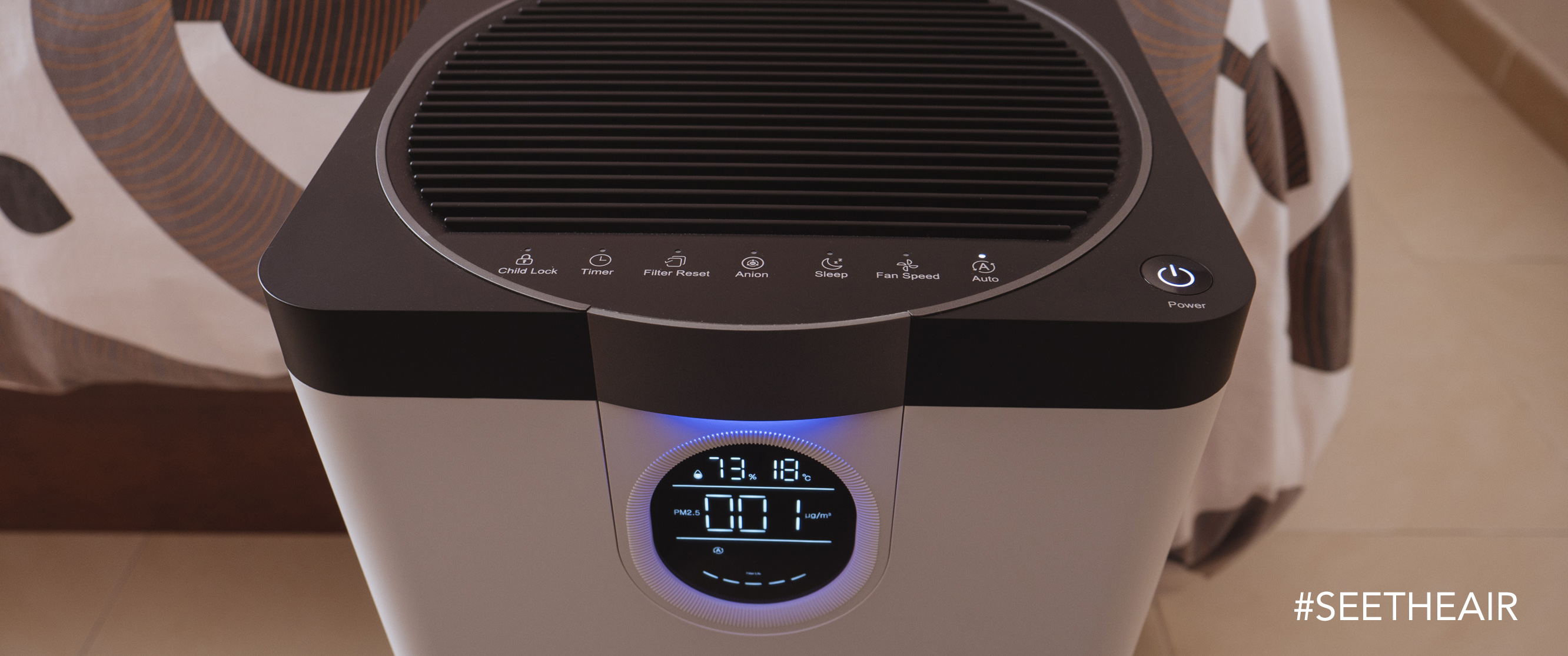
Here comes the HA500 Air Purifier by Healthy Air Technology which is able to eliminate all of these pollutants/pathogens from indoor environments. It does that thanks to the triple-layered system with a primary filter, HEPA 13 filter, and Pollution Eraser DNO filter. DNO means D-Orbital Nano Oxide which is made of two parts.
1st part: The Carrier – Activated charcoal. The material that is used in military gas masks, and captures pollutants within the pores of the charcoal. 2nd part: The Transition metal oxides – Transition metal oxides are coated in the activated charcoal to form catalysts, and these catalysts break down pollutants and toxic gases into harmless chemicals and then release these harmless materials back into the atmosphere like water, oxygen, carbon dioxide, etc. The DNO is invented by the founding CTO of Oxford Catalyst plc (a leader in novel industrial catalysts).







 See The Air