Last week I had the chance of getting Foobot an indoor AQI device with PM, VOCs, CO2, Temperature and Humidity Sensors.
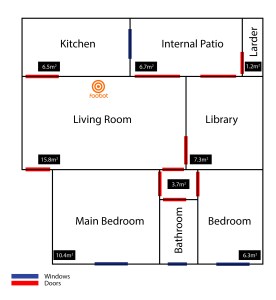
foobot AQI device in the living roomI have been using it since Thursday 19/11/2015, it has been great so far with many useful informations about my air quality. Firstly the device is placed in my living room and I have noticed that my lowest background levels are:
Living room lowest readings
CO2 = 450ppm
VOCs = 127ppb
PMs = 0μg/m³
RH = 60%
PMs can change rapidly when my living room stays uncleaned for 3-4 days, especially when I move a lot around (which I do) and reach values of 17μg/m³. VOCs don’t change a lot because in general I don’t use toxic products for cleaning. CO2 from the other hand can get worse when I have the living room 15m² closed for more than 2-3h and two people are inside. CO2 can reach values of 3000ppm although CO2 isn’t a threat for humans but can indicate your over all well been. Humidity is high and sometimes can reach values of 73% and for me it is hard to battle.
All these data are still under observations and more are about to come.
The answer is almost every time the same, Education. People don’t understand the importance of the air because simple they don’t know that exists, ignorance or non-awareness and because their eyes can’t see it yet. Schools don’t educate kids and if they do always on a basic level, mostly about water and trash.
The other day I was reading a shocking online article, it was about the people from China that they don’t seem to believe that they have air quality issues in multiply levels in their country. Those kind of articles make me wonder and make me feel scared about the future. Why the Chinese don’t understand the problem, maybe they do but they ignore it because they worry they will lose their jobs which is a possibility if you think that they are +1,401,586,609 people and all these people need to work so they can feed their families. However this problem doesn’t appear only in China, even here in Spain people are ignorance about air contamination.
Then there are the smokers, people that are willing to spend money on smoke but literally on smoke CO2 plus other gasses just because they feel good and cool for a moment. Lack of education? Maybe yes, but also because I think we don’t evolve mentally. Of course we innovate and discover new things but our ego doesn’t allow us to see beyond ourselves and our image.
Finally we have some “great” governments that are unable to control or most of the times have a say over big companies. And why those companies don’t care? Money and greediness. Some of them even use the word “Green” to attract more clients or make their clients feel better when they buy their products.
I know that I have promised you all that I will conduct some experiments but so far I haven’t received my devices. (Sad face!)
Both of them are delayed, even big companies like Apple sometimes have issues during productions so for example Awair told me that the devices are in final process of manufacturing and they will begin shipping in a month. TZOA from the other hand is a lot closer to their initial timeline to deliver their device.
From my point of view money and fines won’t save the world and even worse it can’t undo all the damage that they have done and they are still doing because all of those cars that are still working and emitting NOx.
Up to 40 times higher NOx output in real-world driving. An estimated eleven million cars worldwide, produced between model years 2009 and 2015.
To find out if your vehicle is affected and has a motor EA189 you should consider:
– Using a motor 1.6 TDI with a power between 75 and 105 CV or a 2.0 TDI between 84 and 180 CV
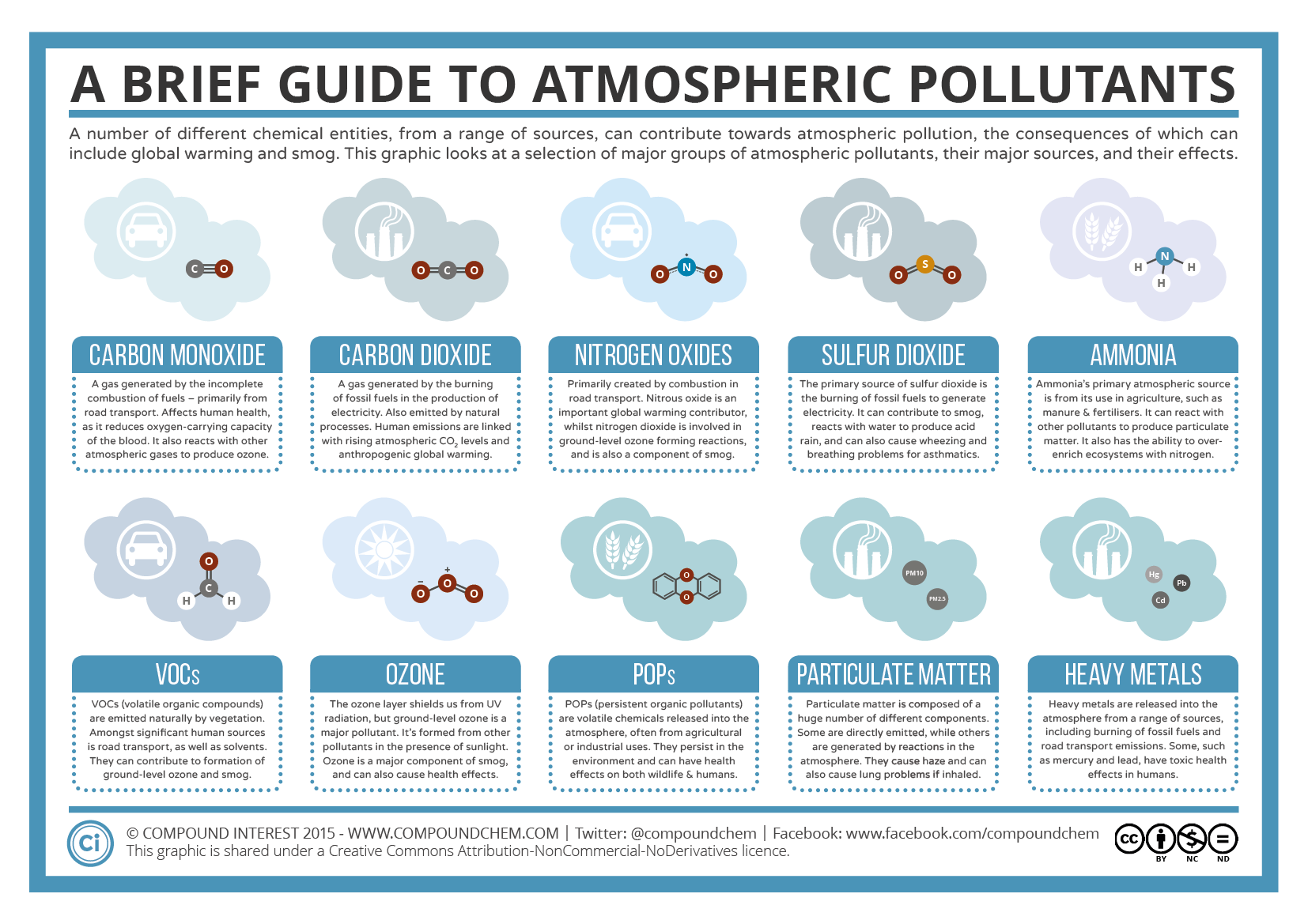
There are so many air pollutants out there and as a result there are many types of air filtrations as well. To be honest I don’t like filters because I believe that we have to reduce and avoid generating pollutants in the first place, but sometimes it’s hard.
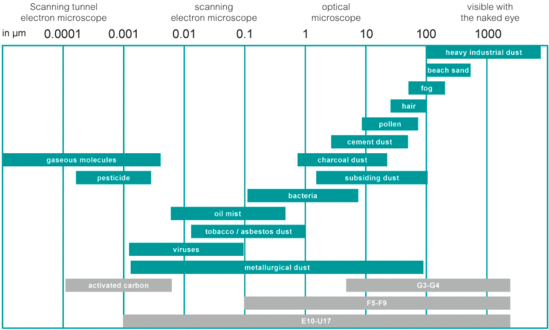
HEPA filters are designed to catch particulate matter >1µm to >0.3µm with an efficiency of 85% to 99.999995%. We can translate that into:
Pollen (5-100 µm)
Mold (2-20 µm)
Pet Dander (0.5-100 µm)
Dust Mite Debris (0.5-50 µm)
Bacteria (0.3 -10 µm)
Green: Pollutants | Grey: HEPA Filter Class E10-U17
Carbon Air Filters
Activated Carbon filters have small absorbent pores that chemically react to pollutants like VOCs as they pass through the filter. The activated carbon absorbs the odors and gasses and neutralises them by bond the pollutants with the carbon. They always combine HEPA filters with active carbon filters because they can’t remove dust and other allergens alone.
Silver Nanoparticles Coated Filter
Silver Nanoparticles Coated Filters have a range of negative effects on virus strains and bacteria and they can destroy the membrane of a cell and deactivate them. They use silver as a natural antibacterial as result there are HEPA filters with Silver Nanoparticles Coated that have been proved to be 98% effective against common flu virus.
Ionic Air Filters/Purifiers
Typically, they produce negatively charged ions aka anions, which then attract positive particles in the air. As the particles make contact with the anions , these particles become too heavy to remain airborne and fall to the floor. Some ionisers are armed with some static plates which trap all those particles, but you have to clean them regularly. A very negative aspect of Ionic air filters is that they produce ozone O3 as a by-product**, which has classified as a toxic gas that causes lung damage. Some companies claim that their ioniser doesn’t produce Ozone but it’s hard not to.
Removes ultra-fine particles as small as 0.01µm
Sterilizes bacteria, viruses, smoke, and other toxic fumes
UV Light Air Purifiers
High intensity UV-C light (240-280 nm) is strong enough to break down most carbon based organic compounds like bacteria and other pathogens by breaking the molecular bonds in their DNA. As a result they are designed to destroy micro-organisms such as germs, bacteria and mold and not to catch allergens and dust like a HEPA filter. This is why many companies combine a HEPA filter and UV Light. This is not a quick process, the pathogens must pass through the UV light multiple times in order to be destroyed.
NTP Non Termal Plasma Purifiers
This is fairly new technology also called Cold Plasma that works like an Ionizer but it splits Oxygen O2 molecules into positive and negative ones. These single oxygen atoms are highly reactive and stick to particles, bacteria, viruses or gases to destroy them or to turn them into harmless substances. They also produce Ozone as a by-product** but in less quantities around ∼0.0058PPM, the World Health Oraginization, EPA and many country standards have set the maximum level of ozone concentration at 0.05PPM.
**The shocking truth is that many devices in your home produce ozone by-product like TVs, computers, electric mixers, hair dryers and ceiling fans.
Foobot also called your good air guru and maybe it is a good guru, thanks to all of its sensors. One of the most powerful device on the market that it is actually available to order right now is equipped with a great variety of sensors like a tVOC: Volatile Organic Compounds (Formaldehyde, Benzene, Xylene,Toluene etc.), PM2.5, PM5 and PM10 Particulate Matte, CO2/CO Conversion from tVOC/Cross sensitivity of tVOC sensor and of course Temperature and Humidity (Full Datasheet).
They have came up with a great design, very futuristic and this is actually the second version of a formerly Alima. The only negative part of the device itself is the plastic case. They use an ABS Glossy and rubber finish which I am not a big fun, hopefully in the future they will have the budget for an Aluminium case.
A gesture friendly device that allows you to check air quality with and without internet connection or a smartphone by just turning it upside down or by tapping it. The RGB LEDs will change colour between 6 levels of orange/blue.
They also have an API that allows to see and export the data on a computer in case you are an advanced user and you need to study the data in a more sophisticated way, although the app for iOS and Android is well build with history browsing, instant readings and alerts or advices to improve your indoor air that getting better over time thanks to machine learning.
Nowadays a product is nothing without a good support from the company. They are active socially through Twitter and Facebook and you can always reach them and ask them questions about their product. Also their Blog is an awesome place (like mine) to learn how to improve your indoor air quality, one of the best article that I really love is Cigarette smoke – Polluting your indoor air.








 See The Air