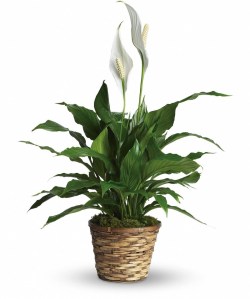
Peace Lily (Spathiphyllum)

peace_lily

Spathiphyllum aka Peace Lily or Spath is a native to tropical regions of the Americas and southeastern Asia.

With wide leaves,  mostly white flowers and over 40 species, Peace Lily is well known for its air-purifying abilities. It’s great at breaking down and neutralizing toxic gases such as carbon monoxideformaldehyde, benzene, trichloroethylene, toluene and xylene.

Spathiphyllum is mildly toxic to humans and animals when ingested. The Peace Lily is not a true lily from the Liliaceae family. True lilies are much more toxic to cats and dogs. The Peace Lily contains calcium oxalate crystals, which can cause skin irritation, a burning sensation in the mouth, difficulty swallowing, and nausea.

Peace lilies love shade and some indirect light. They like a consistent temperature between about 65°F/18°C and 80°F/27°C. Peace lilies like to be watered a lot at once, but also need a chance to dry out afterward. The plant will drop a bit when thirsty, telling you when it needs water. Remember to clean its leaves when dust accumulates.

It’s in my opinion a beautiful plant for the living-room.
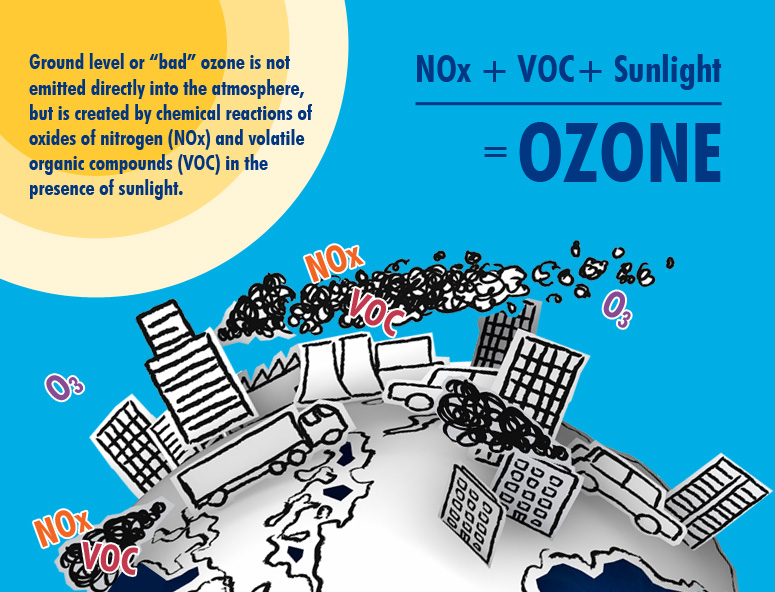
Ground Level Ozone Formation

ozone_formation

Breathing ozone O3 can trigger a variety of health problems, particularly for children, the elderly, and people of all ages who have lung diseases such as asthma. Ground level ozone can also have harmful effects on sensitive vegetation and ecosystems.

Awair indoor Air Monitor

UnknownAwair monitors indoor air, gives solutions when air quality turns unhealthy and communicates with other smart home devices so you can stay healthy.
Apart from the beautiful design, Awair’s sensors monitor the six most important factors of indoor air quality & well-being.

  1. Temperature:  -40 to +125°C / -40 to +257°F
  2. Humidity: 0 to 95%
  3. CO2: 0 to 4000 ppm
  4. VOCs: Air Hydrogen, Hydrogen Sulfide, Ammonia, Ethanol, Toluene to name a few, ranging b/w 0.1~30 ppm
  5. Dust: Particles PM2.5 from 0 to 500 μg/m3. (On their site they mention, dusts and particles under 2.5mmg)
  6. Ambient light

Awair is one of the tools I will use to monitor my indoor air quality (TZOA is the other one). It has awesome design and I love the walnut timber, high quality of course and is painted without harmful VOCs. It will constantly show me the AQI inside my bedroom which is the most important room in my home. During day we are more aware about air quality but during night we aren’t, so I will be able to see if my bedroom offers me more than a bed and a regular night sleep. During sleep our bodies rebuild and our minds refresh, so do we offer them the best conditions?

During day and night time I will conduct experiments with it. Measuring CO2 with and without plants, VOCs with different cleaning products plus furnitures and dust particles from mattresses and bed clothing. All of these experiments will be published here on #SeetheAir.

Temperature and humidity sensors are very import inside a room for many reasons as well. First by knowing the temperature inside a room you can have optimum sleep during night time, in general is recommended slightly cool temp 65ºF/18.5ºC. Second low humidity may cause respiratory problems, itchy eyes and skin. On the other hand, high humidity will result in molds that serve as breeding ground for bacteria. Also dust mites love high humidity. The optimum humidity level is 35-45%.

I live on the coast and humidity levels are so high here so I had to invest on a dehumidifier but I did a smart purchase because I bought an A/C with dehumidifier, this way I control temperature and humidity. Awair is capable of communicating with smart home appliances and turn them on/off via IFTTT. In case your home appliances aren’t smart enough you can boost them with TADO The Smart A/C Control.

Finally the app is elegant and simple for the everyday use but with valuable infos.

Black Carbon Pollution

The_Dark_Side_of_Carbon

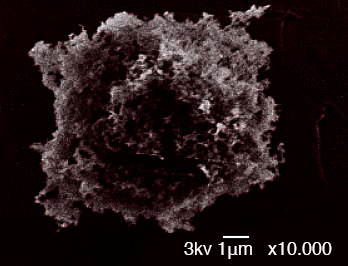
BC particle EM
Black Carbon Particle

Chemically, black carbon or BC is a component of fine particulate matter PM ≤ 2.5 µm. It is formed through the incomplete combustion of fossil fuels, biofuel, and biomass.

Black carbon causes human morbidity and premature mortality. Short-term and long-term exposures to PM2.5 are associated with a broad range of human health impacts, including respiratory and cardiovascular effects as well as premature death.

BC stays in the atmosphere for only several days to weeks, while carbon dioxide (CO2) has an atmospheric lifetime of more than 100 years but the impact of BC is much stronger because BC interacts with clouds, warms the Earth by absorbing heat and light in the atmosphere and by reducing albedo (reflectivity) when deposited on snow and ice.

Sources
  • 42% Open biomass burning (forest and savanna burning)
  • 18% Residential biofuel burned with traditional technologies
  • 14% Diesel engines for transportation (Probably lot more)
  • 10% Diesel engines for industrial use
  • 10% Industrial processes and power generation, usually from smaller boilers
  • 6% Residential coal burned with traditional technologies
Impacts
  • Public health
  • Climate
  • Global warming
Solutions

Reducing emissions of BC immediately! Thank you Volkswagen for all those years of contamination! (#diselgate)

How Plants Remove VOCs and Purify Air?

plant_roots_soil

First, harmful substances and VOCs waft from countless sources in our daily lives, including adhesives, ceiling tiles, photocopiers, wall paint, furnitures, upholstery etc.

We can find the key to our answer from NASA’s experiment, they found that plants absorb airborne pollutants as part of their normal “breathing” process (CO2 carbon dioxide in, O2 oxygen out) and transport them to their roots, where microbes feed on and detoxify them.

As result we need to have in mind that that roots and the soil are very important for optimum results. I will talk about this in the future.

The scientists have measured the filtering capacity of specific plants by putting them into sealed chambers and releasing toxic chemicals, then measuring how much of each chemical remains at 12-hour intervals. The results have been stunning. They found that the most effective plants had a high transpiration rate and they emit more moisture into the environment. This is the result of a natural pumping action. As plants pull air down to their roots, they pump moisture out. They have also found that over time at least one plant, the lady palm, actually becomes more efficient at disposing of the gas.

Is recommend using a mix of plants, two or three plants in 8-inch or 10-inch pots for every 100 square feet of floor space. Now be aware that the more plants you have more excessive humidity you will get, which can contribute to the growth of mold and bacteria. To help prevent that, don’t let your plants sit in stagnant water. Once the water has drained through the soil into the tray below, remove it.  Sub-irrigation planters are a fair option but you have to discourage mold from growing on top of the soil by covering it with moss or gravel.

My personal recommendation is to keep a plant on top of your work desk, on top of your night stand and next to your sofa which are your personal breathing zones.

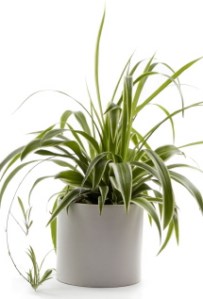
Spider Plant (Chlorophytum comosum)

spider-plantChlorophytum comosum aka Spider Plant or airplane plant or hen-and-chickens is native to tropical and southern Africa plant but it is easy to grow as a houseplant.

With lots of long leaves and tiny white flowers, the spider plant is able to eliminate formaldehyde, toluene and xylene, a solvent used in the leather, rubber and printing industries. As an added bonus, this plant is also considered a safe houseplant if you have pets in the house, (remember Snake Plant isn’t). It is also an efficient filter of carbon monoxide. An effective place to grow spider plants is near fireplaces, kitchens and offices.

Likes bright, indirect light or fluorescent lighting, remember to use room temperature rain or purified water. Let the pot surface feel dry to the touch before watering. Water until water drains from the bottom and empty drained water from trays promptly. Remember to repot them in case they grow too big.

Keep it between 40ºF/4.5ºC and 85ºF/29.5ºC.

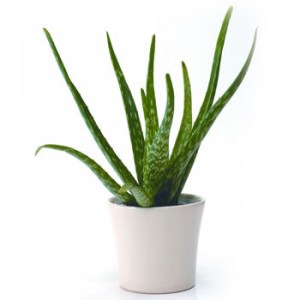
Aloe Vera (Aloe barbadensis Mill)

l-aloe-vera-pot-331497

Aloe Vera is my second must have home plant for many reasons. First of all it is an easy to grow plant, that loves the sun and helps clear the air from formaldehyde and benzene, which can be a byproduct of chemical-based cleaners, paints and more. Aloe is a great choice for sunny kitchen windows and bedrooms. Besides its air-clearing abilities, the aloe gel inside the plant can help heal cuts, burns and other skin issues.

Like Snake PlantAloe Vera also produces Oxygen O2 during night time.

If you are planning to grow Aloe Vera indoors then it’s an easy task. Keep the pot on a sunny spot, water deeply, but sparingly (let it drain good). Aloe plants are pretty low-maintenance, since they don’t require much water. if it’s possible use rainwater. Temperature range for a happy aloe plant is between 70°F/21°C – 80°F/26°C but will survive down to 40ºF/5°C.

Air Quality Devices – The Complete Comparison (updated)

devices2

There are so many devices out there to measure air quality nowadays and the informations are sometimes confusing about what each device is armed with or not. As a result here is a complete guide to choose the right device for you and your needs.


  • Prices may vary during time.
  • Some Companies don’t specify on their data sheet if their devices are capable to measure PM2.5 or PM10 and they just mention the word dust.
  • Some other companies say: Our product goes beyond CO₂ by analyzing substances that directly affect your well-being by measuring VOCs. They aren’t clear if their devices have CO₂ sensor.
  • The classification of the design between Bad, Good and Very Good is based on the materials (plastic, wood, glass and metal) that they have used and the aesthetic on my personal opinion.

Snake Plant (Sansevieria trifasciata)

snake-plant-500x500

Sansevieria trifasciata aka Snake Plant or Mother-In-Law Tongue is one of the best house plants that can clean indoor air but also have a secret ability that most people don’t know which is to produce Oxygen O2 during night time and this is the reason some people also call it Bedroom Plant.

I have three pots of Snake Plant in my home, bedroom, kitchen and my home library.

Snake Plant is capable of removing a big variety of VOCs such as BenzeneFormaldehydeTrichloroethyleneXylene and Toluene (lacks ammonia). It is also effective at removing nitrogen oxide.

It is a good plant for the lazy owners. It can be exposed in full sun light but also does well in dim light. It does not need to be watered very often since it is part of the succulent family (It can rot from over-watering). Ideal temperatures are between 5 – 30 °C (40 – 80 °F). Remember to rotate it every month for uniform light exposure.

Keep it away from pets and babies as it is rated as toxic if ingested.

Air-filtering houseplants

houseplants-lead

In 1989, NASA conducted a Clean Air Study to find out which house plants most effectively ward off the toxins found in a range of household goods. The research was carried out by placing plant species inside a plexiglas chamber and adding the following chemicals inside before collecting air samples to see how the soil and plants fared in removing the air pollutants. ( here is the complete infographic via Love the Garden).

My personal experience with plants has showed me that they actually work. A key parameter here is also a good quality of  soil without pesticide and fertilizer. No need to go wild and convert your house into a jungle one-two plants in each room are enough.

Each week I will dedicate a post for a house plant and its benefits.

Also this fall I will conduct an experiment with some plants and VOCs, so stay tune.

Here are 27 House Plants That Detox The Air In Your Home Naturally
  1. Dwarf Date Palm (Phoenix roebelenii)
  2. Areca Palm (Dypsis lutescens)
  3. Boston Fern (Nephrolepis exaltata ‘Bostoniensis’)
  4. Kimberly Queen Fern (Nephrolepis obliterata)
  5. English Ivy (Hedera helix)*
  6. Lilyturf (Liriope spicata)
  7. Spider Plant (Chlorophytum comosum)
  8. Devil’s Ivy (Epipremnum aureum)*
  9. Peace Lily (Spathiphyllum ‘Mauna Loa’)*
  10. Flamingo Lily (Anthurium andraeanum)*
  11. Chinese Evergreen (Aglaonema modestum)*
  12. Bamboo Palm (Chamaedorea seifrizii)
  13. Broadleaf Lady Palm (Rhapis excelsa)
  14. Variegated Snake Plant, mother-in-law’s tongue (Sansevieria trifasciata ‘Laurentii’)*
  15. Heartleaf Philodendron (Philodendron cordatum)*
  16. Selloum Philodendron (Philodendron bipinnatifidum)*
  17. Elephant Ear Philodendron (Philodendron domesticum)*
  18. Red-Edged Dracaena (Dracaena reflexa)*
  19. Cornstalk Dracaena (Dracaena fragrans ‘Massangeana’)*
  20. Weeping Fig (Ficus benjamina)*
  21. Barberton Daisy (Gerbera jamesonii)
  22. Florist’s Chrysanthemum (Chrysanthemum morifolium)*
  23. Rubber Plant (Ficus elastica)*
  24. Dendrobium Orchids (Dendrobium spp.)
  25. Dumb Canes (Dieffenbachia spp.)
  26. Moth Orchids (Phalaenopsis spp.)
  27. Aloe Vera (Aloe barbadensis Mill.)