Breathe Easy Together: Register Now for The Safer Air Project Report Launch!

Creating a world where everyone can breathe safely indoors.

The pandemic has highlighted a critical truth: many diseases spread through the air we breathe. This makes clean indoor air essential for minimizing the risk of infection in our shared spaces, especially for those most vulnerable to airborne illnesses. Everyone deserves the right to access public spaces safely, and that right starts with clean air.

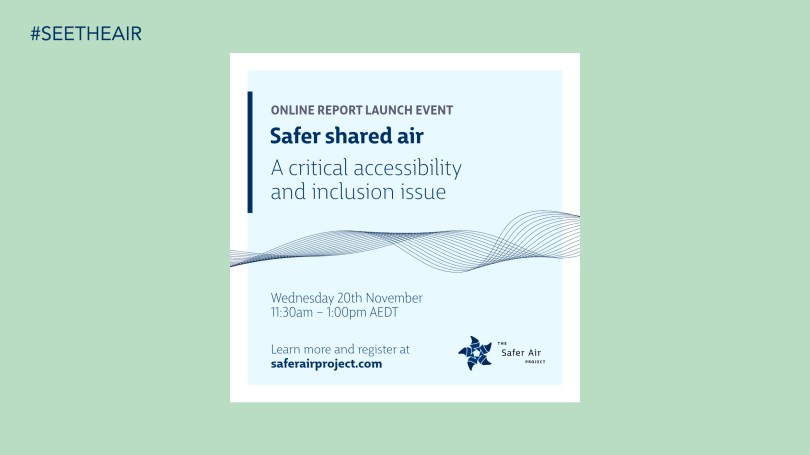
The Safer Air Project is excited to invite you to the online launch of our groundbreaking report, Safer Shared Air: A Critical Accessibility and Inclusion Issue. Join us to explore the importance of clean indoor air for public health and accessibility.

Here’s what you can expect:

  • Discover why safer shared air is a critical accessibility and inclusion issue.
  • Learn how we can work together to ensure healthier indoor air for everyone.
  • Gain insights from our report on the impact of poor indoor air quality and its connection to public health and inclusion.

This event is free and open to everyone!

Register now: https://www.saferairproject.com/

Together, we can create a world where everyone breathes safely indoors. Don’t miss this important discussion!

Recommended CO2 Levels for Optimal Building Performance

Carbon dioxide (CO2) concentration is a critical indicator of indoor air quality (IAQ) and plays a significant role in building performance. While CO2 itself may not be directly harmful at typical indoor levels, its concentration serves as a proxy for ventilation effectiveness and the potential buildup of other indoor air pollutants, including pathogens, that can negatively impact occupant health and cognitive function. This article examines the relationship between CO2 levels and building performance, drawing upon research findings and expert insights to recommend CO2 levels that promote a healthy and productive indoor environment.

Understanding the Role of CO2 in Indoor Environments

CO2 is a natural component of the air we breathe, but its levels can increase significantly in indoor spaces due to human respiration and other combustion processes (candles, cooking, combustion heating, etc). When ventilation is inadequate, CO2 from these sources can accumulate, leading to elevated concentrations.

Read More »

Can an Air Expert Escape Air Pollution? A 2-Month, 6-Month, and Year-Long Experiment in Personal Air Quality

Air pollution is an invisible threat, silently impacting our health. But what if you knew exactly where it lurked, both indoors and outdoors? Could an air quality expert, armed with this knowledge and personal equipment, achieve the World Health Organization’s (WHO) air quality guidelines for extended periods?

This is the question I, Sotirios Papathanasiou, an air quality expert,  will try to figure out over the next year. Starting July 1st, 2024, I embarked on a unique experiment, tracking my personal air quality for a full year. I am monitoring two key air quality metrics: Carbon Dioxide (CO2) and PM2.5 (fine particulate matter). However, PM2.5 data will be excluded when relative humidity surpasses 70% because the limitations of low-cost sensors. I will be carrying an Atmotube Pro and an AIRVALENT everywhere I go.

I am your human guinea pig, carrying these portable air quality monitors everywhere – from my bedroom to my gym, from my kitchen while cooking to the beach on a weekend getaway. This comprehensive data will allow us to see if, despite my expertise in pollution sources and protective measures, I can consistently meet the WHO’s air quality guidelines.

Read More »

It’s Time to Breathe Easy: See The Air is Giving Away an AIRVALENT CO2 Monitor! [Closed]

Calling all air quality enthusiasts! See The Air with the collaboration of AIRVALENT are thrilled to announce a giveaway for one lucky follower to win a cutting-edge AIRVALENT CO2 Monitor.

Ever wondered if that stuffy feeling in your office is due to poor ventilation? Or maybe you’re curious about the CO2 levels in your home gym? With the AIRVALENT CO2 Monitor, you can take control of your indoor air quality and breathe a little easier.

Here’s how to enter the giveaway:

  1. Subscribe at seetheair.org or follow me on any social media. (This will help me to reach out to you in case you win).
  2. Head to the giveaway post and leave a comment telling us which AIRVALENT design you think is the most stylish! There is no correct answer.
  3. (Optional) Share the giveaway post to your social media.
Read More »

Review: airCoda – Pocket CO2 Monitor

Looking for a way to monitor CO2 levels on the go? The airCoda pocket CO2 monitor might be your breath of fresh air. This compact device features a photoacoustic NDIR CO2 sensors, a technology known for its small size and accuracy in measuring CO2 concentrations in any environment.

Why the airCoda?

  • Pocket-Sized Portability: Unlike bulkier CO2 monitors, airCoda’s small size allows you to easily carry it anywhere. Whether you’re checking CO2 levels in your office, classroom, or even your car, airCoda gives you the freedom to monitor air quality wherever you go.
  • Sensor Accuracy: Thanks to the integrated sensor, you can trust airCoda to provide reliable CO2 readings. This is crucial for making informed decisions about ventilation and maintaining healthy air quality.
Read More »

Review: AIRVALENT – The smallest CO2 Monitor

Since I caught COVID last month (for the first time after 4 years), I’ve become increasingly concerned about the air quality in the places that I visit or stay for a long period of time like an airplane. So, I decided to try out the AIRVALENT CO2 air quality monitor to see if it could help me identify badly ventilated indoor environments.

Why the AIRVALENT?

  • Smallest CO2 monitor available: If size is a major concern, the AirValent could be a good option as it can easily fit in your pocket while traveling.
  • Aesthetically pleasing design: The AirValent appears to have a sleek and modern design that can be customizable during the purchase process. Various colors and patterns to choose from.
  • Tracks CO2, humidity, and temperature: This allows for a more comprehensive understanding of your indoor environmental quality.
  • Bluetooth connectivity: Allows for data monitoring and analysis through a smartphone app.

Technical Characteristics of AIRVALENT

Read More »

UNE 171380:2024 − Continuous Measurement of CO2 Indoors to Improve the Health and Well-being of Users

The Spanish Association for Standardization presented the new UNE 171380 standard on CO2 monitoring for health prevention. The University of Seville has played a significant role in the development of these regulations through the Architecture, Heritage and Sustainability Research Group: Acoustics, Lighting, Optics and Energy, represented by researchers Samuel Domínguez and Miguel Ángel Campano.

This standard is a great achievement in the prevention of airborne disease transmission, based on everything learned after the SARS-CoV-2 health emergency, and transparent information to the public about the air quality of establishments.

Read More »

Ventilation Is Not Always An Option & Ventilation Needs to Be Done Correctly


Part 1: Ventilation Is Not Always An Option

Ventilation isn’t always an option in all areas and indoor spaces. Here are some key reasons why:

Environmental challenges:

  • Extreme weather: In very hot or cold climates, opening windows can be impractical or counterproductive. In scorching temperatures, opening windows might invite more heat in, while in freezing temperatures, it can cause heat loss and discomfort.
  • Air pollution: In areas with high levels of outdoor air pollution (e.g., traffic fumes, industrial emissions, wildfires), opening windows can actually worsen indoor air quality by bringing in the polluted air.

Space limitations:

  • Windowless rooms: Basements, interior rooms, and some commercial spaces like server rooms often lack windows, making natural ventilation impossible.
  • Small or airtight spaces: Tiny apartments, trailers, and even some modern, energy-efficient houses can be so tightly sealed that natural ventilation is insufficient.
Read More »

Why every Car needs a CO2 Monitor/Sensor?

Let’s forget at the moment that combustion vehicles emit carbon dioxide (CO2), and focus on the occupants that spend time inside a confined space where they emit CO2 due to metabolite of cell respiration. Vehicles form part of the indoor spaces where humans spend a lot of time due to traffic or because they have to travel long distances.

Regulatory bodies have been controlling many aspects of modern vehicles; tires, mirrors, seat belts, airbags, screens, etc. However, they have forgotten to look into the air quality inside the vehicles and how it affects the driver’s cognitive performance.

Read More »

Modern Houses & Indoor Air Quality 🏡

One will think that the more modern the house, the better the indoor air quality. However, that’s not always the truth as recently I discovered that many houses have inadequate appliances that will create harmful air pollutants and some of them will falsely mitigate contaminants by creating a false sense of remediation.

Example #1

Gas cooktops are a must according to good chefs as the pans are able to heat immediately and you have more control of the heat. That’s not true as the new induction cook tops are able to heat the bottom of the pans as fast without releasing harmful pollutants like Nitrogen dioxide.

Read More »