Review: TSI OmniTrak™ Solution a Tool for Professionals

The TSI OmniTrak™ Solution is a versatile and user-friendly air quality monitor/tracker that offers a comprehensive solution for tracking various pollutants. Equipped with a smart station and a modular design, this device provides data on air quality, making it an invaluable tool for both individuals and professionals. Disclaimer: This review was sponsored by TSI. However, my commitment to providing an unbiased and honest assessment of the product remains unchanged. The opinions expressed in this review are solely my own and are based on my personal experience with the TSI OmniTrak™ Solution.

Key Features and Benefits:

  • Modular Design: The TSI OmniTrak™ Solution supports a wide range of modules, allowing users to customize their monitoring needs. I was fortunate to receive the Ammonia, Ozone, and PM module for fine particles, which also functions as a particle counter. The modularity ensures flexibility and adaptability to different environmental conditions.
  • Wireless Connectivity: One of the standout features is the wireless communication between the modules and the Smart Station via Bluetooth®. This eliminates the need for physical connections, making it convenient to deploy and monitor air quality in various locations.
  • Portable Option: The Smart Station can be used with or without attached modules. This means you can carry the station with you and track air quality on the go by simply attaching the desired module.
  • Intuitive Interface: The large screen on the smart station resembles a smartphone, and it appears to run on an Android operating system. This familiar interface makes navigation and data interpretation straightforward.
  • Real-time Monitoring and Data Recording: The OmniTrak provides real-time measurements of various pollutants. Additionally, the “Study” function allows users to record data for further analysis and comparison.
  • Cloud Connectivity and Data Access: The device connects to the TSI Link™ cloud platform via Wi-Fi, enabling users to access and analyze data from anywhere. Furthermore, connecting the device to a computer via USB-C cable provides another option for data transfer.
Read More »

Carbon Monoxide: The Silent Killer Lurking Indoors

Carbon monoxide (CO), often referred to as the “silent killer,” is a colorless, odorless, and tasteless gas that can be deadly when inhaled in high concentrations. While it is often associated with outdoor air pollution, CO can also pose a significant risk within our homes and workplaces.

Furthermore, while carbon monoxide is often associated with acute poisoning, leading to immediate symptoms like headaches, dizziness, and nausea (hence we have CO alarms), it can also have long-term health consequences. Even exposure to low levels of CO over extended periods can cause damage to various organs and systems. Chronic CO exposure has been linked to chronic fatigue, memory problems, work difficulties, sleep disorders, dizziness, neurological disorders, paresthesia, recurrent infections, abdominal pain, and diarrhea 1, 2.

Read More »

Over-the-Range Hood Microwaves: Addressing Indoor Air Quality Concerns

Over-the-range hood microwaves offer the convenience of a combined microwave and “ventilation” system. However, a common misconception is that they effectively remove cooking fumes and pollutants from the kitchen. While they do have a fan system, it’s crucial to understand their limitations.

Recirculation vs. True Ventilation:

Unlike range hoods that vent exhaust outdoors, most over-the-range microwaves utilize a recirculation system. This means they draw in cooking fumes, grease, and moisture through a metallic mesh filter with holes bigger than a Swiss cheese, then release the “treated” air back into the kitchen.

Read More »

Elevating the Topic of Healthy Air | The Air Exchange S2 E1

H&V’s Air Exchange host, Bruce Lorange, kicks off Season 2 by sitting down with IAQ “Influencer”, Sotirios Papathanasiou of the weblog @ Seetheair.org to discuss the importance of healthy air.

Sotirios discusses the importance of air quality, clean air initiatives, and healthy buildings as he shares his background and passion for merging technology and the environment. Sotirios and Bruce also discuss the need for education and legislation to improve indoor air quality.

Read More »

Beyond the Pleasant Smell: The Hidden Dangers of Air Fresheners in Your Home

We all like our homes to smell fresh (not possible) and inviting. But that seemingly harmless air freshener, scented candle, or electric perfume dispenser might be doing more harm than good. In fact they do and you will understand in detail below. These common household items can release a surprising number of chemicals that negatively impact indoor air quality and potentially our health.

The Culprit: Volatile Organic Compounds (VOCs)

All air fresheners, regardless of form (spray, plug-in, candle), rely on volatile organic compounds (VOCs) to create their signature scents. VOCs are chemicals that easily become gases at room temperature. While some VOCs occur naturally, those found in air fresheners are often synthetic and can irritate the eyes, nose, and throat.

Read More »

Cozy Fireplaces, Clouded Lungs: Why Wood Burning Stoves are a Holiday Health Hazard

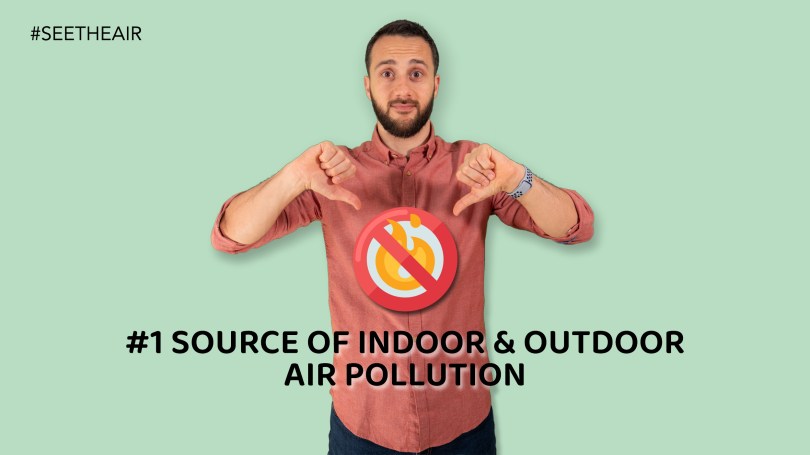
The holidays conjure up images of crackling fires, warm hearths, and cozy evenings. But for many, especially those living in communities with widespread wood burning, this idyllic picture masks a grim reality: a significant decline in indoor and outdoor air quality. Wood burning stoves, while charming and nostalgic, are a major contributor to indoor and outdoor air pollution, posing serious health risks to both the occupants of the house and the surrounding community.

Indoor Air: A Smoky Trap

Burning wood releases a cocktail of harmful pollutants, including fine particulate matter (PM2.5), carbon monoxide, nitrogen oxides, and volatile organic compounds (VOCs). These microscopic particles can easily infiltrate the lungs and bloodstream, causing a range of health problems:

Read More »

Holiday Cheer, Hazy Air: How Festive Practices Can Harm Indoor Air Quality

The holidays are a time for celebration, filled with the warmth of family gatherings, delicious meals, and festive decorations. However, amidst the joy, some seemingly harmless traditions can have unintended consequences for our indoor air quality.

1. Culinary Combustion: The Peril of Holiday Feasts

Holiday dinners often involve hours spent in the kitchen, with ovens cranking and stoves blazing, filling the air with a medley of aromas. While tempting, this culinary combustion releases volatile organic compounds (VOCs) from cooking oils, burning meat, and even vegetables. VOCs can irritate eyes and lungs, exacerbate respiratory issues, and contribute to poor air quality. Keep ventilation on!

2. Fragrant Fumes: The Unseen Threat of Candles and Incense

Candles and incense are staples of holiday decor, adding warmth and ambience to our homes. Unfortunately, their burning releases pollutants like particulate matter and volatile organic compounds, impacting air quality. For those with asthma or allergies, these irritants can trigger unpleasant reactions. Say no to candles and incense burning!

Read More »

Interview with Change The Air Foundation

Our outdoor and indoor air is filled with particulate matter (PM) that consists of tiny solid and liquid particles that are often invisible to the naked eye. 

But just because we can’t always see these particles, doesn’t mean they aren’t there and negatively affecting our health. In fact, the tinier the particle, the deeper into our bodies it can go! 

The good news is there are steps you can take to improve your indoor air quality.

Be sure to check out this interview to learn more about how everything from your gas stove to your humidifier can be contributing to poor indoor air quality and how you can take steps today to improve the air inside your home!

Read More »

Understanding ASHRAE Standard 241: A Boon for Building Occupants

Understanding ASHRAE Standard 241: Control of Infectious Aerosols

ASHRAE, the American Society of Heating, Refrigerating and Air-Conditioning Engineers, is a global professional organization committed to advancing the arts and sciences of heating, ventilation, air conditioning, refrigeration and their allied fields. They have recently introduced a new standard, ASHRAE 241-2023, which focuses on the ‘Control of Infectious Aerosols.’ This new standard is a significant step forward in addressing the transmission of airborne diseases in non-healthcare settings.

The Genesis of ASHRAE 241

The genesis of ASHRAE 241 was during the COVID-19 pandemic, where there was a widespread realization that ventilation rates in non-healthcare settings were not designed to mitigate airborne disease transmission. The pandemic highlighted the inadequacies of our buildings’ ventilation systems, and organizations scrambled to upgrade their systems without a clear understanding of ‘how much’ ventilation was needed.

Read More »

Indoor Air Quality and ChatGPT by OpenAI

This is the first Artificial Intelligent (AI) written article on Indoor Air Quality. I was interested to see if technology understands the issue. I have done zero corrections. What do you think?

Indoor air quality (IAQ) is an important but often overlooked aspect of a home’s environment. Poor IAQ can lead to a variety of health issues, such as asthma, allergies, headaches, and other respiratory and cardiovascular problems. Given the health risks associated with poor IAQ, it’s important to understand the sources of indoor air pollutants, the measures you can take to reduce them, and the steps you should take if you suspect your home has a IAQ issue.

Indoor air pollutants come from a variety of sources, including mold, dust mites, pet dander, pollen, chemicals, and building materials. These pollutants can enter your home through open windows, ventilation systems, and other pathways. Poor maintenance of these sources can lead to an increase in the amount of pollutants in the air. For example, failing to regularly clean carpets and filters can lead to an accumulation of dust and other contaminants.

One source of indoor air pollution that is often dismissed is wood burning. Wood burning can produce both direct and indirect air pollutants, such as smoke, soot, and other particulate matter. The smoke can contain a variety of hazardous compounds, such as carbon monoxide, nitrogen dioxide, and formaldehyde. In addition, the smoke from wood burning can also contain other pollutants, such as volatile organic compounds (VOCs). All of these pollutants can be hazardous to human health, particularly if the exposure is prolonged.

Fortunately, there are several steps you can take to reduce the levels of indoor air pollutants and improve the quality of your home’s air. Regularly cleaning carpets, upholstery, and other surfaces can help reduce the amount of dust and other allergens in the air. Additionally, regularly changing the air filters in your air conditioning and heating systems can help reduce the amount of dust and other particles in the air. Finally, using an air purifier can also help reduce the amount of indoor air pollutants.

If you suspect your home has a IAQ issue, it’s important to take steps to investigate and address the problem. The first step is to identify the source of the problem. This can involve hiring professionals to assess the air quality in your home, as well as conducting tests to identify the specific pollutants in the air. Once the source of the problem has been identified, you can then take steps to address it, such as improving ventilation, cleaning regularly, and using air purifiers.

In conclusion, poor IAQ can lead to a variety of health issues, including asthma, allergies, headaches, and other respiratory and cardiovascular problems. Therefore, it’s important to understand the sources of indoor air pollutants, the measures you can take to reduce them, and the steps you should take if you suspect your home has a IAQ issue. By taking steps to reduce indoor air pollutants and address the sources of IAQ issues, you can help ensure your home’s air quality is as healthy as possible.