As we face the frigid temperatures brought by polar vortexes in the US, the last thing anyone wants is to enter a freezing cold car. However, it is important to note that in many states, warming up your vehicle by letting it idle is actually illegal.
Regardless of the duration, idling is considered an automatic misdemeanor in most states. Surprisingly, even using the automatic start feature on your car can be against the law in some states. The penalties for idling vary depending on the jurisdiction. For example, in Washington D.C., you could face a $5,000 fine if your car idles for just three (3) minutes. However, some states are more lenient, like Pennsylvania, where idling is allowed for up to twenty (20) minutes when the temperature is below 40ºF (4ºC).
What’s new? Well, some clean up of discontinued monitors and some updates. In this list you will find ambient air quality monitors for experts who want to supervise and monitor air pollutants in cities and industrial sites, and commercial outdoor air quality monitors for homeowners who want to check the air quality outside their houses/apartments.
Air pollution can cause a range of health problems, including respiratory and cardiovascular diseases (CVD), and even premature death. By monitoring ambient air quality, governments and individuals can take steps to reduce exposure to harmful pollutants and protect public health.
For privacy reasons the name of the interviewee has been changed.
Jake lives in a remote desert community located in a Military Operational Area (MOA) in the southwestern United States. His town is 90-120 miles away from two major military airports that are the main source of noise and air pollution in our area.
His family moved there in 2021, attracted to the quiet and scenic landscape. However, they soon noticed increased aviation activity, especially overnight flights that interrupt sleep multiple times a night. Although he can’t confirm an increase in flights, the noise pollution seems worse, with persistent droning lasting for hours in the early mornings and evenings. The noise easily penetrates our brick home.
The worst pollution comes from noisy C130s cargo planes, fighter jet passes, and helicopters, often conducting night training and looping for hours across vast distances. He has calculated these planes can be heard indoors from over 20 miles away. The noise affects his sleep, requiring daytime naps which in turn impact his work. He has experienced vestibular symptoms and severe vibration sensitivity both of which were induced by low-flying military helicopters at his old residence where he had around 10 flyovers a day. Each flyover could be multiple helicopters. from the noise exposure. Weekend nights are a respite they look forward to.
I recently learn from Sue, a resident of Los Angeles, who is living in the shadow of the Van Nuys Airport (VNY) that the air quality of the area and mental health of the residents have been affected dramatically. She shared with me the growing concerns regarding the environmental and health impacts of the airport’s operations, particularly due to the increasing number of private and charter jets.
According to Sue over the past few years, the VNY has essentially transformed into a commercial airport due to the influx of private and charter jets. This brings with it an incessant noise pollution problem, as there’s no curfew and flights come in all day and night. And, they are under the most congested airspace in the world, with five airports in the LA area, all converging over them.
Although the airport has been around since the 1920s the changes, in recent years are drastic. Sue lives in that area since mid 80’s. They are now literally feet away from dozens of jets that emit toxic fumes into their homes, schools, and lungs. It was not like this up until a few years ago.
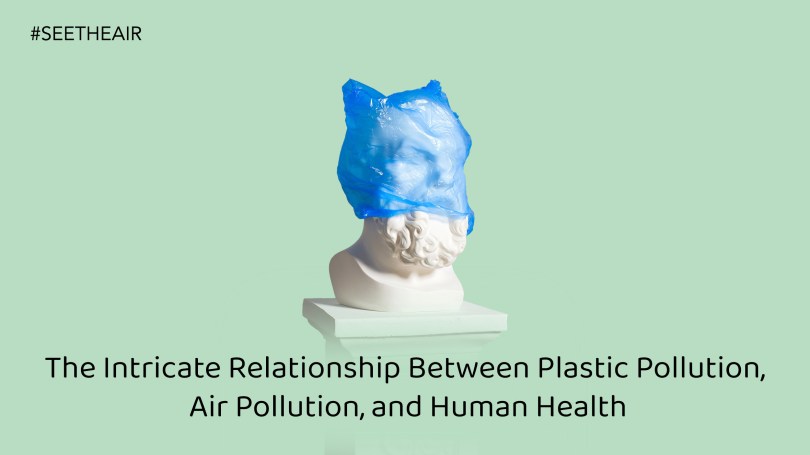
The world is grappling with an abundance of environmental challenges, two of the most critical being plastic pollution and air pollution. Although seemingly disparate, these two issues are more intertwined than we might think, especially when considering their impact on human health. Recent studies have shed light on the presence of microplastics in the human body, a discovery that links plastic pollution and air pollution in a direct and alarming way.
Understanding Plastic and Air Pollution
Plastic pollution refers to the accumulation of plastic objects and particles in the Earth’s environment, including our oceans, lands, and even the air we breathe. This pollution takes many forms such as bags, bottles, microbeads, and tiny particles known as microplastics (less than 5mm in size).
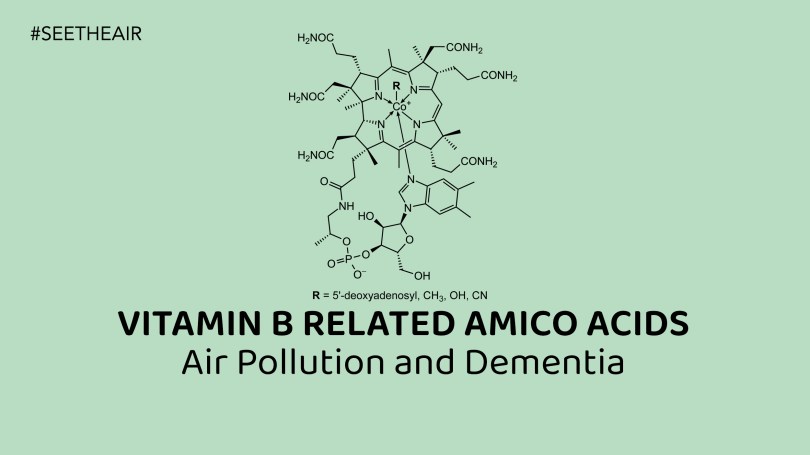
A recent study has unveiled a potential link between exposure to air pollution, the risk of developing dementia, and the levels of certain nutrients in the blood. The research, published in the journal Neurology, suggests that individuals with blood certain concentrations of vitamin B related amino acids (Homocysteine and Methionine) may be more susceptible to dementia after exposure to air pollution.
The study, led by a team of researchers, analyzed data from over 2,500 adults participants aged 60 and above. The participants’ blood samples were examined for levels of certain amino acids, while their exposure to air pollution was assessed using their residential history and air quality data.
The animated image below was created by Mark Parrington and was originally publish on his Twitter account on June 6th, 2023.
I believe it is an eye opening animation as it reveals how easy air pollution travels across states and countries. We call this pollution Cross-Border Air Pollution.
Let’s forget at the moment that combustion vehicles emit carbon dioxide (CO2), and focus on the occupants that spend time inside a confined space where they emit CO2 due to metabolite of cell respiration. Vehicles form part of the indoor spaces where humans spend a lot of time due to traffic or because they have to travel long distances.
Regulatory bodies have been controlling many aspects of modern vehicles; tires, mirrors, seat belts, airbags, screens, etc. However, they have forgotten to look into the air quality inside the vehicles and how it affects the driver’s cognitive performance.
You may have heard the term “air pollution is invisible” which was first told by Dr. Gary Fuller (if I am not mistaken), but apart from the fact that the composition of the pollution is made from tiny particles and gases that are not visible to the naked eye, I think the real reason is different.
People forget easily, and even when they see stuff, repeatable patterns get canceled out by the brain. A clear example are perfumes. When you wear the same perfume over and over, you lose the ability to smell it. Another example is the smell each house has as the owners/occupants of the house are unable to smell it. Visitors, on the other hand, can and sometimes is very potent.
I believe the same thing happens with air pollution. When you expose yourself to the same pungent odors (e.g nitrogen dioxide) because you go to work or school every day, your brain becomes familiar with the odor and it cancels it out. Same thing with wood burning smoke, as I have encountered people that live inside clouds of wood smoke which doesn’t bother them. Eventually, their lungs/heart cannot cope anymore and they die prematurely.
Another reason air pollution is invisible is that the majority of people lack education in order to see the problem. Scientifically speaking air pollution is a very complex topic that involves knowledge in chemistry, physics, statistics, and more. It is not expected for people to have this kind of knowledge and this is the reason we have to communicate the impact it has on human health in simple terms. Environmental education has to come from the early stages of school education which is absent in most countries, even the developed ones.
We cannot allow any more drawings with a chimney and smoke as something normal
Sensor technology has allowed us to see the air we breathe yet many public/private organizations are scared of the information we collect and share. Accurate information is a powerful tool. Inaccurate, or the absence of information, is dangerous.
Believe it or not, there is a lot of misinformation about air pollution. For example, wood stove pellets do not produce air pollution nor CO2! This is what the industry of wood burners tells people. Pure lies.
I will close this article with a question, are you allowed to breathe clean air?
I live in an area where wood burning is an unfortunate “cozy” habit for the people around me. So, I decided to see if patterns appear after monitoring the ambient air quality for 30 days in order to identify if there is any window that will allow me to open the windows and get some fresh & clean air. For the sake of simplicity, I will use only PM2.5 values.
I don’t mind if I have to wake up at 3:00 AM in order to allow some outdoor air to come inside and dilute some VOC and CO2 that build up. Indoors, PM2.5 concentrations are kept well under 5μg/m3 because I run the air purifiers 24/7. By the way in a recent, poster the position of the air purifier inside the house plays an important role in how well particles are captured.
Anyway, let’s jump into the data I collected and analyzed.







 See The Air