The animated image below was created by Mark Parrington and was originally publish on his Twitter account on June 6th, 2023.
I believe it is an eye opening animation as it reveals how easy air pollution travels across states and countries. We call this pollution Cross-Border Air Pollution.
Let’s forget at the moment that combustion vehicles emit carbon dioxide (CO2), and focus on the occupants that spend time inside a confined space where they emit CO2 due to metabolite of cell respiration. Vehicles form part of the indoor spaces where humans spend a lot of time due to traffic or because they have to travel long distances.
Regulatory bodies have been controlling many aspects of modern vehicles; tires, mirrors, seat belts, airbags, screens, etc. However, they have forgotten to look into the air quality inside the vehicles and how it affects the driver’s cognitive performance.
You may have heard the term “air pollution is invisible” which was first told by Dr. Gary Fuller (if I am not mistaken), but apart from the fact that the composition of the pollution is made from tiny particles and gases that are not visible to the naked eye, I think the real reason is different.
People forget easily, and even when they see stuff, repeatable patterns get canceled out by the brain. A clear example are perfumes. When you wear the same perfume over and over, you lose the ability to smell it. Another example is the smell each house has as the owners/occupants of the house are unable to smell it. Visitors, on the other hand, can and sometimes is very potent.
I believe the same thing happens with air pollution. When you expose yourself to the same pungent odors (e.g nitrogen dioxide) because you go to work or school every day, your brain becomes familiar with the odor and it cancels it out. Same thing with wood burning smoke, as I have encountered people that live inside clouds of wood smoke which doesn’t bother them. Eventually, their lungs/heart cannot cope anymore and they die prematurely.
Another reason air pollution is invisible is that the majority of people lack education in order to see the problem. Scientifically speaking air pollution is a very complex topic that involves knowledge in chemistry, physics, statistics, and more. It is not expected for people to have this kind of knowledge and this is the reason we have to communicate the impact it has on human health in simple terms. Environmental education has to come from the early stages of school education which is absent in most countries, even the developed ones.
We cannot allow any more drawings with a chimney and smoke as something normal
Sensor technology has allowed us to see the air we breathe yet many public/private organizations are scared of the information we collect and share. Accurate information is a powerful tool. Inaccurate, or the absence of information, is dangerous.
Believe it or not, there is a lot of misinformation about air pollution. For example, wood stove pellets do not produce air pollution nor CO2! This is what the industry of wood burners tells people. Pure lies.
I will close this article with a question, are you allowed to breathe clean air?
I live in an area where wood burning is an unfortunate “cozy” habit for the people around me. So, I decided to see if patterns appear after monitoring the ambient air quality for 30 days in order to identify if there is any window that will allow me to open the windows and get some fresh & clean air. For the sake of simplicity, I will use only PM2.5 values.
I don’t mind if I have to wake up at 3:00 AM in order to allow some outdoor air to come inside and dilute some VOC and CO2 that build up. Indoors, PM2.5 concentrations are kept well under 5μg/m3 because I run the air purifiers 24/7. By the way in a recent, poster the position of the air purifier inside the house plays an important role in how well particles are captured.
Anyway, let’s jump into the data I collected and analyzed.
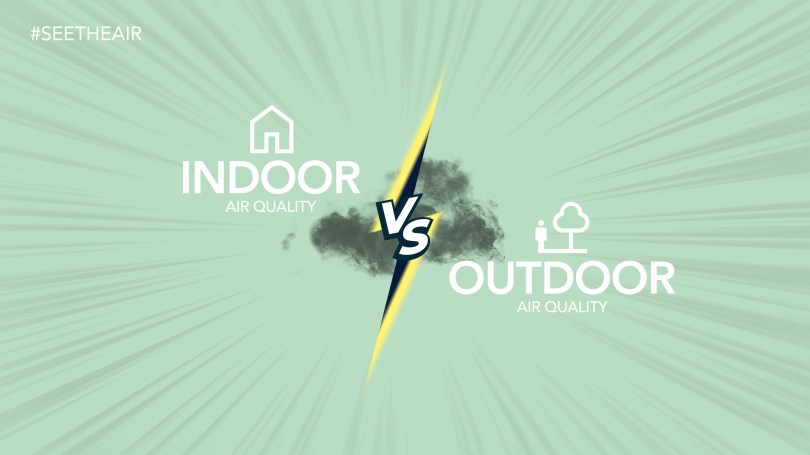
There are countless times that I stretch the importance of monitoring and managing indoor air quality by keeping an eye on the outdoor air quality/conditions.
In this experiment, I want to demonstrate that it is hard to manage indoor air. I want to state that indoor spaces should be subject to 24/7 monitoring and not a periodic inspection.
The graph below demonstrated that indoor AQ gets influenced by outdoor air and on top of that, the polluted air lingers for a longer time indoors unless there is a mitigation plan (aka filtration) in place.
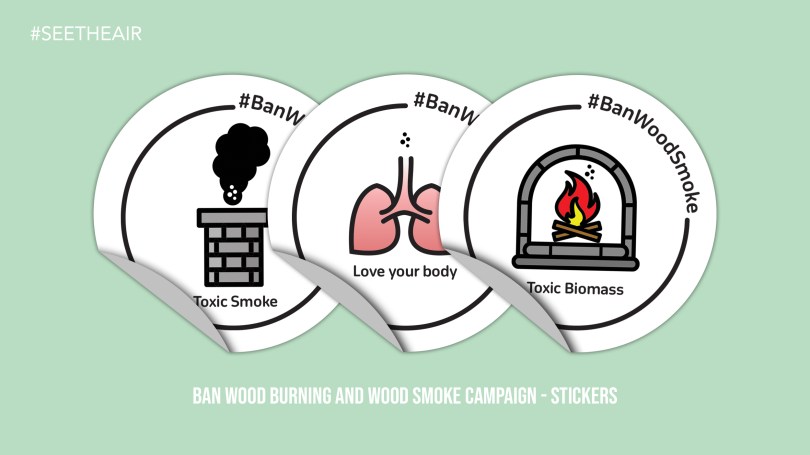
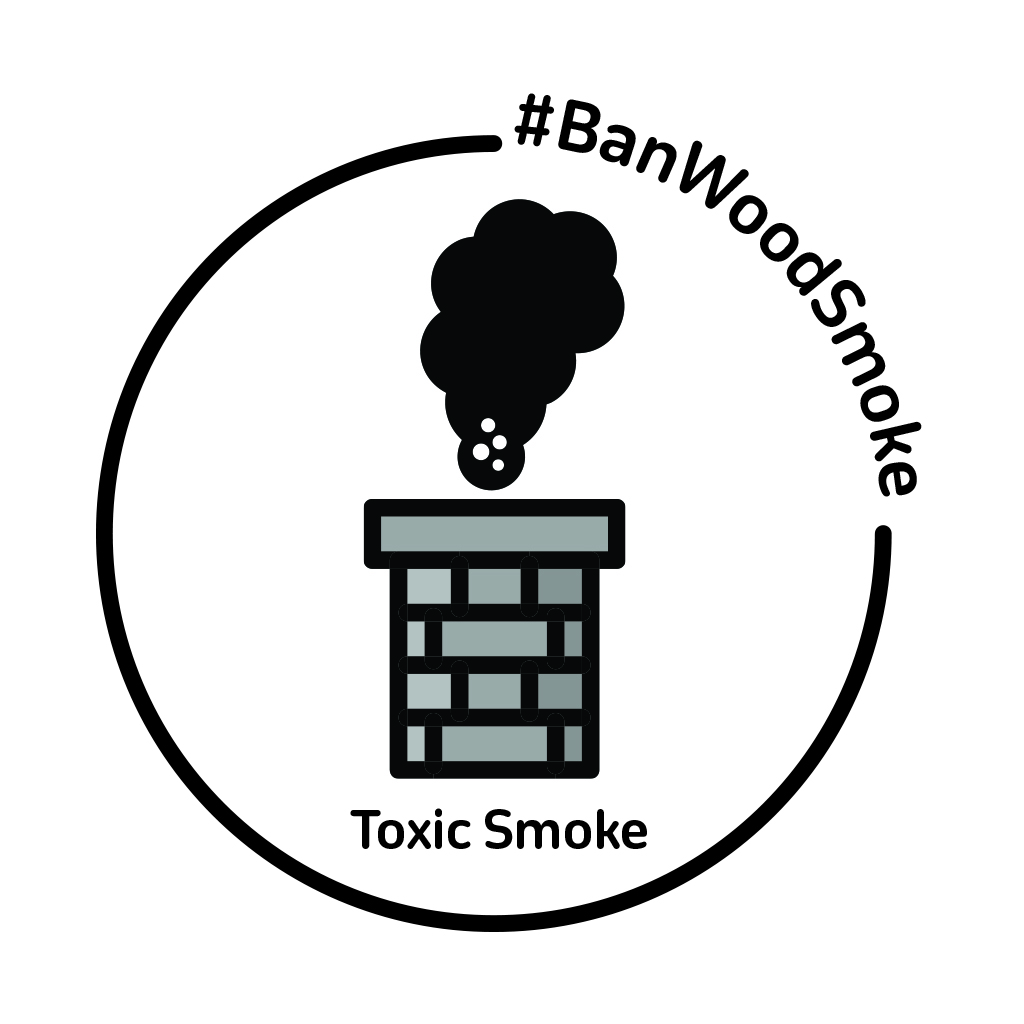
In my effort to help clean air communities to raise awareness (I am not only words), I decided to design three simple circular stickers which I will distribute to the communities once the poll is closed and you have selected the best sticker.
Choose one between the three of them and apply to get stickers once the poll is closed. You can apply for the winning sticker via the contact page. Thank you!
In a constant effort to educate the community, I highly recommend you to attend my upcoming webinar “Size Matters: Why is important to know the Particle Size Distribution“. The webinar is scheduled for the16th of November, 2022 at 8am EST.
Although it is a business oriented webinar, I will also try to educate in simple terms the attendees on what is PM2.5 and why it falls short as it doesn’t reveal in detail the make up of air pollution.
One will think that the more modern the house, the better the indoor air quality. However, that’s not always the truth as recently I discovered that many houses have inadequate appliances that will create harmful air pollutants and some of them will falsely mitigate contaminants by creating a false sense of remediation.
Example #1
Gas cooktops are a must according to good chefs as the pans are able to heat immediately and you have more control of the heat. That’s not true as the new induction cook tops are able to heat the bottom of the pans as fast without releasing harmful pollutants like Nitrogen dioxide.
Not lots of people are ready to accept the truth or understand it. We dismiss important information when it is not visible “out of sight, out of mind” and we get influenced when something is shiny and pretty.
Productivity
Poor air quality won’t kill you (at least not immediately and depending on the pollutants), but do you want to be an average employee, athlete, parent, student, or the best? Do you want your employees to work in mediocre conditions and perform poorly, or do you want them to be vibrant and productive?
Low-cost sensors have helped communities see the air quality, but experts are still debating whether data are accurate or not. In many cases, monitor manufacturers have to turn to data manipulation in order to get accurate results, but it is time to step up by deploying better sensor technology.
The technology exists and we should take advantage of it as soon as possible. Almost always, the first thing I am asked about sensors is how accurate they are. Well, this question has a very tricky answer. In many cases, we measure accuracy by comparing a low-cost sensor with a reference monitor, which worths thousands of dollars. However, the comparison is not always fair. For example, if the XYZ company sends their monitor for evaluation during a high humidity season then unless they have a heater or dryer at the inlet to remove humid droplets of water from the samples before measurement then the results from the correlation would be catastrophic.







 See The Air