Review: airCoda – Pocket CO2 Monitor

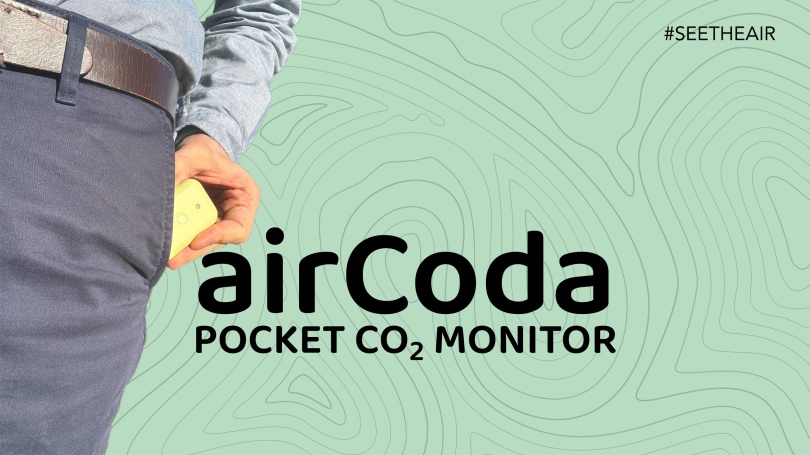
Looking for a way to monitor CO2 levels on the go? The airCoda pocket CO2 monitor might be your breath of fresh air. This compact device features a photoacoustic NDIR CO2 sensors, a technology known for its small size and accuracy in measuring CO2 concentrations in any environment.

Why the airCoda?

  • Pocket-Sized Portability: Unlike bulkier CO2 monitors, airCoda’s small size allows you to easily carry it anywhere. Whether you’re checking CO2 levels in your office, classroom, or even your car, airCoda gives you the freedom to monitor air quality wherever you go.
  • Sensor Accuracy: Thanks to the integrated sensor, you can trust airCoda to provide reliable CO2 readings. This is crucial for making informed decisions about ventilation and maintaining healthy air quality.

Read More »

Masked and Misunderstood: The Silent Struggle of Chronically Ill in a Challenging World

For many, face masks became a symbol of the pandemic – a temporary inconvenience in the fight against COVID-19. But for those with chronic illnesses, masks are a lifeline, a shield against a world teeming with invisible threats. These individuals wage a silent battle, one breath at a time, often unseen and misunderstood.

Imagine living with a compromised respiratory system, a weakened immune response, or a condition that makes you extra susceptible to infections. Every outing becomes a calculated risk. A simple cough from a stranger or a waft of car exhaust can trigger a flare-up, landing you in the hospital. Face masks, then, aren’t just a recommendation; they’re a necessity.

Read More »

Taiwan Tightens PM2.5 Standards to Protect Public Health

Taiwan is taking a significant step towards cleaner air by tightening its regulations on PM2.5, a dangerous air pollutant linked to lung cancer and other respiratory illnesses. The new standard will set the maximum permissible concentration of PM2.5 at 12 μg/m3, a reduction from the current limit of 15 μg/m3.

This policy change is backed by an eight-year research study conducted by the National Health Research Institutes. The study’s findings confirm the negative health impacts of PM2.5 exposure, highlighting the urgency to curb air pollution levels.

PM2.5 refers to fine particulate matter measuring 2.5 micrometers or less in diameter. These tiny particles can easily penetrate deep into the lungs, causing inflammation and aggravating respiratory problems. Air pollution sources include vehicle emissions, industrial activities, and other human-made factors.

Read More »

Are Low-Cost Sensors Random Number Generators?

Low-cost sensors aka LCS are commonly used in an effort to measure air pollutants like particulate matter all around the world, indoors and outdoors. Their low price has driven a lot of interest from many communities. Academics, experts, and consumers have embraced them because they are cheap to get and easy to embed in an IoT solution.

Countless air quality monitors use low-cost sensors (mostly from China) and although they are great as educational tools, their low accuracy leads to wrong conclusions most of the time.

Wrong conclusions are as bad as misinformation or fake news. Air pollution doesn’t kill instantly (most of the time) and it doesn’t create severe health issues in the short-term, but after an extended period or at least when we notice the consequences. One exception is carbon monoxide (CO) as it can kill people instantly and this is the reason we don’t see many low-cost CO sensors. There are some regulations that protect the consumers. Moreover, companies don’t want to take responsibility by using a low-cost CO sensor because they can get sued easily by the family of a victim when the air quality monitor won’t notice the increase of the gas indoors. Liability!

Read More »