Review: Cambridge Mask

This time I had the opportunity of getting a half face mask by Cambridge Mask Co. and of course I wrote with pleasure a review on my blog.

Characteristics

Cambridge Mask offers the N99 respirators (Not oil resistant), a three layer mask with a Military Grade Carbon Filter layer, and the Three-Ply Micro Particulate layer. An exhale valve is present as well to ensure that moist won’t build up.  These respirators also filter 99.6% of viruses and 99.77% of bacteria.Read More »

Exhaust Smoke Colours and Pollutants

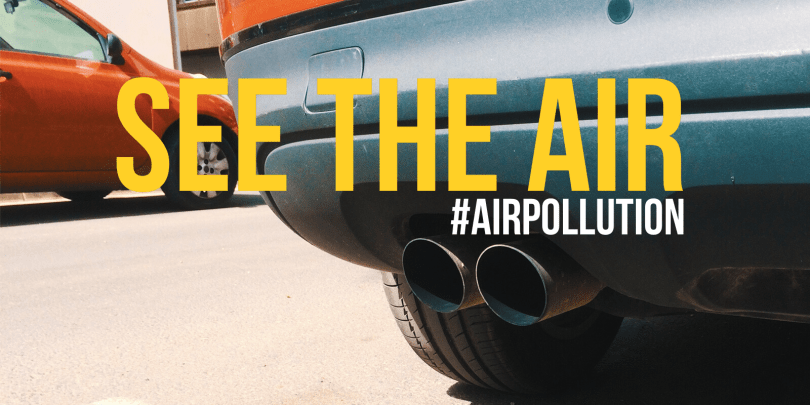
Did you know that cars emit smoke with a differnt colour depending the engine that they use and the problems that they are having. Here are the following categories: Blue smoke, White smoke and Black smoke.

Untitled

Blue Smoke

Blue smoke means your engine is burning oil. Oil is an important element in the engine, but only to lubricate the moving parts. When it is burnt by the engine means that there are leaking valve seals or worn piston rings or worn cylinder walls. In this case large quantities of Carbon monoxide CO, PMs, NO2 and SO2 are released into the environment.

White Smoke

There are two types of white smoke, the normal white vapor that disappears quickly under normal conditions due to condensation and the heavy white smoke. The heavy white smoke must concern you because the coolant has made its way into the combustion chamber. In this case large quantities of VOCs and PMs are released into the environment.

Black Smoke

Finally the black smoke indicates that your air/fuel mixture is running rich. Which means that more fuel is entering the engine and it doesn’t burn completely due to the lack of the air or oxygen. This is also called rich. When more air enters the engine than fuel this is called lean. In this case large quantities of CO, PMs and NO2 are released into the environment.

Conclusion

All in all, the emitted smoke from the exhaust may not tell you the exact problem, but it can give you an idea of what the problem of your engine is and the pollution that is emitted. Visit your mechanic immediately, public health may be in jeopardy.

Ozone O3 an Air Pollutant

The Ozone O3 is protecting us through the Ozone Shield from the harmful ultraviolet UV radiation when it is in the lower portion of the stratosphere at 20km to 30km above Earth. However it is a harmful gas for the respiratory system and it can cause serious health issues when it is inhaled in high consecration.

As a result we divide the Ozone in two categories, the Ozone Shield aka Good Ozone and the Ground Level Ozone aka Bad Ozone. Basically the Ground level Ozone is formatted by a combination of gases and the Sunlight.

VOCs + NOx + Heat + Sunlight = Ozone

 Breathing ozone O3 can trigger a variety of health problems, particularly for children, the elderly, and people of all ages who have lung diseases such as asthma. Ground level Ozone can also have harmful effects on sensitive vegetation and ecosystems.

Read more about air pollutants inside my book See The Air

CO2 Candles Experiment

CO2 Candles Experiment

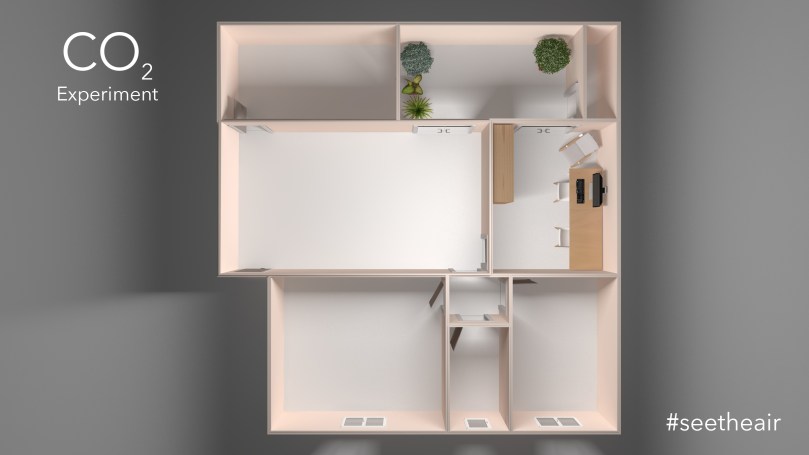
In this experiment I will demonstrate how fast Carbon Dioxide CO2 rises inside a room by lighting two small candles.

bedroomday1_0000 copy

I chose my study room as it can be easily isolated, plus I have got all the AQI monitors inside this room for the purpose of the experiment. The room is 7.3m². The experiment is easy, I lit 2 candles and closed the door and window of the room. Then I waiting with myself inside the room till the CO2 reached 1200ppm. Basically I logged the time when the CO2 was 430ppm and when it reached the 1200ppm with and without the candles.

With the candles the CO2 needed 35 minutes to reach the 1200ppm limit as you can see on the graph below and without any candle and with exactly the same conditions as before the CO2 needed 59 minutes to reach the upper limit.

Conclusion

You gain 25 minutes of more oxygen and less CO2 until the room reaches the 1200ppm limit which means more productive time and fewer headaches.

Gray Slate

Where are the Public Air Quality Stations?

In my city (Almeria, Spain) there are two stations that measure the local Air Quality.

Let’s analyze them and see if they are located in the correct places and if they feature the necessary instruments for measuring the AQI properly.

The Background

It is located in “El Boticario” a park 10km outside of the city center. The coordinates according to an official document from“Junta de Andalucía” are UTMX:554439 and UTMY:4080272, but they aren’t correct (Not so professional). The real coordinates are UTMX:554319 and UTMY:4080066. This station seems to work well although they don’t feed the data in real time to the public and quite often is down.

Read More »

Vitamin B and Air Pollution

Vitamin B diminishes effects of air pollution

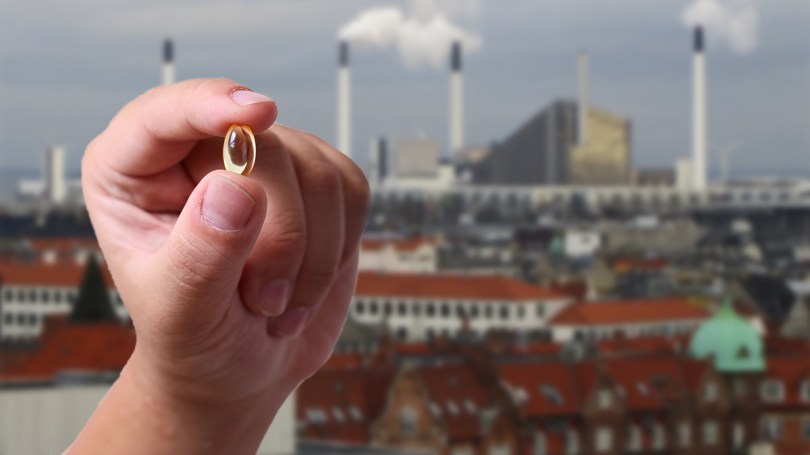
This is the new title many tweets and articles write about on media, but let’s take a step back. A pill will cure the problem! Well I don’t think so.

Of course we always have to eat well and healthy, lots of vegetables and fruit. The group of Vitamin B may help with the impact of fine particle pollution on cardiovascular disease (I won’t talk about the study), but please don’t lay your hopes on a pill. Air pollution is increasing and the only solution is decreasing our footprint by burning less to none coal and fossil fuels.

See The Air: The Book

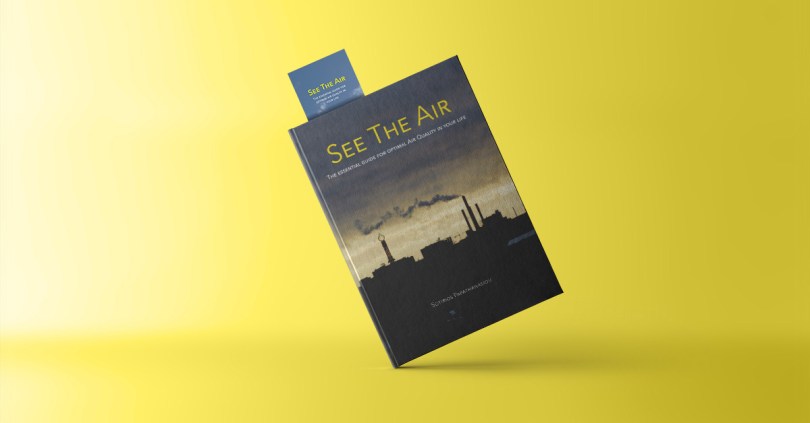
See The Air

The Essential Guide For Optimal Air Quality In Your Life

After a long time of researching and writing all the essential information about air pollution and how you can improve the air quality for you and your community, the book is ready. I am very thrilled to share this book with you all and I will be even happier if you share it with your friends and family as well. I tried to keep it as simple as possible without unnecessary information. You can see the table of contents below and take a small idea of what is inside this book.Read More »

Air pollution and Eyesight

eye dirt

There are more than 100 studies demonstrating that poor air quality and pollution can affect your respiratory system (lungs, throat, etc) but what about our vision and our eyes. Does air pollution affects our Eyes?

The short answer is yes! Think about how you feel when your eyes come in contact with pollen (in case you are allergic) or heavy smoke, they immediately become red and itchy! The effects of the air pollution have not been studied enough yet on the same way as on the respiratory system, but I am sure scientists are doing the best they can.Read More »