Review: AIRINUM Lite Air Mask

It has been a long time since I reviewed a face mask. This mask review is all about how to protect yourself from ambient air pollution while commuting rather than from Covid-19. The mask can protect you from COVID because it is KN95 certified, which is similar to FFP2 and N95, but as most people use simple disposable surgical masks for their low price, I won’t focus on it. For this review, I decided to focus on air pollution which is a more severe threat in my opinion. Keep in mind, cheap surgical masks are useless and they pollute a lot more than they protect as they are thrown all around us by most people. We all have seen them flying around or on the ground or inside the sea. I am against disposable masks.

The AIRINUM Lite Air Mask offers great protection from particulate matter but also a modern and young style. I have been wearing the Aurora Blue for three weeks already and I am impressed by its performance.

Read More »

What does my air filter reveal about my indoor environment? In-Depth Filter Analysis by Camfil

We have indoor air quality monitors and purifiers to manage indoor air, but even the most intelligent domestic devices cannot inspect all the air pollutants present in our indoor spaces, so I thought it was about time to send a filter from the main air purifier to a laboratory for analysis in order to identify all the pollutants that have been present in my house. Maybe there is something I am not aware!

I try my best to keep outdoor pollutants from entering inside like smoke from wood-burning stoves or fumes from vehicle traffic. However, we are humans and we make mistakes, so sometimes we burn the food or introduce pollutants indoors unconsciously.

We humans can smell some pollutants like PAHs or VOCs but sometimes we are unable to detect heavy metals or other pollutants that our nose isn’t able to register, yet we may breathe them. Air purifiers or central HVAC with a filtration system capture those pollutants in the filter media. Then we can analyze the filter and discover aspects of the pollution we hadn’t thought about before.

Read More »

Outdoor Air Quality Monitors 2021Q4

What’s new? Well, lots of new Outdoor Air Quality Monitors have been released into the market for various purposes and different budgets. Air quality monitors for professional use in cities and industrial sites and homeowners who want to supervise the ambient air quality outside their houses/apartments.

This time, I have included the General Star Score from the AIRLAB Challenge 2021 for the monitors that took part. The Ethera NEMo Outdoor monitor scored the highest with 4.5 Stars out of 5.

uRADMonitor with the Smoggie and City models scored 4/5 and 3.5/5, respectably. Also the Kunak Air Pro which I will review soon scored 4/5. It is great to see that all these solutions deliver accurate results.

If you would like to download the document please consider donating or subscribing to my blog in order for me to continue creating helpful content for all.

3+1 Habits for Healthy Lungs

Our lungs are the first main organs to interact with the breathing air but remember almost all our organs will eventually receive something from the air we inhaled — ideally Oxygen. OK, let’s take a step back to remind ourselves of the composition of the air in our atmosphere. The composition of the atmospheric air is 78% Nitrogen, 21% Oxygen, 0.9% Argon, 0.04% Carbon Dioxide, and other trace gases and aerosols that in most cases are the pollutants that will deplete our health. You see, our modern lifestyle and the constant burning of fossil fuels (of any form including wood burning) has changed the balance and composition of the air in neighborhoods and cities. As a result, we end up with abnormal concentrations of pollutants like particulate matter, nitrogen dioxide, carbon monoxide, etc in the breathing air.

From an evolutionary perspective, our bodies are not designed to deal with the fine particles or the notorious toxic gases that are released into the atmosphere from our wrong investment in fossil fuels. With the exception of our gastrointestinal system which can discard unnecessary solids or liquid, our lungs cannot get rid of the air pollutants so they stuck and accumulate inside us. Some may be filtered by the liver.

Our noses or even our upper respiratory tracks can trap some coarse particulate matter, but there isn’t any mechanism to trap fine-PM or nanoparticles or gases, as a result, they end up reaching our lungs and the alveolar sacs where the exchange between oxygen and carbon dioxide occurs. The pollutants can pass that barrier or even they are stuck there resulting in inflammation responses and trust me we don’t want inflammation anywhere. I don’t want to dive too deep regarding what’s going on inside us when air pollution reaches our organs because it gets ugly.

What can we do to keep our lungs and the rest of our organs healthy and happy?

Avoid Ambient Air Pollution & Fix Your Indoor Air Quality

The first and obvious thing to do is to avoid air pollution. Some apps can help you find the best route in case you commute. However, sometimes it is hard to bypass polluted and busy roads. For this reason, we need to prevent pollution from being released into the atmosphere in the first place. How? By educating the rest. I know it is a hard task but it doesn’t have to be a chore. Just convince one close person and teach him or her how to do the same with another person close to them. If we have learned something from COVID-19 is how fast something can spread.

Indoor air quality is something we have to pay closer attention to. Sometimes we dismiss the fact that we spend a lot of time indoors and outdoor pollution slips inside or we create indoor air pollution. We had better demand better indoor quality in our workplaces as we spend a lot of time there too. Quantify the pollution with an indoor air quality monitor as it is the easiest way to take control of your air. Remember, no one is looking after your indoor air quality, except you!

Work Out

I love exercising, well no! Hear me out, I love the feeling of achievement each time I complete a physical workout because I know it benefits me on so many levels, including my lungs.

Full disclosure, I only exercise and recommend it to people when air quality is excellent and this is a condition that I have to follow 100% because when we exercise the demand for air increases, and our respiratory rates jump from about 15 times a minute to about 50 times a minute.

When we exercise we increase the capacity of air our lungs can hold and we increase the blood flow to our lungs, allowing the lungs to deliver more oxygen into the blood. Exercise reduces our blood pressure and improves our overall cardiac function so that our heart can pump more blood with each heartbeat. That means that our heart beats less time per minute, as a result, we extend its life span.

Don’t run next to busy streets! Indoors, make sure the air quality is excellent too.

Eat Healthy Food & Drink Healthy Beverages

We are what we eat, drink and breathe, so invest in healthy and vibrant food like seasonal fruit and veggies. Meat is also important but during a whole week dedicate one or two days to meatless meals. There are plenty of delicious, inexpensive, and climate-friendly recipes. I could recommend some so feel free to ask me. I don’t believe in strict diets but in well-balanced diets.

Unfortunately, the food and beverage industry is adding sugar and salt to make food and drinks more interesting for many decades, as a result, we are unable to distinguish the real flavor of a meal. My approach is to search for the taste of the plain food or drink. I can taste water, can you? Drink a cup of organic coffee or tea without sugar and try to find the notes of the different elements.

Our lungs need food and drinks rich in nutrients and antioxidants like vitamins, minerals, healthy fat, fiber, protein, and complex carbohydrates. These nutrients will reverse some of the damages and inflammation air pollution will cause to our lungs during our walk in the city center where traffic is awful. Did you know that the lungs are responsible for the transpiration of the “burned” calories out of our bodies in the form of carbon dioxide?

Meditate

Meditate once a day if you can, but don’t burn stuff! I have seen people burning incense or dry plants (sage) when they meditate in their effort to create a pleasant indoor environment but these practices release a lot of particulate matter and VOCs which end up inside them.

Meditation and some breathing techniques are designed to strengthen the lungs and the muscles around them. People who suffer from asthma, chronic obstructive pulmonary disease (COPD), and other lung diseases may benefit from practicing them, according to some scientific studies but make sure to ask your doctor.

Breathe Helmet – Angel Investor

Introduction

I have teamed up with a great product designer Nathan Hassanali in our effort to offer clean air to the commuters that need to move around the cities where combustion engine vehicles are unfortunately still a priority over sustainable alternative methods.

The Problem – Air Pollution

One of the biggest challenges of the 21st century will be to mitigate the negative effects of transport – greenhouse gases, air pollution, and noise – while ensuring positive aspects of mobility. Meanwhile what can dwellers do to protect themselves from the toxic air that is present in the streets all around the world?

Although air pollution has decreased over the last two decades, it is still a major problem in many areas. ‘EURO standards’ for vehicles have not succeeded in reducing Nitrogen Dioxide (NO2) emissions and “defected” vehicles (aka Dieslegate) still circulate without meeting the levels set out in the legislation. Recently, the World Health Organization updated the Air Quality Guidelines (2021 AQGs) which sets the bar for human health high because according to new methods for evidence synthesis and guideline development they found proof of health effects occurring at lower levels than previously understood.

Read More »

What Is COP26 & What Does It Mean For Our Climate?

COP26 stands for Conference of the Parties, which are the countries that signed the United Nations Framework Convention on Climate Change (UNFCCC). The 2021 meeting will be the 26th meeting. Initially, it was due to take place in Glasgow in Scotland in November 2020, but it was postponed for a year because of the COVID19 pandemic.

During COP26 governments will demonstrate their commitment by showing how they will keep global temperature rises below 1.5ºC, deliver money promised to countries on the front-lines of the climate crisis, and shift away from fossil fuels.

So far and after the Paris Agreement little has been done in order to reduce greenhouse emissions. The pressure governments receive is even greater than before because the climate crisis is already unfolding in front of your eyes as more and more people demand actions.

Global Warming

Many people with a lack of understanding for the term global warming just believe that some seasons will be warmer, so what! The term global warming has indeed misled the population for many years as it doesn’t describe the real scenarios of the alteration of the climate on a global scale. Today, there are many terms available trying to describe and help people understand better the severeness of the issue.

Read More »

Op-ed: Wood-Burning Season is ON and the Zombies return!

Although some people claim that the wood-burning season doesn’t exist anymore because people never stop burning stuff (and this is true in some regions), the vast majority of the population can’t wait for cold weather to arrive in order to light the “cozy” wood stoves and unconsciously chock the village with toxic smoke.

Yes, wood-stoves even the ECO friendly or low-emissions or EPA certified or you name it, are huge polluters! They emit lots of particulate matter (commonly known as PM2.5) and a huge array of toxic chemicals that sometimes linger in the air for many days. Air pollution kills 13 people every minute worldwide and scientists at Harvard University found that dwellers who live in polluted areas are 15% more likely to die from COVID-19 than those who do not!

The atmospheric conditions and the geographical location of a village or city work in a complex way sometimes in favor of the dwellers but most of the time against the dwellers. When a city is surrounded by hills and mountains air pollution tends to stay there for a long time, like in Murcia, Spain. In that case, people’s lungs work as purifiers and trap all the pollutants, as a result, we have more hospital admissions and more chances to suffer severe health effects due to the air pollution which is deposed inside our bodies. The cost to maintain public health also increases.

By comparison, wood smoke from stoves and boilers carries the highest concentration across all pollutants. One eco-certified wood stove is rated at 3.1grams/h of particulate matter which is equal to six heavy-duty lorries which are rated at 0.5grams/h of particulate matter each.

Read More »

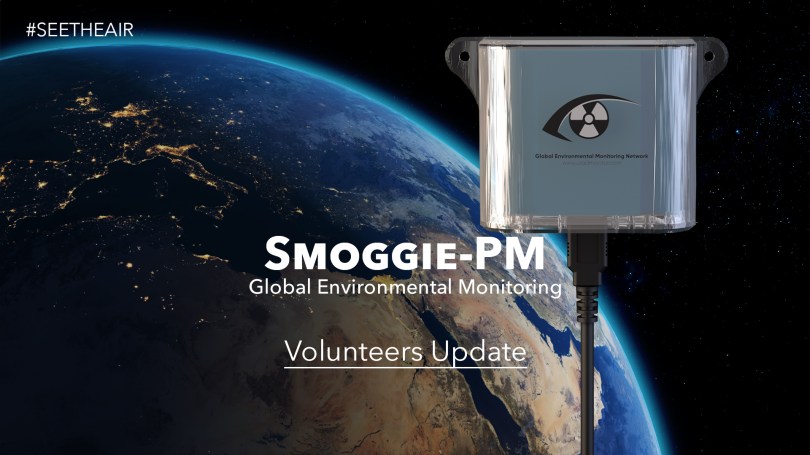
Smoggie-PM Volunteers Update

Back in April, I and uRADMonitor shipped 5 Smoggie-PM to 5 volunteers in order to help them raise awareness but also to investigate what people breathe in other parts of the world, like in Belgium, Uganda, Azerbaijan, the USA, and Spain. Unfortunately, the US volunteer doesn’t respond to my emails and he hasn’t set the monitor up yet. I hope he is fine and covid-19 or any other possible problem hasn’t affected him.

In this article, I will analyze the data from two of the locations in order to determine the Air Quality (AQ) and get some conclusions that will help my volunteers. Here are some of the photos the volunteers have sent me.

It is always recommended to place the AQ monitors under the shade as sunlight can increase the internal temperature and consequentially the measurements of temperature and humidity will be incorrect.

Read More »

WHO 2021 Air Quality Guidelines – My Take!

On 22nd September 2021, the World Health Organization released the so long-awaited update of the Air Quality Guidelines (AQGs). They are bold and ambitious but will governments adopt them?

Let’s see how the updated AQGs compare to the old ones, which were released in 2005. The classical pollutants (Particulate Matter PM2.5/10, and NO2) have been reduced significantly. They have introduced additional AQG levels, such as for peak season Ozone (O3), 24-hour averaging time for Nitrogen Dioxide (NO2), and Carbon Monoxide (CO). On the contrary, they have increased the Sulfur Dioxide (SO2) levels from 20 μg/m3 to 40 μg/m3.

Read More »

Nasal hair and Air Pollution: Does nasal hair offer a filtration function?

It is unfortunate true the fact that I have encountered a lot of people who think that nasal hair will stop all air pollutants from being inhaled and reach the lungs, or as we now know, the heart and brain. They feel completely sure that they are safe irrelevant the concentration of the pollution.

people nose

The human nose is an extraordinary human organ that offers us so much, many times we don’t even appreciate its function until we lose it. It can warn us that something isn’t right, for example, food has gone bad, or the presence of toxic gases in a close/open environment but it can also offer us a pleasant sensation when we smell a rose or lavender flowers.

Read More »