2021: Year in Review – See The Air

One more year has passed, one more orbit around the Sun, but still in many places of the world air pollution remains the number one threat for the health of the dwellers and the stability of the ecosystem. The political unwillingness to address air pollution and lots of green-washing from companies haven’t alleviated the situation anywhere. Sad, but even the COP26 was a bit of a fiasco as the leaders of this planet and the majority of the population are still trying to process the information of climate change and air pollution. Apparently, the world doesn’t want to sacrifice convince over the quality of life and life expectancy.

Megalomania and individualism are tearing the ecosystem apart and polarizing the society into left or right, pro-climate or anti-climate, pro-clean air (anapneism), or burn as much fossil fuel, waste and wood as possible. Plastic pollution is another big issue as well.

Read More »

3+1 Habits for Healthy Lungs

Our lungs are the first main organs to interact with the breathing air but remember almost all our organs will eventually receive something from the air we inhaled — ideally Oxygen. OK, let’s take a step back to remind ourselves of the composition of the air in our atmosphere. The composition of the atmospheric air is 78% Nitrogen, 21% Oxygen, 0.9% Argon, 0.04% Carbon Dioxide, and other trace gases and aerosols that in most cases are the pollutants that will deplete our health. You see, our modern lifestyle and the constant burning of fossil fuels (of any form including wood burning) has changed the balance and composition of the air in neighborhoods and cities. As a result, we end up with abnormal concentrations of pollutants like particulate matter, nitrogen dioxide, carbon monoxide, etc in the breathing air.

From an evolutionary perspective, our bodies are not designed to deal with the fine particles or the notorious toxic gases that are released into the atmosphere from our wrong investment in fossil fuels. With the exception of our gastrointestinal system which can discard unnecessary solids or liquid, our lungs cannot get rid of the air pollutants so they stuck and accumulate inside us. Some may be filtered by the liver.

Our noses or even our upper respiratory tracks can trap some coarse particulate matter, but there isn’t any mechanism to trap fine-PM or nanoparticles or gases, as a result, they end up reaching our lungs and the alveolar sacs where the exchange between oxygen and carbon dioxide occurs. The pollutants can pass that barrier or even they are stuck there resulting in inflammation responses and trust me we don’t want inflammation anywhere. I don’t want to dive too deep regarding what’s going on inside us when air pollution reaches our organs because it gets ugly.

What can we do to keep our lungs and the rest of our organs healthy and happy?

Avoid Ambient Air Pollution & Fix Your Indoor Air Quality

The first and obvious thing to do is to avoid air pollution. Some apps can help you find the best route in case you commute. However, sometimes it is hard to bypass polluted and busy roads. For this reason, we need to prevent pollution from being released into the atmosphere in the first place. How? By educating the rest. I know it is a hard task but it doesn’t have to be a chore. Just convince one close person and teach him or her how to do the same with another person close to them. If we have learned something from COVID-19 is how fast something can spread.

Indoor air quality is something we have to pay closer attention to. Sometimes we dismiss the fact that we spend a lot of time indoors and outdoor pollution slips inside or we create indoor air pollution. We had better demand better indoor quality in our workplaces as we spend a lot of time there too. Quantify the pollution with an indoor air quality monitor as it is the easiest way to take control of your air. Remember, no one is looking after your indoor air quality, except you!

Work Out

I love exercising, well no! Hear me out, I love the feeling of achievement each time I complete a physical workout because I know it benefits me on so many levels, including my lungs.

Full disclosure, I only exercise and recommend it to people when air quality is excellent and this is a condition that I have to follow 100% because when we exercise the demand for air increases, and our respiratory rates jump from about 15 times a minute to about 50 times a minute.

When we exercise we increase the capacity of air our lungs can hold and we increase the blood flow to our lungs, allowing the lungs to deliver more oxygen into the blood. Exercise reduces our blood pressure and improves our overall cardiac function so that our heart can pump more blood with each heartbeat. That means that our heart beats less time per minute, as a result, we extend its life span.

Don’t run next to busy streets! Indoors, make sure the air quality is excellent too.

Eat Healthy Food & Drink Healthy Beverages

We are what we eat, drink and breathe, so invest in healthy and vibrant food like seasonal fruit and veggies. Meat is also important but during a whole week dedicate one or two days to meatless meals. There are plenty of delicious, inexpensive, and climate-friendly recipes. I could recommend some so feel free to ask me. I don’t believe in strict diets but in well-balanced diets.

Unfortunately, the food and beverage industry is adding sugar and salt to make food and drinks more interesting for many decades, as a result, we are unable to distinguish the real flavor of a meal. My approach is to search for the taste of the plain food or drink. I can taste water, can you? Drink a cup of organic coffee or tea without sugar and try to find the notes of the different elements.

Our lungs need food and drinks rich in nutrients and antioxidants like vitamins, minerals, healthy fat, fiber, protein, and complex carbohydrates. These nutrients will reverse some of the damages and inflammation air pollution will cause to our lungs during our walk in the city center where traffic is awful. Did you know that the lungs are responsible for the transpiration of the “burned” calories out of our bodies in the form of carbon dioxide?

Meditate

Meditate once a day if you can, but don’t burn stuff! I have seen people burning incense or dry plants (sage) when they meditate in their effort to create a pleasant indoor environment but these practices release a lot of particulate matter and VOCs which end up inside them.

Meditation and some breathing techniques are designed to strengthen the lungs and the muscles around them. People who suffer from asthma, chronic obstructive pulmonary disease (COPD), and other lung diseases may benefit from practicing them, according to some scientific studies but make sure to ask your doctor.

Gamification works and IoT Air Quality Monitors need it

Long story short gamification works and should be adopted by IoT Air Quality Monitor and their Air Quality apps in order to achieve a behavior change.

What is gamification?

Gamification is adding game mechanics into non-game environments, like a website, a fitness app, or air quality apps to increase participation. The goal of gamification is to engage with users to inspire, collaborate, share, and interact.

Let’s take as an example Apple’s fitness app, those who wear an Apple Watch they know what I am talking about. Each month the application engages users by offering them a digital award, as a result, last month I had to burn actively 19.300 calories in order to win a shine yellow badge. On special days the app encourages you to complete a specific workout to win a special award like for the World Environment Day or Earth’s Day.

Read More »

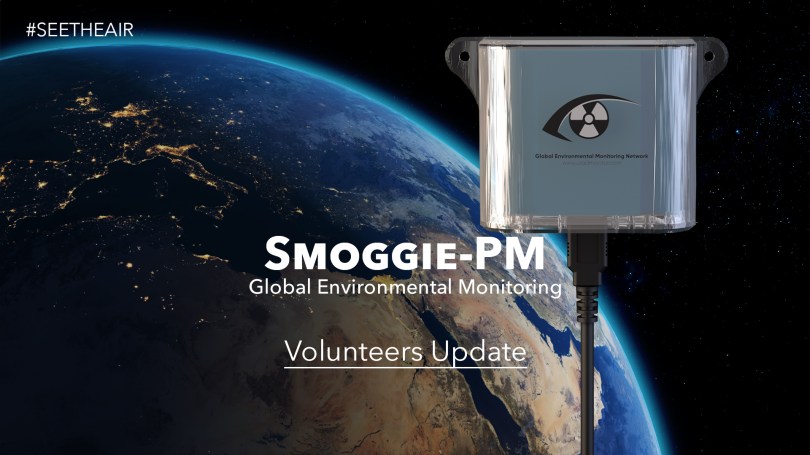
Smoggie-PM Volunteers Update

Back in April, I and uRADMonitor shipped 5 Smoggie-PM to 5 volunteers in order to help them raise awareness but also to investigate what people breathe in other parts of the world, like in Belgium, Uganda, Azerbaijan, the USA, and Spain. Unfortunately, the US volunteer doesn’t respond to my emails and he hasn’t set the monitor up yet. I hope he is fine and covid-19 or any other possible problem hasn’t affected him.

In this article, I will analyze the data from two of the locations in order to determine the Air Quality (AQ) and get some conclusions that will help my volunteers. Here are some of the photos the volunteers have sent me.

It is always recommended to place the AQ monitors under the shade as sunlight can increase the internal temperature and consequentially the measurements of temperature and humidity will be incorrect.

Read More »

Review: AirAssure an Indoor AQ Monitor by TSI

Someone may ask what more they can offer to an already saturated market of air quality monitors. The answer is simple: Experience! TSI Incorporated is a USA-based company with more than 60 years of experience and knowledge thanks to the 1000 researchers and engineers that work for the company worldwide. They hold more than 50 patents.

Recently, TSI released the AirAssure which is an IoT-enabled Indoor Air Quality Monitor (AQM) designed specifically for buildings that really need to have an in-depth and accurate view of the indoor air quality. The monitor comes in two versions the 4-gas and 6-gas variation. I am going to review the 4-gas AirAssure IAQM that comes with a Formaldehyde, Carbon Monoxide, Carbon Dioxide, and Total Volatile Organic Compounds sensors. Apart from the 4 or 6 gas sensors configurations, all versions come with a particulate matter sensor and a temperature/humidity/barometric pressure sensor. Also, a new CO2 and VOC model will be released this autumn.

Technical Specs 4-Gas AirAssure

  • Formaldehyde (CH₂O)
  • Carbon Monoxide (CO)
  • Carbon Dioxide (CO2)
  • Total Volatile Organic Compounds (tVOC)
  • Particulate matter (PM)
  • Temperature, Relative humidity and Barometric pressure
  • Universal USB-A Power Adapter
  • USB-A to USB-C Cable
  • USB-C port
  • Included 32GB Removable micro-SD
  • 24 VAC Terminal Connector
  • Colour LED Lights
Read More »

WHO 2021 Air Quality Guidelines – My Take!

On 22nd September 2021, the World Health Organization released the so long-awaited update of the Air Quality Guidelines (AQGs). They are bold and ambitious but will governments adopt them?

Let’s see how the updated AQGs compare to the old ones, which were released in 2005. The classical pollutants (Particulate Matter PM2.5/10, and NO2) have been reduced significantly. They have introduced additional AQG levels, such as for peak season Ozone (O3), 24-hour averaging time for Nitrogen Dioxide (NO2), and Carbon Monoxide (CO). On the contrary, they have increased the Sulfur Dioxide (SO2) levels from 20 μg/m3 to 40 μg/m3.

Read More »

Report: Air Quality Results from my 4000 km Road Trip – I was surprised by the PM2.5 concentrations

In August 2021 (summer in Northern Hemisphere), I travelled from Spain to Greece in order to visit my parents as I hadn’t see them for a long time due to the pandemic. I visited 10 countries and I evaluated the air quality with a portable air quality monitor (Atmotube PRO) but as well as the behavior of the people in these countries as they tend to have different customs when it comes to cooking or transporting around the cities.

This evaluation is very narrow because of the fact that I didn’t stay longer than a day or two in each city so take it with a pinch of salt. Also, the climatological conditions were entangled to the summer month of August and high temperatures were expected in the Mediterranean coastline. Wildfires are more likely to occur during the dry month of August and indeed I witnessed a few in the Balkans.

Read More »

Episode 9: Q&A

This is the last episode of season 1 where I answer your questions!
  1. Episode 9: Q&A
  2. Episode 8: London, UK – Indoor Air Pollution
  3. Episode 7: Guatemala – Traffic/Stubble Burning/Power Plants
  4. Episode 6: Delhi, India – Traffic/Stubble Burning
  5. Episode 5: Sheffield, UK – Professional Opinion

This is the last episode of season 1 where I answer your questions!

Please share and rate this episode with 5 stars.

Road Trip 3799 km – Where will I find the cleanest air?

On 1st August 2021, I will attempt to travel from Spain to Greece in a hybrid car. I aim to reach my parent’s home (yes, I miss them a lot, damn you covid19) and then return to Spain by sea on a ferry.

It is a month-long road trip of about 3799 km (2360 miles) and I hope I will have the chance to meet new places and during this process, I will document the air quality/pollution in different countries/cities in my effort to raise awareness. I will carry with me a portable air quality monitor that measures, particulate matter (PM1.0/PM2.5), volatile organic compounds (VOC), temperature, and humidity. The monitor is the Atmotube Pro which I have already reviewed here and it correlates very well against reference monitors. Personal and 3rd party field evaluations reveal that the monitor correlates very strongly against GRIMM data PM1.0 r2 ~ 0.93, and PM2.5 r2 ~ 0.89 (1-hr mean). PM2.5 data against a FEM BAM correlate strongly as well r2 ~ 0.78.

I feel confident about the data that I will obtain and as the device saves everything on internal storage and in the phone with GPS coordinates, I won’t lose anything and I will be able to answer some questions, like which counties are more Air Quality friendly based on my data, what was my average exposure to PM during the trip in total and in different countries, or if I had stayed at home, would I have been exposed to less PM, etc. Let’s find the Mediterranean country/city with the cleanest air.

I will visit some cities in Spain, France, Monaco, Italy, Slovenia, Croatia, Bosnia and Herzegovina, Montenegro, Albania, and Greece.

Stay tuned on social media like Twitter and Instagram, as I will post very frequently photos of the trip with AQ data and comments!

Wish me good luck and if you are interested in learning about the air quality in one of the places I will visit or you have any questions please write below.

Episode 8: London, UK – Indoor Air Pollution

Episode 8: London, UK – Indoor Air Pollution See The Air | Real Life Stories

My guest today is Robert John aka HUMAN SPACEMAN who is a purpose driven entrepreneur, visionary leader and innovator of human health improving solutions for property technology. Many say he was born do to make indoor environment better due to his severe childhood asthma and getting into the air cleaning industry with only 19 years of age. Today, over 20 years later he is the founder of Terraform Global based in London, UKLinkedin: https://www.linkedin.com/in/robert-john-spaceman/

My guest today is Robert John aka HUMAN SPACEMAN who is a purpose driven entrepreneur, visionary leader and innovator of human health improving solutions for property technology. Many say he was born do to make indoor environment better due to his severe childhood asthma and getting into the air cleaning industry with only 19 years of age. Today, over 20 years later he is the founder of Terraform Global based in London, UK

Linkedin: https://www.linkedin.com/in/robert-john-spaceman/

Please share and rate this episode with 5 stars.