Spring Clean Your Indoor Air Quality

During Spring (March, April, May) most people in Northern Hemisphere dedicate extra time to clean and organize their house for the warmer months. Many times we start this process unconscious of the dangerous chemicals present in cleaning products that may be released into the indoor environment. What can we do to improve indoor air quality, especially during spring when many people suffer from allergies?

Here I will conclude a few tips and steps in order to make the most out of this process and detox your house from nasty chemicals and other pollutants/allergens.

1st Tip – Bed Linen

It is important to ventilated bed linen and in case this is not an option we can always change them with clean ones. It is hard to tell how often someone should change the bedsheets but I would recommend at least 2 twice a month. Avoid synthetic textiles like Acrylic, Polyester, Nylon, etc, and invest in good cotton or silk (expensive) sheets and pillowcases as they offer the most comfortable experience, and they don’t pollute the environment once they are washed.

Dead skin and hair can build up and we don’t want to feed dust mites. According to House Dust Biology by J. Bronswijk human skin particles make up approximately 53% of household dust which leads me to the next tip.

Read More »

Podcast Ep1: See The Air | Real Life Stories

I am very happy to announce that I am launching a new series of Podcast episodes where people from all around the world will be able to share their experience with air pollution and how it affects their lives.

The episodes will be available in all big Podcast distributional channels like Apple Podcast, Google Podcast, Spotify, and Spreaker.

Episode 1 : London, UK – Traffic Pollution and LTNs

In the first episode, we will hear Ediz from London, UK. Ediz is a clean air campaigner and he and his family members have to breathe lots of traffic-related air pollution as his neighborhood is jammed by hundreds of cars every day.

Read More »

Review: Aether Air HA30 an in-Vehicle Air Purifier

Commuting to work is proved to contribute the biggest daily exposure to air pollutants according to the University of California. Car filters are not very good at filtering out PM1, PM2.5, and PM10 particles from vehicle emissions as they were originally designed to catch large particles like dust and pollen. Gas filtration is non-existence even today in any vehicle, as a result, drivers and vehicle passengers breathe notorious toxic fumes.

Although I believe that if you live in a city and you work in the same city, you should find a better way to commute, for some people this is not an option. Consequently, they need to find a way to protect themselves and mitigate their exposure to air pollution.

Aether Air HA30 is an in-vehicle air purifier capable of filtering particulate matter and eliminating nitrogen dioxide (NO2) among other chemicals.

It uses the same technology as the HA500 domestic purifier but in a smaller package. The D-Orbital Nano Oxide (DNO) filter, which is an innovative filtration system invented by the founding CTO of Oxford Catalyst plc (a leader in novel industrial catalysts)” and a HEPA 13 filter.

Read More »

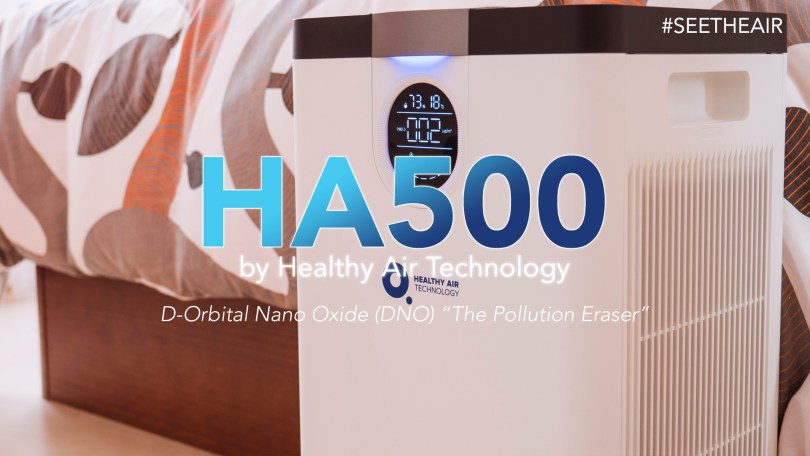
Review: HA500 Air Purifier by Healthy Air Technology

It is not always an easy task to keep indoor air free from pollutants, especially, when Nitrogen Dioxide (NO2) is present in indoor environments. In most cases, there is little you can do to eliminate NO2 and other gases like Sulphur Dioxide (SO2), Formaldehyde (TVOC), or even pathogens like H1N1 Influenza A virus (pandemic flu), and Staphylococcus aureus (or similar bacteria).

Here comes the HA500 Air Purifier by Healthy Air Technology which is able to eliminate all of these pollutants/pathogens from indoor environments. It does that thanks to the triple-layered system with a primary filter, HEPA 13 filter, and Pollution Eraser DNO filter. DNO means D-Orbital Nano Oxide which is made of two parts. 

1st part: The Carrier – Activated charcoal. The material that is used in military gas masks, and captures pollutants within the pores of the charcoal.
2nd part: The Transition metal oxides – Transition metal oxides are coated in the activated charcoal to form catalysts, and these catalysts break down pollutants and toxic gases into harmless chemicals and then release these harmless materials back into the atmosphere like water, oxygen, carbon dioxide, etc. The DNO is invented by the founding CTO of Oxford Catalyst plc (a leader in novel industrial catalysts).

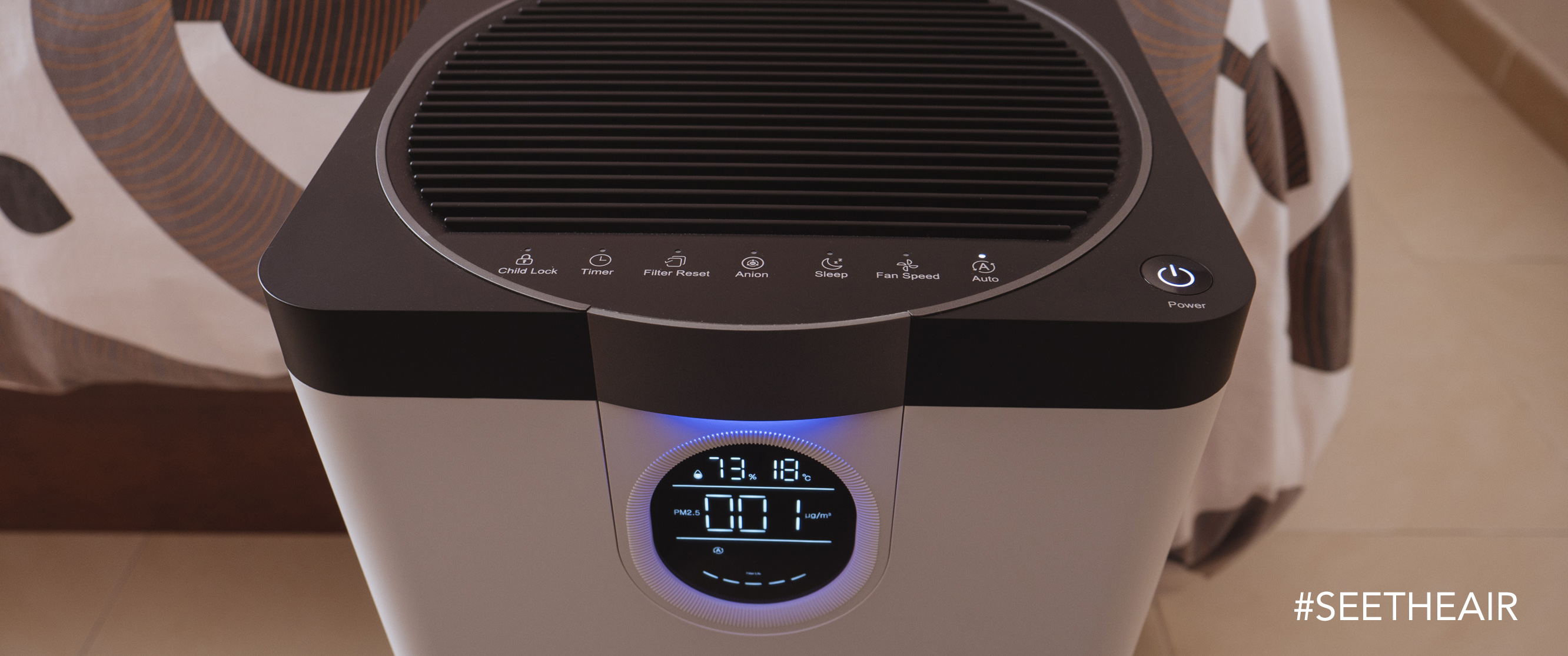
HA500 Control Panel and Display
Read More »

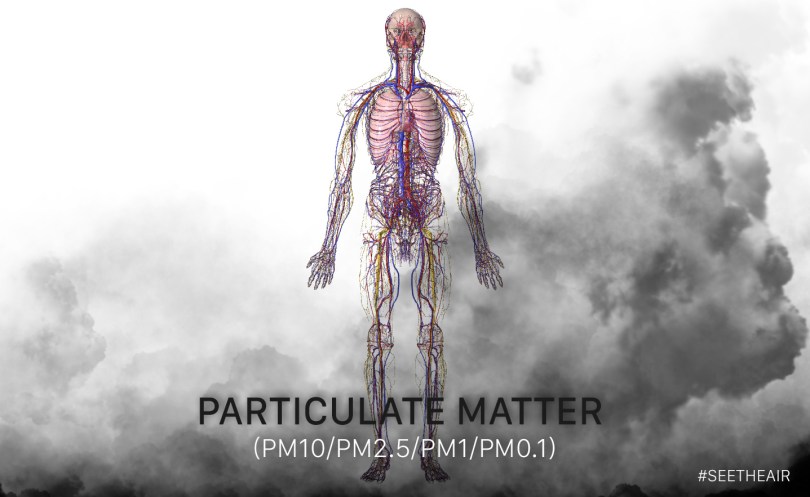
Penetration of Particles into the Human Body

How deep can pollution particles go into the human body?

How to Use CO2 Monitors

I see a lot of pictures on social media platforms where people measure Carbon Dioxide (CO2) concentrations in indoor environments incorrectly.

Read More »

Review: Envirosuite – Air Quality Management Platform

In today’s marketplace, there are many ambient air quality monitors capable of measuring multiple environmental parameters and pollutants in real-time. However, air quality monitors aren’t useful unless they are paired with an intelligent software platform in order to extrapolate the information and make it serviceable to operators and communities.

 Envirosuite has succeeded in embedded 30+ years or experience working with complex air quality and meteorology challenges directly into an advanced software platform. Users can make operational decisions based on insights from real-time air quality data and emissions modeling. Furthermore, they can identify the likely sources of air quality pollution from past incidents. 

The platform is currently used by over 500 industrial operations such as mines, oil refineries, maritime ports, construction sites but also for municipal authorities in cities. Noise management capabilities are also used at 200 of the world’s major airports.

Key modules and their functionalities

Envirosuite does just that and it is a global leader in Environmental Intelligence, using proprietary technology and real-time localized data to help industries grow sustainably and communities to thrive. The platform integrates with pre-existing monitoring devices that are capturing data on multiple air quality parameters. It is offered as SaaS (software-as-a-service) subscription supported by AWS cloud technology and is segmented into modular solutions for to assist with specific air quality challenges.

Read More »

Study: Taking a closer look at the air quality in classrooms

After almost two months of asking local schools for permission to install air quality monitors in their classrooms, on the 4th of December, a local school decided to grant me access.

In my city, Almeria, Spain, there are about 110 schools. I didn’t apply to all of them because each time I managed to find a way to contact them, I had to arrange a meeting in order to explain to them what I wanted to do, and all this process takes time. I managed to contact nine schools.

For this study, schools didn’t have to pay anything, so money wasn’t the issue for their refusal. They were worried about what will happen if the results were disappointing and negative. I tried to explain to them that the aim of the study is to understand what is going on in the classroom, in real conditions, with real students. I don’t want to discredit the school either the local authorities that manage the budget for the school. For this reason, I will keep the name of the school private.

Monitors

The monitors that I have installed for the study are made by Airthings. There are two Wave Plus, which include a CO2 sensor by Senseair. The sensor is called Sunrise, and it is an ultra-low-power, high precision NDIR sensor. Accuracy (CO2) ±30 ppm ±3% of reading. Finally, it features a self-correction system that allows them to auto-calibrate every 180 hours. I also have included a Wave mini monitor in the teacher’s office room. 

Read More »

Air Quality Adaptive Information (AQAI)

Apple iOS 14 has brought many new features to phones and tablets. For the first time, I enrolled in the beta versions of the operating system for the iPhone just because I wanted to explore the user experience (UX) of the widgets.

Long story short, I really loved them, especially the weather widget because of how intuitive it is about the information that it displays. Generally, we are accustomed to the static widgets that they only update the information every 10 minutes and that’s all, but what Apple did with the weather widget was phenomenal. Depending on the time of the day it is able to display the most important information for users to read and make appropriate decisions.

During the day, you can see the current temperature and weather forecast for the following 6 hours, plus the highest and lowest temperature of the day. However, during the night, it makes a short suggestion about the following day, for example, Warmer tomorrow with a high of 29ºC. It is fantastic because you can plan the day ahead. I call this feature Adaptive Information, and this is what I will value as a user from an air quality monitor or and AQ app.

iOS 14: Left Day | Right Night
Read More »

Things no one talks about: Flatulence and Indoor Air Quality

Have you ever wondered if the gases we produce as humans are toxic to those who live with us?

It is a taboo but I think we all have thought about it at one moment in our lives. Scientifically known as flatus but commonly known as a fart, many of us even use funny expressions to cope with this uncomfortable situation they create like Acid-rain maker, After the thunder comes the rain, Baking brownies, Death Breath, Fire a stink torpedo, pass the gas, etc…

Let’s take a step back and analyze the chemical composition of a flatus. More than 99% of the volume of flatus is composed of non-smelly gases. These include oxygen (O2), nitrogen (N), carbon dioxide (CO2) hydrogen (H) and methane (CH4), keep in mind, methane is a colorless, odorless gas and nitrogen is not produced in the gut, but it is a component of environmental air. The remaining trace (<1% volume) compounds give flatus its smell which comes from a combination of volatile sulfur compounds. Hydrogen sulfide (H₂S), methyl mercaptan (CH4S), dimethyl sulfide (C2H6S), dimethyl disulfide (C2H6S2), and dimethyl trisulfide (C2H6S3).Read More »