Why Millions in India Breathe Toxic Air

Air pollution is a major health crisis in India. Millions of people in the country are exposed to unhealthy levels of air pollution every day. This is a serious problem that can lead to a variety of health problems, including respiratory diseases, heart disease, and even cancer.   

There are a number of reasons why air pollution is so bad in India. One reason is the large number of vehicles on the roads. India has a rapidly growing economy, and this has led to a surge in the number of cars, trucks, and motorcycles on the roads. These vehicles emit a lot of pollutants into the air.   

Another reason for air pollution in India is industrial activity. India is a major industrial power, and factories and other industrial facilities emit a lot of pollutants into the air.   

Finally, agricultural burning is also a major source of air pollution in India. Farmers often burn crop stubble after harvest, and this can create a thick haze of smoke that can linger for days.   

The Health Effects of Air Pollution

Air pollution can have a serious impact on human health. Short-term exposure to air pollution can cause respiratory problems, such as coughing, wheezing, and shortness of breath. Long-term exposure to air pollution can lead to more serious health problems, such as heart disease, stroke, lung cancer, and even death.   

Read More »

The Future of Air Quality Monitoring: Portable Power

Years ago, I explored the potential of gamification to enhance public engagement with air quality. Now, numerous projects are emerging, promising to deliver user-friendly products that bridge the knowledge gap. Two key players are driving this innovation: sensor manufacturers, who are relentlessly miniaturizing their technology, and startups, which are pioneering innovative solutions to bring these sensors directly to consumers.

Air quality monitoring is no longer a niche concern for environmental scientists. With growing awareness of the impact of air pollution on health, a new wave of portable air quality monitors is poised to revolutionize how we perceive and manage the air we breathe.

Read More »

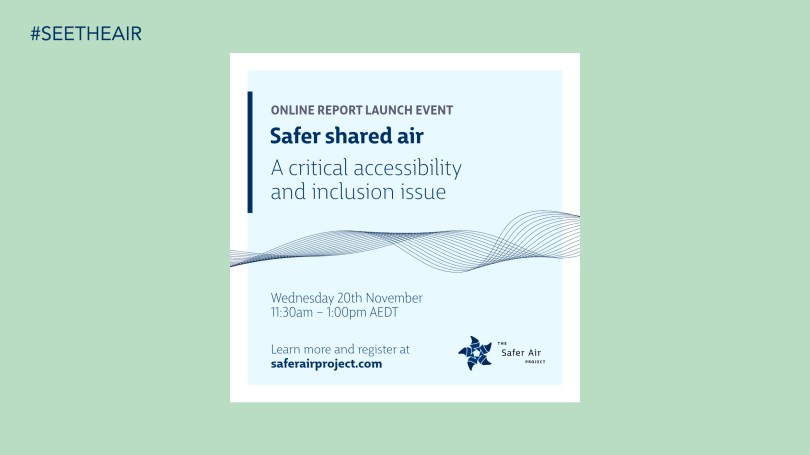
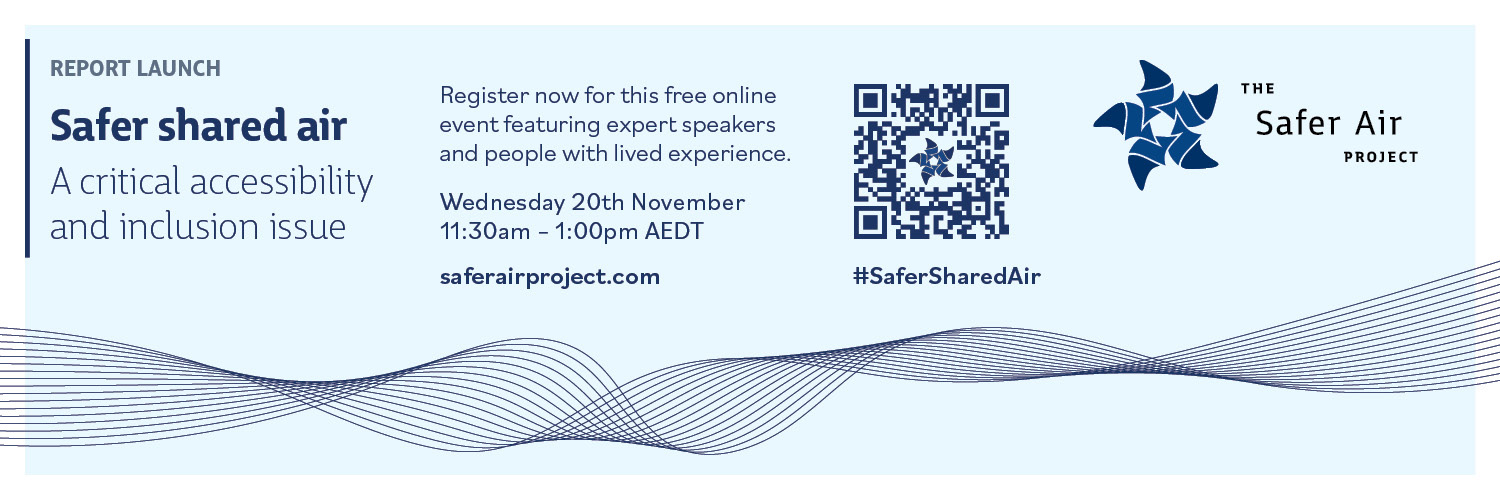
Breathe Easy Together: Register Now for The Safer Air Project Report Launch!

Creating a world where everyone can breathe safely indoors.

The pandemic has highlighted a critical truth: many diseases spread through the air we breathe. This makes clean indoor air essential for minimizing the risk of infection in our shared spaces, especially for those most vulnerable to airborne illnesses. Everyone deserves the right to access public spaces safely, and that right starts with clean air.

The Safer Air Project is excited to invite you to the online launch of our groundbreaking report, Safer Shared Air: A Critical Accessibility and Inclusion Issue. Join us to explore the importance of clean indoor air for public health and accessibility.

Here’s what you can expect:

  • Discover why safer shared air is a critical accessibility and inclusion issue.
  • Learn how we can work together to ensure healthier indoor air for everyone.
  • Gain insights from our report on the impact of poor indoor air quality and its connection to public health and inclusion.

This event is free and open to everyone!

Register now: https://www.saferairproject.com/

Together, we can create a world where everyone breathes safely indoors. Don’t miss this important discussion!

Indoorcare: Finally, Actionable Insights for Indoor Air Quality Management

For years, I’ve been preaching to companies the importance of offering curated insights into indoor air quality (IAQ). Building managers, while well-meaning, are often overwhelmed by raw data and technical measurements. They need actionable information, not complex reports.  Indoorcare is the first platform I’ve seen that truly empowers building managers to do their jobs effectively without becoming data analysts.

Effortless Management with AI-powered Insights

Indoorcare offers a user-friendly dashboard that goes beyond simply displaying air quality readings for PM2.5, CO2, CO, etc.  The magic lies in the AI-powered feedback. Users are presented with clear, easy-to-understand metrics like “Comfort Index,” “Cognitive Performance,” and even an “Allergy Risk Meter.” This allows managers to  immediately grasp the impact of air quality on building occupants.

Read More »

Particle Sizes, Infiltration, and the Indoor/Outdoor Ratio

Particle Sizes

Particle size plays a significant role in determining how particles behave indoors and their potential impact on human health. Fine particulate matter (PM2.5), with diameters of 2.5 micrometers or less, is a major concern due to its ability to penetrate deep into the respiratory system. An important subset of PM2.5 is ultrafine particles (UFPs), which have diameters less than 0.1 micrometers and are primarily emitted from combustion sources. These UFPs can even be transported to the brain via the olfactory nerve, potentially causing neurological effects. Particles in the 0.1 to 2.5 micrometer range can originate from indoor sources like soot or from the infiltration of outdoor particles. Coarse particles, larger than 2.5 micrometers, are mainly generated by mechanical processes like resuspending dust. These size distinctions are crucial because they influence a particle’s ability to penetrate indoors, remain airborne, and affect human health. For instance, the high surface area to mass ratio of UFPs makes them efficient at transporting harmful chemicals deep into the lungs. Understanding the sources and behavior of different particle sizes indoors is essential for developing effective strategies to mitigate their potential health risks.

Read More »

Recommended CO2 Levels for Optimal Building Performance

Carbon dioxide (CO2) concentration is a critical indicator of indoor air quality (IAQ) and plays a significant role in building performance. While CO2 itself may not be directly harmful at typical indoor levels, its concentration serves as a proxy for ventilation effectiveness and the potential buildup of other indoor air pollutants, including pathogens, that can negatively impact occupant health and cognitive function. This article examines the relationship between CO2 levels and building performance, drawing upon research findings and expert insights to recommend CO2 levels that promote a healthy and productive indoor environment.

Understanding the Role of CO2 in Indoor Environments

CO2 is a natural component of the air we breathe, but its levels can increase significantly in indoor spaces due to human respiration and other combustion processes (candles, cooking, combustion heating, etc). When ventilation is inadequate, CO2 from these sources can accumulate, leading to elevated concentrations.

Read More »

Carbon Monoxide: The Silent Killer Lurking Indoors

Carbon monoxide (CO), often referred to as the “silent killer,” is a colorless, odorless, and tasteless gas that can be deadly when inhaled in high concentrations. While it is often associated with outdoor air pollution, CO can also pose a significant risk within our homes and workplaces.

Furthermore, while carbon monoxide is often associated with acute poisoning, leading to immediate symptoms like headaches, dizziness, and nausea (hence we have CO alarms), it can also have long-term health consequences. Even exposure to low levels of CO over extended periods can cause damage to various organs and systems. Chronic CO exposure has been linked to chronic fatigue, memory problems, work difficulties, sleep disorders, dizziness, neurological disorders, paresthesia, recurrent infections, abdominal pain, and diarrhea 1, 2.

Read More »

Global Coalition Launches Initiative to Establish Universal Indoor Air Quality Standards: Global Open Air Quality Standards (GO AQS)

A diverse global coalition of scientists, air quality experts, and industry leaders has united to establish the Global Open Air Quality Standards (GO AQS), an unprecedented initiative aimed at creating universal indoor air quality (IAQ) standards. This groundbreaking effort seeks to ensure that everyone, regardless of location or socio-economic status, has access to the knowledge and tools needed to enhance their health and well-being through improved air quality.

GO AQS will serve as an authoritative and comprehensive resource for scientists, engineers, public health officials, businesses, and policymakers worldwide. By providing accessible, consistent and clear, standardised guidelines for IAQ, it empowers people to make informed decisions about their living and working environments, directly impacting health and productivity.

IAQ significantly affects our health, cognitive function, and overall productivity. Poor indoor air can exacerbate respiratory conditions, increase the risk of cardiovascular problems, and contribute to reduced work performance. Establishing universal air quality standards is a critical step in ensuring equitable access to clean and healthy air globally.

The coalition comprises experts from different fields including public health, environmental science, epidemiology, occupational health, engineering, and air quality research. Together, they are dedicated to developing GO AQS standards that are both scientifically robust and practical for implementation across diverse settings. These standards will address a wide range of indoor pollutants, including particulate matter (PM and PCN), carbon dioxide (CO2), carbon monoxide (CO), ozone (O3), and formaldehyde (CH2O), which are known to have significant adverse effects on human health and environment.

GO AQS aims to be a valuable tool for the public, private sector, and academia alike. Organisations that adopt these standards can enhance the health and well-being of their employees and customers, while simultaneously reducing their environmental footprint. This initiative also supports broader sustainability goals by promoting healthier indoor environments. 

While air quality interrogators and manufacturers are supportive of the overall goals of GO AQS, there are areas where the draft version requires further refinement to ensure its practical implementation. We remain committed to working collaboratively with all stakeholders to finalise a version of GO AQS that is both effective and feasible for the industry. Therefore the coalition is currently finalising the GO AQS standards and developing educational materials to facilitate their global implementation. The official launch is anticipated in December 2024, marking a significant milestone in the global effort to prioritise IAQ.

Read More »

AirDeveloppa: Breathe Easy and Earn Bitcoin While You’re At It

Air pollution got you down? Want to find places with clean air to escape to? Look no further than AirDeveloppa! This innovative web app tackles air quality concerns with a unique approach that benefits both users and businesses.

Finding Fresh Air, One Coffee Shop at a Time

AirDeveloppa’s core function is to help you locate indoor spots with good air quality. Participating businesses like cafes, gyms, and co-working spaces utilize the AirCheck Monitor, which constantly monitor PM2.5 levels and send that data directly to the app. With up-to-date info at your fingertips, you can easily find a breath of fresh air on even the smoggiest days. Currently only people in Thailand have access to this service but hopefully it will become worldwide available.

Read More »

Help Us Breathe Cleaner Air: Citizen Science Project Seeks Donations for Wood Smoke Research

I won’t write a long introduction because this is of urgent matter for people to understand and support. While wood-burning stoves offer a tempting escape from soaring energy costs, they also release harmful substances into our homes and communities. These include fine particulate matter (PM2.5) and Polycyclic Aromatic Hydrocarbons (PAHs), both of which have been linked to serious health issues, including cancer.

Unveiling the Hidden Danger

Despite the known risks, we still lack sufficient data on PAHs concentrations in residential areas where wood burning is common. The location of investigation will be chosen in the Netherlands or Belgium. This is where your help is crucial.

By supporting this citizen science project, you’ll help us gather vital information about the impact of wood smoke on our air quality. The project will measure PAHs and PM2.5 levels in a residential area heavily reliant on wood burning for heating. This data will be invaluable for raising awareness among policymakers and advocating for stronger air quality regulations.

How Your Donation Makes a Difference

Analyzing air for PAHs is a complex process requiring specialized equipment and laboratory analysis. With your support, the project will:

  • Purchase air pumps and ten (10) absorption tubes to collect air samples.
  • Conduct laboratory analysis to identify and quantify PAHs.
  • Measure PM2.5 levels using advanced sensors.
  • Compare PAHs levels in wood-burning areas to background levels.

Join the Fight for Clean Air

Your donation will directly contribute to a healthier community. Together, we can uncover the hidden dangers of wood smoke and work towards cleaner air for everyone. Finally, I want to thank Dieter Pientka for his passion to investigate this crucial subject.

Help us make a difference. Donate today!