Understanding AHAM and CADR: Your Guide to Cleaner Indoor Air


In today’s world, indoor air quality is more important than ever.  Dust, pollen, and even wildfire smoke can significantly impact our health and comfort. Air purifiers offer a solution, but navigating the world of product specifications can be confusing. Is product efficiency a sufficient way to rate them, or should we think about effectiveness? This article explains the role of the Association of Home Appliance Manufacturers (AHAM) and the importance of the Clean Air Delivery Rate (CADR) in choosing the right air purifier for your needs, plus an upcoming standard that wants to deliver even better indoor air solutions.  

Understanding CADR

The Clean Air Delivery Rate (CADR) is a crucial metric that indicates how quickly an air purifier can remove specific types of particles from a room.  It measures the volume of clean air delivered by the unit and is expressed in cubic meters per hour (CMH) or cubic feet per minute (CFM). AHAM tests air purifiers for three common pollutants; smoke, dust, and pollen. Note: CMH can be converted to CFM by dividing by 1.7.

Read More »

Benchmarking: The Ultimate Catalyst for Better Air Quality Through Global Standards

This article first appeared on www.goaqs.org

Air quality is an invisible yet pervasive factor influencing our health, productivity, and overall well-being. While awareness of air pollution is growing, translating that awareness into actionable behavioral change remains a significant challenge. The key to unlocking this transformation lies in the power of benchmarking—a potent tool that, when coupled with global standards like the proposed Global Air Quality Standard (GO AQS), can empower individuals and communities to breathe cleaner air.

The Power of Comparison: Learning from Other Fields

The effectiveness of benchmarking as a driver for improvement is not a new concept; it has long been a cornerstone of success in diverse fields. Consider the world of athletics: elite athletes constantly benchmark their performance—speed, strength, endurance—against competitors in their category. This isn’t about shaming, but about identifying areas for improvement. A runner who sees their sprint times lagging behind others in their age group knows exactly where to focus their training. Similarly, in healthcare, patients track metrics like blood pressure or cholesterol against established healthy ranges or anonymized data from similar patient populations. This comparison provides a clear understanding of their health status, prompting necessary lifestyle changes or medical interventions.

A practical, personal example vividly illustrates this point: as an individual tracking my resting heart rate through an app that allows comparison against +56,000 users worldwide. Seeing a “superb” rating, indicating excellent heart aging, provides tangible positive reinforcement and validates my health efforts. Conversely, a less favorable comparison would flag a problematic area, encouraging focused action. This simple yet powerful mechanism of comparison fosters accountability and motivates behavioral adjustments.

Read More »

Key Insights from ASIC 2025 in Thailand: Bridging the Indoor-Outdoor Divide

The recent Air Sensors International Conference (ASIC) 2025, held in the vibrant backdrop of Thailand, offered a profound opportunity to delve into the evolving landscape of air quality monitoring. As an attendee, several key themes emerged that highlight both the progress made and the remaining challenges in our quest to understand the air we breathe.

The Indoor-Outdoor Air Quality Discrepancy

One striking observation from the conference was the apparent disparity in research emphasis between indoor and outdoor air quality monitoring. While outdoor environments have benefited immensely from the widespread adoption and scrutiny of low-cost air quality monitors, indoor spaces appear to lag in comparison. The primary reason for this imbalance lies in the availability of robust reference instrumentation. Governments worldwide have invested in publicly air quality stations equipped with reference-grade instruments, providing invaluable benchmarks for normalization and validating low-cost sensors in a variety of outdoor conditions. This has not only accelerated the development of accurate low-cost monitors but also fostered the creation of sophisticated correction algorithms.

Read More »

Review: InBiot Mica Plus – A Comprehensive IAQ Solution for Green Buildings and Beyond

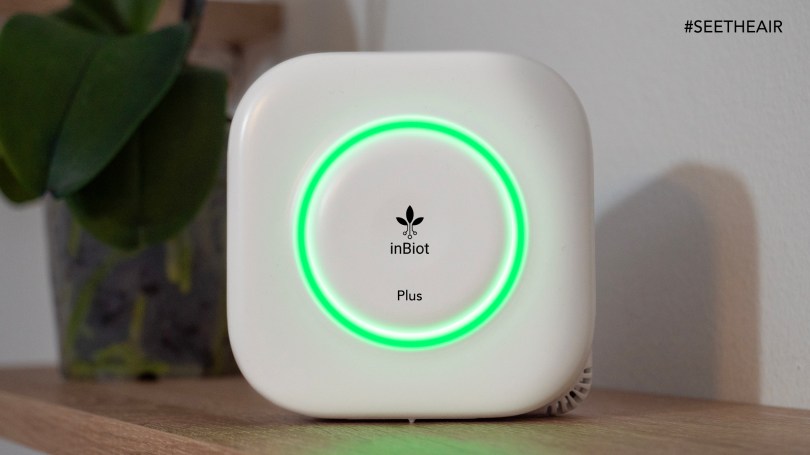
The inBiot Mica Plus is a robust indoor air quality monitor designed squarely for the B2B market, catering specifically to buildings aiming for top-tier Indoor Environmental Quality (IEQ) and compliance with stringent green building certifications like WELL, RESET, and LEED. With a promised 10-year lifespan and minimal maintenance thanks to automatic calibration, the Mica Plus is a compelling long-term investment.

Equipped with a comprehensive sensor suite including Temperature, Relative Humidity, CO₂, TVOC, Particulate Matter, and Formaldehyde, the Mica Plus provides a detailed picture of indoor air conditions. Its connectivity options are equally impressive, spanning basic Wi-Fi to advanced protocols like Power over Ethernet (PoE), LoRaWAN, Sigfox, NB-IoT/LTE-M, and local communication options such as Modbus RTU/TCP/IP, API, BACnet, and MQTT, ensuring seamless integration into existing building management systems.

Read More »

Review: µCritAir Development Kit – Gamifying Our Way to Better Indoor Air

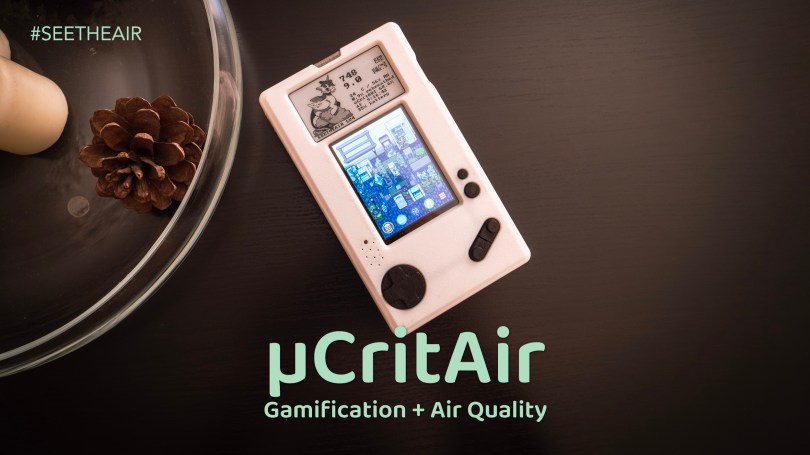
For years, I’ve been advocating for the integration of gamification into everyday tools to drive meaningful behavioral change, especially concerning something as vital yet often invisible as indoor air quality. We need engaging ways to keep people motivated to understand and improve their environments. So, when I encountered the µCritAir (it actually found me), I was immediately intrigued. This isn’t just another air quality monitor; it’s an experiment in engagement, using a digital pet – a µCritter – whose health depends directly on the air you breathe. Keep your air clean, and your critter thrives. Let it worsen, and its health suffers. It’s a compelling, tangible connection between data and consequence.

Development Kit

It’s important to set expectations correctly: the µCritAir is currently available as a Development Kit. This isn’t a polished, mass-market product yet. Instead, it’s aimed squarely at enthusiasts, early adopters, and tinkerers who enjoy being part of the development journey. Yes, this means you’ll encounter some unpolished aspects, perhaps a bug here or there, or features still under active development. However, this is also its strength for the right audience. The team behind µCritAir is clearly passionate and actively working on both software and hardware improvements. They genuinely value the feedback from their early users, creating a collaborative dynamic that’s exciting to be a part of.

Read More »

Review: aranetRn+ – A Deep Dive into Radon Awareness

Aranet has carved a niche for itself in the air quality monitoring space, establishing a distinct design language that prioritizes clarity and functionality. The aranet4, their popular CO2 monitor, set the stage with its minimalist aesthetic and intuitive e-ink display. The aranetRn+ builds upon this foundation, tackling the complex issue of radon monitoring while staying true to aranet’s core principles.

The aranetRn+ maintains the familiar clean lines and robust build quality associated with aranet products. However, the nature of radon detection necessitates a deeper profile. The device houses a α-decay event detection using ionization chamber, which contributes to its increased depth. While slightly bulkier, the aranetRn+ remains a discreet and unobtrusive addition to any home.

Read More »

Tools for Navigating Global Air Quality Standards, and the Push for Universal Equity

The air we breathe is fundamental to life, yet the quality of that air varies drastically across the globe. Understanding the complexities of air quality standards (AQS) is crucial for policymakers, researchers, and concerned citizens alike. Thankfully, several invaluable tools exist to navigate this complex landscape.   

Two prominent resources stand out: the WHO’s Air Quality Standards tool and the STC34’s IEQ Guidelines platform.

The WHO’s Interactive Tool: A Global Overview

The World Health Organization (WHO) has developed a powerful interactive tool, accessible at https://worldhealthorg.shinyapps.io/Air_Quality_Standards_V2_1/, that allows users to explore ambient AQS from countries worldwide. This platform provides a user-friendly interface to compare standards for key pollutants such as particulate matter (PM2.5, PM10), ozone (O3), nitrogen dioxide (NO2), sulfur dioxide (SO2), and carbon monoxide (CO). Users can filter by country, pollutant, and averaging time, gaining a comprehensive understanding of the diverse regulatory approaches adopted globally.   

Read More »

A DIY Ventilation Solution for Renters

Renting an apartment often means limited control over modifications, especially when it comes to essential systems like ventilation. Poor indoor air quality can significantly impact health and well-being, but drilling holes for traditional ventilation systems is usually out of the question. This article presents a simple, affordable DIY project using a standard air purifier to bring fresh, filtered air into your rented space without any permanent alterations.

The Problem: Stale Indoor Air and Renting Restrictions

Old apartments but also modern, energy-efficient apartments can sometimes suffer from poor ventilation, leading to a buildup of indoor pollutants like CO2, volatile organic compounds (VOCs), and particulate matter. While opening windows is a simple solution, it’s not always practical due to weather, noise, or outdoor air pollution. Renters often face the added challenge of not being allowed to make structural changes, ruling out traditional ventilation installations.   

The DIY Solution: Air Purifier Ventilation

This project uses a standard standalone air purifier in a novel way to introduce fresh, filtered outdoor air. The key components are:

  • A Standard Air Purifier: Choose one with a HEPA filter for particulate matter and a carbon filter for gases. Programmable models are highly recommended for automation.
  • Flexible Tubing and Window Adapter: These connect the air purifier’s intake to a slightly opened window. You can find suitable tubing and adapters at most hardware stores for around €15.
Read More »

Join the Global Open Air Quality Standards Initiative

The air we breathe is fundamental to our health and well-being, yet air quality, particularly indoors, remains a complex and often overlooked issue. Communicating this complexity to the public, ensuring consistent industry practices, and guaranteeing equitable access to clean air for everyone are critical challenges. That’s why we’re excited to invite you to join the Global Open Air Quality Standards (GO AQS) initiative.   

GO AQS is a collaborative effort aimed at developing and promoting universally recognized standards for indoor air quality. This open invitation extends to researchers, industry professionals, policymakers, and anyone passionate about ensuring healthy air for all. We believe that by working together, we can create a world where clean air is not a privilege, but a fundamental right.   

Why is Academia’s Support Crucial?

The academic community plays a vital role in the success of GO AQS. Your expertise and research are essential for establishing robust, science-backed standards. Here’s why your involvement is so important:

Read More »

Book Review: “Indoor Air Quality in Buildings for Well-being: Practical Application Strategies”

A 2023 published book in Spanish, “Calidad del aire interior en los edificios para el bienestar: estrategias de aplicación práctica” (Indoor Air Quality in Buildings for Well-being: Practical Application Strategies), is poised to become an essential resource for improving indoor air quality globally. Authored by Miguel Ángel Campano, Jessica Fernández-Agüera, and Juan José Sendra, this comprehensive guide delves into the critical aspects of indoor air quality (IAQ) and offers practical strategies for creating healthier indoor environments.   

Relevance to Global Initiatives

While currently available in Spanish, this book’s content is highly relevant to international efforts such as the development of Global Open Air Quality Standards (GO AQS). The GO AQS initiative aims to establish universal benchmarks for air quality, and the book provides valuable insights and data that can orient the initiative.

Comprehensive Coverage of Key IAQ Factors

Read More »