DIY PM Monitor Take 2

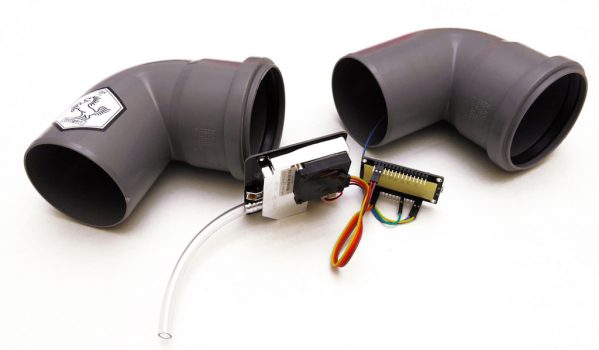
Do you remember this DIY Low cost DIY PM Monitor, there is a new and better version available.

The new version offers a low cost housing and the software is more mature now. The software is open source, on github, and there are some pre-built images on their website.

A great new feature is the ability to store of a few days of data on the device which makes it more robust to internet outages and usable for periods away from wifi access, and it records every sample from the PMS5003 sensor which is more that one per second to better capture quick changes and better for mapping walking around.

You can find all the instructions on their website.

uHoo vs AirVisual vs Awair

On this article I am going to compare three AQI monitors: AirVisual, uHoo and Awair.

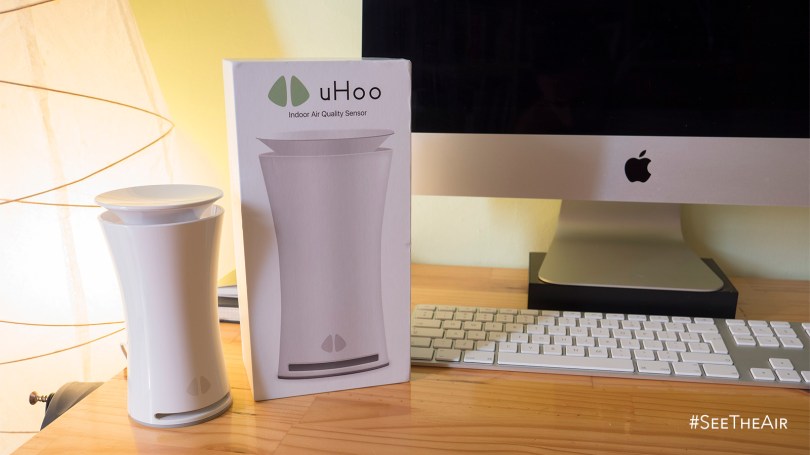
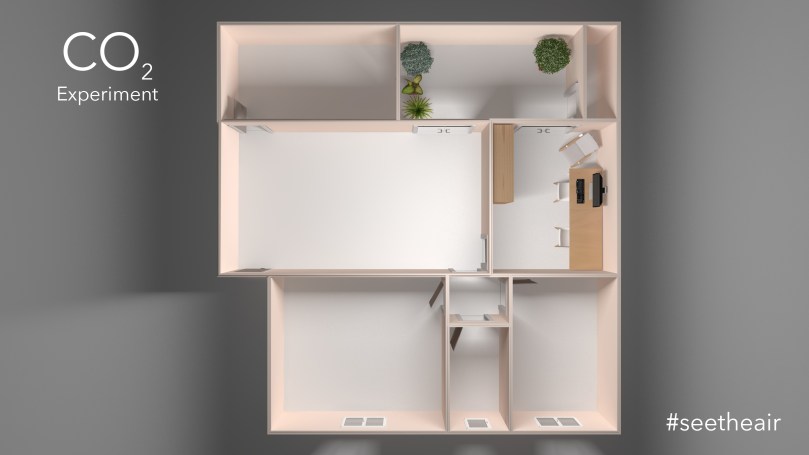
All the monitors were placed together in the guest room in my house, as you can see on the picture above. I chose that room because I wanted to be able to isolate the devices from the rest of the house and from human interaction especially for the first 21 measurements. No one was allowed in that room during those measurements. After those 21 random measurements which were taken during 4 days period of time I opened the door and I created some “air pollution”. The whole experiment lasted 10 days. Below you can see the graphs with all the sensors and monitors.

Read More »

Review: uHoo AQI Monitor

Finally is here. After having an adventure with the postal service for +40 days the uHoo device found its way to my home. I want to thank uHoo for its persistence.

Let me start by saying that this is a very promising device because it features 9 separate Sensors for Air Quality monitoring and there isn’t any other device with so many sensors for indoor use. The company was founded in August 2014 and it took them two and a half years to develop uHoo.

Features:

  • RGB LED Light
  • Temperature Sensor -40°C to 85°C / 40°F to 185°F
  • Humidity Sensor RT 0-100%
  • Air Pressure Sensor 300-1,100mbar
  • Carbon Dioxide CO2 Sensor 400-10,000ppm
  • Carbon Monoxide CO Sensor 0-1000ppm
  • VOC Sensor 0-1,000ppb
  • PM2.5 Sensor 0-200ug/m³
  • Ozone O3 Sensor 0-1,000ppb
  • *Nitrogen Dioxide NO2 Sensor 0-1000ppb
  • Micro USB Power Input 5V DC
  • WiFi 802.11 b/g/n @ 2.4 GHz

Read More »

OK Lab Stuttgart – PM DIY Monitor

An Outdoor PM DIY Monitor

Do you think the current PM (Particulate Matter) monitors are too expansive or too risky to leave them outside? Do you need proofs for convincing your local authorities to take actions against air pollution?

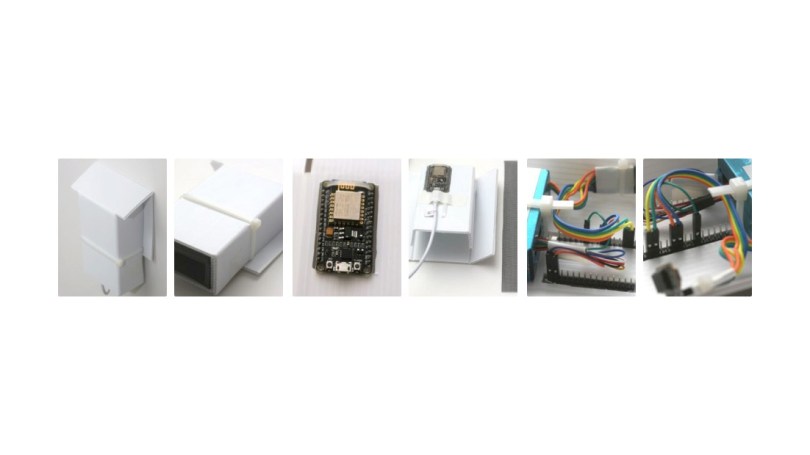
Then it’s time to build your own personal outdoor PM DIY Monitor. It won’t cost you more than €32 and it can feed your community with valuable data about the air quality. Use that data to prove how bad is the air quality in your neighborhood or community.

Read More »

The Air in New York

In my recent visit in New York and in other USA cities I decided to take with me a portable carbon monoxide device and measure the air quality across the cities during my trip.

The CO Sensor was placed on a net pocket that I had sewed on my backpack. I am quite the craftsman! The experiment had to be done correctly to ensure that the air flowed easily and the measurements were taken correctly and constantly.Read More »

Air Quality Devices – Comparison 2017 Q2

More and new devices on the market. From wearables to home AQI monitors are here to assist people’s needs. Remember air pollution is everywhere.

comparison air 2017 Q2

  • Prices may vary during time.
  • Some Companies don’t specify on their data sheet if their devices are capable to measure PM2.5 or PM10 and they just mention the word dust.
  • Some other companies say: Our product goes beyond CO₂ by analyzing substances that directly affect your well-being by measuring VOCs. They aren’t clear if their devices have CO₂ sensor.
  • Some of the devices are AQI Monitors and Air Purifiers Combo. On this list you can only read the features as an AQI monitor.
  • The classification of the design between BadGood and Very Good is based on the materials (plastic, wood, glass and metal) that they use and the aesthetic on my personal opinion.

CO2 Candles Experiment

CO2 Candles Experiment

In this experiment I will demonstrate how fast Carbon Dioxide CO2 rises inside a room by lighting two small candles.

bedroomday1_0000 copy

I chose my study room as it can be easily isolated, plus I have got all the AQI monitors inside this room for the purpose of the experiment. The room is 7.3m². The experiment is easy, I lit 2 candles and closed the door and window of the room. Then I waiting with myself inside the room till the CO2 reached 1200ppm. Basically I logged the time when the CO2 was 430ppm and when it reached the 1200ppm with and without the candles.

With the candles the CO2 needed 35 minutes to reach the 1200ppm limit as you can see on the graph below and without any candle and with exactly the same conditions as before the CO2 needed 59 minutes to reach the upper limit.

Conclusion

You gain 25 minutes of more oxygen and less CO2 until the room reaches the 1200ppm limit which means more productive time and fewer headaches.

Gray Slate

Where are the Public Air Quality Stations?

In my city (Almeria, Spain) there are two stations that measure the local Air Quality.

Let’s analyze them and see if they are located in the correct places and if they feature the necessary instruments for measuring the AQI properly.

The Background

It is located in “El Boticario” a park 10km outside of the city center. The coordinates according to an official document from“Junta de Andalucía” are UTMX:554439 and UTMY:4080272, but they aren’t correct (Not so professional). The real coordinates are UTMX:554319 and UTMY:4080066. This station seems to work well although they don’t feed the data in real time to the public and quite often is down.

Read More »