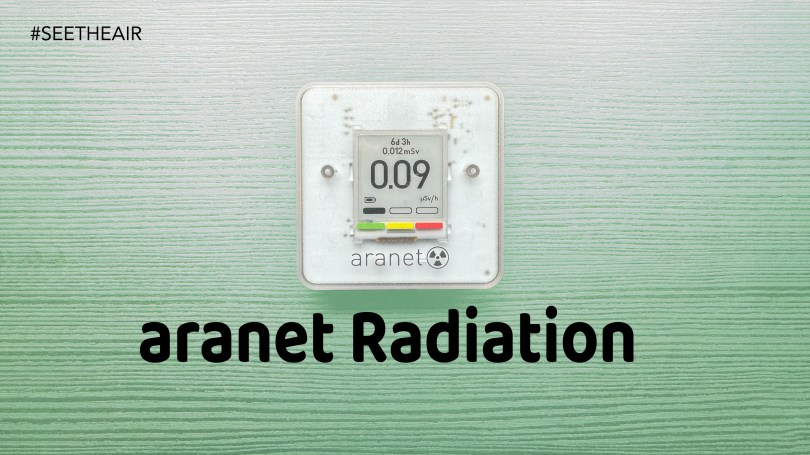
The aranet Radiation tackles a whole new frontier: personal radiation safety. This device promises to empower you by monitoring gamma (γ), beta (β), and x-ray levels, giving you insights into your environment’s radiation for years.
Pros:
Peace of Mind: Being aware of radiation levels can be a major stress reliever, especially in areas where radiation concerns might exist like near nuclear power plants.
Long-Term Tracking: With a two-year data tracking capability, the Aranet Radiation allows you to identify trends and build a picture of your overall radiation exposure.
Battery Life: Aranet devices are known for their impressive battery life, and the Radiation model is likely to follow suit.
The recent Air Sensors International Conference (ASIC) 2025, held in the vibrant backdrop of Thailand, offered a profound opportunity to delve into the evolving landscape of air quality monitoring. As an attendee, several key themes emerged that highlight both the progress made and the remaining challenges in our quest to understand the air we breathe.
The Indoor-Outdoor Air Quality Discrepancy
One striking observation from the conference was the apparent disparity in research emphasis between indoor and outdoor air quality monitoring. While outdoor environments have benefited immensely from the widespread adoption and scrutiny of low-cost air quality monitors, indoor spaces appear to lag in comparison. The primary reason for this imbalance lies in the availability of robust reference instrumentation. Governments worldwide have invested in publicly air quality stations equipped with reference-grade instruments, providing invaluable benchmarks for normalization and validating low-cost sensors in a variety of outdoor conditions. This has not only accelerated the development of accurate low-cost monitors but also fostered the creation of sophisticated correction algorithms.
While monitoring air quality, scientists traditionally relied on mass concentration to measure particulate matter (PM). This metric tells you the total mass of particles per unit volume of air. But for sub-micron particles – those less than one micrometer in diameter – mass concentration falls short. Here’s why measuring particle number by size distribution is a superior approach.
The Small Matter of Small Particles
Sub-micron particles are incredibly tiny. Imagine a human hair – typically around 70 microns thick. A sub-micron particle is hundreds to thousands of times smaller! Due to their miniscule mass, even large numbers of sub-micron particles can register a low mass concentration. This can be misleading, as the health risks they pose aren’t dependent solely on weight.
Penetrating Deep: Size Matters More
Sub-micron particles, especially those in the ultrafine range (less than 100 nanometers), are deeply concerning. Their small size allows them to bypass the body’s natural defenses and infiltrate deep into the lungs. These particles can even enter the bloodstream, potentially causing respiratory and cardiovascular problems.
Low-cost sensors aka LCS are commonly used in an effort to measure air pollutants like particulate matter all around the world, indoors and outdoors. Their low price has driven a lot of interest from many communities. Academics, experts, and consumers have embraced them because they are cheap to get and easy to embed in an IoT solution.
Countless air quality monitors use low-cost sensors (mostly from China) and although they are great as educational tools, their low accuracy leads to wrong conclusions most of the time.
Wrong conclusions are as bad as misinformation or fake news. Air pollution doesn’t kill instantly (most of the time) and it doesn’t create severe health issues in the short-term, but after an extended period or at least when we notice the consequences. One exception is carbon monoxide (CO) as it can kill people instantly and this is the reason we don’t see many low-cost CO sensors. There are some regulations that protect the consumers. Moreover, companies don’t want to take responsibility by using a low-cost CO sensor because they can get sued easily by the family of a victim when the air quality monitor won’t notice the increase of the gas indoors. Liability!
So many different types of sensors have become available in the market. For years we have seen and used Single (mainly) and Dual-Beam NDIR sensors for CO2 detection, but now another technology has surfaced, the Photoacoustic.
I decided to do a quick comparison of the different technologies in order to determine which one is the best and what are the differences if there is one. Price always affects the Bill of Material BOM, so we need to make a wise choice depending on the application of the sensor (commercial, real estate, industrial, scientific, etc).
Single and Dual Beam NDIR
CO2 is a gas with an asymmetric molecular structure that has strong absorption of infrared. This is the reason we use a Non-Dispersive Infrared NDIR sensor which is based on tunable diode laser spectroscopy.
Recently, I shared an illustration that demonstrates, based on scientific research, how deep pollution particles can go into the human body.
Particulate matter (PM) are basically sneaky and invisible (to the naked eye) particles of various sizes that trigger inflammatory responses all over the human body depending on their size/origin and how deep inside us they can go. They are even able to destroy human tissue when the origin of the particles comes from the combustion of fossil fuel or biomass burning.
The smaller they get the easier it is to enter our bloodstream and affect every cell and organ in our body, even our brain. For this reason, it is very important to start monitoring the unregulated ultrafine particles aka nanoparticles or PM0.1 or UFP.
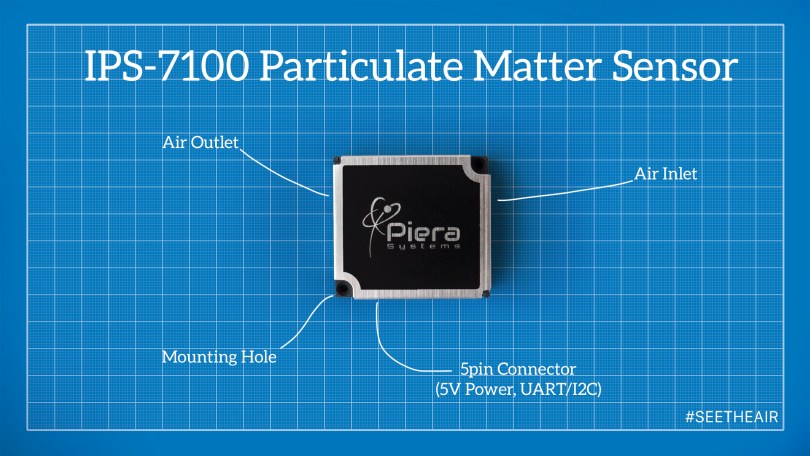
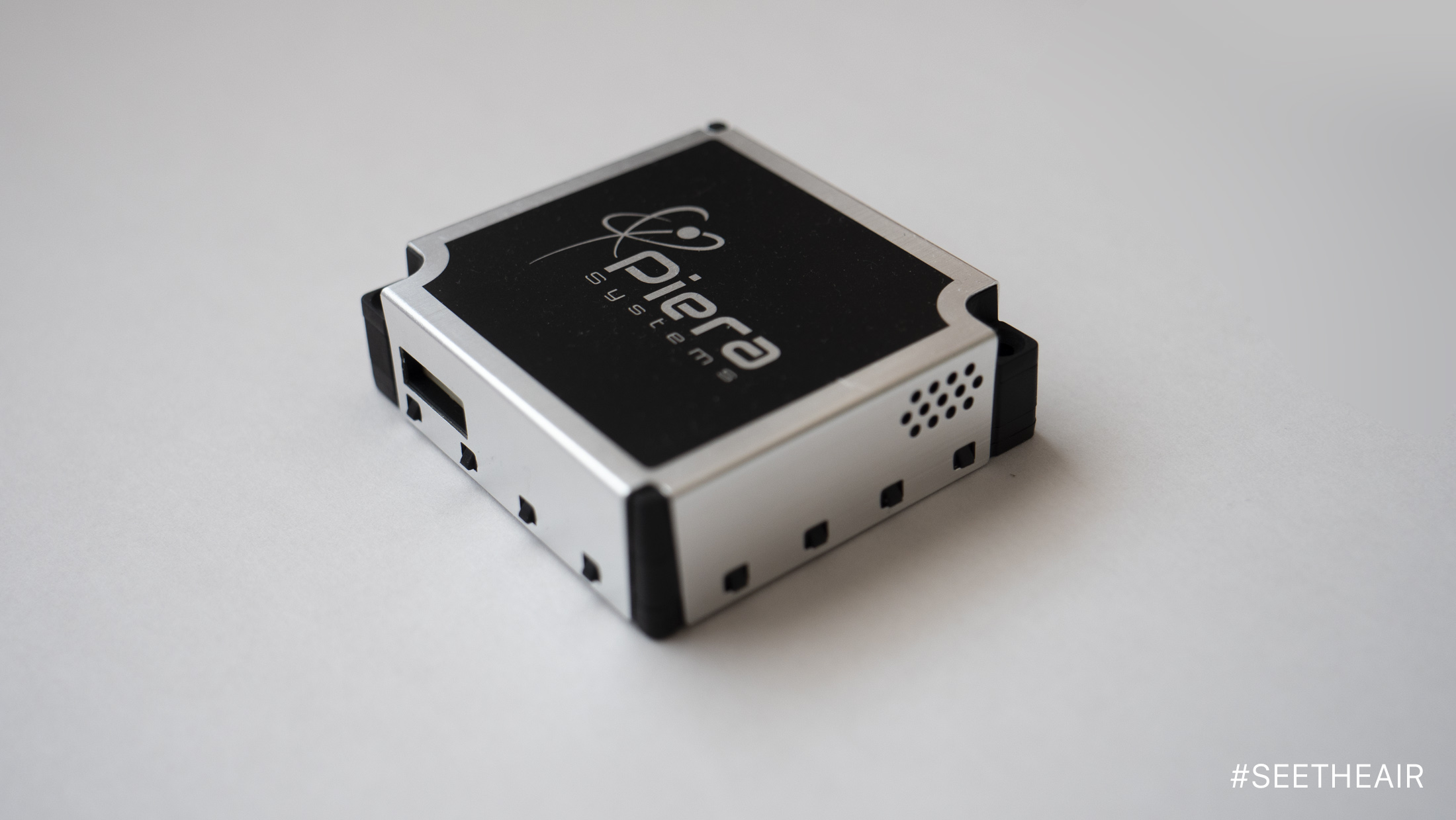
The IPS7100 by Piera Systems (a Canadian company) is a new generation low-cost laser scattering sensor capable of measuring those ultrafine particles PM0.1 but also fine particles PM0.3/PM0.5/PM1/PM2.5 and coarse particles PM5/PM10. In total, the 7100 series offers 7 output bins.
Back in 2019 uRADMonitor and I organized a “Call for Volunteers” where we gave away 10 monitors all around the world.
Once more we are looking for five volunteers who want to receive a Smoggie-PM monitor. The new version comes with new transparent icy look case and visual indication of the pollution concentration thanks to the LED light.
Volunteers all around the world who are willing to install an Air Quality Monitor in their backyard or balcony or window or any other outdoor environment in order to build a better air quality network and to help you raise awareness in your neighborhood/community.
The only requirement from your side is to have a good Wi-Fi internet connection 24/7 and keep the device on constantly in order to broadcast the measurements to an open map. The WiFi signal must reach the monitor outdoors.
Just email or tweet or DM me on any social media platform, tell me where are you planning to install the monitor and why should I choose you.
What is SMOGGIE-PM?
Smoggie-PM is an ultra low-cost high performance Air Quality Monitor, with Wi-Fi connectivity and a laser scattering sensor (Plantower PMS5003) that measures Particulate Matter PM1, PM2.5 and PM10 and makes it available on your phone or laptop in real time. Also, it is equipped with a Temperature/Humidity/Pressure sensor (Bosch BME280).
Smoggie is an automated, fixed, Air Quality monitoring station. It has WiFi connectivity to send the air quality measurements to the uRADMonitor Cloud in real time. It needs 5V to run, powered by a standard micro-USB cable (the same your smartphone uses in order to charge it). The new versions have a color LED light that reflect the pollution levels in real-time.
I really like to have all AQ Monitors and other devices connected to one place in order to make my life easier when I try to figure out what is going on in my house. I am an iOS user which means this post doesn’t concern Android users, however, I will advise you to stick around and read the benefits of having Apple HomeKit.
Not all AQ Monitor manufacturers support HomeKit and here comes HomeBridge which is a platform to bring non-supported devices to Apple’s ecosystem. There are only a few AQM manufacturers that officially support HomeKit, like Kaiterra, Eve and QingPing.
The community of the HomeBridge has allowed others to take advantage of the platform and make the user experience even better by porting many more AQMs into HomeKit.
In a previous post, I presented Airthinx IAQ for Homeowners and how an advanced AQ monitor can be used for indoor environmental monitoring. In this post, we will explore how we can use the same monitor but in business environments (offices, industrial buildings, food supply chains, etc).
We will focus on the tools present in the dashboard as it is one of the best dashboards you will find in the market, and we will learn how to get the most out of it.
Let’s begin with the Dashboard – Home. Here we can create various types of widgets and arrange them according to our preference. First, you can see that I have created a column with all the current measurements with small graphs of the environmental parameters. Right next to it, I always watch for the general AQ, PM2.5, and Humidity. Below I have more widgets with other graphs and values that I want to have a glance.
Dashboard – Home
Next, we can see the Map tab. Here we can locate all the available monitors in a high precision as the monitors come with a GPS module, however, we will see later that we can manually set the location of the device.
SPEC Sensors was founded in 2012 in the USA (California) by Dr. Joseph Stetter and Ed Stetter. Their gas sensors, analog and digital, are one of a kind as the technology and hard work has allowed them to minimize the sensor size to only 20x20x3 mm in order for gas sensing to become a part of our everyday lives. The company has foreseen that sensors of all types are going to be integrated into smartphones and other wearable devices, becoming an integral part of our everyday lives and building the Internet of Things (IoT).
IoT low-cost sensors are in my DNA as I believe they will allow us to understand environmental issues otherwise, we would have dismissed or we would not be aware.
Let’s read together what they have to share with us and reach a conclusion at the end.
Interview
Tell us a bit about your motivation in developing air quality sensors?
We saw the need and opportunity for low cost electrochemical sensors with good performance – before SPEC, high performance sensors were too expensive and too big to enable new applications in wearables and distributed monitors. SPEC was born out of the research driven by Eco Sensors / KWJ Engineering, Inc. led by Dr. Joseph Stetter.We were able to build SPEC Sensors using modern technology in a new high performance plastic package.Read More »






 See The Air