OK Lab Stuttgart – PM DIY Monitor

An Outdoor PM DIY Monitor

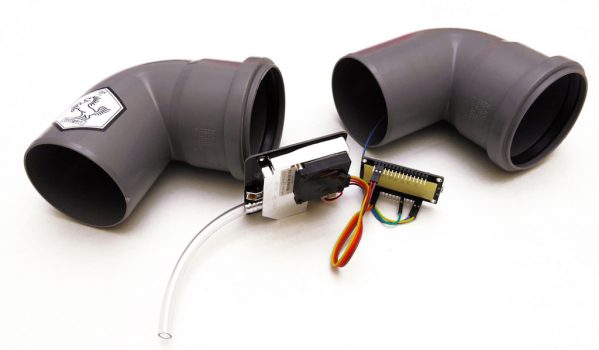
Do you think the current PM (Particulate Matter) monitors are too expansive or too risky to leave them outside? Do you need proofs for convincing your local authorities to take actions against air pollution?

Then it’s time to build your own personal outdoor PM DIY Monitor. It won’t cost you more than €32 and it can feed your community with valuable data about the air quality. Use that data to prove how bad is the air quality in your neighborhood or community.

Read More »

Three Great Books for the Summer

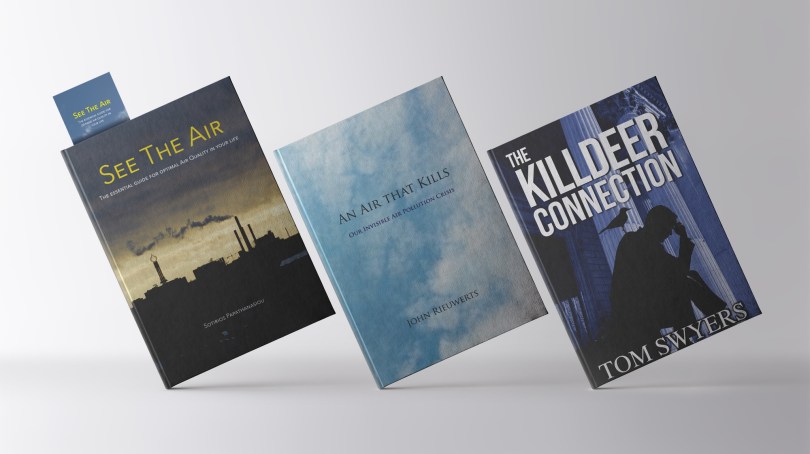
Summer is here and everyone is on vacation, with spare time to read some great books. It doesn’t matter which one you will choose Mine or Rieuwerts’ or Swyers’ or all of them, just make sure you learn more about the air you breathe. Share with your loved ones and friends the knowledge you will get.

Make sure you follow us on Twitter at @SeeTheAirBook@AnAirThatKills@TomSwyers.
SeeTheAirAnAirThatKillsbook tom

The Air in New York

In my recent visit in New York and in other USA cities I decided to take with me a portable carbon monoxide device and measure the air quality across the cities during my trip.

The CO Sensor was placed on a net pocket that I had sewed on my backpack. I am quite the craftsman! The experiment had to be done correctly to ensure that the air flowed easily and the measurements were taken correctly and constantly.Read More »

Review: Cambridge Mask

This time I had the opportunity of getting a half face mask by Cambridge Mask Co. and of course I wrote with pleasure a review on my blog.

Characteristics

Cambridge Mask offers the N99 respirators (Not oil resistant), a three layer mask with a Military Grade Carbon Filter layer, and the Three-Ply Micro Particulate layer. An exhale valve is present as well to ensure that moist won’t build up.  These respirators also filter 99.6% of viruses and 99.77% of bacteria.Read More »

Exhaust Smoke Colours and Pollutants

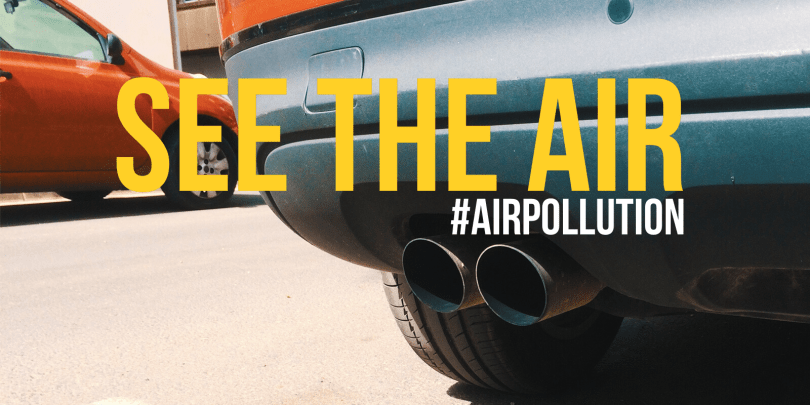
Did you know that cars emit smoke with a differnt colour depending the engine that they use and the problems that they are having. Here are the following categories: Blue smoke, White smoke and Black smoke.

Untitled

Blue Smoke

Blue smoke means your engine is burning oil. Oil is an important element in the engine, but only to lubricate the moving parts. When it is burnt by the engine means that there are leaking valve seals or worn piston rings or worn cylinder walls. In this case large quantities of Carbon monoxide CO, PMs, NO2 and SO2 are released into the environment.

White Smoke

There are two types of white smoke, the normal white vapor that disappears quickly under normal conditions due to condensation and the heavy white smoke. The heavy white smoke must concern you because the coolant has made its way into the combustion chamber. In this case large quantities of VOCs and PMs are released into the environment.

Black Smoke

Finally the black smoke indicates that your air/fuel mixture is running rich. Which means that more fuel is entering the engine and it doesn’t burn completely due to the lack of the air or oxygen. This is also called rich. When more air enters the engine than fuel this is called lean. In this case large quantities of CO, PMs and NO2 are released into the environment.

Conclusion

All in all, the emitted smoke from the exhaust may not tell you the exact problem, but it can give you an idea of what the problem of your engine is and the pollution that is emitted. Visit your mechanic immediately, public health may be in jeopardy.

Ozone O3 an Air Pollutant

The Ozone O3 is protecting us through the Ozone Shield from the harmful ultraviolet UV radiation when it is in the lower portion of the stratosphere at 20km to 30km above Earth. However it is a harmful gas for the respiratory system and it can cause serious health issues when it is inhaled in high consecration.

As a result we divide the Ozone in two categories, the Ozone Shield aka Good Ozone and the Ground Level Ozone aka Bad Ozone. Basically the Ground level Ozone is formatted by a combination of gases and the Sunlight.

VOCs + NOx + Heat + Sunlight = Ozone

 Breathing ozone O3 can trigger a variety of health problems, particularly for children, the elderly, and people of all ages who have lung diseases such as asthma. Ground level Ozone can also have harmful effects on sensitive vegetation and ecosystems.

Read more about air pollutants inside my book See The Air

Air Quality Devices – Comparison 2017 Q2

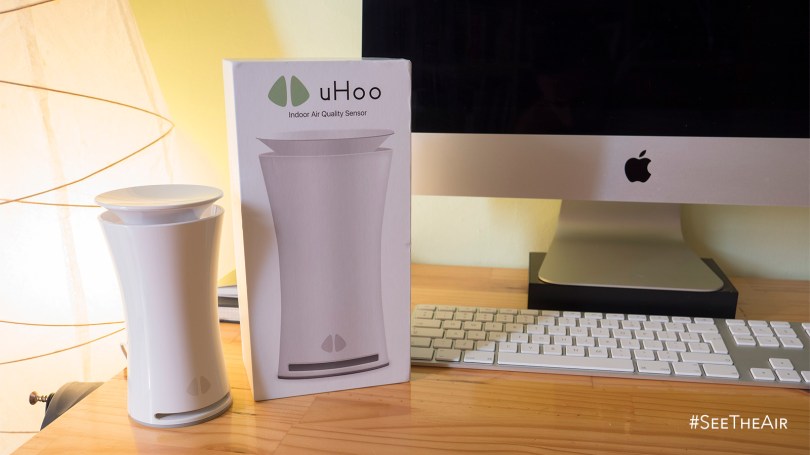
More and new devices on the market. From wearables to home AQI monitors are here to assist people’s needs. Remember air pollution is everywhere.

comparison air 2017 Q2

  • Prices may vary during time.
  • Some Companies don’t specify on their data sheet if their devices are capable to measure PM2.5 or PM10 and they just mention the word dust.
  • Some other companies say: Our product goes beyond CO₂ by analyzing substances that directly affect your well-being by measuring VOCs. They aren’t clear if their devices have CO₂ sensor.
  • Some of the devices are AQI Monitors and Air Purifiers Combo. On this list you can only read the features as an AQI monitor.
  • The classification of the design between BadGood and Very Good is based on the materials (plastic, wood, glass and metal) that they use and the aesthetic on my personal opinion.

CO2 Candles Experiment

CO2 Candles Experiment

In this experiment I will demonstrate how fast Carbon Dioxide CO2 rises inside a room by lighting two small candles.

bedroomday1_0000 copy

I chose my study room as it can be easily isolated, plus I have got all the AQI monitors inside this room for the purpose of the experiment. The room is 7.3m². The experiment is easy, I lit 2 candles and closed the door and window of the room. Then I waiting with myself inside the room till the CO2 reached 1200ppm. Basically I logged the time when the CO2 was 430ppm and when it reached the 1200ppm with and without the candles.

With the candles the CO2 needed 35 minutes to reach the 1200ppm limit as you can see on the graph below and without any candle and with exactly the same conditions as before the CO2 needed 59 minutes to reach the upper limit.

Conclusion

You gain 25 minutes of more oxygen and less CO2 until the room reaches the 1200ppm limit which means more productive time and fewer headaches.

Gray Slate

Candles and Incense sources of Indoor Air Pollution

Candles and Incense sources of Indoor Air Pollution

They look nice and they smell even better, but unfortunately most of them are made of toxic ingredients and when you light them, they diffuse all these toxic ingredients inside your house.

Harmful VOCs

Most commercial candles are full of toxic ingredients that many times they don’t even write on the package like Paraffin, Acetone, Trichlorofluoromethane, Carbon Disulfide, 2-Butanone, Trichloroethane, Trichloroethene, Carbon Tetrachloride, Tetrachloroethene, Chlorobenzene, Ethylbenzene, Styrene, Xylene, Phenol, Cresol and Cyclopentene. Most of them are VOCs and the majority of the AQI monitors with VOC sensor will recognize the toxins in the air. Now, when paraffin burned releases toluene and benzene which are highly toxic and carcinogens (these fumes are the same as when diesel is burnt).Read More »

Where are the Public Air Quality Stations?

In my city (Almeria, Spain) there are two stations that measure the local Air Quality.

Let’s analyze them and see if they are located in the correct places and if they feature the necessary instruments for measuring the AQI properly.

The Background

It is located in “El Boticario” a park 10km outside of the city center. The coordinates according to an official document from“Junta de Andalucía” are UTMX:554439 and UTMY:4080272, but they aren’t correct (Not so professional). The real coordinates are UTMX:554319 and UTMY:4080066. This station seems to work well although they don’t feed the data in real time to the public and quite often is down.

Read More »