2024: Year in Review – See The Air 🔁 2️⃣0️⃣2️⃣4️⃣

A Year of Air Quality Awareness

2024 was a year marked by increased global awareness of air quality issues. Our blog, See The Air, played a pivotal role in disseminating critical information and fostering a community of informed individuals.

With over 196K users visiting our site, primarily through Google Search and LinkedIn, we are proud to have contributed to a more informed and healthier world.

The recent updates to the PM2.5 limits by the European Union and the US EPA signify a significant step forward in prioritizing public health. By lowering the acceptable levels of these harmful fine particulate matter, these regulatory bodies are acknowledging the strong scientific evidence linking PM2.5 exposure to respiratory diseases, heart problems, and premature death. These stricter standards will drive efforts to reduce air pollution from industrial emissions, transportation, and other sources, ultimately leading to cleaner air and healthier populations.

Read More »
Why Millions in India Breathe Toxic Air

Air pollution is a major health crisis in India. Millions of people in the country are exposed to unhealthy levels of air pollution every day. This is a serious problem that can lead to a variety of health problems, including respiratory diseases, heart disease, and even cancer.   

There are a number of reasons why air pollution is so bad in India. One reason is the large number of vehicles on the roads. India has a rapidly growing economy, and this has led to a surge in the number of cars, trucks, and motorcycles on the roads. These vehicles emit a lot of pollutants into the air.   

Another reason for air pollution in India is industrial activity. India is a major industrial power, and factories and other industrial facilities emit a lot of pollutants into the air.   

Finally, agricultural burning is also a major source of air pollution in India. Farmers often burn crop stubble after harvest, and this can create a thick haze of smoke that can linger for days.   

The Health Effects of Air Pollution

Air pollution can have a serious impact on human health. Short-term exposure to air pollution can cause respiratory problems, such as coughing, wheezing, and shortness of breath. Long-term exposure to air pollution can lead to more serious health problems, such as heart disease, stroke, lung cancer, and even death.   

Read More »

The Future of Air Quality Monitoring: Portable Power

Years ago, I explored the potential of gamification to enhance public engagement with air quality. Now, numerous projects are emerging, promising to deliver user-friendly products that bridge the knowledge gap. Two key players are driving this innovation: sensor manufacturers, who are relentlessly miniaturizing their technology, and startups, which are pioneering innovative solutions to bring these sensors directly to consumers.

Air quality monitoring is no longer a niche concern for environmental scientists. With growing awareness of the impact of air pollution on health, a new wave of portable air quality monitors is poised to revolutionize how we perceive and manage the air we breathe.

Read More »

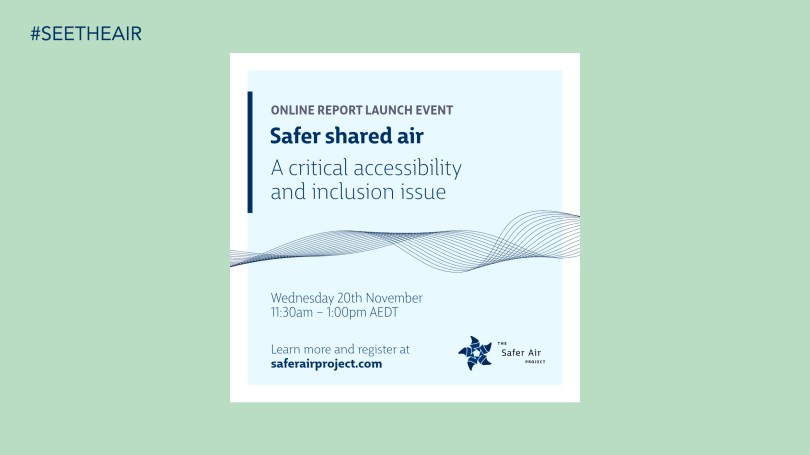
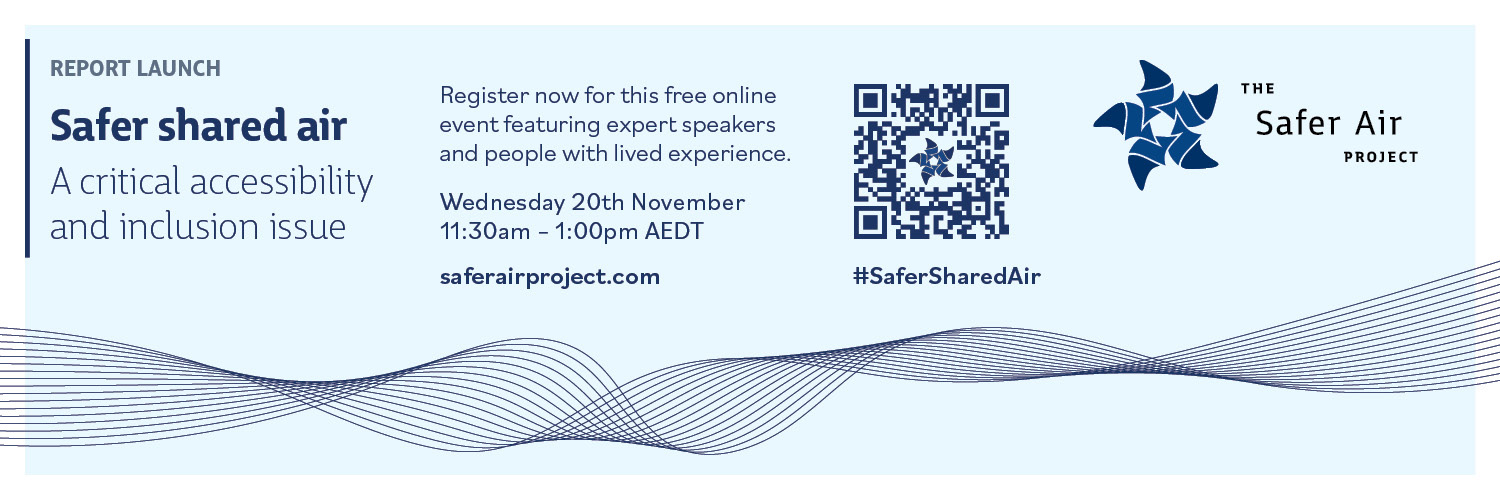
Breathe Easy Together: Register Now for The Safer Air Project Report Launch!

Creating a world where everyone can breathe safely indoors.

The pandemic has highlighted a critical truth: many diseases spread through the air we breathe. This makes clean indoor air essential for minimizing the risk of infection in our shared spaces, especially for those most vulnerable to airborne illnesses. Everyone deserves the right to access public spaces safely, and that right starts with clean air.

The Safer Air Project is excited to invite you to the online launch of our groundbreaking report, Safer Shared Air: A Critical Accessibility and Inclusion Issue. Join us to explore the importance of clean indoor air for public health and accessibility.

Here’s what you can expect:

  • Discover why safer shared air is a critical accessibility and inclusion issue.
  • Learn how we can work together to ensure healthier indoor air for everyone.
  • Gain insights from our report on the impact of poor indoor air quality and its connection to public health and inclusion.

This event is free and open to everyone!

Register now: https://www.saferairproject.com/

Together, we can create a world where everyone breathes safely indoors. Don’t miss this important discussion!

Exciting News! “Nicholas and his Incredible Eyesight” Now Available in Farsi! 🇮🇷

Calling all Farsi readers! I am thrilled to announce that the beloved “Nicholas and his Incredible Eyesight” book series is now translated into Farsi (modern Persian). Since Farsi language printed books aren’t currently supported by Amazon, I’ve decided to make the digital format of my book available for free to everyone. This way, readers can still enjoy the work regardless of the limitations on print formats.

This exciting adventure awaits anyone who wants to join Nicholas on his amazing journeys. With his incredible eyesight, Nicholas sees the world in a whole new way, encountering challenges and surprises along the path.

A special thanks to Solmaz Ahadi, Air Quality Specialist, for her invaluable help in bringing this translation to life!

Want your FREE digital copy? It’s easy! Simply leave a comment below this announcement or contact me and I will send it straight to you.

Let’s celebrate the magic of storytelling and the power of Nicholas incredible eyesight – in Farsi! 

#FarsiBooks #FreeBooks #ChildrensBooks #NicholasAndHisIncredibleEyesight #AirQuality

Elevating the Topic of Healthy Air | The Air Exchange S2 E1

H&V’s Air Exchange host, Bruce Lorange, kicks off Season 2 by sitting down with IAQ “Influencer”, Sotirios Papathanasiou of the weblog @ Seetheair.org to discuss the importance of healthy air.

Sotirios discusses the importance of air quality, clean air initiatives, and healthy buildings as he shares his background and passion for merging technology and the environment. Sotirios and Bruce also discuss the need for education and legislation to improve indoor air quality.

Read More »

MasterClass: Air Quality Data Visualization with R Studio & Packages

R Studio and its packages are used by hundreds of thousands of people to make millions of plots. I use it to compare air sensor data from different air quality monitors/sensors or to visualize air pollution levels.

In this article we will explore both how we can visualize air quality data from publicly available sources and how you can create statistical correlations between different pollutants or different sensors to find the correlation coefficient or correlation of determination.

First: Get the Right Packages

Packages are collections of functions, data, and compiled code in a well-defined format, created to add specific functionality. Here are some of the packages that we will install inside RStudio and use.

#You can either get ggplot2 by installing the whole tidyverse library
install.packages(tidyverse)

#Alternatively, install just ggplot2
install.packages(ggplot2)

#saqgetr is a package to import European air quality monitoring data in a fast and easy way
install.packages(saqgetr)

#worldmet provides an easy way to access data from the NOAA Integrated Surface Database
install.packages(worldmet)

#Date-time data can be frustrating to work with in R and lubridate can help us fix possible issues
install.packages(lubridate)

#Openair is a package developed for the purpose of analysing air quality data
linstall.packages(openair)
Read More »

Dust Devils of Doom: Sand Storm & Haboob and Their Invisible Assault on Human Health

Recently, I met Dr. Karin Ardon-Dryer and she is my new favorite scientist/superstar because of her research and her charismatic way to share important information to the public. She was able to captivate everyone in the room with her presentation Effect of Dust Particles on Human Health at Miami University.

Sand storms, often romanticized in movies and documentaries, pose a far more significant threat than just a dramatic backdrop. These swirling giants of dust wreak havoc on air quality, carrying not just coarse sand but also microscopic fine particles with serious implications for human health. While sand storms are often associated with arid regions far from home, their reach extends farther than you might think, impacting even areas within the United States. Arizona, New Mexico, Texas, and even eastern California are some of the states that experience poor air quality from such meteorological phenomena.

Haboob vs Sandstorm vs Dust Storms 

  • Haboob (Arabic for blasting/drifting) is a strong wind carrying a mass of dust and sand that has been lifted from the ground in very dry areas such as deserts.
  • Sandstorm is a windstorm especially in a desert, that blows along great clouds of sand.
  • Dust storms carry much smaller particles, which can be carried higher and further than sandstorms. 
Read More »

Saving Lives, Breath by Breath: Learn about WHO AirQ+ (Free Software)

Air pollution hangs heavy over many parts of the world, silently claiming millions of lives each year. Researchers and policymakers are locked in a crucial battle against this invisible enemy, and WHO AirQ+ software serves as a powerful weapon in their arsenal. Available for macOS, MS Windows, and Linux in English, French, German, Russian and Spanish.

This free, user-friendly software, developed by the World Health Organization (WHO), quantifies the health impacts of air pollution. It’s not just about measuring harmful particles or gases; it translates those numbers into real-world consequences, shedding light on the human cost of poor air quality.

How AirQ+ Works:

  • Estimates Health Effects: Enter air pollution data for a specific location, and AirQ+ calculates the burden of diseases attributed to various pollutants like particulate matter (PM), ozone, and nitrogen dioxide. This includes premature deaths, respiratory illnesses, and other health problems.
  • Short-Term & Long-Term Impact: Analyze both immediate effects from spikes in pollution and the accumulated burden from chronic exposure.
  • Future Scenarios: Model the potential health benefits of interventions like reducing emissions or switching to cleaner fuels. Imagine thousands of lives saved, just by seeing the numbers.
Read More »

2023: Year in Review – See The Air 🔁 2️⃣0️⃣2️⃣3️⃣

2023 was a year full of air quality news. From raising awareness about air pollution to sharing solutions and inspiring stories, the blog has been a valuable resource for people interested in the issue of air quality.

In addition, See The Air also continued to publish regular news updates, sharing the latest developments in the field of air quality and environmental policy. The blog also featured a number of guest posts from experts in the field, providing diverse perspectives on the issue of air pollution.

Blog Statistics

In 2023 my blog was visited by 110K people, slightly higher than last year. Keep in mind, my blog is all about air pollution/quality, a very narrow subject but at the same time very important for all of us. I am very satisfied that the blog is able to help people understand and see the air.

Google, LinkedIn, and Yahoo are the top three referrers to my blog during 2023.

Top Countries

  1. USA
  2. UK
  3. Canada
  4. Australia
  5. Spain
  6. Germany

Most Visited Articles

  1. Things no one talks about: Flatulence and Indoor Air Quality
  2. The Dark Side of the Wood Stove Industry
  3. Particulate Matter (PM2.5) Mega Guide
  4. Understanding ASHRAE Standard 241
  5. Indoor Air Quality Monitors – Comparison List 2023Q3

Conclusion

Looking ahead to 2024, See The Air has ambitious plans to expand its reach and impact. I am working on developing new partnerships and collaborations to help raise awareness about the issue of air pollution and drive meaningful change. I look forward to seeing what the scientific community will achieve in the coming year.