Particle Sizes, Infiltration, and the Indoor/Outdoor Ratio

Particle Sizes

Particle size plays a significant role in determining how particles behave indoors and their potential impact on human health. Fine particulate matter (PM2.5), with diameters of 2.5 micrometers or less, is a major concern due to its ability to penetrate deep into the respiratory system. An important subset of PM2.5 is ultrafine particles (UFPs), which have diameters less than 0.1 micrometers and are primarily emitted from combustion sources. These UFPs can even be transported to the brain via the olfactory nerve, potentially causing neurological effects. Particles in the 0.1 to 2.5 micrometer range can originate from indoor sources like soot or from the infiltration of outdoor particles. Coarse particles, larger than 2.5 micrometers, are mainly generated by mechanical processes like resuspending dust. These size distinctions are crucial because they influence a particle’s ability to penetrate indoors, remain airborne, and affect human health. For instance, the high surface area to mass ratio of UFPs makes them efficient at transporting harmful chemicals deep into the lungs. Understanding the sources and behavior of different particle sizes indoors is essential for developing effective strategies to mitigate their potential health risks.

Read More »

AirDeveloppa: Breathe Easy and Earn Bitcoin While You’re At It

Air pollution got you down? Want to find places with clean air to escape to? Look no further than AirDeveloppa! This innovative web app tackles air quality concerns with a unique approach that benefits both users and businesses.

Finding Fresh Air, One Coffee Shop at a Time

AirDeveloppa’s core function is to help you locate indoor spots with good air quality. Participating businesses like cafes, gyms, and co-working spaces utilize the AirCheck Monitor, which constantly monitor PM2.5 levels and send that data directly to the app. With up-to-date info at your fingertips, you can easily find a breath of fresh air on even the smoggiest days. Currently only people in Thailand have access to this service but hopefully it will become worldwide available.

Read More »

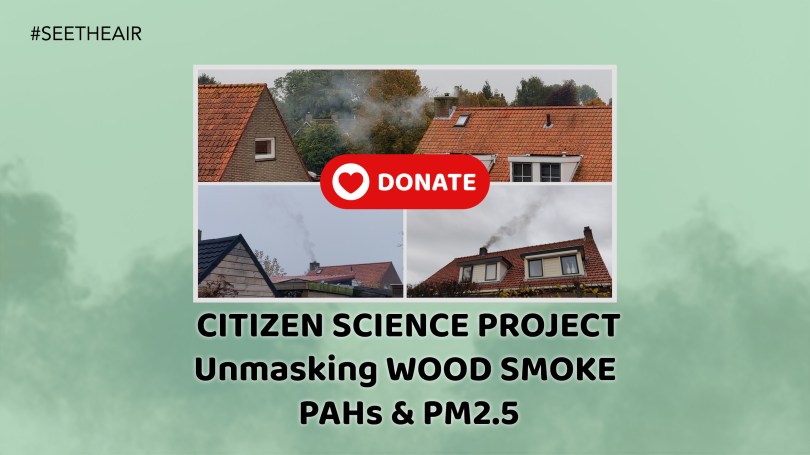
Help Us Breathe Cleaner Air: Citizen Science Project Seeks Donations for Wood Smoke Research

I won’t write a long introduction because this is of urgent matter for people to understand and support. While wood-burning stoves offer a tempting escape from soaring energy costs, they also release harmful substances into our homes and communities. These include fine particulate matter (PM2.5) and Polycyclic Aromatic Hydrocarbons (PAHs), both of which have been linked to serious health issues, including cancer.

Unveiling the Hidden Danger

Despite the known risks, we still lack sufficient data on PAHs concentrations in residential areas where wood burning is common. The location of investigation will be chosen in the Netherlands or Belgium. This is where your help is crucial.

By supporting this citizen science project, you’ll help us gather vital information about the impact of wood smoke on our air quality. The project will measure PAHs and PM2.5 levels in a residential area heavily reliant on wood burning for heating. This data will be invaluable for raising awareness among policymakers and advocating for stronger air quality regulations.

How Your Donation Makes a Difference

Analyzing air for PAHs is a complex process requiring specialized equipment and laboratory analysis. With your support, the project will:

  • Purchase air pumps and ten (10) absorption tubes to collect air samples.
  • Conduct laboratory analysis to identify and quantify PAHs.
  • Measure PM2.5 levels using advanced sensors.
  • Compare PAHs levels in wood-burning areas to background levels.

Join the Fight for Clean Air

Your donation will directly contribute to a healthier community. Together, we can uncover the hidden dangers of wood smoke and work towards cleaner air for everyone. Finally, I want to thank Dieter Pientka for his passion to investigate this crucial subject.

Help us make a difference. Donate today!

Can an Air Expert Escape Air Pollution? A 2-Month, 6-Month, and Year-Long Experiment in Personal Air Quality

Air pollution is an invisible threat, silently impacting our health. But what if you knew exactly where it lurked, both indoors and outdoors? Could an air quality expert, armed with this knowledge and personal equipment, achieve the World Health Organization’s (WHO) air quality guidelines for extended periods?

This is the question I, Sotirios Papathanasiou, an air quality expert,  will try to figure out over the next year. Starting July 1st, 2024, I embarked on a unique experiment, tracking my personal air quality for a full year. I am monitoring two key air quality metrics: Carbon Dioxide (CO2) and PM2.5 (fine particulate matter). However, PM2.5 data will be excluded when relative humidity surpasses 70% because the limitations of low-cost sensors. I will be carrying an Atmotube Pro and an AIRVALENT everywhere I go.

I am your human guinea pig, carrying these portable air quality monitors everywhere – from my bedroom to my gym, from my kitchen while cooking to the beach on a weekend getaway. This comprehensive data will allow us to see if, despite my expertise in pollution sources and protective measures, I can consistently meet the WHO’s air quality guidelines.

Read More »

Don’t Be Fooled by Mass: Why Counting Particles Is One Way Street for Sub-micron Air Quality Monitoring

While monitoring air quality, scientists traditionally relied on mass concentration to measure particulate matter (PM). This metric tells you the total mass of particles per unit volume of air. But for sub-micron particles – those less than one micrometer in diameter – mass concentration falls short. Here’s why measuring particle number by size distribution is a superior approach.

The Small Matter of Small Particles

Sub-micron particles are incredibly tiny. Imagine a human hair – typically around 70 microns thick. A sub-micron particle is hundreds to thousands of times smaller! Due to their miniscule mass, even large numbers of sub-micron particles can register a low mass concentration. This can be misleading, as the health risks they pose aren’t dependent solely on weight.

Penetrating Deep: Size Matters More

Sub-micron particles, especially those in the ultrafine range (less than 100 nanometers), are deeply concerning. Their small size allows them to bypass the body’s natural defenses and infiltrate deep into the lungs. These particles can even enter the bloodstream, potentially causing respiratory and cardiovascular problems.

Read More »

Taiwan Tightens PM2.5 Standards to Protect Public Health

Taiwan is taking a significant step towards cleaner air by tightening its regulations on PM2.5, a dangerous air pollutant linked to lung cancer and other respiratory illnesses. The new standard will set the maximum permissible concentration of PM2.5 at 12 μg/m3, a reduction from the current limit of 15 μg/m3.

This policy change is backed by an eight-year research study conducted by the National Health Research Institutes. The study’s findings confirm the negative health impacts of PM2.5 exposure, highlighting the urgency to curb air pollution levels.

PM2.5 refers to fine particulate matter measuring 2.5 micrometers or less in diameter. These tiny particles can easily penetrate deep into the lungs, causing inflammation and aggravating respiratory problems. Air pollution sources include vehicle emissions, industrial activities, and other human-made factors.

Read More »

Are Low-Cost Sensors Random Number Generators?

Low-cost sensors aka LCS are commonly used in an effort to measure air pollutants like particulate matter all around the world, indoors and outdoors. Their low price has driven a lot of interest from many communities. Academics, experts, and consumers have embraced them because they are cheap to get and easy to embed in an IoT solution.

Countless air quality monitors use low-cost sensors (mostly from China) and although they are great as educational tools, their low accuracy leads to wrong conclusions most of the time.

Wrong conclusions are as bad as misinformation or fake news. Air pollution doesn’t kill instantly (most of the time) and it doesn’t create severe health issues in the short-term, but after an extended period or at least when we notice the consequences. One exception is carbon monoxide (CO) as it can kill people instantly and this is the reason we don’t see many low-cost CO sensors. There are some regulations that protect the consumers. Moreover, companies don’t want to take responsibility by using a low-cost CO sensor because they can get sued easily by the family of a victim when the air quality monitor won’t notice the increase of the gas indoors. Liability!

Read More »

Over-the-Range Hood Microwaves: Addressing Indoor Air Quality Concerns

Over-the-range hood microwaves offer the convenience of a combined microwave and “ventilation” system. However, a common misconception is that they effectively remove cooking fumes and pollutants from the kitchen. While they do have a fan system, it’s crucial to understand their limitations.

Recirculation vs. True Ventilation:

Unlike range hoods that vent exhaust outdoors, most over-the-range microwaves utilize a recirculation system. This means they draw in cooking fumes, grease, and moisture through a metallic mesh filter with holes bigger than a Swiss cheese, then release the “treated” air back into the kitchen.

Read More »

MasterClass: Air Quality Data Visualization with R Studio & Packages

R Studio and its packages are used by hundreds of thousands of people to make millions of plots. I use it to compare air sensor data from different air quality monitors/sensors or to visualize air pollution levels.

In this article we will explore both how we can visualize air quality data from publicly available sources and how you can create statistical correlations between different pollutants or different sensors to find the correlation coefficient or correlation of determination.

First: Get the Right Packages

Packages are collections of functions, data, and compiled code in a well-defined format, created to add specific functionality. Here are some of the packages that we will install inside RStudio and use.

#You can either get ggplot2 by installing the whole tidyverse library
install.packages(tidyverse)

#Alternatively, install just ggplot2
install.packages(ggplot2)

#saqgetr is a package to import European air quality monitoring data in a fast and easy way
install.packages(saqgetr)

#worldmet provides an easy way to access data from the NOAA Integrated Surface Database
install.packages(worldmet)

#Date-time data can be frustrating to work with in R and lubridate can help us fix possible issues
install.packages(lubridate)

#Openair is a package developed for the purpose of analysing air quality data
linstall.packages(openair)
Read More »

Dust Devils of Doom: Sand Storm & Haboob and Their Invisible Assault on Human Health

Recently, I met Dr. Karin Ardon-Dryer and she is my new favorite scientist/superstar because of her research and her charismatic way to share important information to the public. She was able to captivate everyone in the room with her presentation Effect of Dust Particles on Human Health at Miami University.

Sand storms, often romanticized in movies and documentaries, pose a far more significant threat than just a dramatic backdrop. These swirling giants of dust wreak havoc on air quality, carrying not just coarse sand but also microscopic fine particles with serious implications for human health. While sand storms are often associated with arid regions far from home, their reach extends farther than you might think, impacting even areas within the United States. Arizona, New Mexico, Texas, and even eastern California are some of the states that experience poor air quality from such meteorological phenomena.

Haboob vs Sandstorm vs Dust Storms 

  • Haboob (Arabic for blasting/drifting) is a strong wind carrying a mass of dust and sand that has been lifted from the ground in very dry areas such as deserts.
  • Sandstorm is a windstorm especially in a desert, that blows along great clouds of sand.
  • Dust storms carry much smaller particles, which can be carried higher and further than sandstorms. 
Read More »