
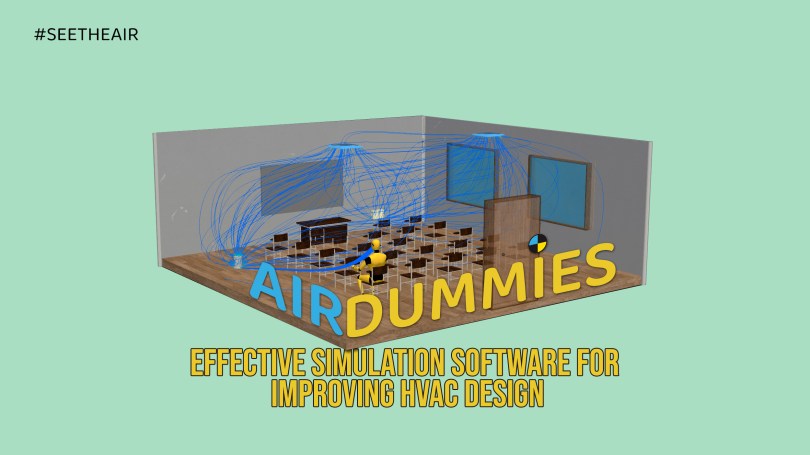
AirDummies emerges as a highly intuitive and powerful Computational Fluid Dynamics (CFD) software, purpose-built to demystify the complex world of indoor air dynamics. Designed with a clear focus on accessibility, it caters to a broad spectrum of users, offering invaluable insights into air patterns within diverse indoor environments, including school classrooms, offices, and domestic settings. Its ability to simulate everything from CO2 concentrations, particle contaminants, and temperature gradients to air velocity makes it an indispensable tool for optimizing comfort, health, and energy efficiency.
AirDummies is built upon the OpenFOAM open-source library. This foundational relationship means AirDummies leverages OpenFOAM’s extensive capabilities for simulating fluid flow, heat transfer, and related phenomena. By utilizing OpenFOAM, AirDummies benefits from a robust, well-validated, and continuously developed CFD engine, providing users with a powerful and flexible platform for their simulation needs.
One of AirDummies’ most commendable features is its user-friendly, top-down operational architecture. The process is logically structured, guiding users seamlessly from initial space design to advanced simulation and detailed reporting. You begin by meticulously crafting your virtual environment, selecting and positioning essential architectural elements such as walls, windows, and doors. This foundational step is followed by the placement of furniture and occupants, allowing for a realistic representation of the space’s inhabitants and their impact on airflow.
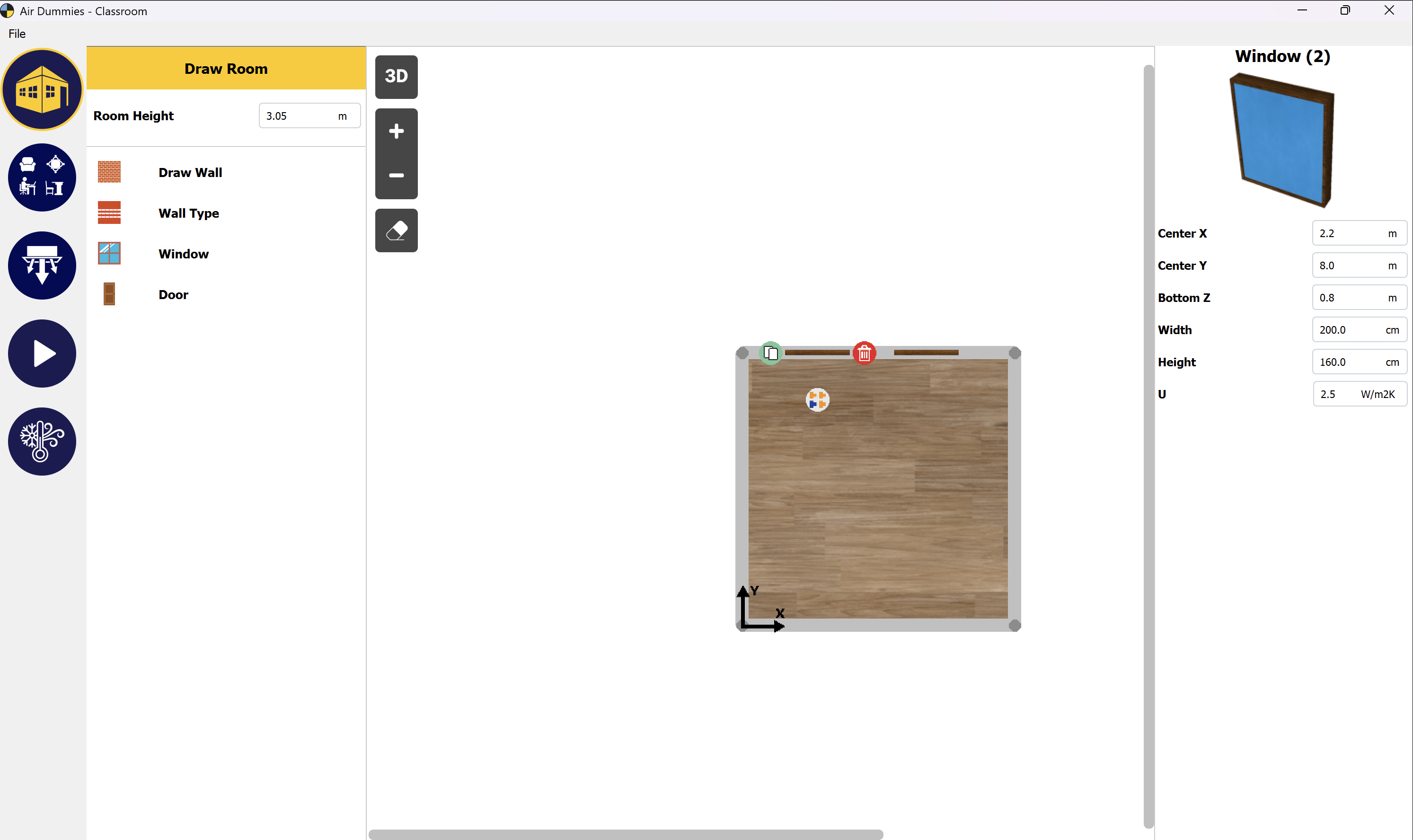
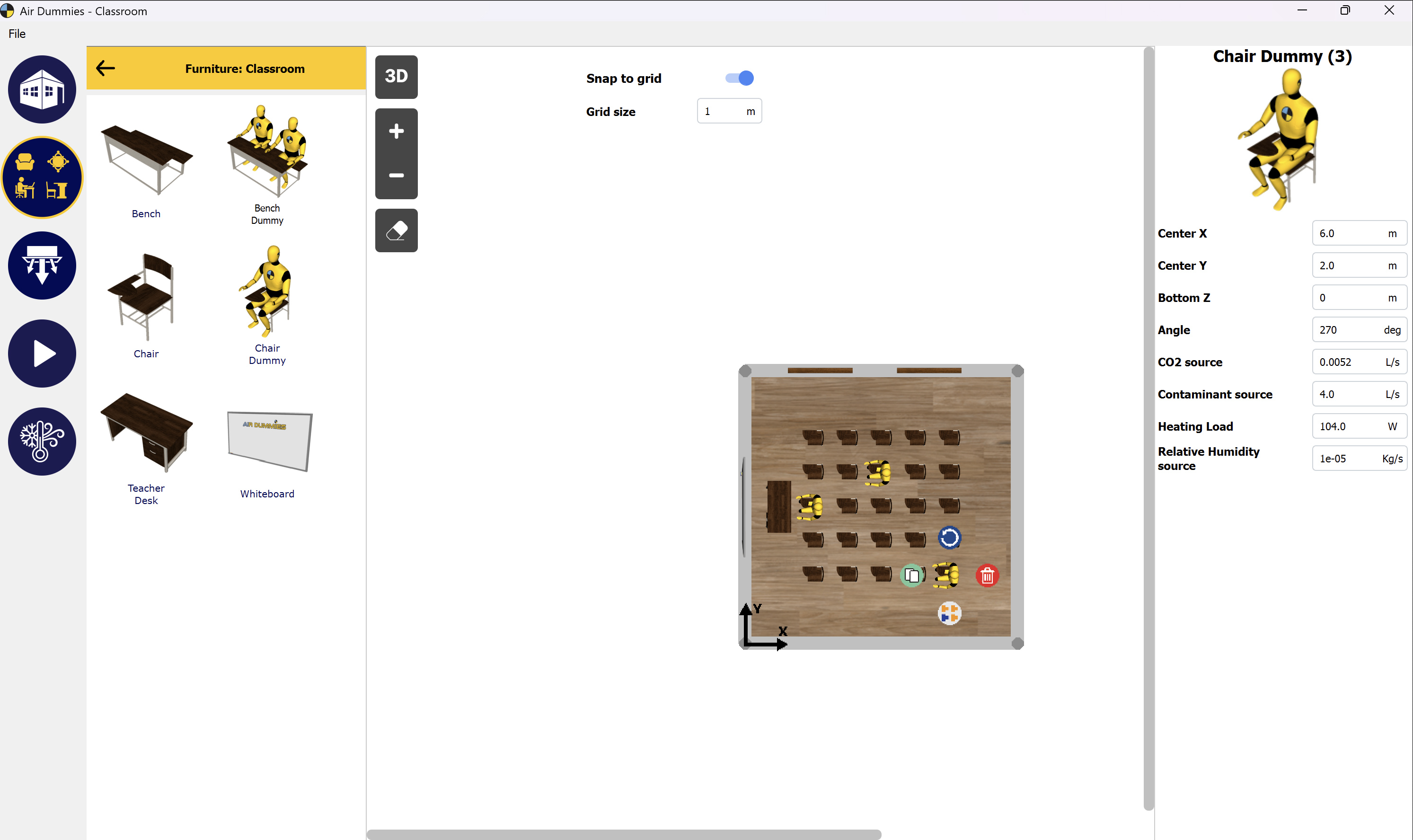
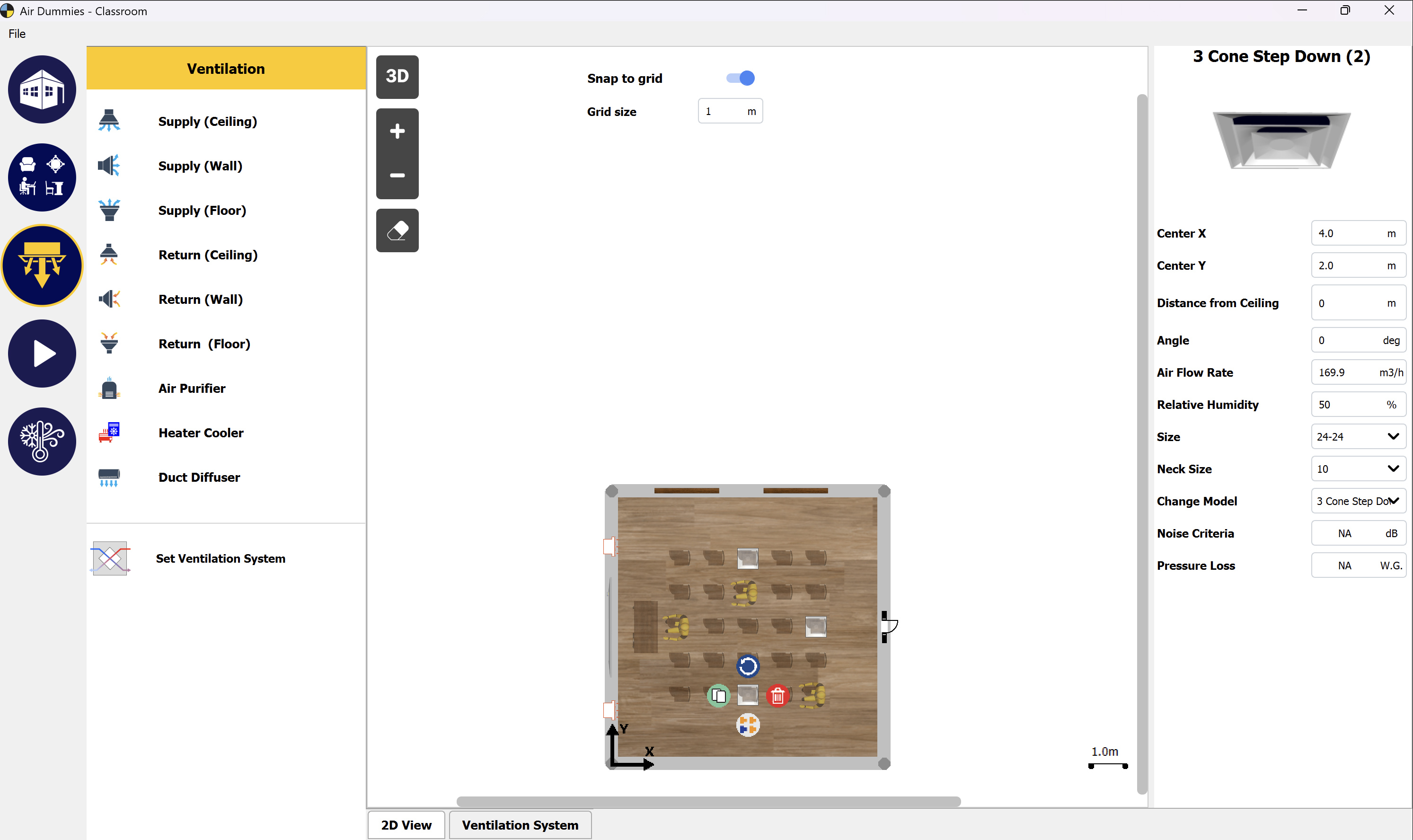
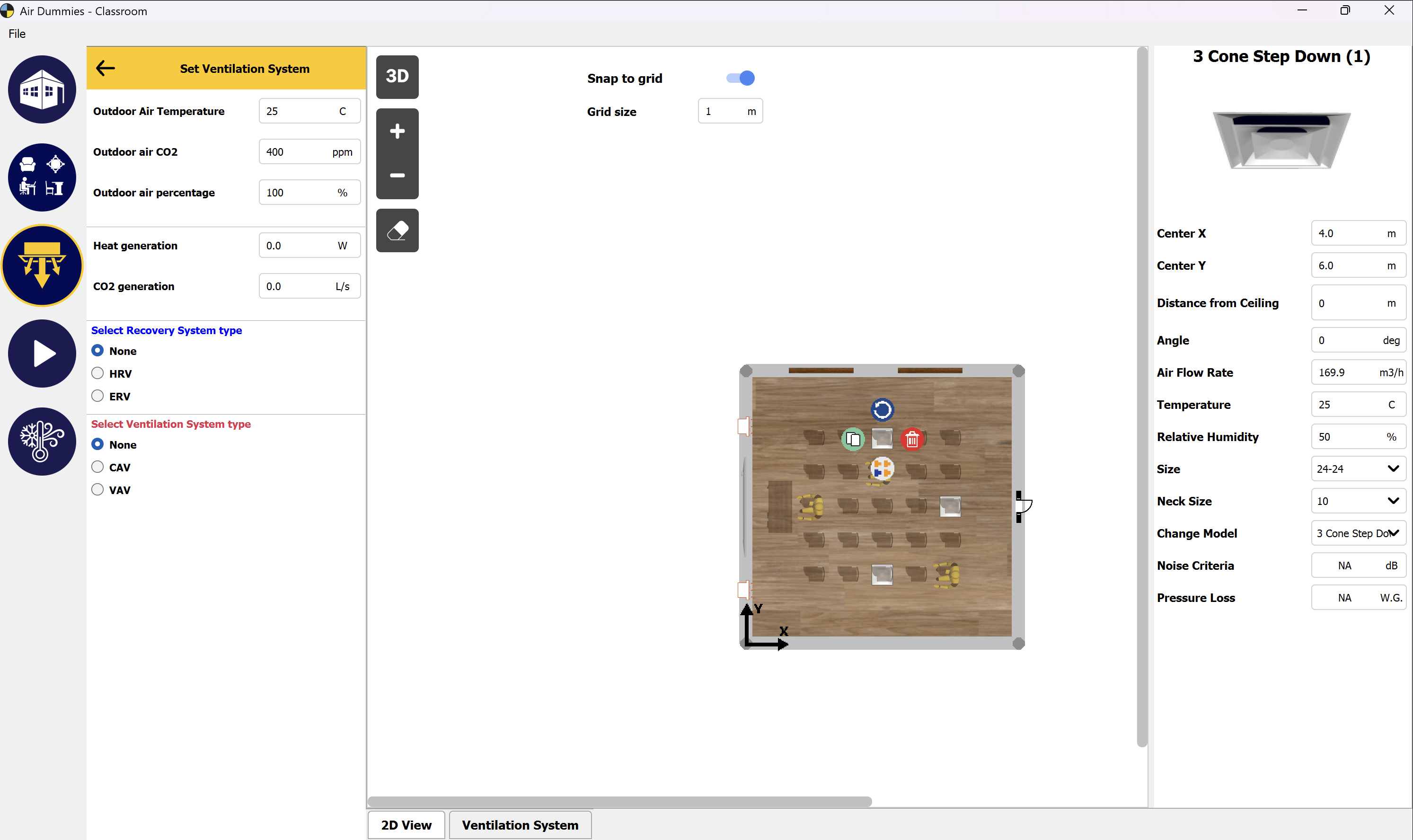
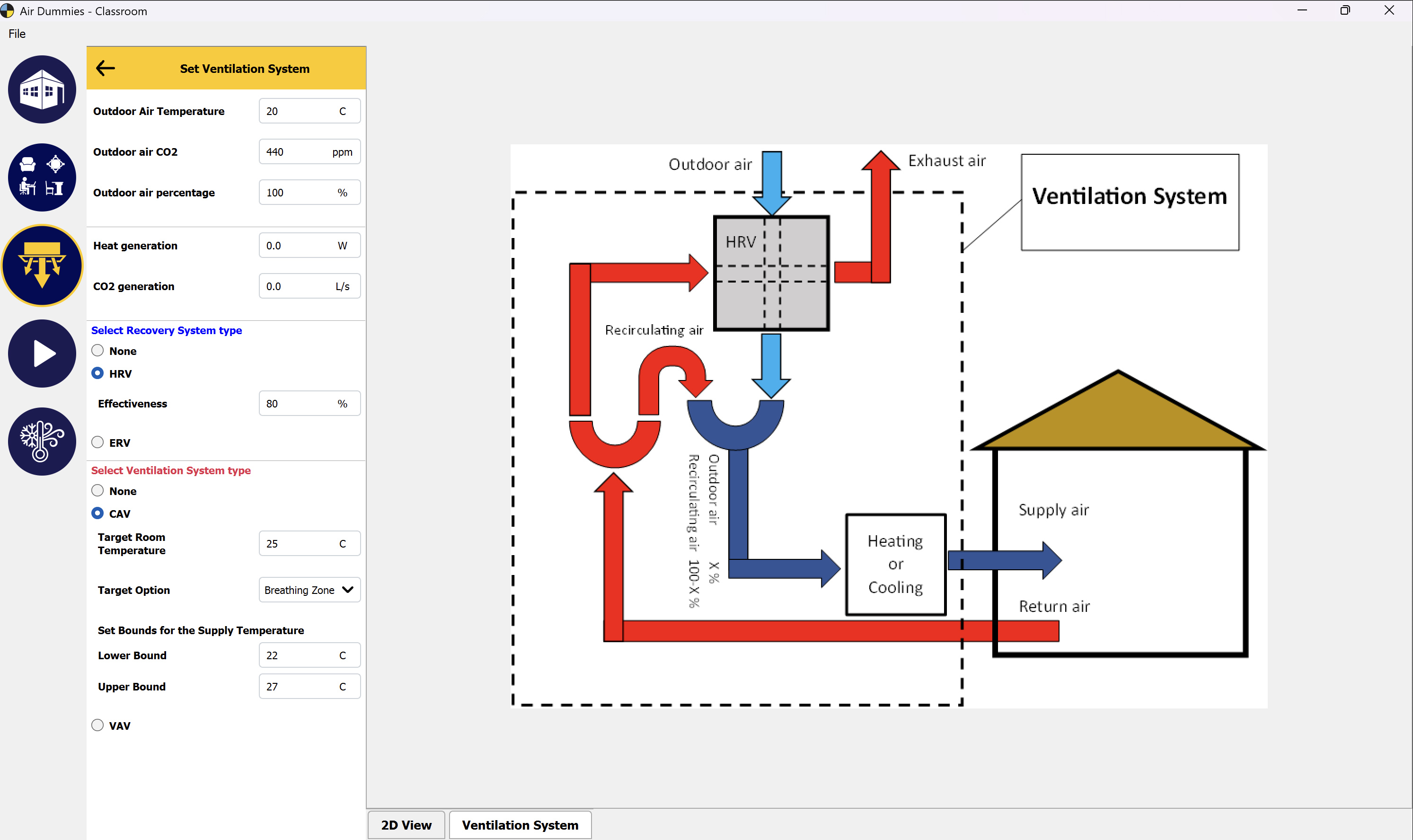

The software truly shines in its comprehensive ventilation and filtration system modeling capabilities. AirDummies provides a wide array of options, including advanced heat recovery systems like HRV (Heat Recovery Ventilator) and ERV (Energy Recovery Ventilator), along with both Constant Air Volume (CAV) and Variable Air Volume (VAV) systems. This extensive selection, coupled with the ability to fine-tune system settings, empowers users to accurately replicate and optimize various ventilation strategies.
Once the environment and systems are configured, AirDummies offers three distinct simulation types, balancing speed with accuracy. The “Preview Simulation” provides rapid results, ideal for quick assessments and initial design iterations, albeit with a lower degree of precision. Note: the Preview Simulation is not CFD, it solves simpler version of the equations. For more detailed analysis, the “Fast Simulation” and “Accurate Simulation” delivers refined and robust data, albeit requiring a longer processing time. This flexibility allows users to tailor the simulation approach to their specific project needs and time constraints.
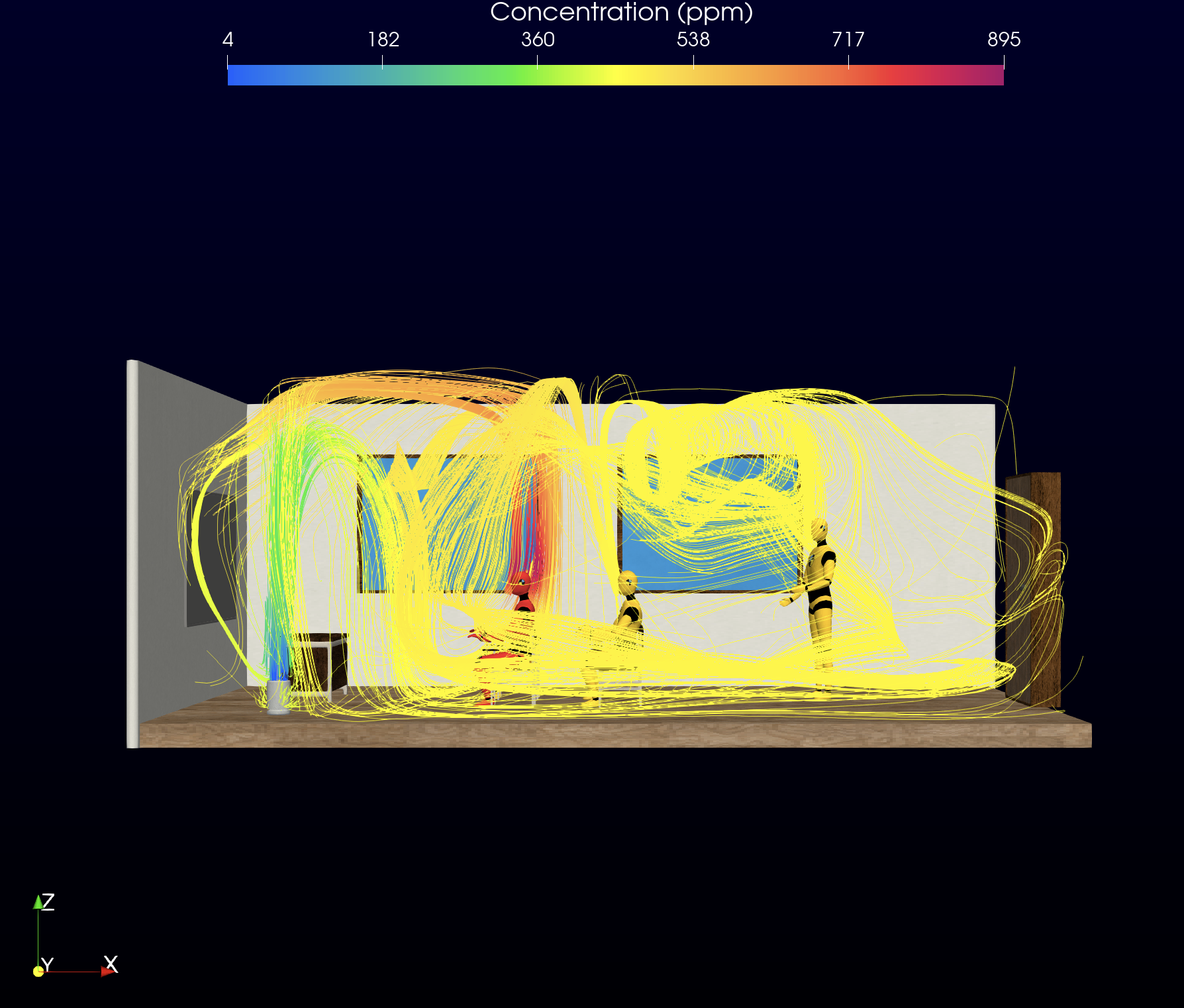
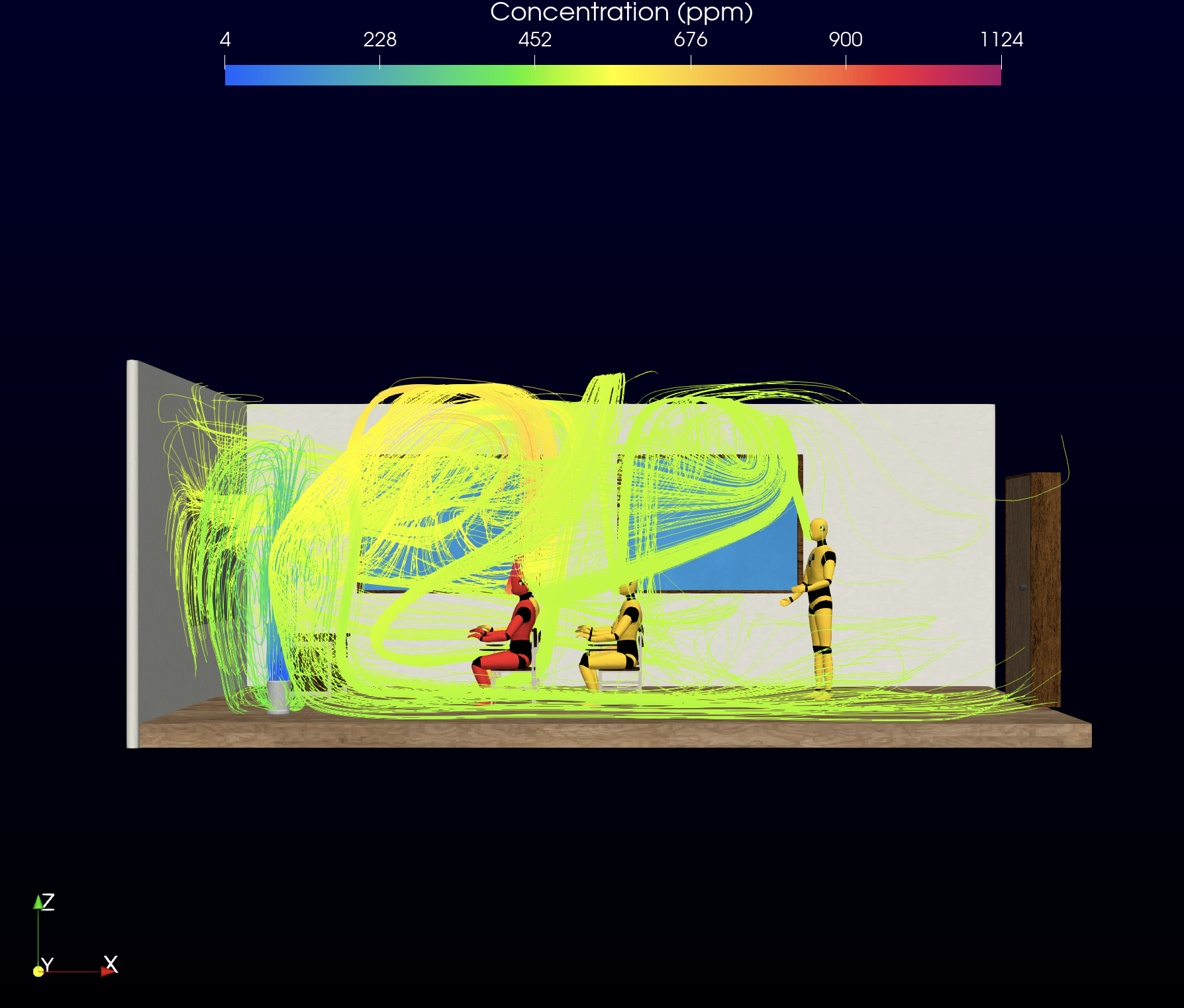
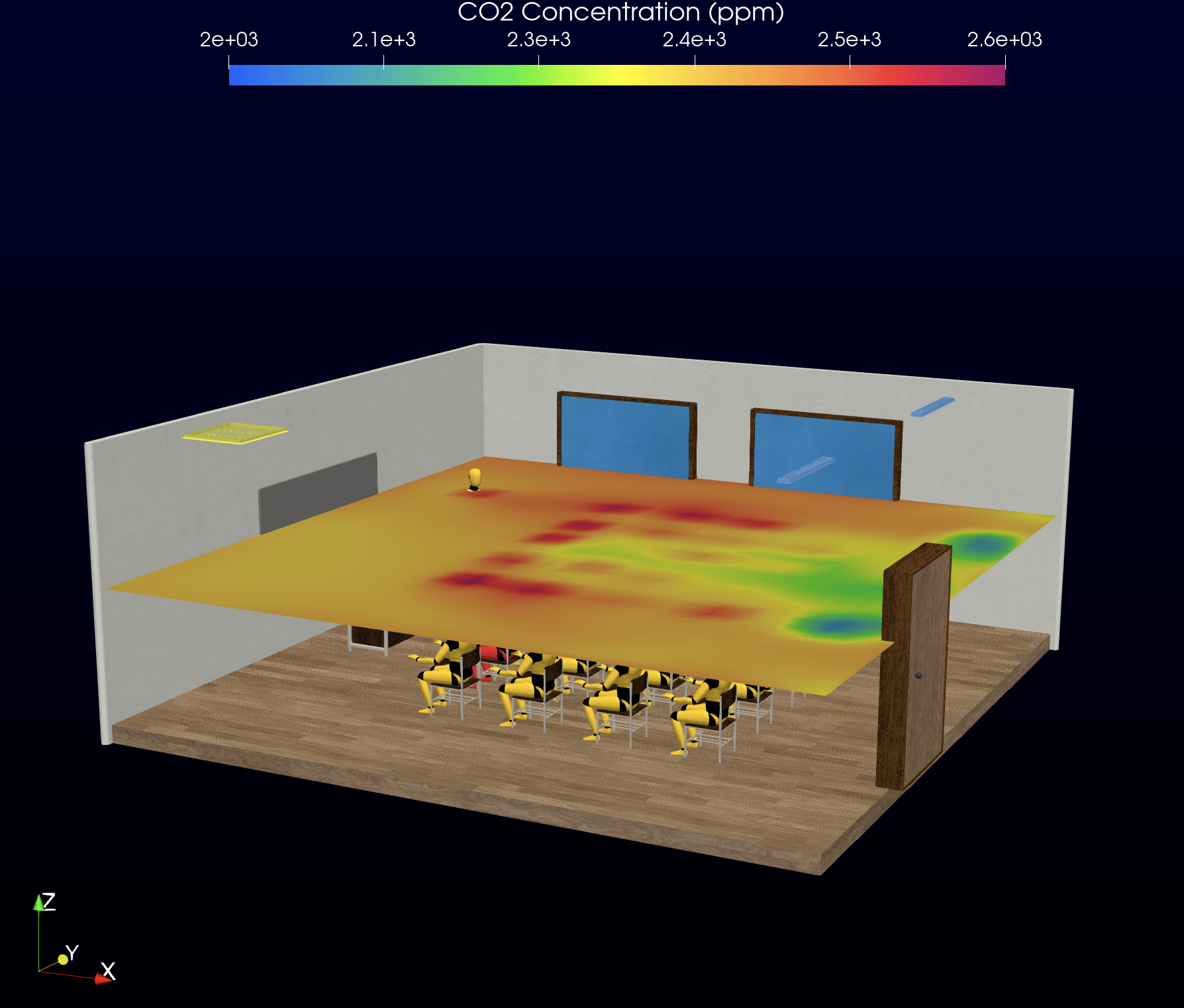
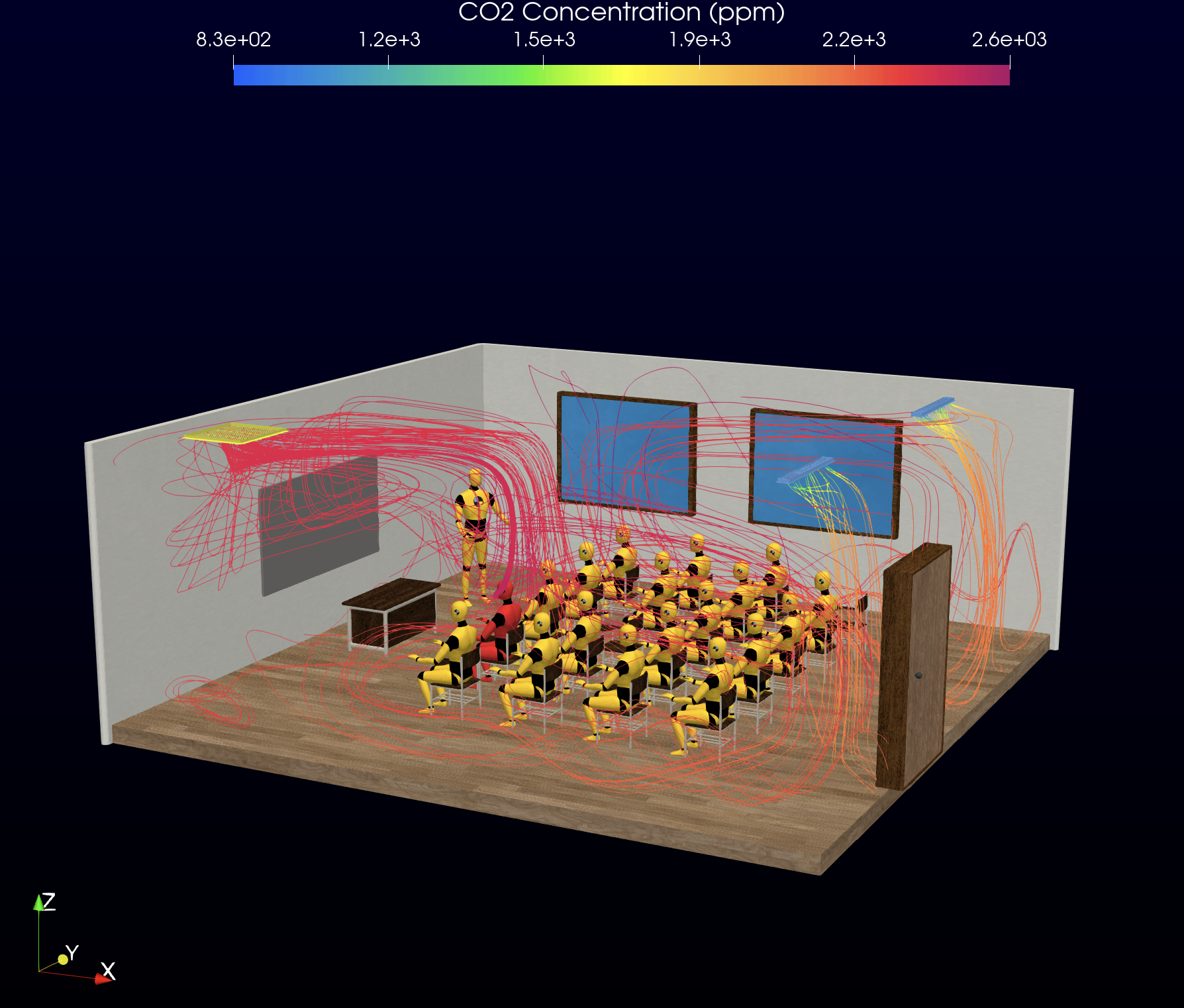
The post-simulation analysis and reporting features are equally good. Users can delve into a wealth of visual and numerical data, including intricate Air Flow Streams that vividly illustrate air movement patterns and insightful Contour Plots depicting variations in CO2, temperature, or velocity across the room. The ability to generate comprehensive PDF reports, enriched with integrated images of Air Flow Streams and Contour Plots, significantly enhances the clarity and impact of the findings, making it easy to communicate complex data to stakeholders.
While AirDummies is natively a Windows-only application, its demonstrated compatibility with virtualization software on macOS is a testament to its adaptability. This broadens its reach, allowing a wider audience of users, irrespective of their operating system, to leverage its powerful capabilities.
It’s important to note that although AirDummies caters to a broad spectrum of users, manufactures, and professionals in fields like HVAC design, architectural engineering, and facilities management will not be disappointed. The software’s capacity to simulate complex phenomena like precise CO2 concentrations and detailed air velocities provides the nuanced data necessary for rigorous analysis and informed decision-making. The comprehensive ventilation and filtration system modeling, offering a range of advanced options, allows engineers and specialists to accurately design, test, and optimize systems for specific performance targets. Furthermore, the “Accurate Simulation” option ensures that professional users can obtain highly refined and robust results crucial for critical projects where precision is paramount. The ability to generate detailed PDF reports, complete with visual aids, also streamlines the professional workflow, enabling clear and impactful communication of findings to clients and project teams. Example of the PDF Report.
During the AirDummies, we encountered some limitations that hindered our workflow. A primary constraint was the inability to import objects from external libraries. This feature, while desirable, is currently restricted due to the company’s rigorous validation process, which ensures the integrity of all simulations—a limitation that, while understandable from a quality control perspective, may slow down our design and testing cycles. Additionally, the software currently lacks the functionality to simulate open windows and doors, which would be crucial for accurately modeling air flow and pressure changes in real-world scenarios. The absence of a built-in feature for exporting high-resolution images of the simulations also proved to be a significant drawback, as we were forced to rely on low-fidelity screenshots for our documentation and presentations.
In conclusion, AirDummies stands out as an exceptional CFD software for indoor environment simulation. Its intuitive interface, comprehensive feature set, flexible simulation options, and robust reporting capabilities make it an invaluable asset for anyone seeking to understand, analyze, and optimize indoor air quality and comfort. For both general users and seasoned professionals, AirDummies provides the tools to literally visualize the air we breathe, paving the way for healthier and more efficient indoor spaces.
Discover more from See The Air
Subscribe to get the latest posts sent to your email.
 See The Air
How do you account for the specific impacts of specific voids in the building envelope.
xxx-xxx-xxxx
LikeLiked by 1 person
Hi Paul,
At the moment, the software doesn’t account for it, but we’re in the process of adding the infiltration effect.
LikeLiked by 1 person
can the programme simulate ion concentration in a room(space)?
LikeLike